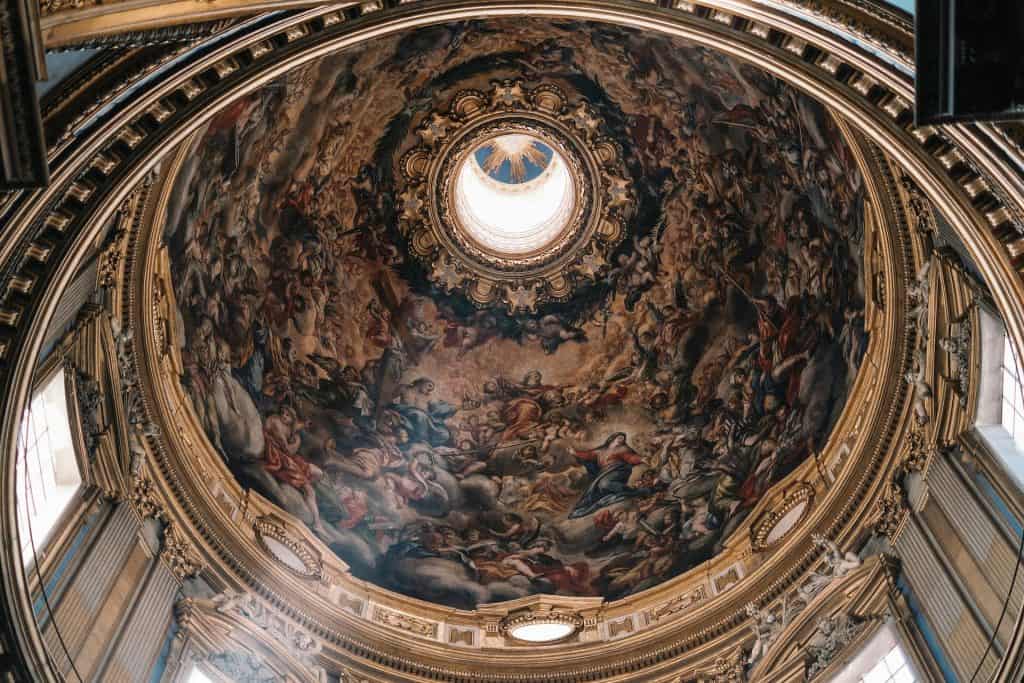
Baroque architecture is the bold, theatrical style that grew out of Counter-Reformation Rome around 1600 and spread across Europe and the Americas until the mid-1700s. It was built to move people: curved walls pull you forward, gilded vaults draw your eye up, and hidden windows make stone seem to float in light.
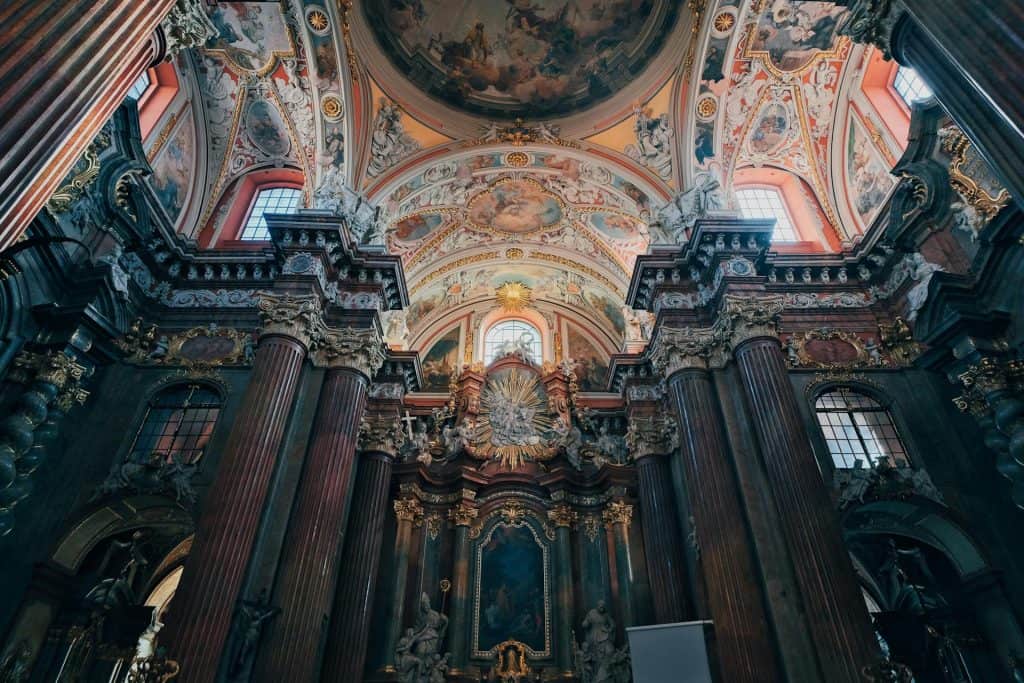
For architects and students, the Baroque is more than a history topic. Its tools, such as controlled sequence, dramatic thresholds, directed light and shifting scale, still shape how good buildings feel today. Learn how the Baroque did it and you learn how a building can produce a physical, emotional response in the people inside it.
This guide covers what Baroque architecture is, how it began, its eight key characteristics, how it differs from the Renaissance, the architects and buildings that defined it, its regional styles and its legacy, with answers to common questions at the end. If you want the wider timeline first, our overview of architectural styles from ancient to modern times puts the Baroque in context.
Baroque architecture at a glance
- When: about 1580 to 1750, with the Rococo as a late offshoot.
- Where it began: Rome, then Italy, Spain, Portugal, France, Central Europe, England, Russia and Latin America.
- Key features: huge scale, curved and moving walls, rich ornament, theatrical light, oval plans, painted ceilings and colossal classical columns.
- Key architects: Bernini, Borromini, Guarini, the Dientzenhofers, Fischer von Erlach, Balthasar Neumann and Christopher Wren.
- Famous buildings: St Peter’s Square and Baldacchino, San Carlo alle Quattro Fontane, Sant’Ivo alla Sapienza, Versailles, the Karlskirche and St Paul’s Cathedral.
What Is Baroque Architecture?
Baroque architecture is a style defined by grand scale, dynamic movement, rich ornament and the theatrical use of light and space to create emotional intensity. It emerged in Rome in the late sixteenth century and spread across Europe between roughly 1580 and 1750, serving both religious and political aims: the Catholic Church used it to win back the faithful, and absolute monarchs used it to show their power.
The name comes from the Portuguese barroco, a misshapen pearl. Eighteenth-century critics used it as an insult for work they saw as odd and overloaded. Today it simply names the period. The Baroque sits between the calm order of the Renaissance and the cool restraint of Neoclassical architecture, and like the Gothic before it, it used light and height to make visitors feel small before something larger.
How Baroque Architecture Emerged
Counter-Reformation origins
Baroque architecture was born from a political and spiritual crisis. After the Protestant Reformation, the Catholic Church needed to reassert its authority and its emotional pull. The Council of Trent (1545 to 1563) called for art and architecture that would inspire faith through the senses rather than through abstract argument. Architecture became a tool of persuasion.
Rome was the laboratory. The Jesuits commissioned churches that replaced the measured calm of Renaissance interiors with spaces designed to awe. The Chiesa del Gesù (begun 1568), with its broad single nave, side chapels lit from hidden windows and later its dramatic ceiling fresco, set a template copied across the Catholic world. For how this fits the longer story of church design, see our guide to the evolution of Christian architecture.
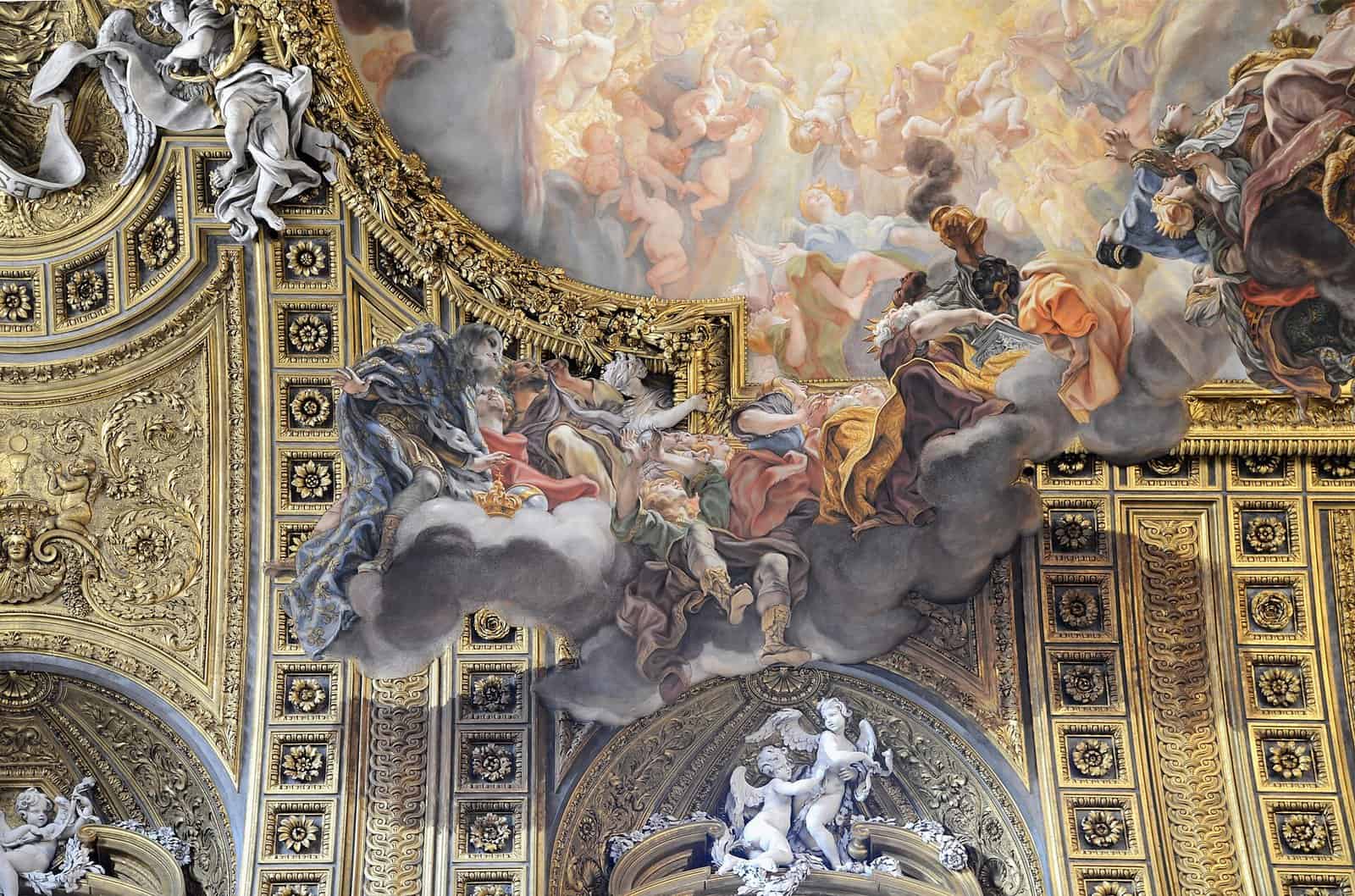
Look closely at the Gesù ceiling. Giovanni Battista Gaulli, known as Baciccio, painted clouds and figures that break over the gilded frame and onto the real vault, with stucco angels joining in. Painting, sculpture and architecture are no longer separate. That blurring is the Baroque in one image.
Spread and patronage
From Rome the Baroque spread fast: first to other Italian cities, then to Spain, Portugal, the Southern Netherlands, the Habsburg lands of Central Europe, and on to colonial Latin America and the Philippines. Two kinds of patron drove it. The Catholic Church used it to communicate divine power; absolute monarchs used it to communicate political power. Versailles and the Karlskirche in Vienna serve the same basic purpose as Sant’Andrea al Quirinale: they make authority feel inevitable.
Timeline of the Baroque period
Historians usually divide the Baroque period in architecture into three phases:
- Early Baroque (c. 1580 to 1625): experiments in Rome, such as Carlo Maderno’s facade for St Peter’s Basilica, and the first clear breaks from Renaissance restraint.
- High Baroque (c. 1625 to 1675): the mature style. Bernini and Borromini in Rome fuse sculpture, painting and architecture into single spatial stories.
- Late Baroque (c. 1675 to 1750): the style spreads across Europe and takes on regional forms. Decoration grows lighter and more playful, leading to the Rococo in some places and a Neoclassical reaction in others.
8 Key Characteristics of Baroque Architecture
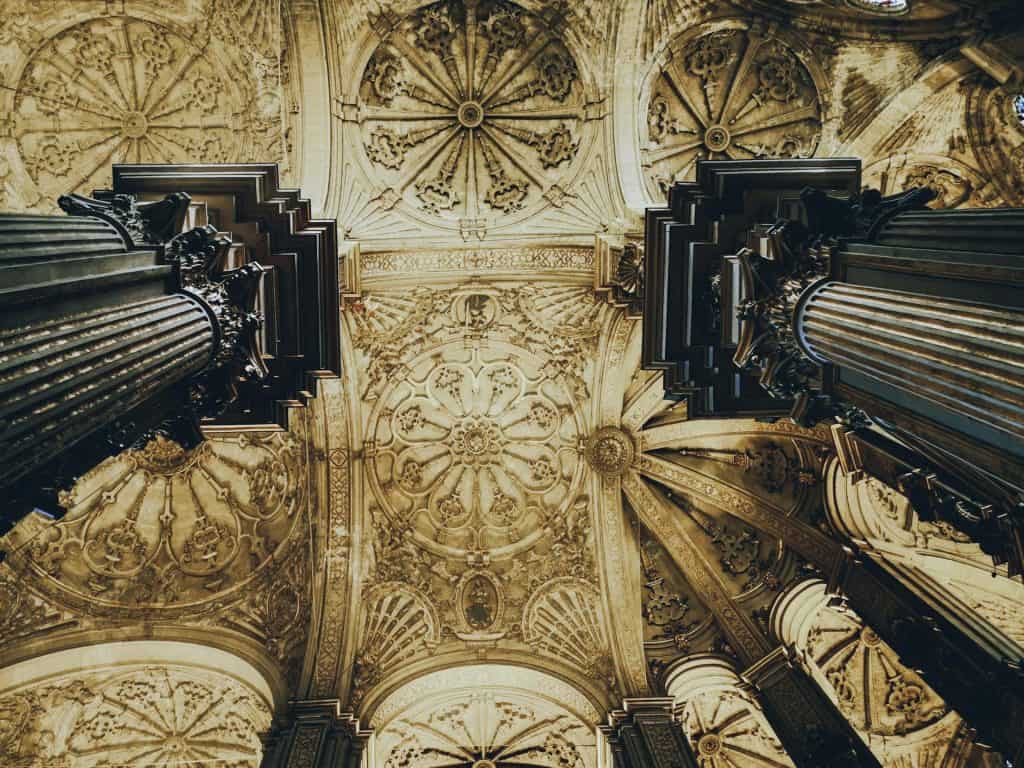
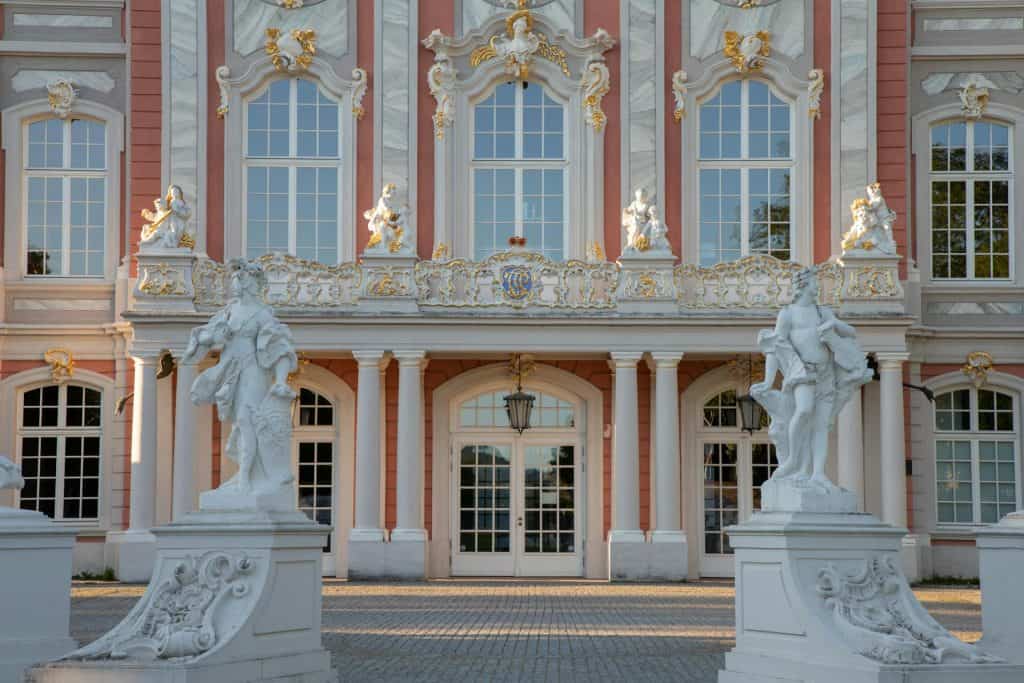
These are the core characteristics of Baroque architecture. Most Baroque buildings show several of them at once, and the best show all eight working together.
1. Grand scale and spatial drama
Baroque buildings are built at a scale meant to shrink the individual and lift up the institution. Naves are wider, domes taller and facades broader than their Renaissance predecessors. The point is not just size but the experience of size, tuned through proportions that make spaces feel even larger than they are.
2. Dynamic movement
Renaissance architecture aimed for static balance; Baroque architecture introduces movement. Walls curve in plan and section. Facades ripple with convex and concave surfaces. Columns are grouped, stacked and angled to set up a rhythm. The eye is never allowed to rest. It is pulled along planned visual paths through the building.
3. Elaborate ornamentation
Baroque ornament is not decoration stuck on afterwards. It is part of the spatial and narrative plan. Stucco garlands, gilded mouldings, carved cartouches and sculpted figures work together to blur the line between structure and surface, and between architecture and art. Every surface carries meaning and adds to the atmosphere.
4. Theatrical use of light
Light in Baroque architecture is treated as a building material. It is directed through concealed windows, filtered through coloured glass, bounced off gilding, and used to set bright focal points against shadowy recesses. Bernini’s Cornaro Chapel, where a hidden window pours golden light onto the Ecstasy of Saint Teresa, is the classic example, but the idea works at every scale, from parish churches to palace galleries.
5. Oval and distorted plans
Baroque architects took the central and longitudinal plans inherited from the Renaissance and bent them for effect. Oval plans, overlapping geometries and squeezed or stretched axes create spatial tension. Movement through the building is scripted: tight spaces open suddenly into wide ones, darkness gives way to light, and the main space (an altar, a throne room or a garden vista) arrives as a revelation.
6. Integration of the arts
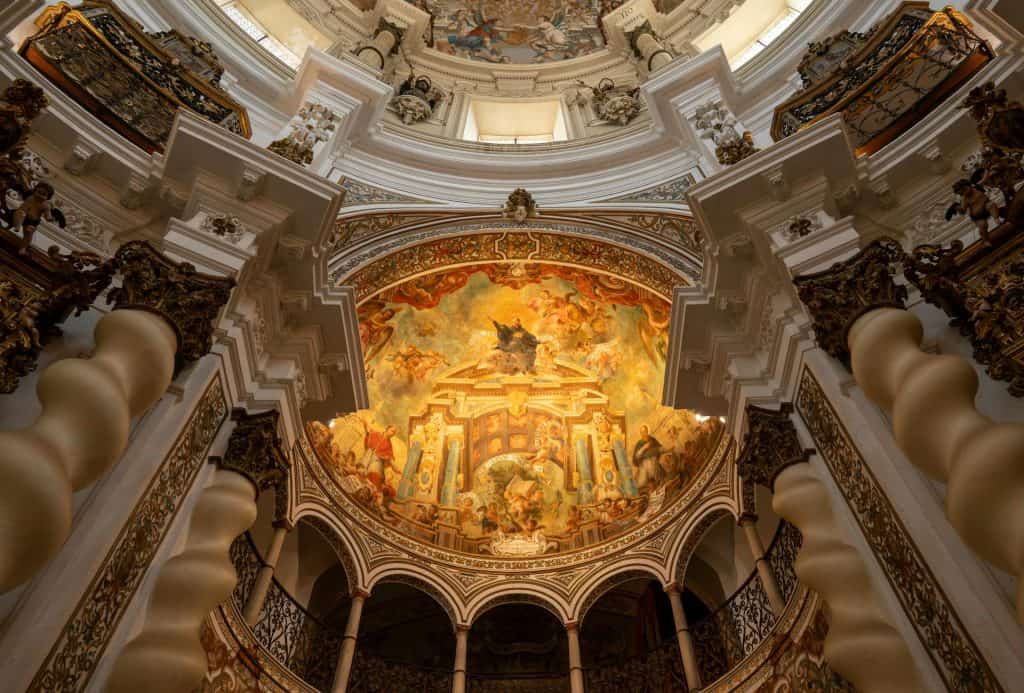
Baroque architecture removes the boundaries between architecture, painting and sculpture. Frescoed ceilings extend real space into painted heavens. Sculpted figures step out of their niches into the visitor’s space. The building is designed as a total work of art, what later German critics called a Gesamtkunstwerk, where no single art form is subordinate to another.
7. Monumental classical elements
The classical vocabulary of columns, pilasters, entablatures and pediments is kept but amplified and distorted. Columns are colossal (rising through several storeys), paired or twisted. Pediments are broken, curved or stacked. Entablatures push forward and pull back. The result is classical language pushed to its limits: familiar enough to read as authoritative, distorted enough to feel alive.
8. Rich materials
Baroque interiors use coloured marble, bronze, gilt and fresco for sensory richness. Materials are chosen not only for colour but for how they catch and return light, how they feel underfoot and how they shape the sound of a space. The material palette backs up the whole programme of immersion.
Baroque vs Renaissance Architecture
Understanding Baroque architecture often starts with what it reacted against. The Renaissance pursued harmony, proportion and intellectual clarity. The Baroque pursued drama, movement and emotion. Both drew on classical antiquity, but they used it in very different ways.
| Aspect | Renaissance | Baroque |
|---|---|---|
| Spatial character | Static, balanced, contemplative | Dynamic, directional, overwhelming |
| Plan geometry | Pure circles, squares, Greek crosses | Ovals, overlapping geometries, distorted axes |
| Facade treatment | Flat, planar, evenly spaced | Undulating, layered, sculptural |
| Ornament | Restrained, subordinate to structure | Abundant, part of the spatial story |
| Light | Even, rational, diffused | Directed, dramatic, from hidden sources |
| Relationship to viewer | Admired from a distance | Bodily immersion and emotional response |
| Classical vocabulary | Correct, proportional, rule-following | Amplified, distorted, rule-breaking |
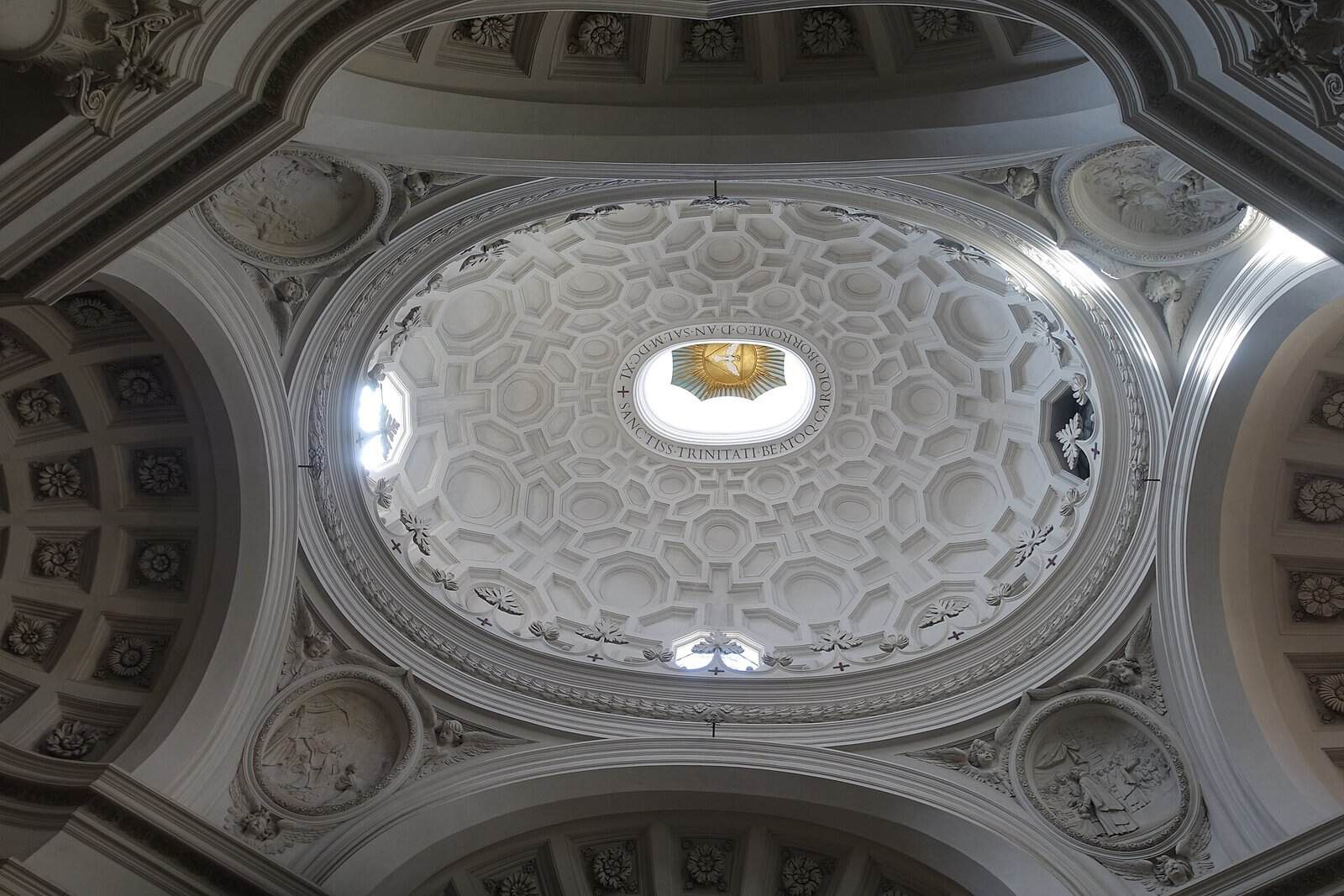
Borromini openly challenged Renaissance rules. His San Carlo alle Quattro Fontane (1638 to 1646) sits on a site barely larger than one of the crossing piers of St Peter’s, yet generates a spatial complexity that Brunelleschi or Alberti would have thought irrational. The undulating walls, the oval dome whose coffers shrink towards the lantern to fake extra height, and the compressed entry all work against Renaissance clarity. That is the point: the Baroque defined itself by breaking the rules productively.
The same story runs further back. The Renaissance revived the Roman orders that had faded after the heavy, round-arched churches described in our guide to Romanesque architecture, and the Baroque then pushed that revived language to its limits.
Famous Baroque Architects and Their Buildings
Gian Lorenzo Bernini (1598 to 1680)
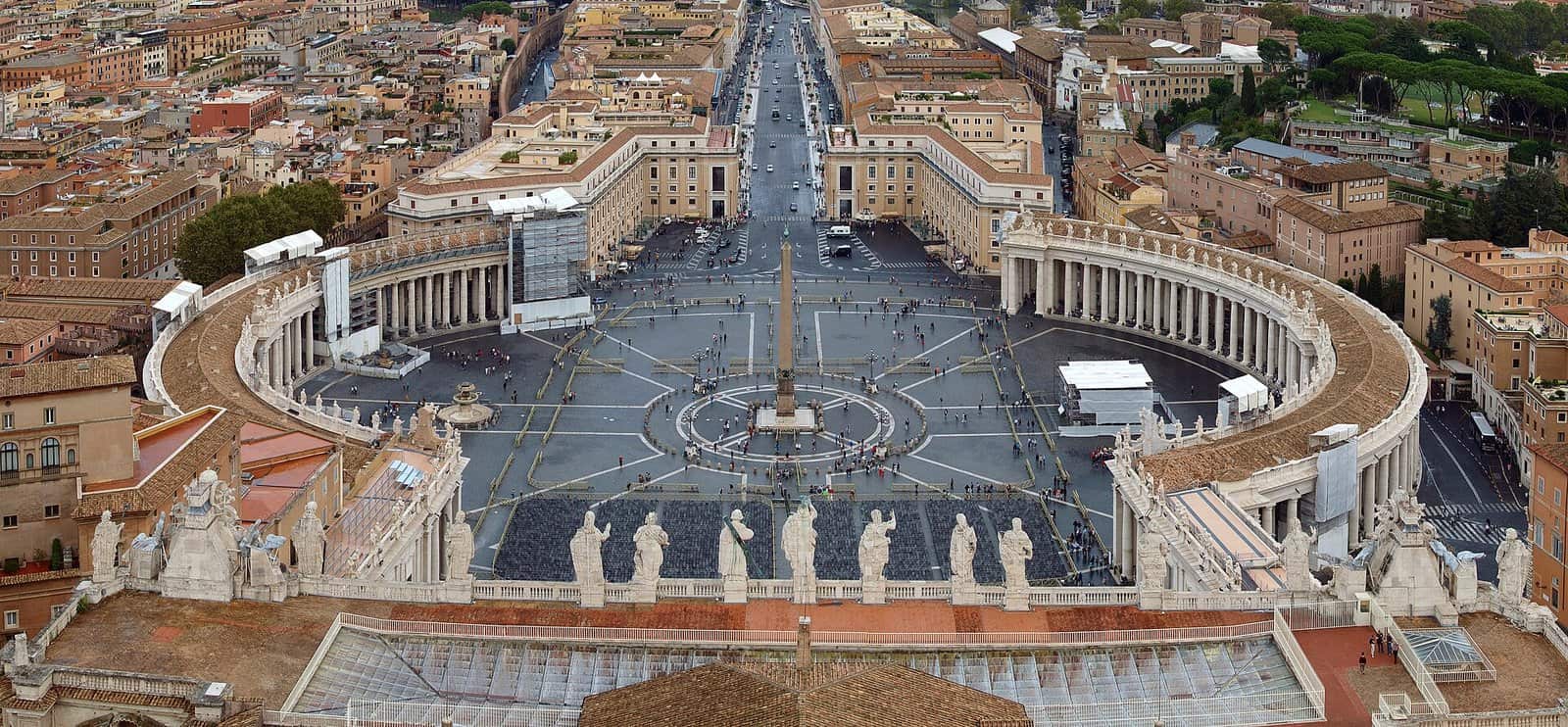
Bernini was the great director of Baroque space. His colonnade for St Peter’s Square (1656 to 1667) uses 284 Tuscan columns, four rows deep and topped by 140 statues of saints, arranged in an oval to create a space that both embraces the faithful and frames the spatial drama of St Peter’s Basilica. Inside the basilica, his bronze Baldacchino (1623 to 1634), almost 29 metres tall on twisted Solomonic columns, marks a vertical axis beneath Michelangelo’s dome that anchors the whole interior.
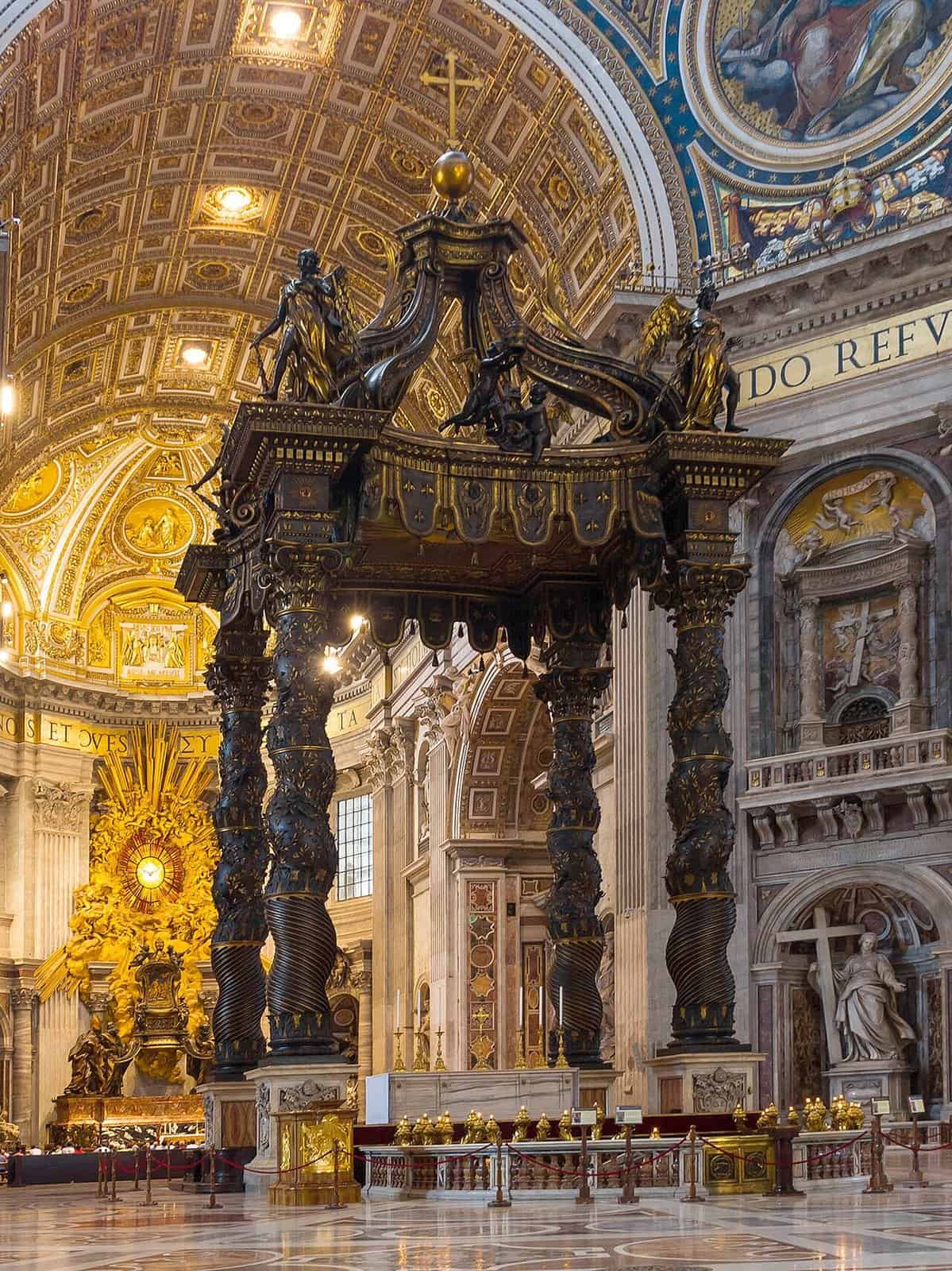
Bernini’s genius was his ability to fuse architecture, sculpture and urban design into one experience. The Scala Regia at the Vatican, Sant’Andrea al Quirinale and the fountains of Piazza Navona all show his command of sequence, surprise and theatrical reveal.
Francesco Borromini (1599 to 1667)
Where Bernini worked with grand gestures and rich materials, Borromini worked with geometry and invention. San Carlo alle Quattro Fontane and Sant’Ivo alla Sapienza (1642 to 1660) are masterclasses in creating complexity from tight constraints. Borromini generated his plans from geometric operations, such as overlapping triangles and interlocking circles, that produce walls of extraordinary plasticity. His influence on the later Baroque of Central Europe was immense.
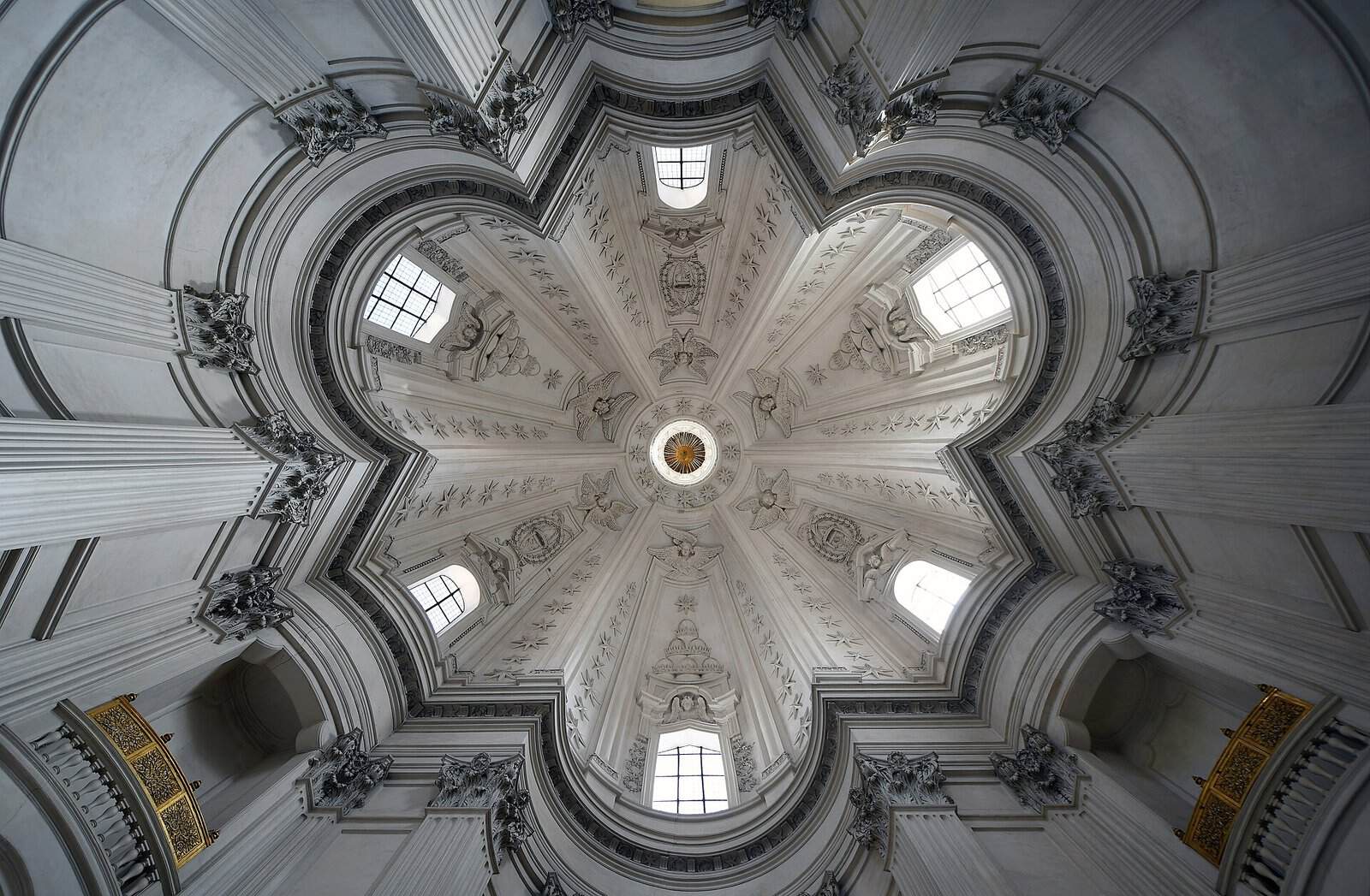
Stand under the dome of Sant’Ivo and you see the method. The plan starts as two overlapping equilateral triangles, forming a six-pointed star. Borromini alternated concave and convex ends to the points, then carried those lobes straight up into the dome without a break, so the whole room seems to twist towards the light.
Guarino Guarini (1624 to 1683)
A Theatine priest and mathematician, Guarini brought an almost Gothic structural daring to the Baroque. His Chapel of the Holy Shroud in Turin (1668 to 1694) stacks layers of small arches to make a dome that seems to dissolve into light, a structural and optical illusion of remarkable sophistication. His treatise Architettura Civile (published after his death, in 1737) spread his ideas across Europe.
The Dientzenhofer family and Bohemian Baroque
Christoph Dientzenhofer (1655 to 1722) and his son Kilian Ignaz Dientzenhofer (1689 to 1751) developed a distinct Central European Baroque in Prague and across Bohemia. Their churches, including St Nicholas in Malá Strana, feature interlocking oval spaces, dynamic vaults and facades that seem to pulse with movement. Prague remains one of the best cities in which to experience Bohemian Baroque churches and the wider range of Prague’s architectural styles.
Johann Bernhard Fischer von Erlach (1656 to 1723)
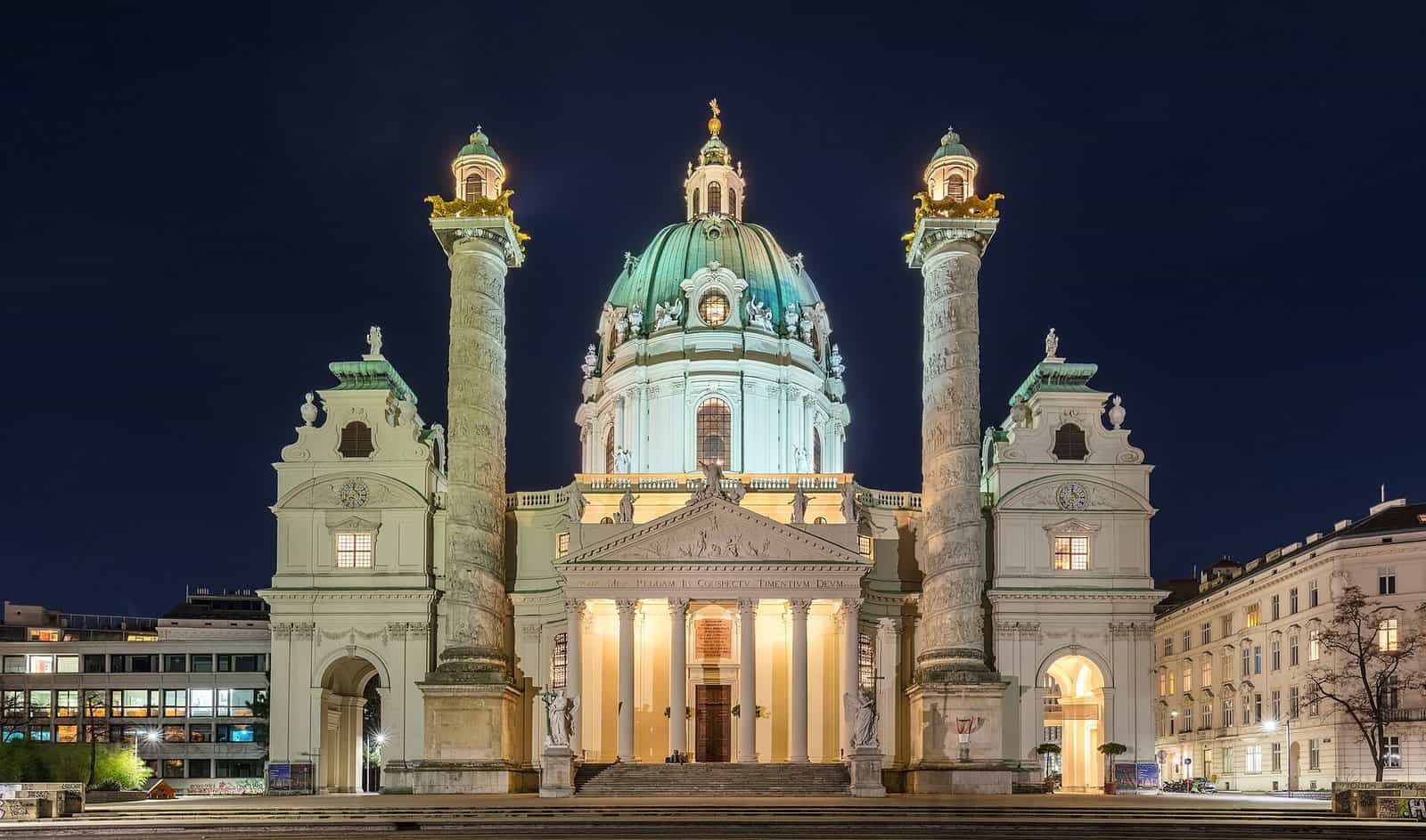
Fischer von Erlach blended Italian Baroque with imperial ambition in his work for the Habsburgs. The Karlskirche in Vienna (1716 to 1737) combines a temple portico, two triumphal columns modelled on Trajan’s Column and an oval dome into a composition that is both classical and theatrical, a manifesto for Austrian imperial identity. It is a highlight of any walk through Vienna’s imperial Baroque architecture.
Christopher Wren (1632 to 1723)
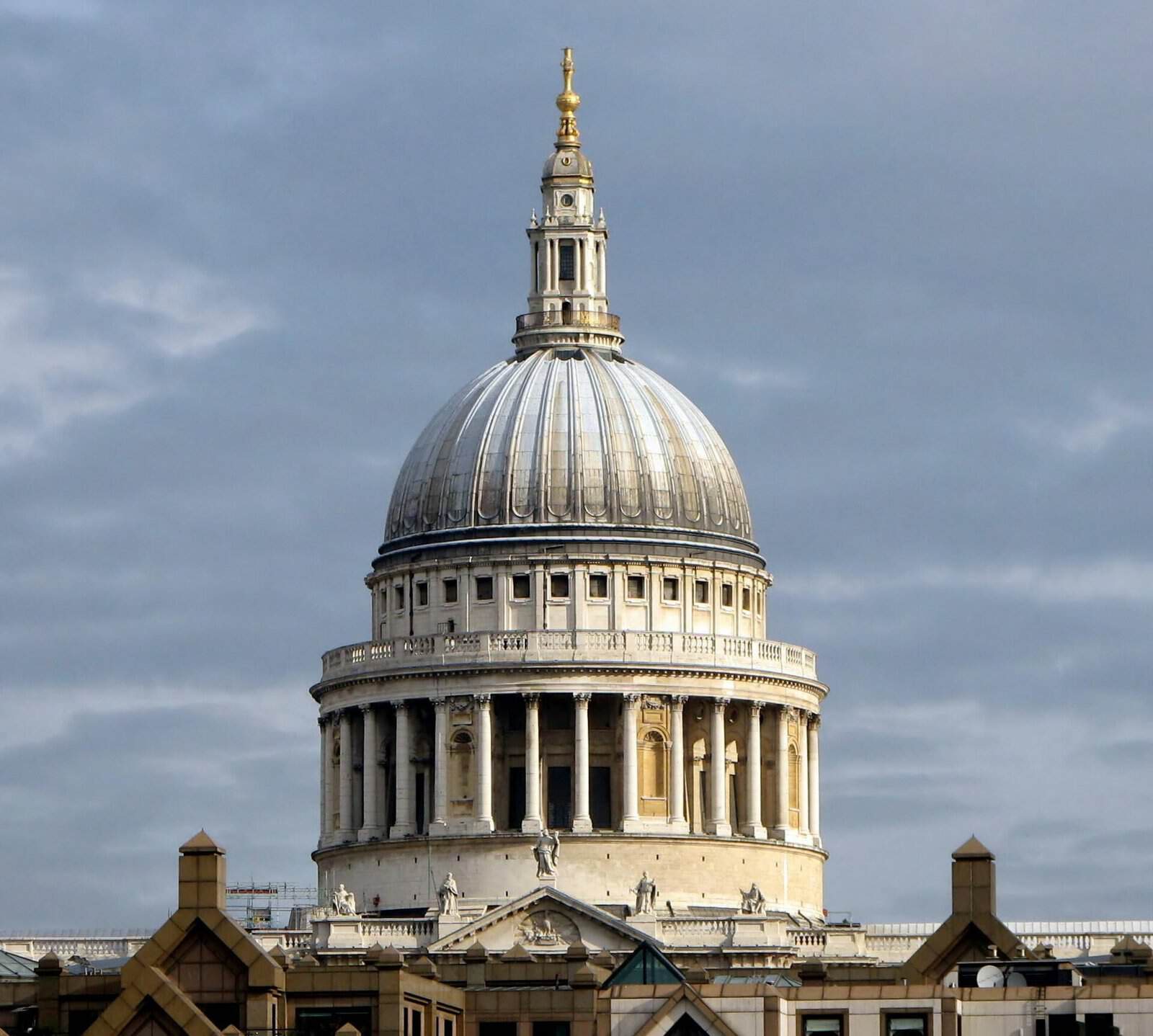
English Baroque worked under different constraints: Protestant sobriety, Palladian precedent and a practical building culture. Wren’s St Paul’s Cathedral (1675 to 1711) balances these with great skill. Its dome is really three structures: a low inner dome, a hidden brick cone that carries the stone lantern, and a lead-covered timber outer dome. It is an engineering feat disguised as a calm classical composition. Wren, with Hawksmoor and Vanbrugh, created an English Baroque that favoured mass and silhouette over surface ornament.
Want to see more of the buildings these architects left behind? Our list of Baroque masterpieces you must see in your lifetime picks the highlights.
Baroque Architecture Around the World: Regional Styles
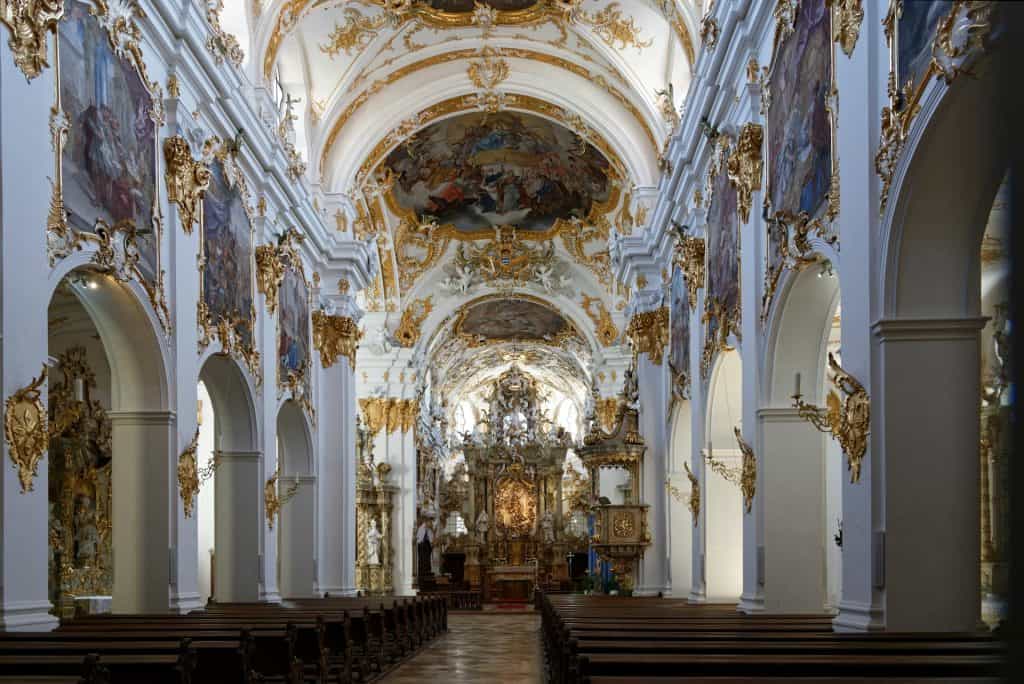
Italian Baroque
Rome remained the centre, but strong regional styles grew up across Italy. Turin, under Guarini and later Filippo Juvarra, developed a courtly Baroque of great spatial sophistication. Naples and Sicily produced exuberant facades and richly decorated interiors. Venice adapted the Baroque to its Gothic and Byzantine fabric, most famously in Baldassare Longhena’s Santa Maria della Salute.
Central European and Bohemian Baroque
The Habsburg lands and their neighbours (Austria, Bohemia, Bavaria and Franconia) produced some of the most spatially ambitious Baroque architecture anywhere. Counter-Reformation zeal, imperial patronage and access to Italian-trained architects created the conditions for extraordinary invention. Pilgrimage churches like Balthasar Neumann’s Vierzehnheiligen (1743 to 1772) show a spatial fluidity that arguably goes beyond anything achieved in Italy.
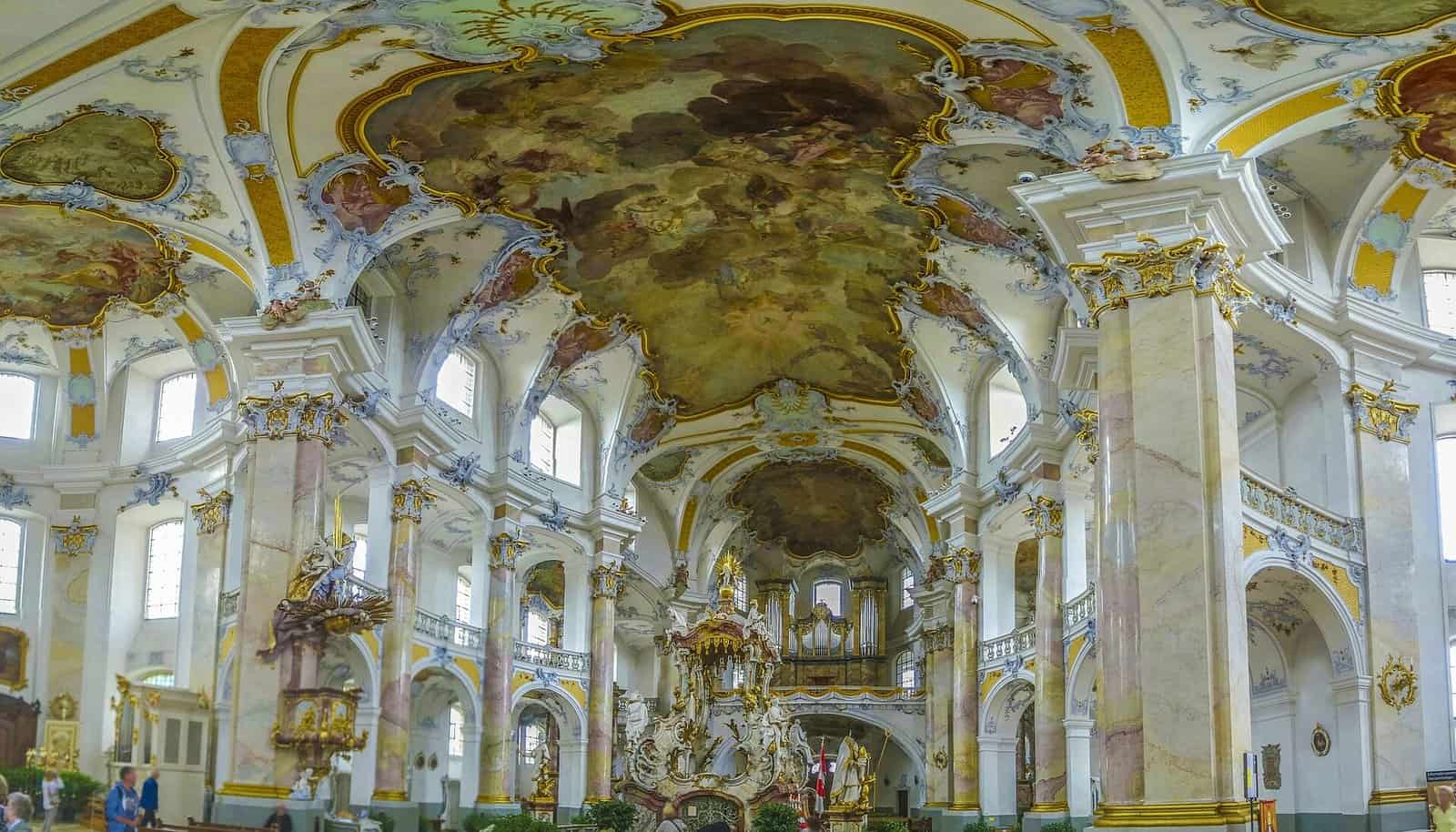
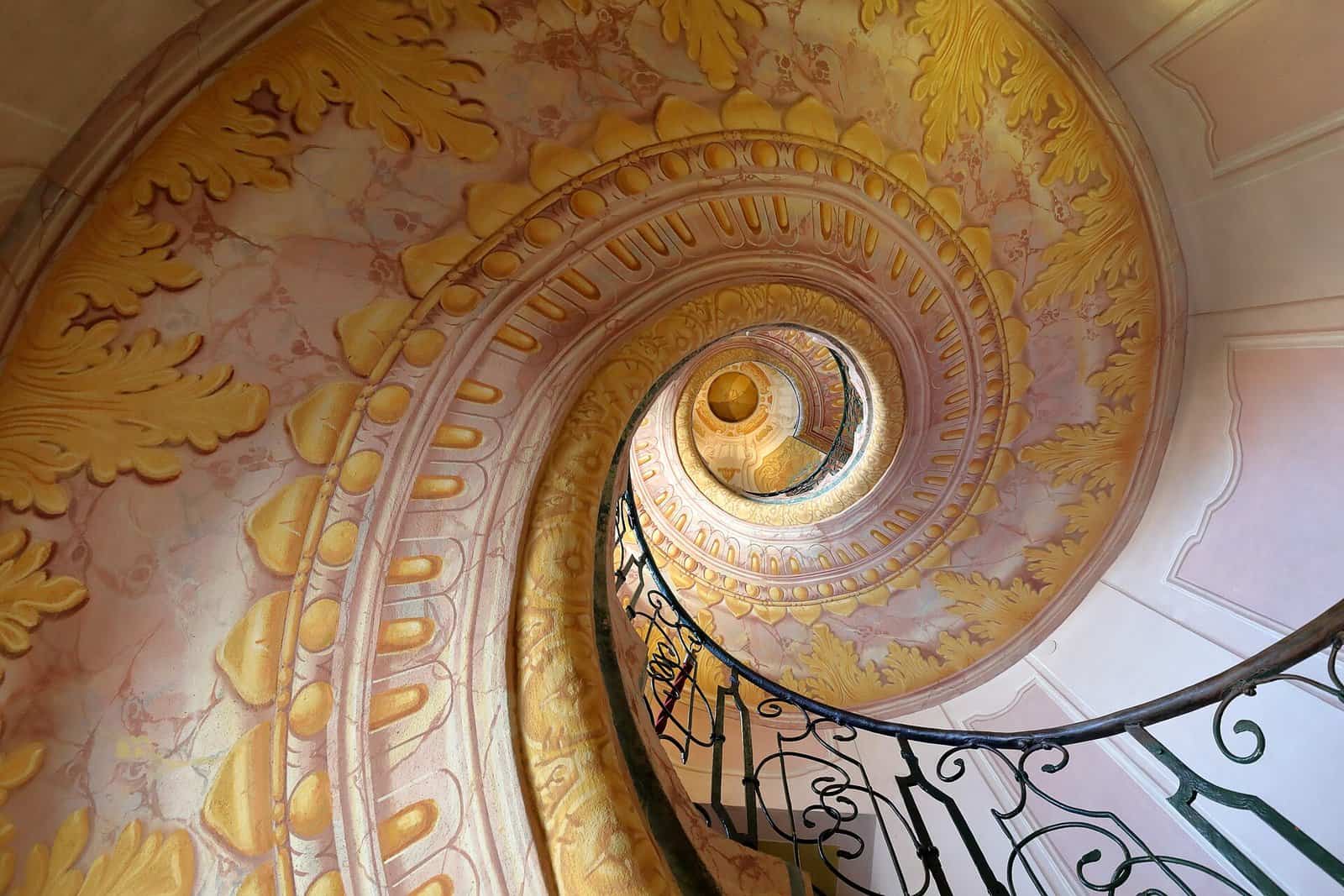
At Vierzehnheiligen, Neumann laid out a chain of overlapping ovals rather than a simple nave. The pilgrimage altar stands in the middle of the church, not at the end, and pale walls, slim columns and tall windows flood the interior with light. Down the Danube, Jakob Prandtauer rebuilt Melk Abbey (1702 to 1736) as a cliff-top statement of monastic power, complete with a famous library and a sculptural spiral stair.
French Baroque
France adapted Baroque ideas to its own classical tradition, producing a more restrained variant often called French Classicism. Versailles (begun 1661) is Baroque in its scale, its fusion of architecture and landscape and its open display of absolute power, but its facades keep a disciplined regularity that Italian architects would have found restrictive. The tension between Baroque ambition and classical restraint defines the French contribution.
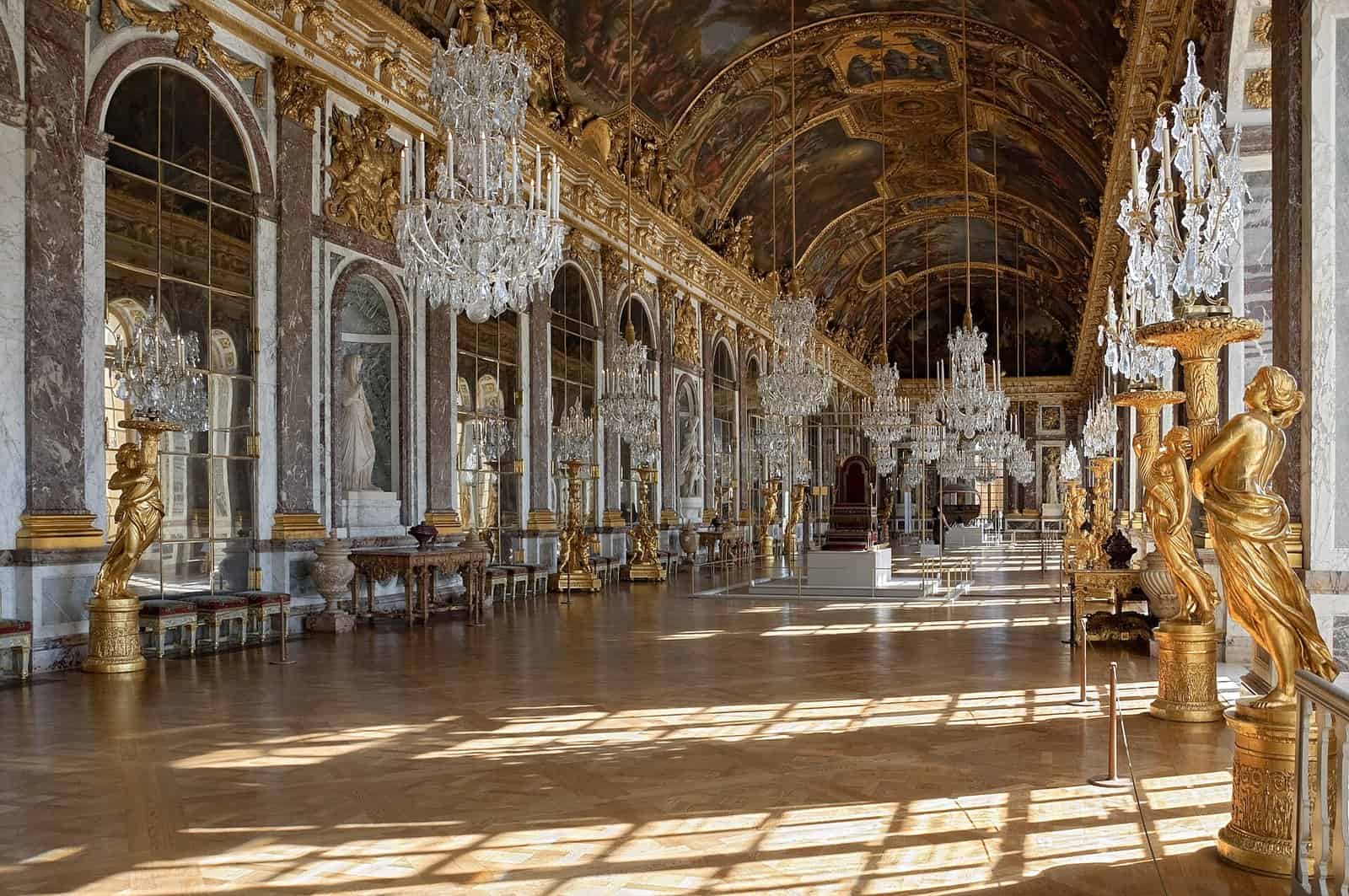
The Hall of Mirrors (1678 to 1684) is French Baroque at full volume. Jules Hardouin-Mansart lined one side of a 73-metre gallery with 17 arched mirrors facing 17 windows onto the gardens, so daylight bounces through the room, while Charles Le Brun painted the vault with the triumphs of Louis XIV.
Iberian and Latin American Baroque
Spain and Portugal developed intensely ornamental variants. In Spain this became the Churrigueresque, named after the Churriguera family of architects. In Portugal it meant gilded carved woodwork (talha dourada) and blue-and-white azulejo tiles, seen at their best in Porto’s Baroque churches. Exported to Mexico, Brazil and Peru, these traditions merged with local craft to produce some of the most visually dense architecture in the Western canon. The facade of Santa Prisca in Taxco, Mexico, is an ornamental programme of staggering complexity.
English Baroque
Beyond Wren, English Baroque reached its most dramatic form in the work of John Vanbrugh and Nicholas Hawksmoor. Blenheim Palace and Castle Howard combine massive, almost fortress-like bulk with dramatic skylines. Hawksmoor’s London churches, such as Christ Church Spitalfields and St George’s Bloomsbury, are among the most inventive buildings in England, combining classical parts in ways that feel almost modern in their abstraction.
Russian Baroque
Peter the Great imported the style for his new capital, and under Empress Elizabeth Bartolomeo Rastrelli, the Paris-born son of an Italian sculptor, gave it a uniquely Russian scale and colour in the Winter Palace and the Catherine Palace. Our guide to St Petersburg’s architecture traces how the city moved from Petrine Baroque to Neoclassicism.
Inside Baroque Interiors: Light, Illusion and Space
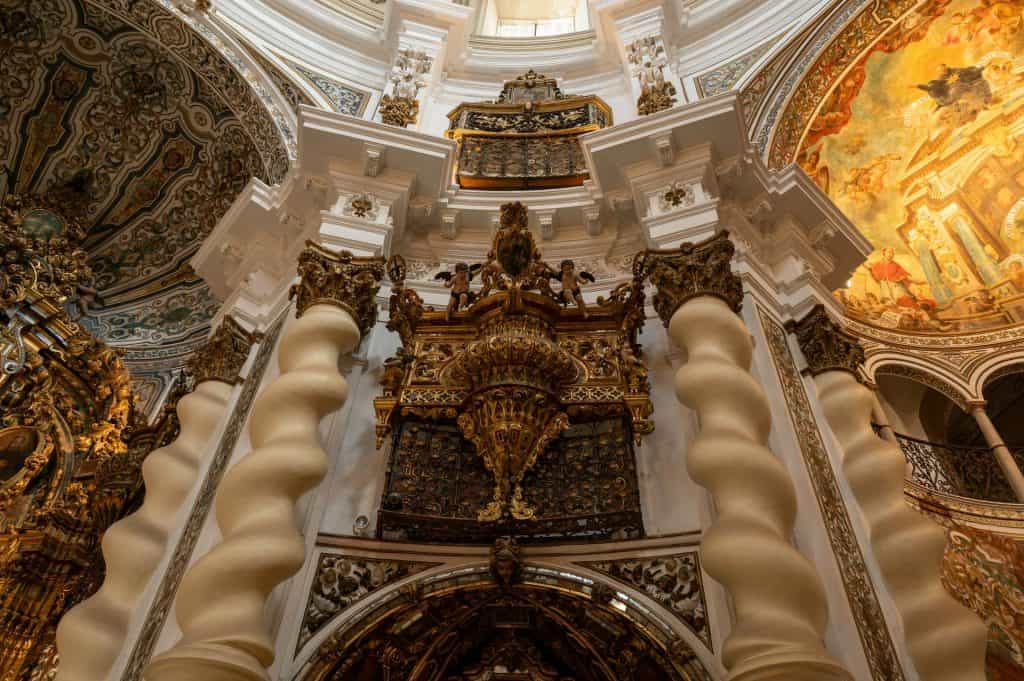
Baroque architecture is above all an architecture of interior experience. Facades announce and persuade, but the full spatial programme unfolds inside. The Baroque interior is designed as one continuous, immersive environment in which every surface adds to a single atmosphere.
Dissolving the boundaries
Frescoed ceilings are the most visible technique. Andrea Pozzo’s ceiling at Sant’Ignazio in Rome (1685 to 1694) uses quadratura, painted architectural perspective, to extend the real vault into an illusionistic heaven filled with figures rising into infinite space. The line between built and painted architecture is deliberately blurred. Standing beneath it, you cannot easily tell where the structure ends and the painting begins.
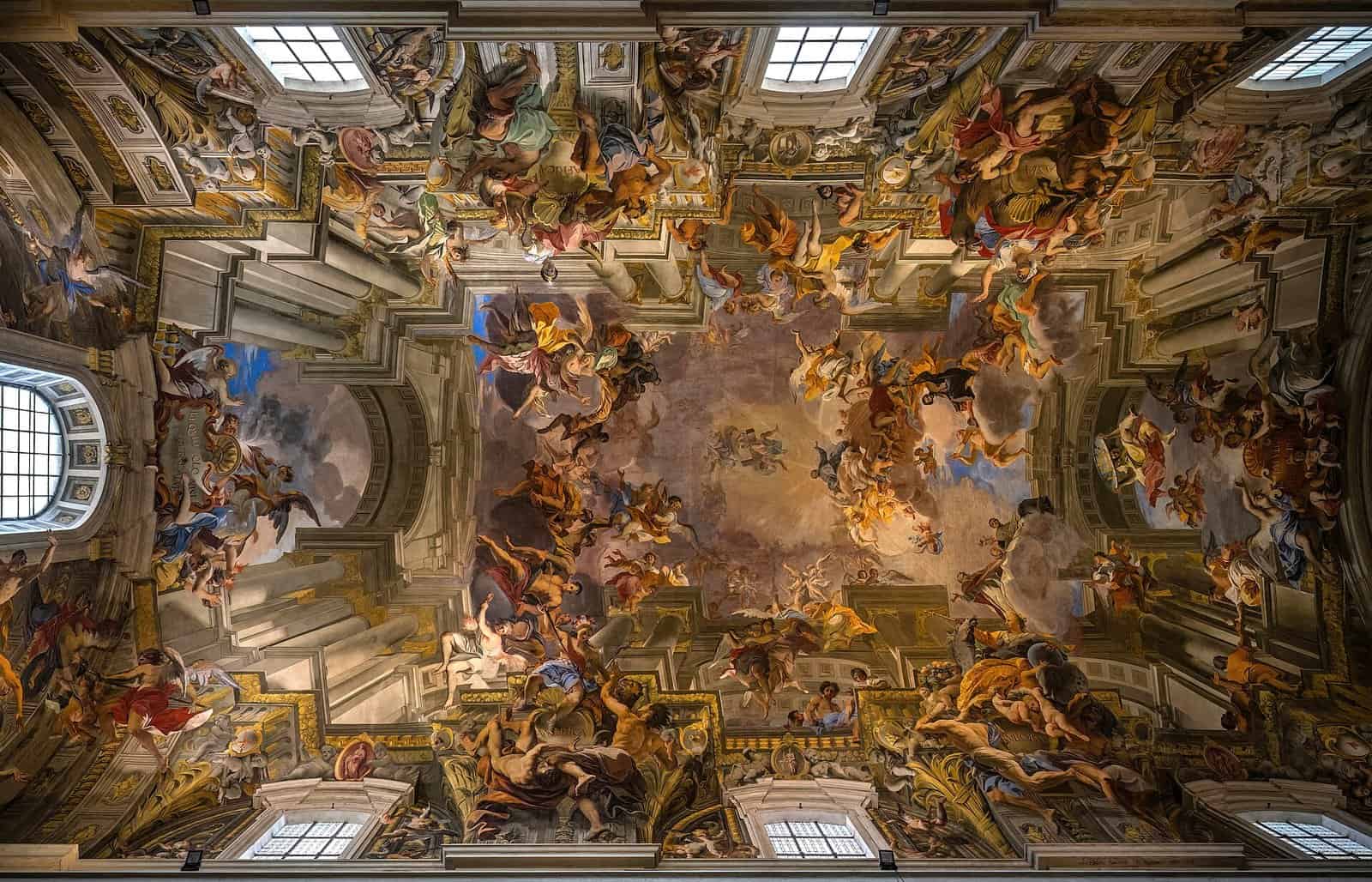
Pozzo marked a disc in the nave floor to show where to stand. From that spot the painted columns line up perfectly with the real walls. Step away and the illusion bends, which is a reminder that Baroque space was designed around a moving viewer.
Light as narrative
Light in Baroque churches is rarely even. It is scripted to support the liturgical and emotional story of the space. Side chapels are dim; the crossing is bright. Light enters from hidden sources above altarpieces, so it seems to come from the sacred image itself. In St Peter’s Basilica, the walk from the dimmer nave to the light-filled crossing under the dome acts out a story of spiritual ascent.
Sound and touch
Baroque interiors also work through sound and touch, though these are discussed less often. Hard marble surfaces and domed geometry create acoustics that carry choral music and the spoken liturgy. The materials underfoot and at hand, cool marble, warm gilded wood and textured stucco, engage the body beyond sight alone.
Baroque Architecture’s Legacy Today
The Baroque’s influence reaches well beyond preservation or revival. Its core concerns (spatial sequence, embodied experience, the fusion of structure and surface and the control of light) remain central to architecture today.
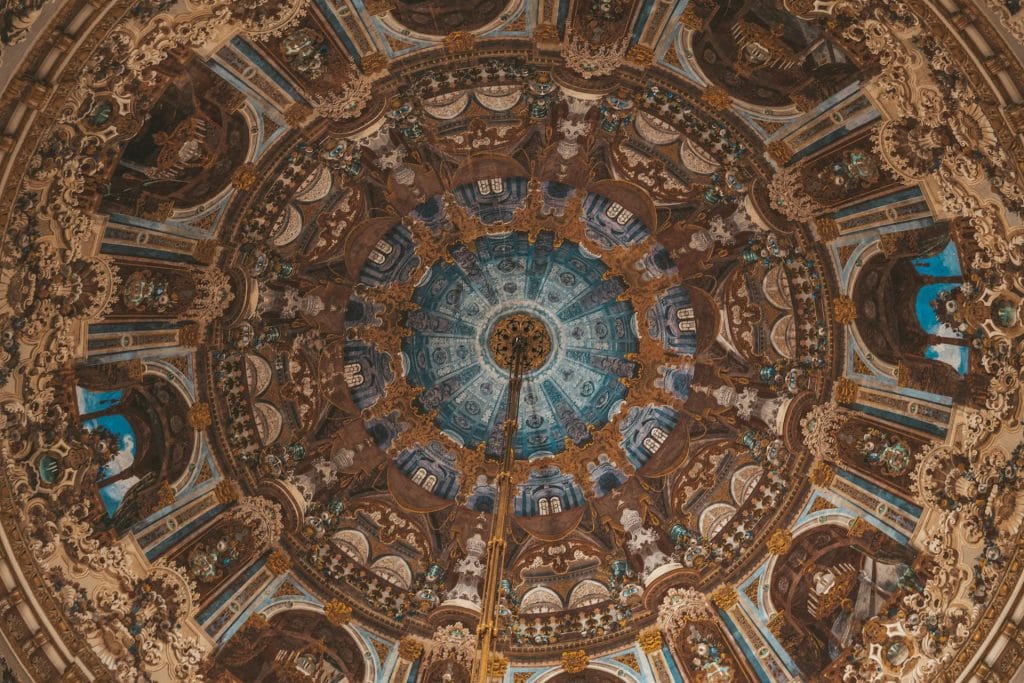
The style also travelled far beyond Catholic Europe. In eighteenth- and nineteenth-century Istanbul, Ottoman builders borrowed Baroque curves, scrolls and gilding for mosques, fountains and palaces such as Dolmabahçe, a story we follow in Istanbul’s Ottoman legacy.
Parametric architecture, with its computer-generated curves and complex surfaces, owes a clear conceptual debt to Baroque spatial thinking. Zaha Hadid cited the Baroque as a reference, especially its fluid space and sense of movement. Her Heydar Aliyev Centre in Baku, whose continuous curves erase the difference between wall, roof and ground, works on principles Borromini would have recognised, even if the formal language is entirely different.
More broadly, any architect working with spatial sequence, framed views, theatrical light or choreographed movement is working in a tradition the Baroque codified. Treat these features as deliberate design strategies, not just style markers, and Baroque architecture becomes a living resource for practice.
Studying Baroque buildings as precedent
The best way to understand a Baroque building is to draw it. A long section through a church shows how hidden windows feed light to the altar, so our guide to architectural section drawing styles is a good starting point. An elevation captures the rhythm of a rippling facade like San Carlo’s, and our elevation drawing styles show ways to render it. For interlocking geometries like Sant’Ivo or Vierzehnheiligen, an axonometric drawing lets you show plan, walls and dome in a single view.
Baroque Architecture FAQs
What are the main characteristics of Baroque architecture?
The main characteristics of Baroque architecture are grand scale, a sense of movement (curved and undulating walls and facades), elaborate ornament, theatrical light from hidden windows, oval or distorted plans, the fusion of architecture with painting and sculpture, oversized or twisted classical columns, and rich materials such as coloured marble, bronze and gilt.
When was the Baroque period in architecture?
The Baroque period in architecture ran from roughly 1580 to 1750. The early Baroque took shape in Rome around 1580 to 1625, the High Baroque of Bernini and Borromini followed from about 1625 to 1675, and the late Baroque spread across Europe and the Americas until about 1750, when it gave way to the Rococo and then Neoclassicism.
What is the difference between Baroque and Renaissance architecture?
Renaissance architecture aims for calm, balance and clear proportion, using pure shapes such as circles and squares and evenly lit interiors. Baroque architecture aims for drama and emotion, using ovals, curving facades, dramatic light and abundant ornament. Both use the classical orders, but the Baroque stretches and breaks the rules the Renaissance followed.
What is the difference between Baroque and Rococo architecture?
Rococo grew out of the late Baroque in France around 1730. Baroque is heavy, monumental and often religious, with deep colours, marble and strong contrasts of light and shade. Rococo is lighter and more playful, with pastel colours, white and gold interiors, asymmetrical shell-like ornament and a focus on intimate rooms rather than grand public spaces.
Who are the most famous Baroque architects?
The most famous Baroque architects include Gian Lorenzo Bernini and Francesco Borromini in Rome, Guarino Guarini in Turin, Baldassare Longhena in Venice, Christoph and Kilian Ignaz Dientzenhofer in Prague, Johann Bernhard Fischer von Erlach in Vienna, Balthasar Neumann in Germany, Jules Hardouin-Mansart in France and Christopher Wren in England.
Final Thoughts
Baroque architecture, with its grand scale, movement, integrated ornament, theatrical light, oval plans, fusion of the arts, amplified classical language and rich materials, is more than a list of style markers. It is a coherent set of spatial strategies designed to produce a physical response in the people who move through it.
For architects and students looking for precedent, the Baroque is a masterclass in how buildings can move people, not through novelty alone but through careful control of space, light, material and sequence. Its lessons apply to a contemporary gallery or civic building as much as to a seventeenth-century Roman church. To keep exploring, read our guides to Gothic architecture and Neoclassical architecture, or see how these styles played out in the sacred spaces that redefined church architecture.
Recent Posts
How to Use Textures in Architectural Renders: Where to Find Them and How to Apply Them
Free Architecture Cutouts: Where to Find Them and How to Use Them in Renders
Architectural Diagrams: 15 Styles and Examples for Your Next Presentation