Wave Cube: Architectural Analysis, Materiality and Design Lessons
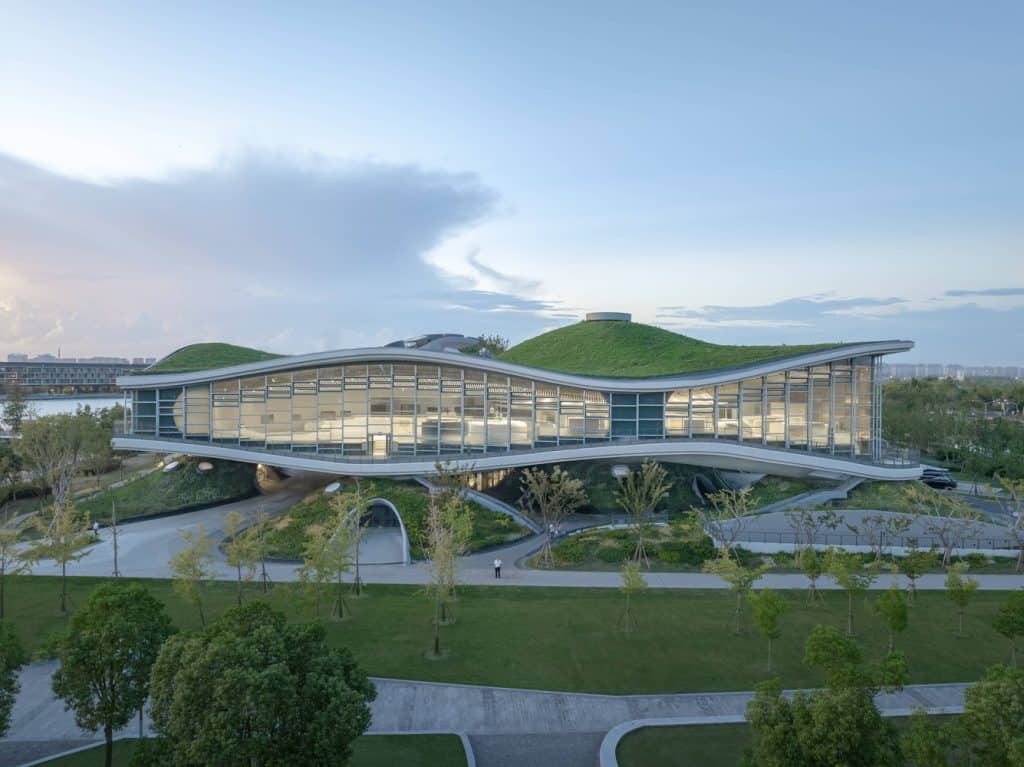
The Wave Cube by Scenic Architecture Office is one of those projects that stops you mid-scroll. Situated in Shanghai, this compact commercial building wraps a simple rectilinear volume in a dramatically undulating aluminium facade — a surface that appears to ripple and shift depending on the viewer’s position and the quality of light. It is a project worth studying closely, not because it is large or programmatically complex, but because it demonstrates how a single, well-executed design move can transform an otherwise ordinary building type into something memorable. This precedent study breaks down the concept, structural approach, materiality and transferable design lessons that make the Wave Cube a valuable reference for studios and research alike.
Project Context
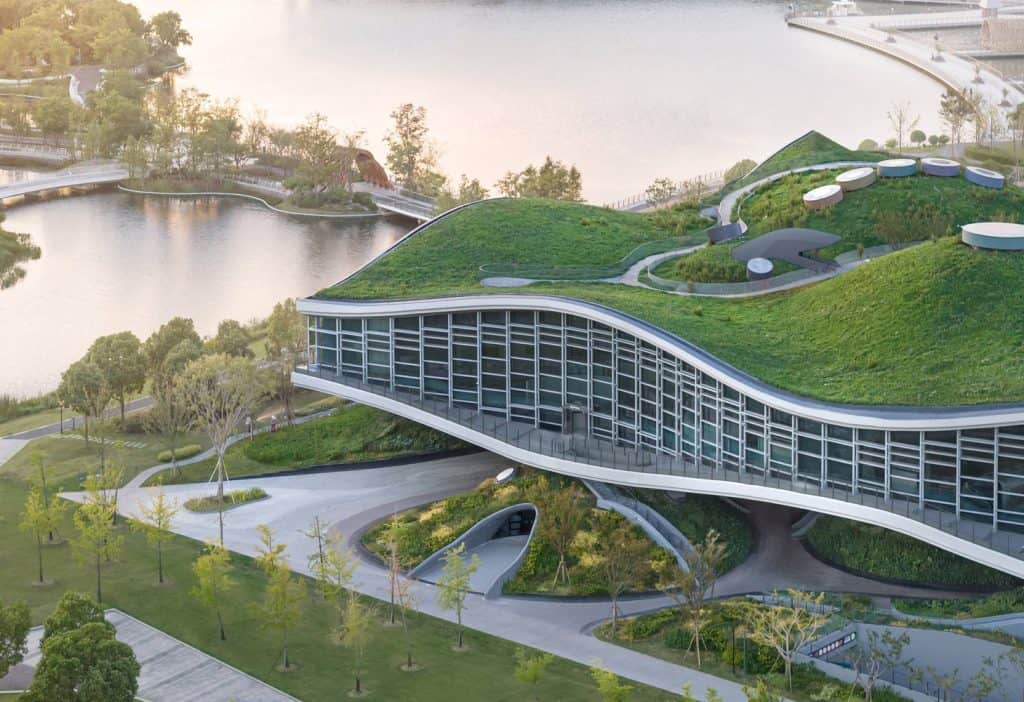
Shanghai’s commercial streetscapes are dense, competitive and visually saturated. Signage, LED screens and branded cladding systems fight for attention at every turn. Within this context, the challenge for any new commercial building is not simply to be noticed — almost everything is noticed — but to be recognised as architecture rather than advertising.
Scenic Architecture Office, a practice known for exploring parametric and computationally driven design strategies, approached this problem through form and surface rather than applied graphics. The firm’s broader body of work shows a consistent interest in how digital modelling tools can generate buildable, materially coherent outcomes — not parametric form for its own sake, but parametric logic in service of fabrication and spatial experience. The Wave Cube is a clear expression of that philosophy: a project where computational design thinking is embedded in the facade system itself, not merely in the rendering.
Design Concept
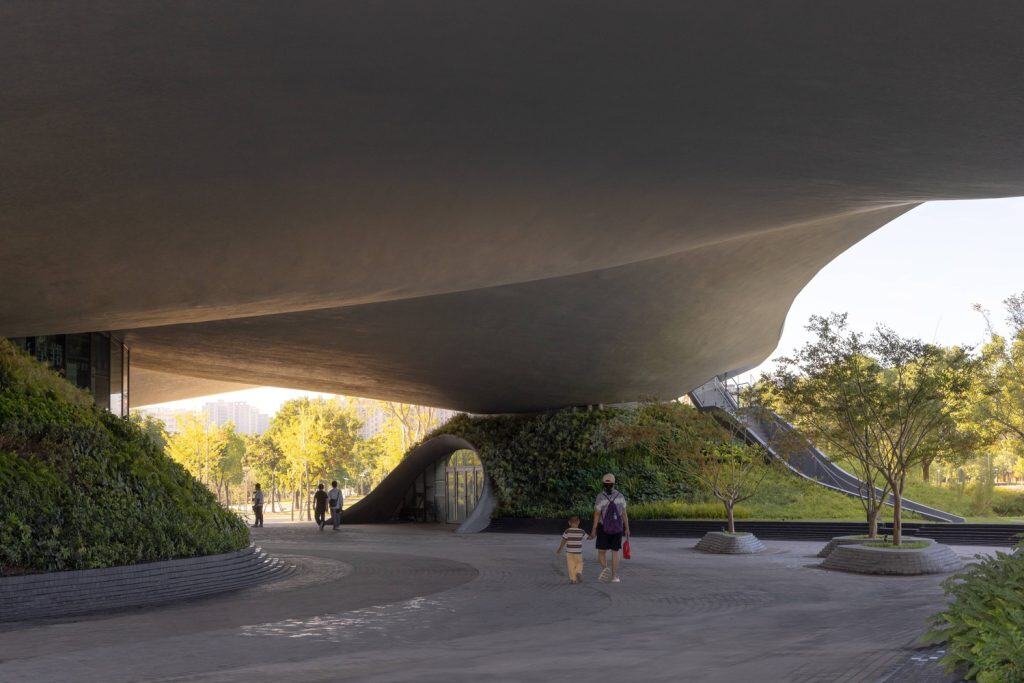
At its core, the Wave Cube is built on a productive tension. The overall massing is a cube — arguably the most neutral, static volume in architecture. The facade, however, is anything but static. Its surface undulates in continuous, wave-like curves that wrap the building on all visible elevations, creating a sense of fluid motion frozen in metal.
This contrast is the concept’s strength. By keeping the underlying volume simple, Scenic Architecture Office ensured that the facade reads as a coherent, singular gesture rather than a chaotic accumulation of curves. The wave is legible because the cube is plain. Strip away the undulation and you have a box; strip away the box and the undulation has no frame of reference. Neither element works without the other, and that interdependence is what gives the design its clarity.
From a commercial standpoint, the strategy is also effective. The building achieves a strong street identity without relying on signage, colour branding or applied imagery. The architecture itself becomes the brand — a rippling, light-catching surface that is instantly identifiable from a distance and rewards closer inspection at the pedestrian scale. For students analysing how commercial architecture can assert identity through design rather than decoration, this is a key takeaway.
Structure and Facade System
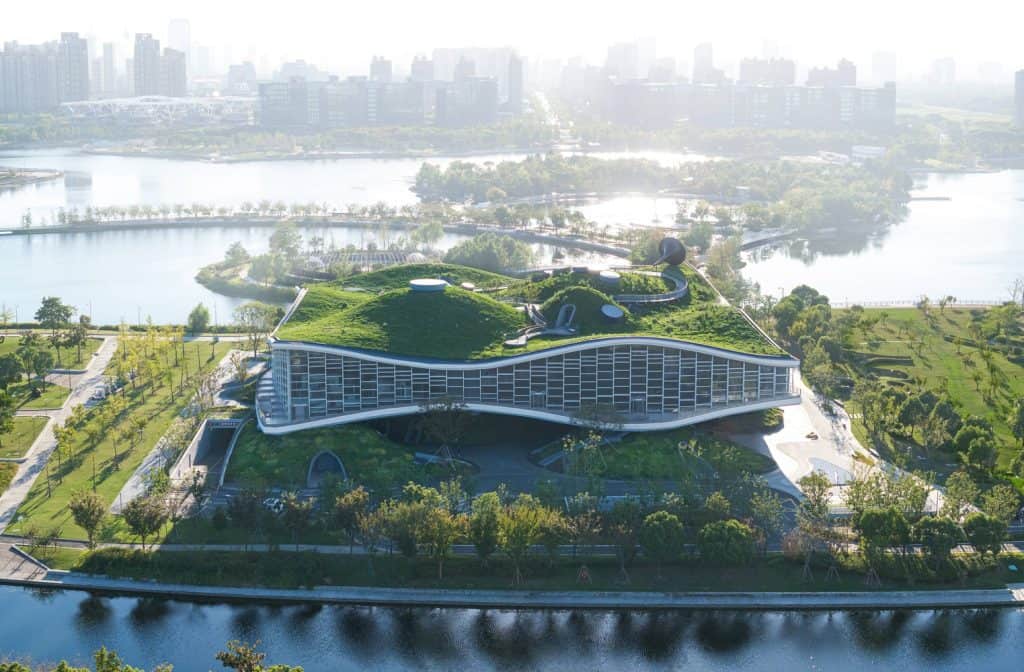
The Wave Cube separates its primary structure from its expressive skin. The building’s load-bearing structure is a conventional frame — straightforward, efficient and largely invisible from the outside. This is a deliberate choice. By decoupling structure from facade, the design team freed the external surface to follow its own geometric logic without imposing unusual structural demands on the core building.
The undulating facade is supported by a secondary substructure — a framework of brackets and rails that mediates between the flat planes of the primary structure and the curved geometry of the external panels. This substructure is where much of the design intelligence sits. Each bracket position and angle must be precisely coordinated to achieve the target curvature while maintaining consistent panel joints and adequate tolerance for thermal movement.
The facade panels themselves vary in curvature across the surface. Rather than repeating a single curved module, the system uses a family of panel geometries that transition gradually from flatter zones to more deeply curved areas. This is where parametric modelling becomes essential — not as a stylistic choice but as a practical coordination tool. Each panel’s geometry, its fixing points and its relationship to adjacent panels would be extraordinarily difficult to manage through conventional drafting. Computational workflows allow the design team to define the overall wave surface mathematically, extract individual panel geometries from that surface and generate fabrication data directly.
The result is a facade that appears smoothly continuous from a distance but reveals its panel logic up close — a rhythm of joints and subtle shifts in curvature that give the surface texture and scale.
Materiality
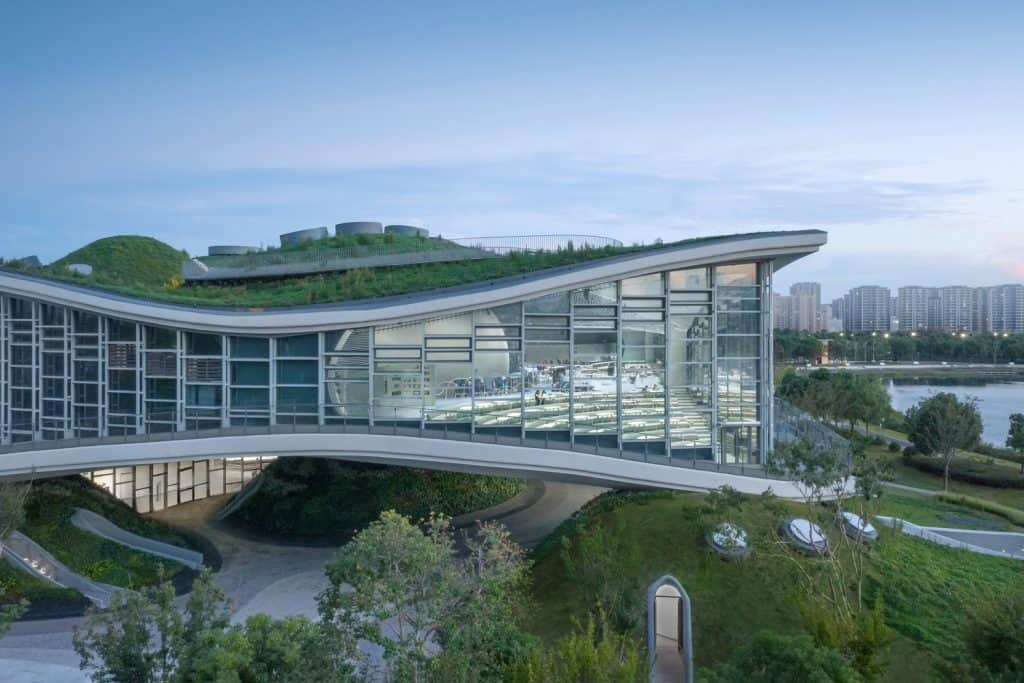
Aluminium is the defining material of the Wave Cube’s exterior, and its selection is well-suited to both the design intent and the environmental context.
From a fabrication standpoint, aluminium is relatively easy to form into curved profiles compared to heavier cladding materials. It can be press-formed, rolled or CNC-cut with high precision, making it a practical choice for a facade system that demands varied panel geometries across a large surface area. Its light weight also reduces the load on the secondary substructure, simplifying bracket design and fixing details.
From a performance standpoint, aluminium offers strong corrosion resistance — an important consideration in Shanghai’s humid subtropical climate, where moisture, salt air from the nearby coast and urban pollution can degrade less resilient materials over time. The metal’s surface can be anodised or coated to further enhance durability and control reflectivity.
It is the reflective quality that matters most to the design experience. The curved aluminium panels catch and redirect light differently across the facade throughout the day. In direct sunlight, the peaks of the wave geometry brighten while the troughs fall into soft shadow, exaggerating the sense of depth and movement. Under overcast skies, the surface reads as a more uniform, muted texture. At night, artificial lighting can further transform the reading of the facade. This dynamic interaction between material, form and light means the building never looks quite the same twice — a quality that keeps it visually engaging over time rather than becoming background noise in the streetscape.
Environmental and Contextual Response
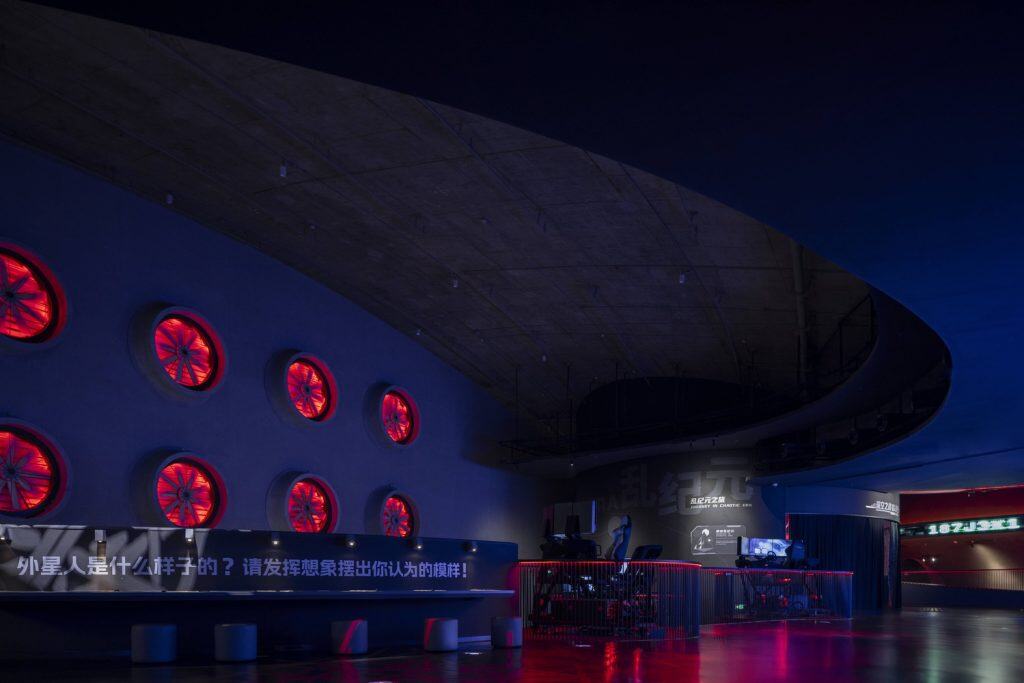
The undulating surface is not purely decorative in its environmental behaviour. The varied angles of the curved panels inherently create zones of self-shading across the facade, reducing direct solar gain on portions of the building envelope at any given time of day. While this is unlikely to have been the primary design driver, it is a useful secondary benefit — particularly on west-facing elevations exposed to intense afternoon sun.
At street level, the facade’s depth and curvature give the building a tactile, almost sculptural presence that engages pedestrians more effectively than a flat curtain wall. The play of light and shadow across the surface changes as you walk past, creating a kinetic experience from a static object. In a commercial context, this kind of pedestrian engagement is valuable — it slows people down, encourages a second look and reinforces the building’s identity in memory.
Design Lessons and Takeaways
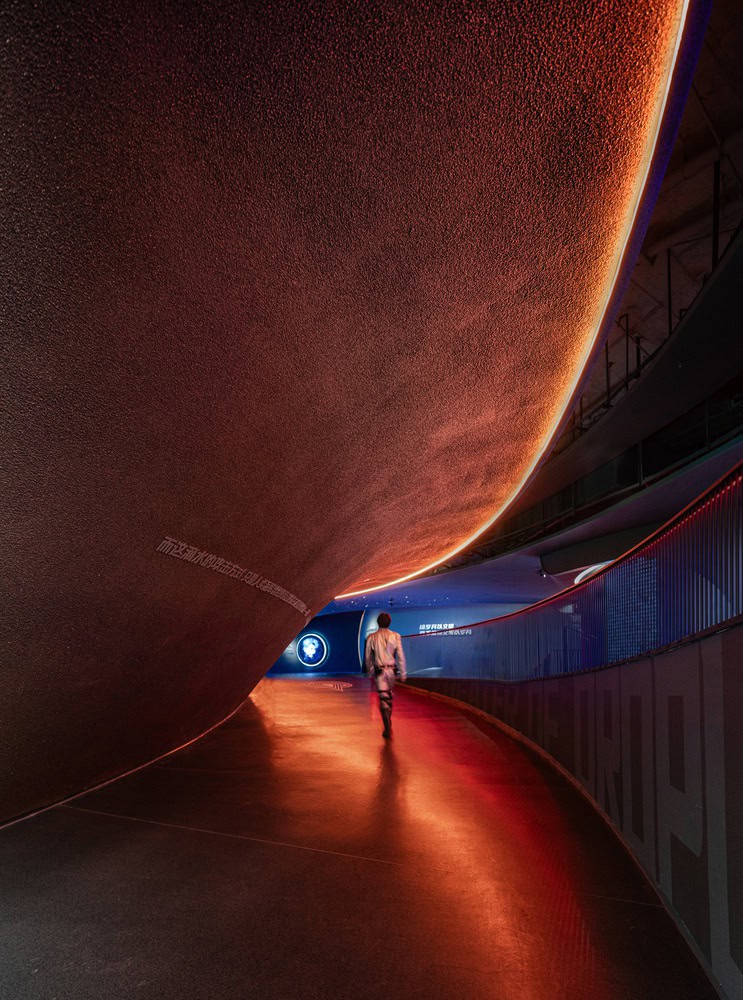
The Wave Cube offers several transferable lessons that extend well beyond this specific project.
Restraint amplifies impact. The decision to pair a radically expressive facade with a simple cube massing is a masterclass in editorial discipline. Complexity is concentrated where it matters most — the public-facing skin — while everything else remains calm. For students developing design proposals, this is a reliable principle: one strong move, well executed, almost always outperforms multiple competing gestures.
Material economy can produce visual richness. The facade achieves its effect through a single material manipulated in one way — curved aluminium panels. There is no reliance on material variety, colour contrast or mixed cladding systems. The richness comes from geometry and light, not from an expensive palette. This is a useful lesson for projects with constrained budgets or material limitations.
Fabrication-aware design keeps ambition buildable. The parametric workflow was not an aesthetic indulgence — it was the mechanism that made the facade constructible. Every panel needed precise fabrication data, every bracket needed a unique angle, and the only practical way to manage that complexity was computationally. This is an increasingly important skill set for emerging architects: understanding that digital tools are most powerful when they serve construction logic, not just formal exploration.
Architecture can be identity. In a commercial context saturated with applied branding, the Wave Cube proves that the building itself can function as the most effective form of identity. The facade is the sign. This has implications for retail, hospitality and workplace projects where clients often default to graphic overlays when the architecture could do the work instead.
Conclusion
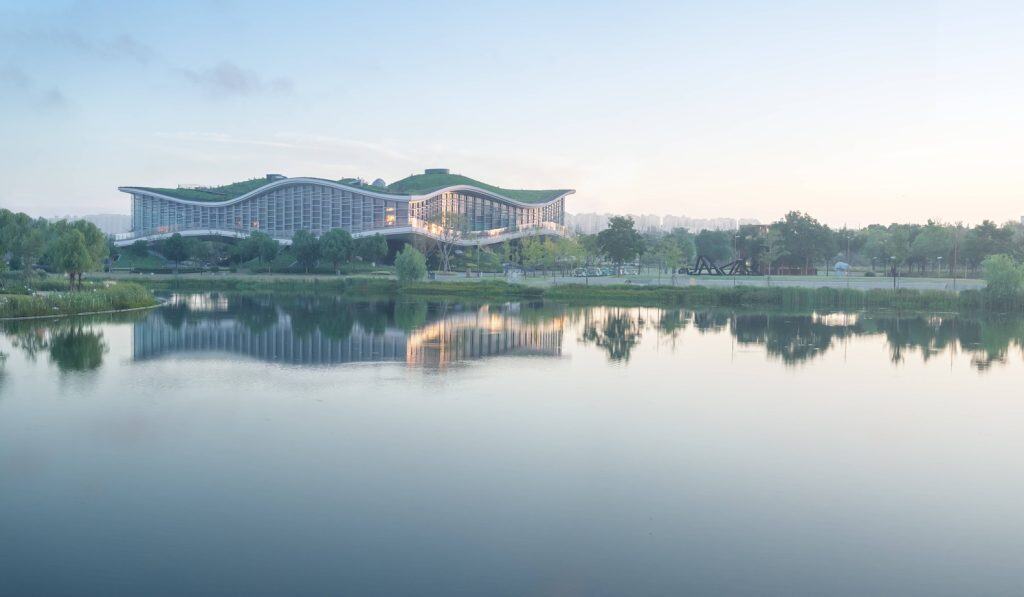
The Wave Cube by Scenic Architecture Office is a compact project with outsized lessons. It demonstrates how computational design, material intelligence and conceptual clarity can converge in a building that is both commercially effective and architecturally serious. For anyone researching parametric facades, aluminium detailing or identity-driven commercial architecture, it belongs in your precedent library.
Recent Posts
Architectural Section Drawing: 14 Styles to Inspire You
Romanesque Architecture Explained: Arches, Mass, and Monastic Power
Neoclassical Architecture Explained: Order, Symmetry, and Democratic Ideals