Vienna State Opera by August Sicard von Sicardsburg + Eduard van der Nüll in Vienna, Austria
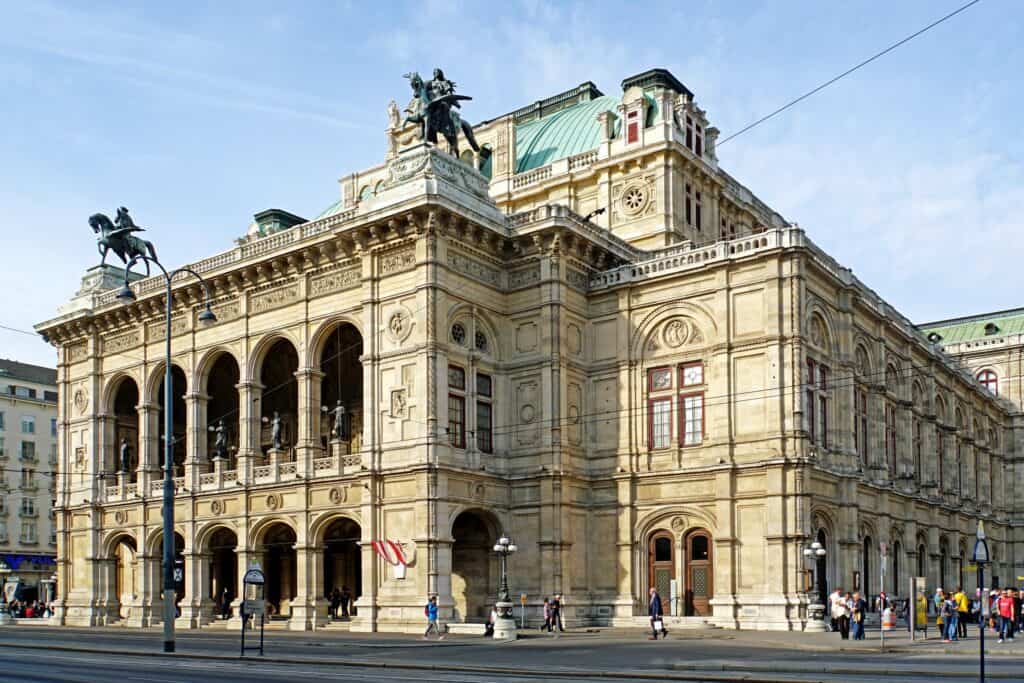
The Vienna State Opera — the Wiener Staatsoper — is Vienna’s great Neo-Renaissance opera house on the Ringstrasse, designed by architects August Sicard von Sicardsburg + Eduard van der Nüll as the first major public building on the new boulevard and the flagship of musical life in Austria. It opened as the Imperial-Royal Court Opera on 25 May 1869 with Mozart’s Don Giovanni, in the presence of Emperor Franz Joseph and Empress Elisabeth, and took its present name after the end of the monarchy.
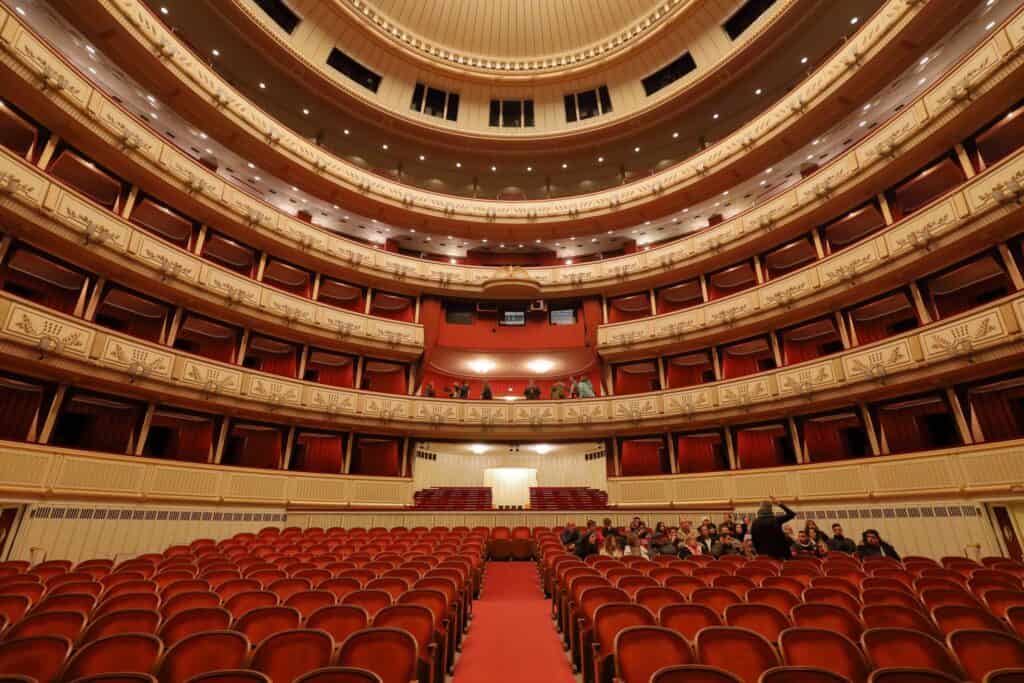
Ringstrasse commission, criticism and the architects’ deaths
Franz Joseph chose the site and paid for the building, and the two architects were selected through a public competition in 1861; the foundation stone was laid on 20 May 1863 and the Czech builder Josef Hlávka carried out the work. When the level of the Ringstrasse in front of the house was raised by about a metre after construction had begun, the Viennese mocked the opera as a “sunken treasure chest” and the “Königgrätz of architecture”, and the emperor himself reportedly remarked that the building sat too low in the ground. Van der Nüll took his own life on 4 April 1868 and Sicardsburg died on 11 June 1868, so neither saw the opening. Shaken, Franz Joseph is said to have limited his public verdicts ever after to “Es war sehr schön, es hat mich sehr gefreut” — “It was very nice, I enjoyed it very much.”
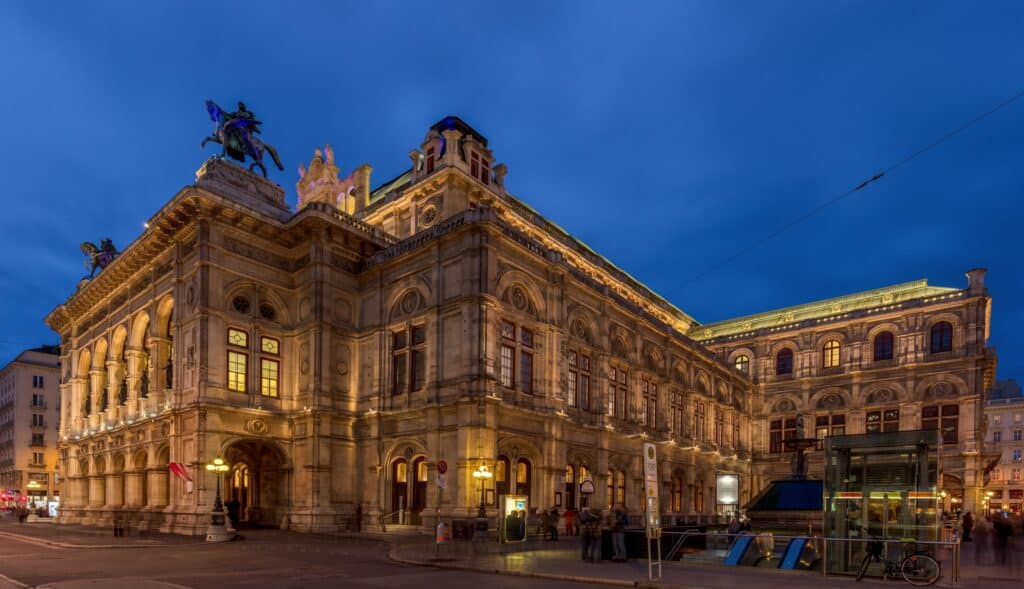
Neo-Renaissance stone, the staircase and Schwind’s frescoes
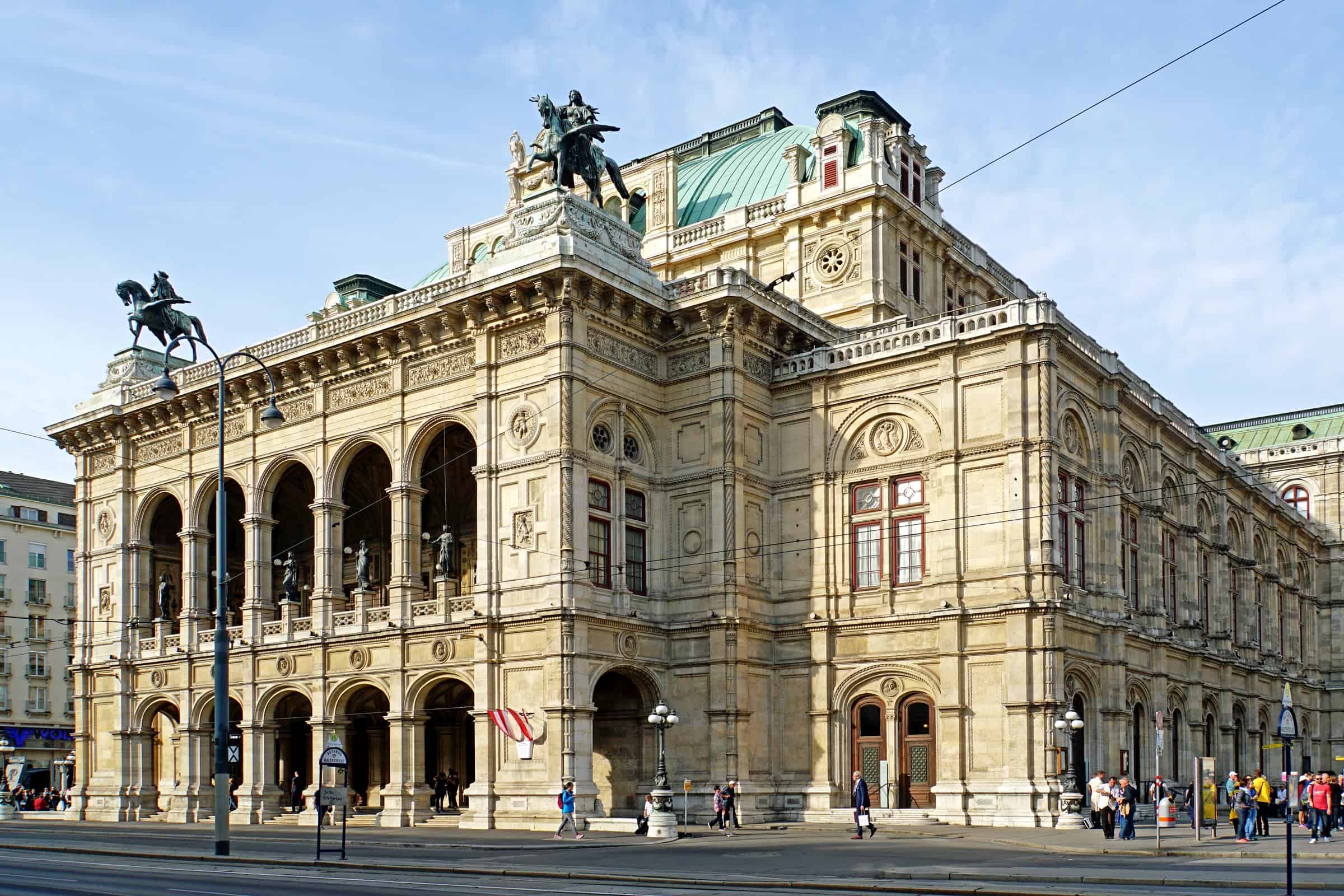
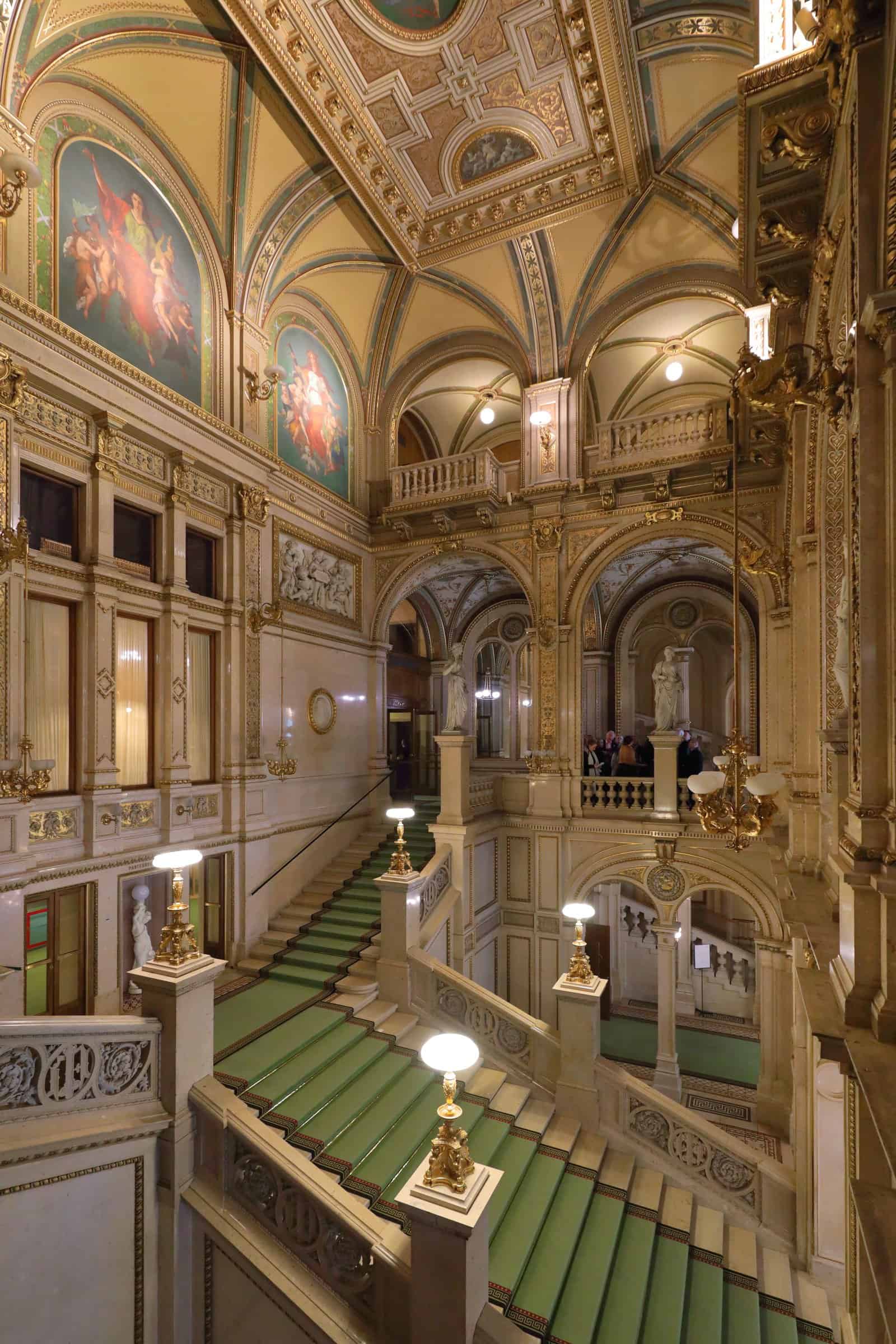
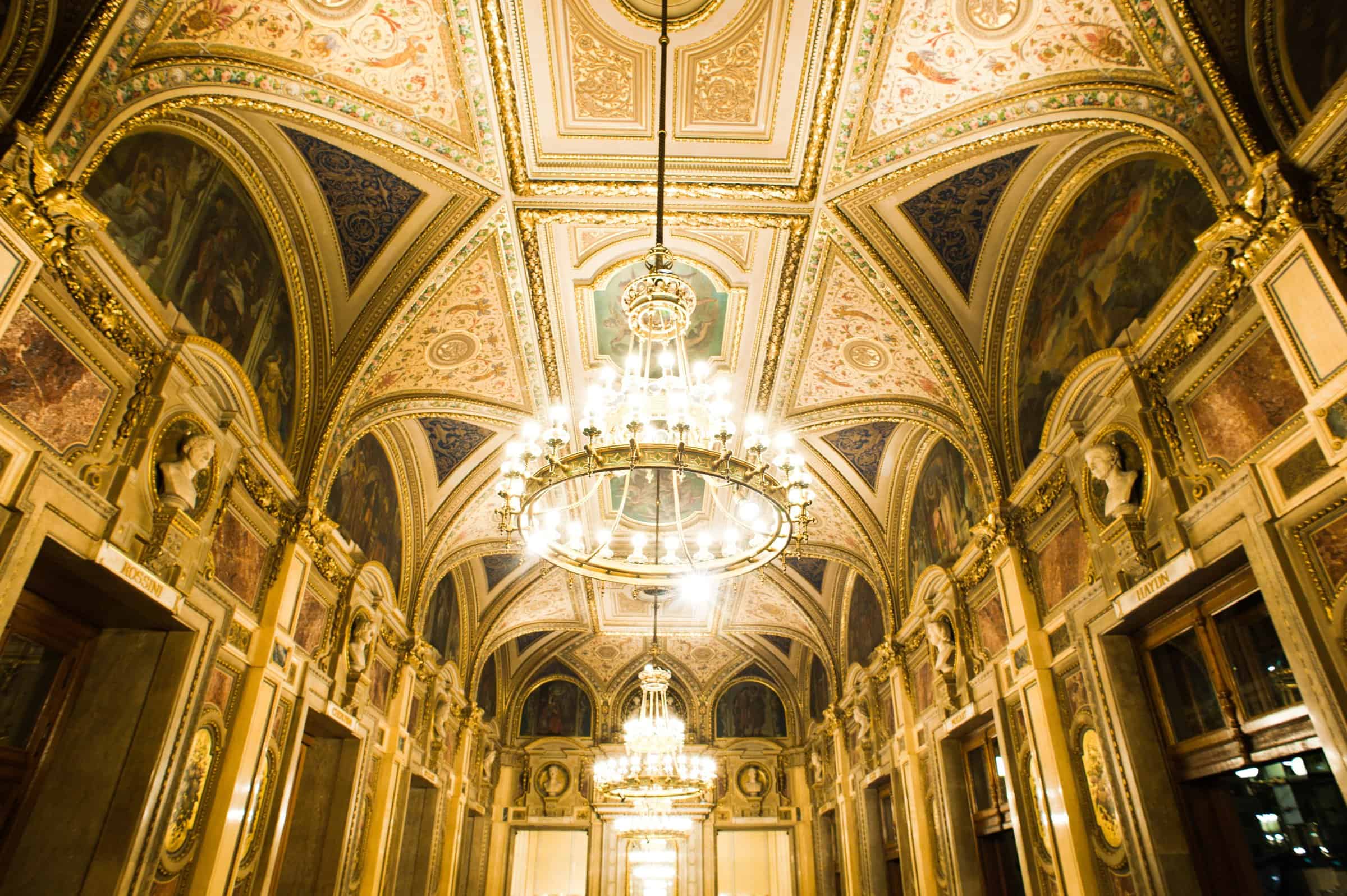
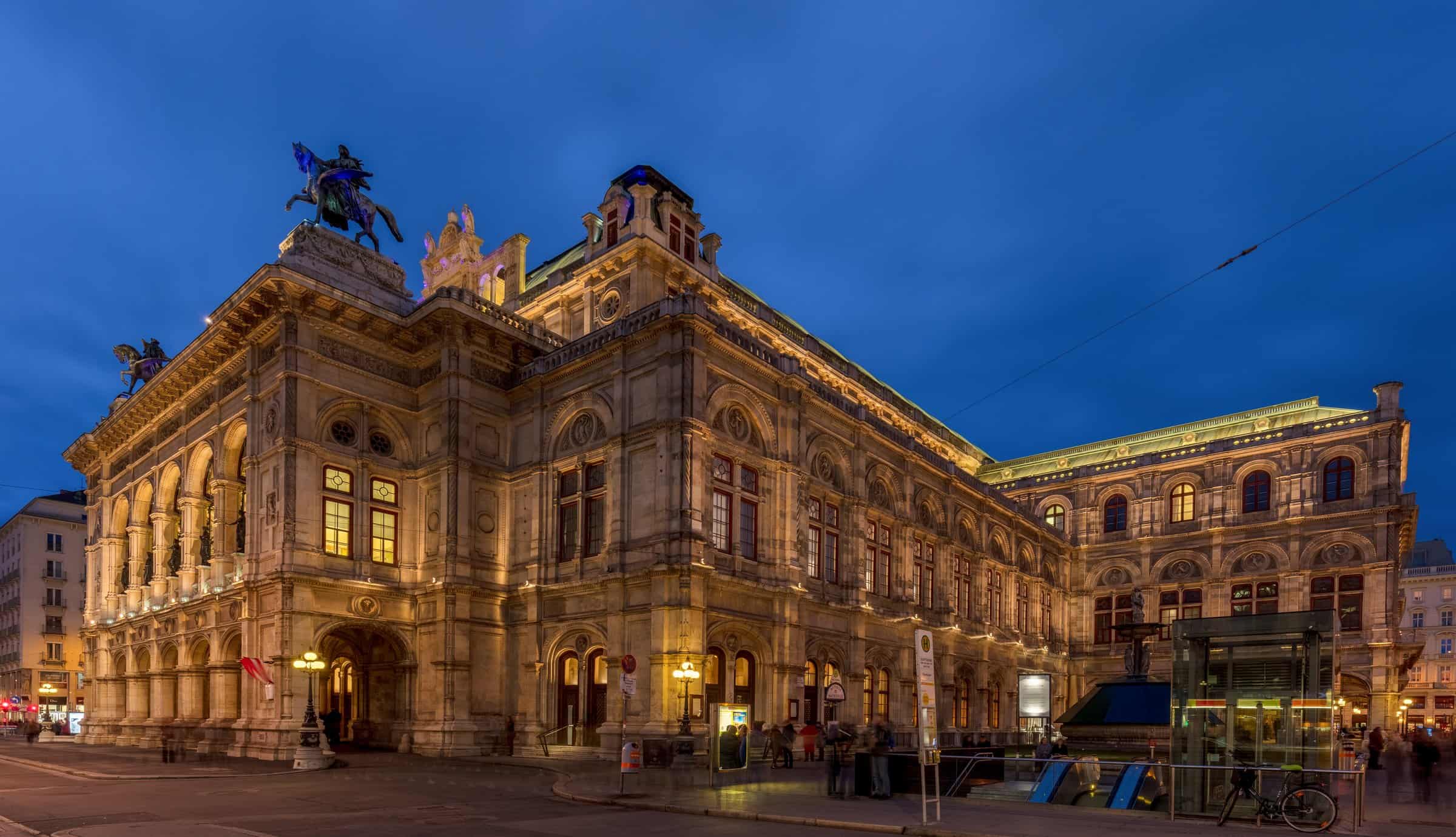
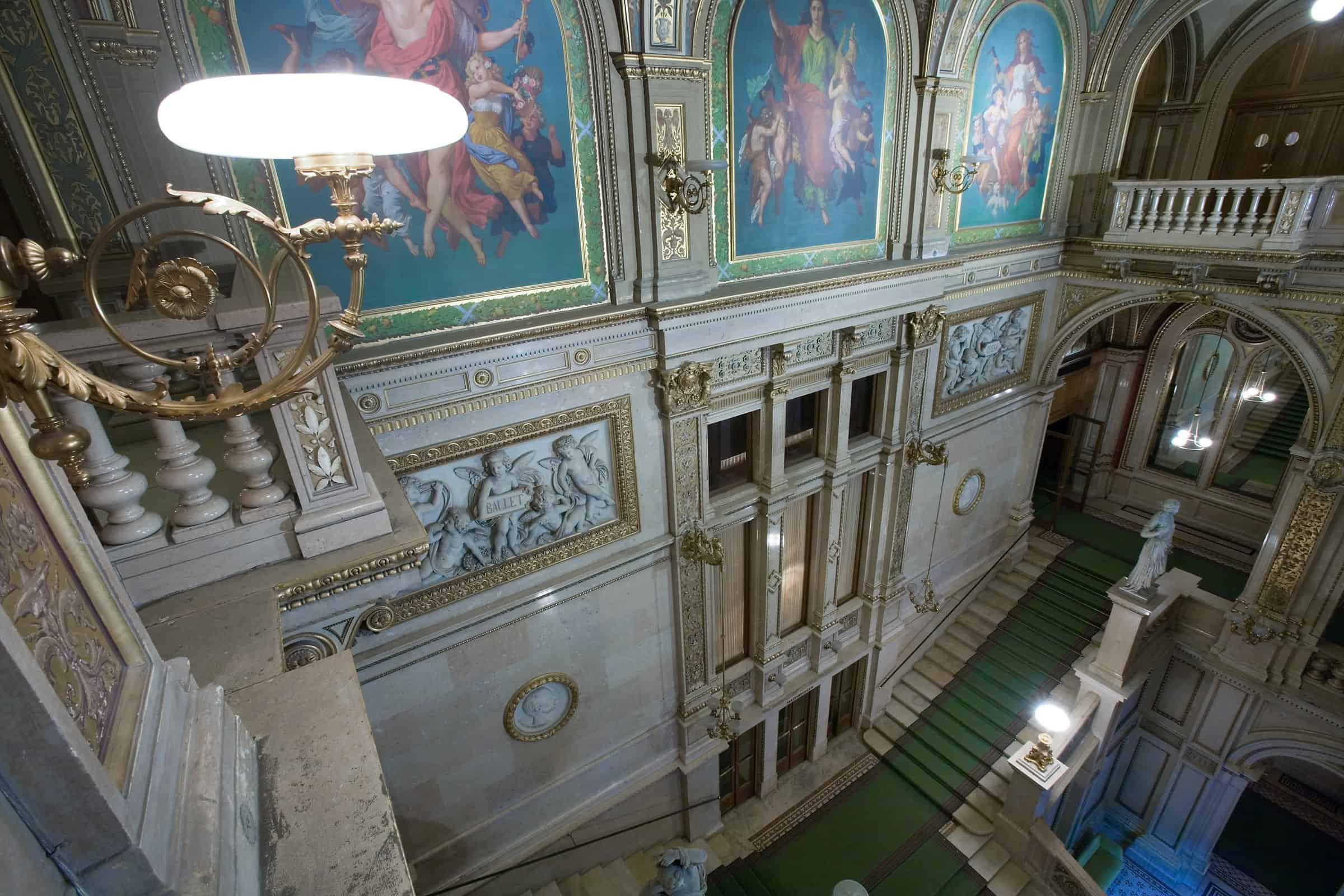
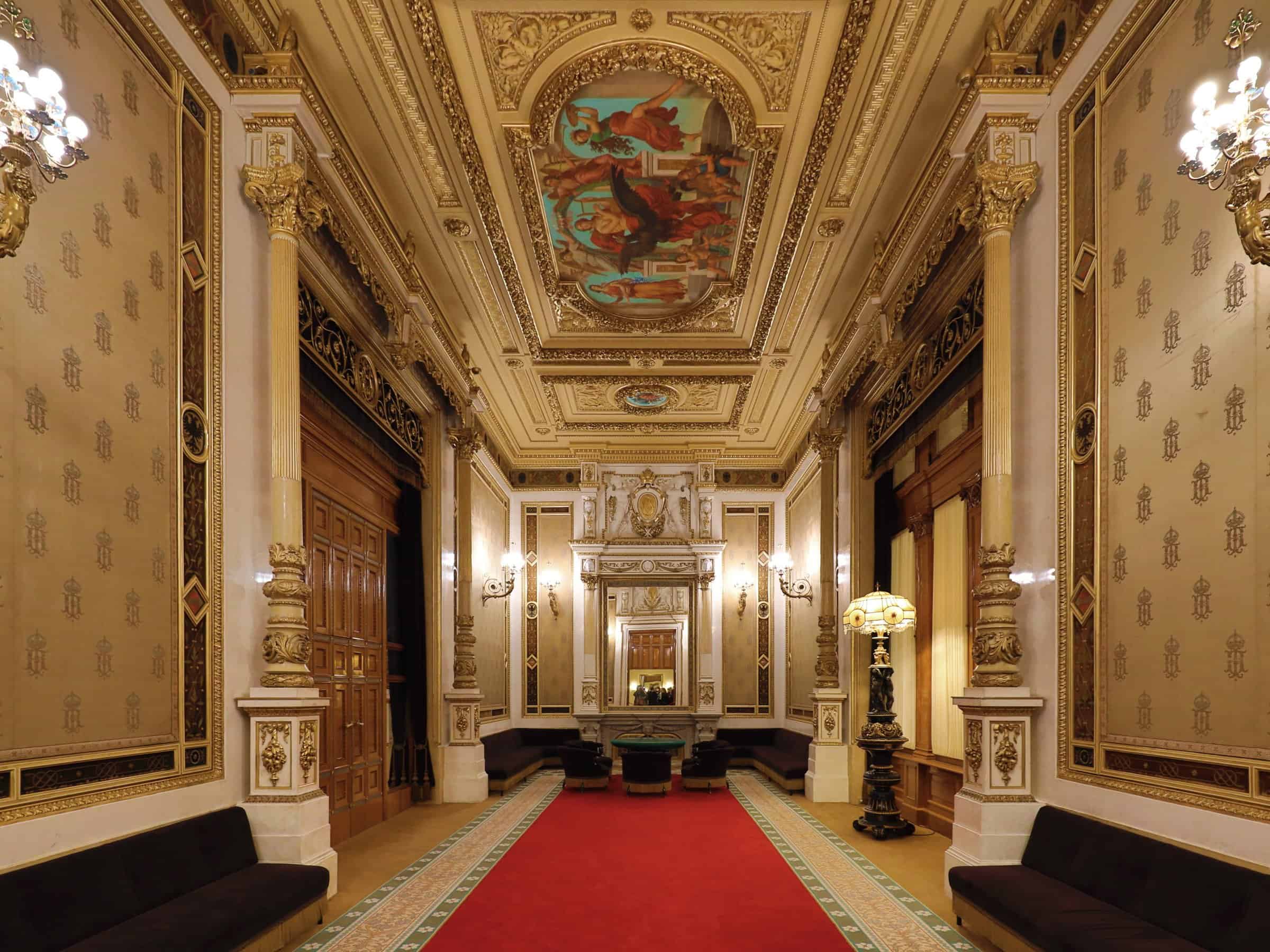
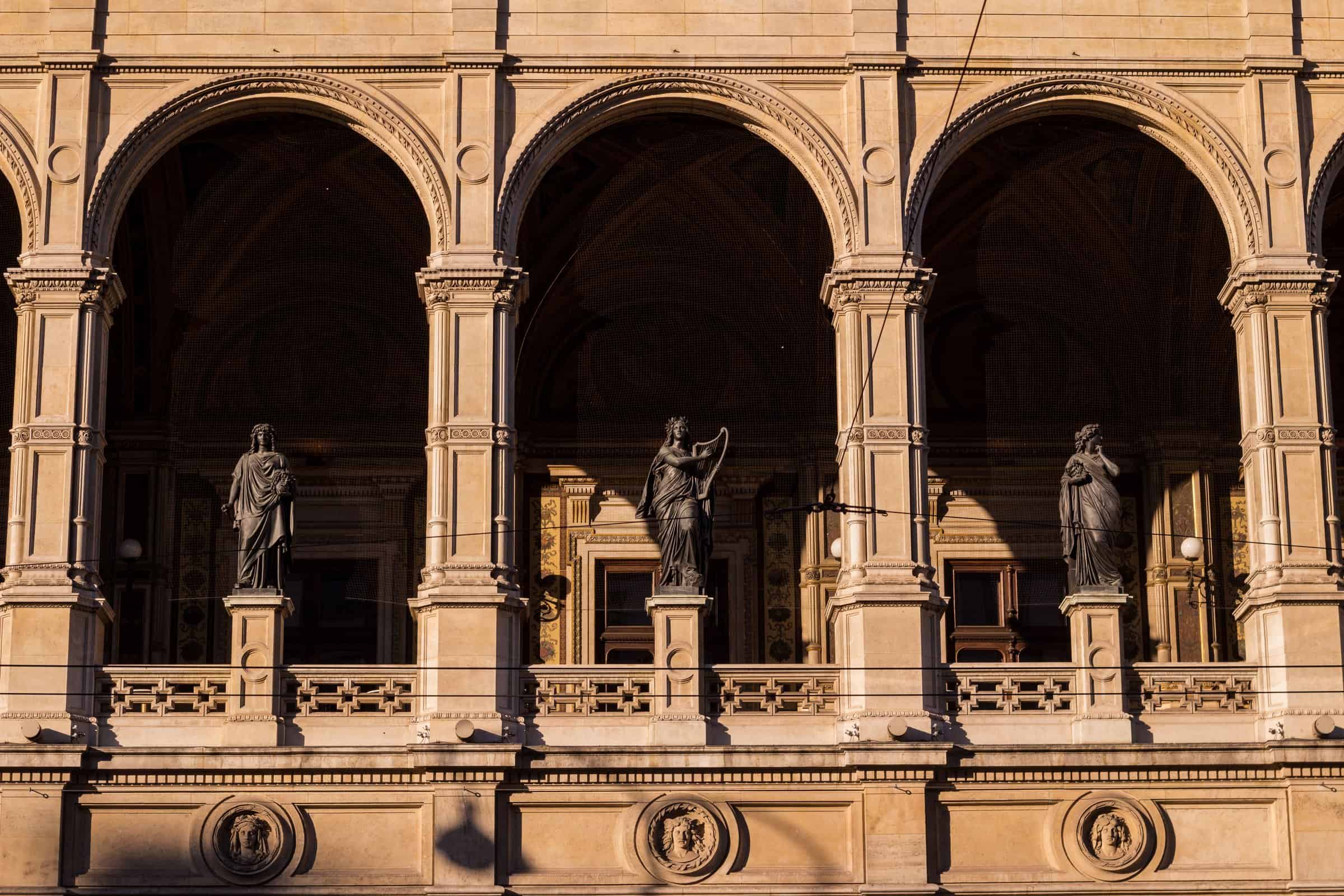
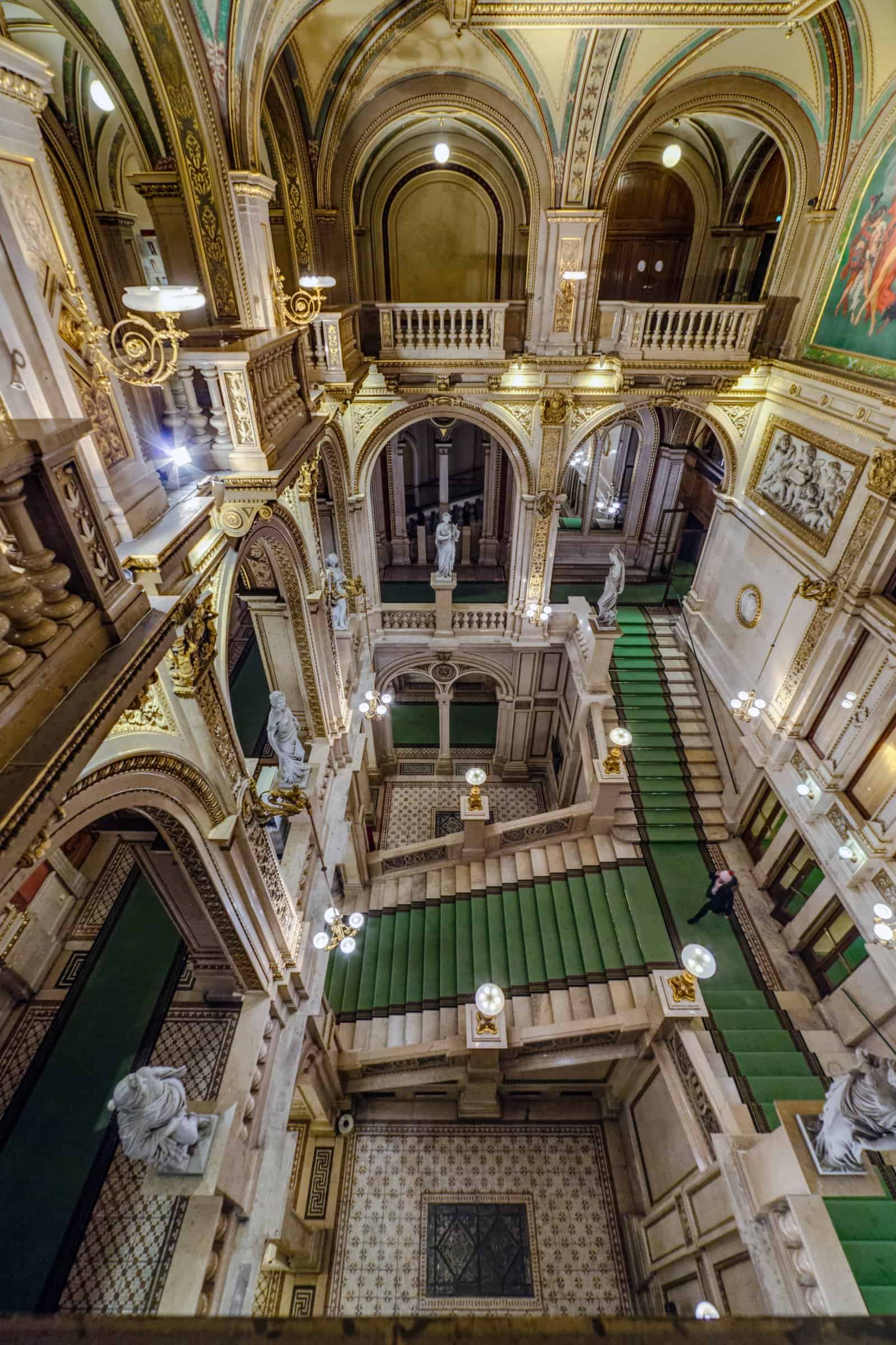
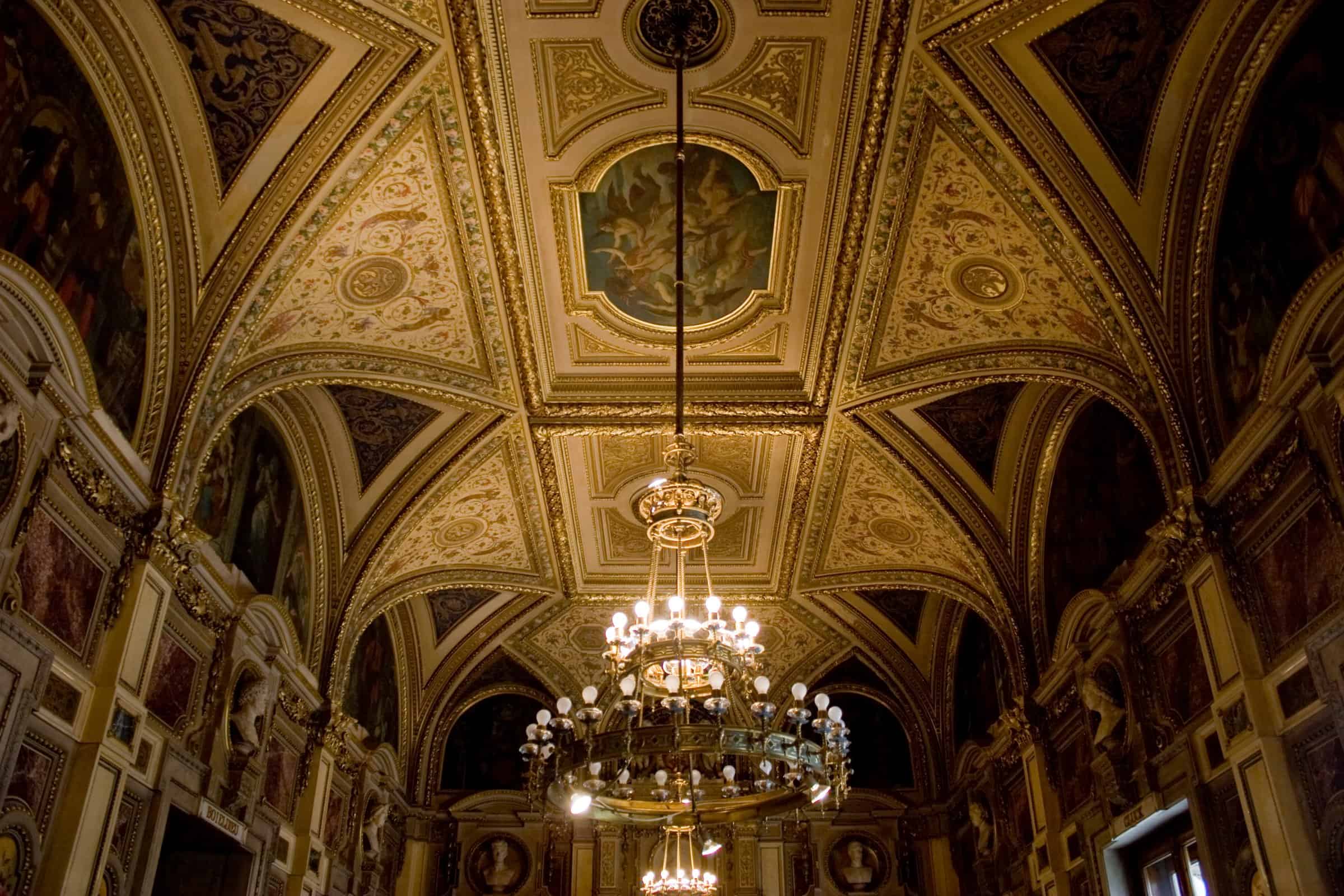
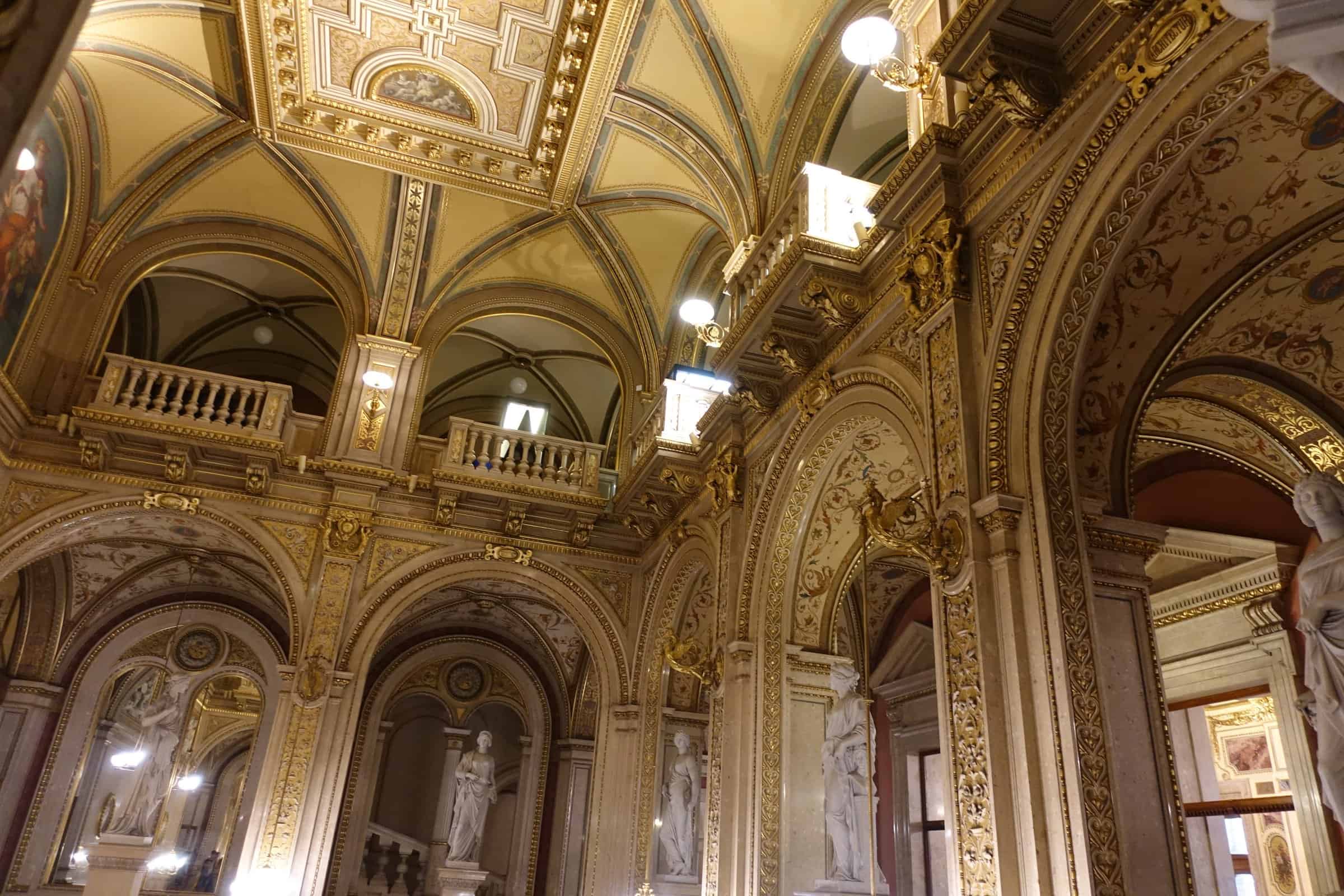
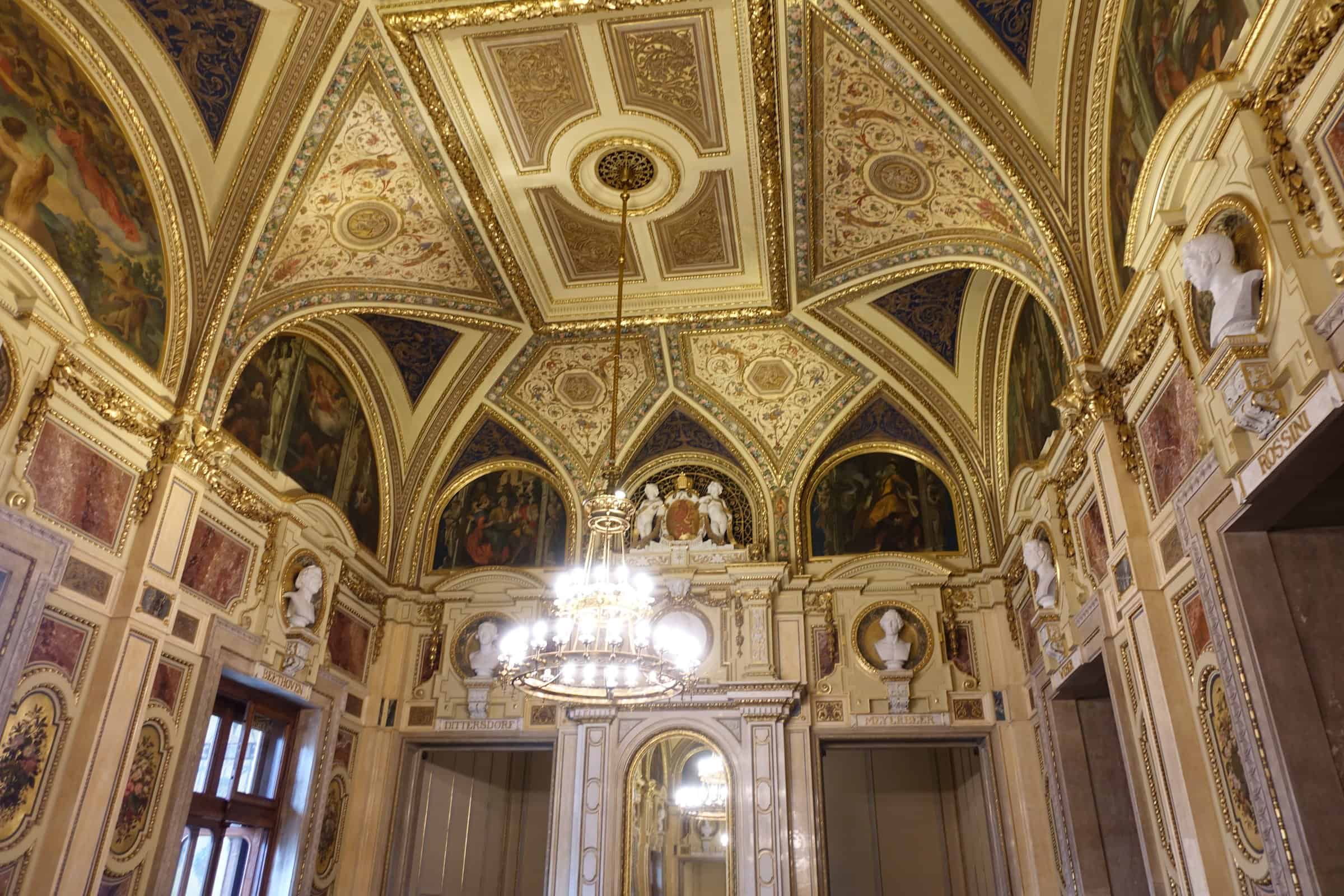
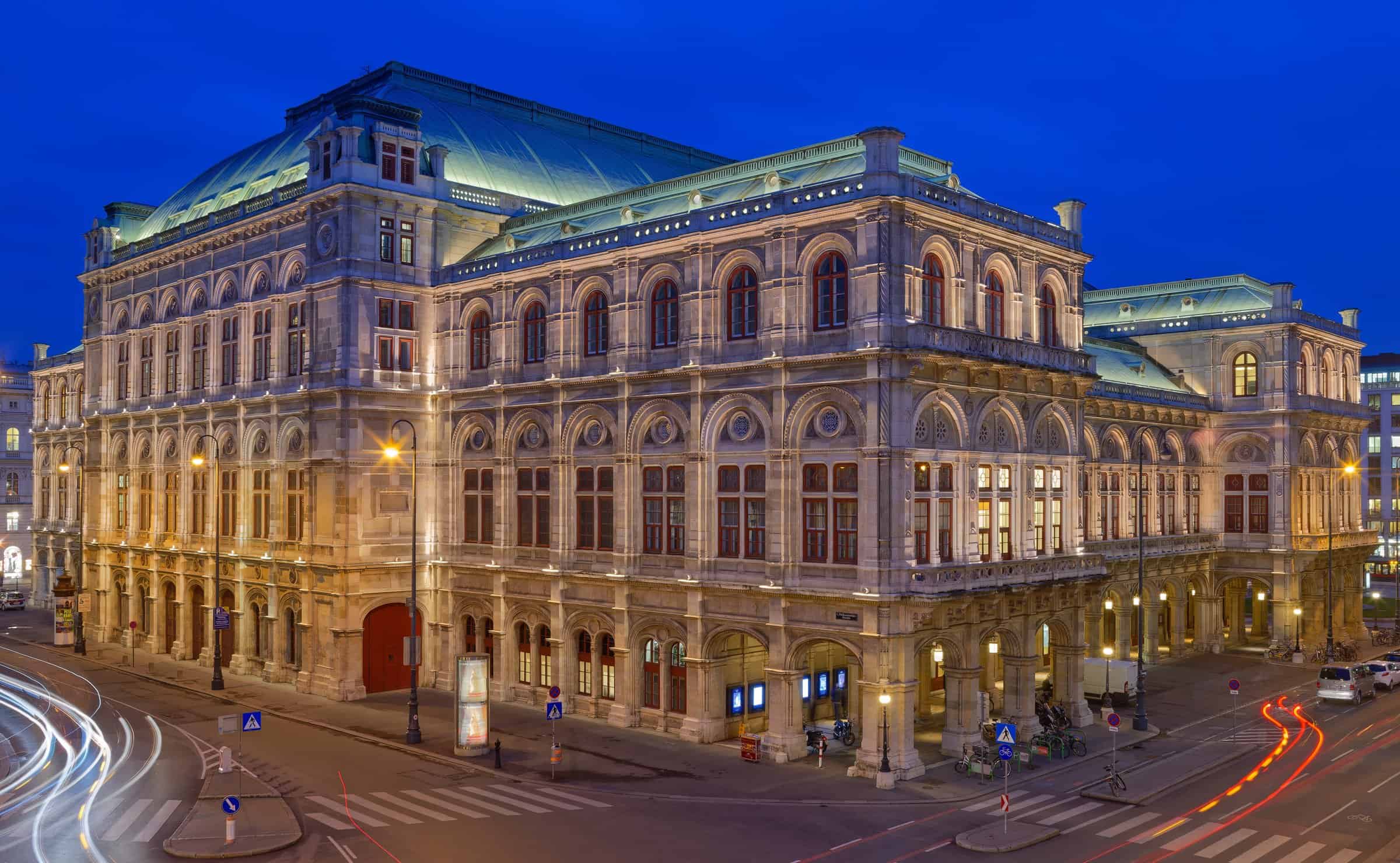
Outside, the architects drew on the Renaissance: arcaded stone elevations, a five-arched loggia facing the Ring with bronze allegorical figures by Ernst Julius Hähnel, and winged-horse bronze groups on the roofline. Inside, the grand staircase of polished Kaiserstein rises beneath painted lunettes and marble statues to the Schwind Foyer, the former promenade hall gilded in 22-carat gold leaf, whose lunettes by Moritz von Schwind illustrate the repertoire of 1869 beneath Gothic-tinged pointed vaults. The adjoining loggia carries Schwind’s frescoes from Mozart’s The Magic Flute — Tamino, Pamina, Papageno and Papagena — while the Tea Salon, once the emperor’s private salon beside the court box, still bears the monograms of Franz Joseph and Elisabeth.
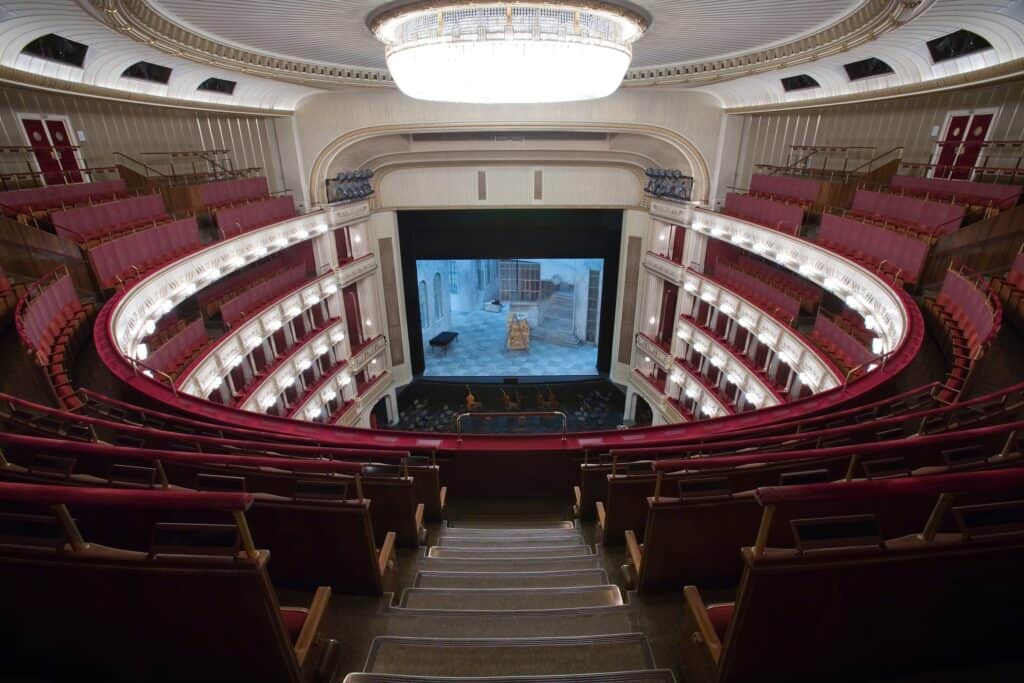
12 March 1945 and the 1955 reopening with Fidelio
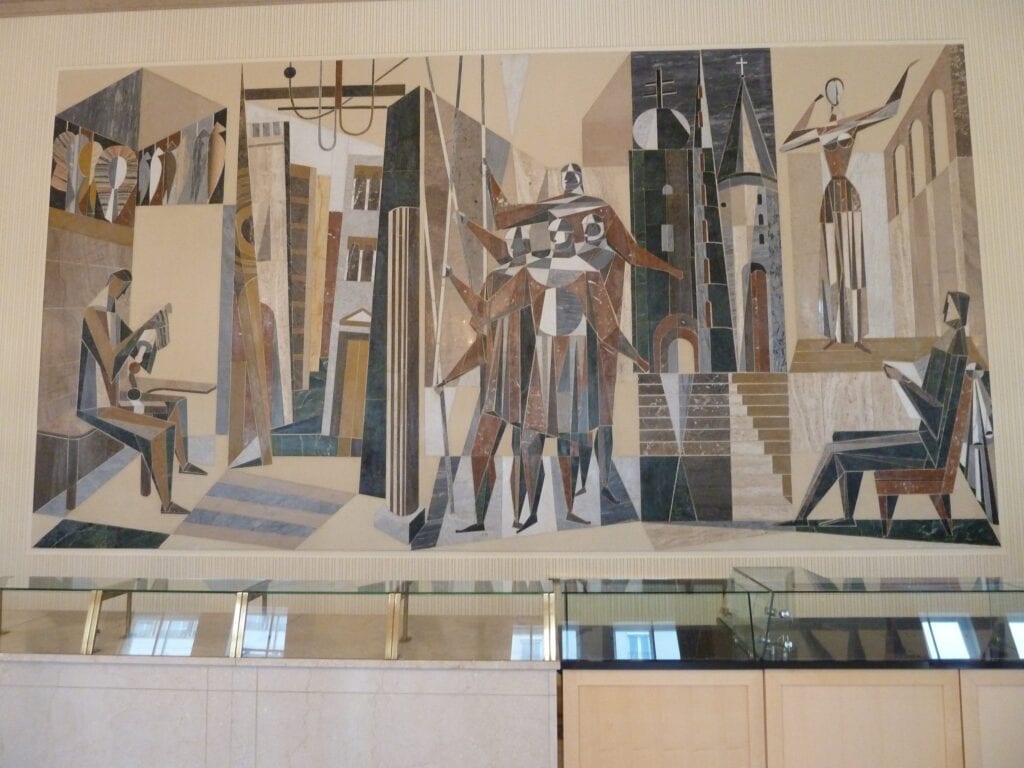
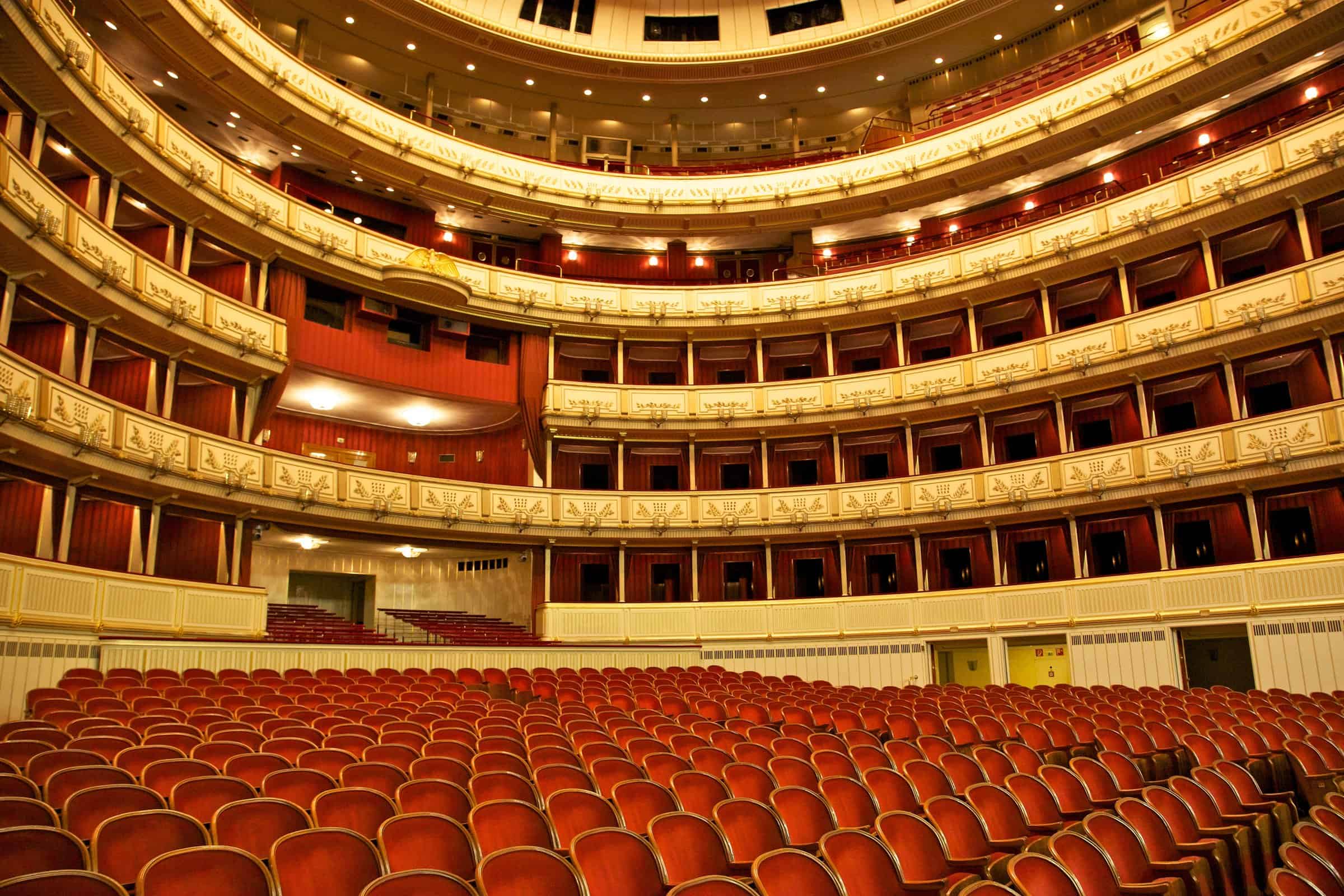
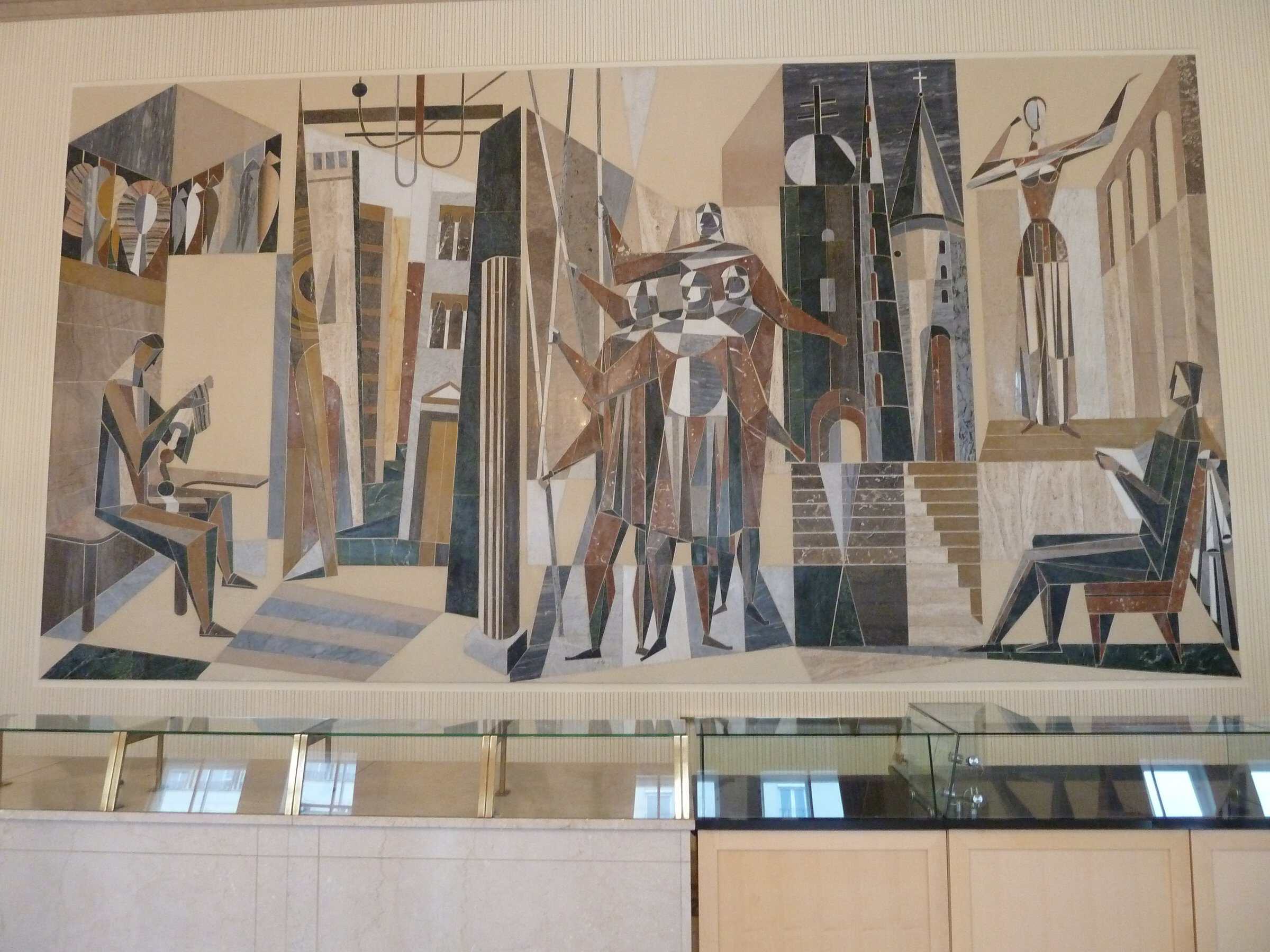
On 12 March 1945, in the last weeks of the Second World War, an American bombing raid set the opera on fire. The auditorium and stage burned out, together with the sets for more than 120 operas and some 150,000 costumes, but the walled-off front of the house survived: the facade, vestibule and grand staircase, the Schwind Foyer and loggia, and the Tea Salon. After long debate the building was restored on its original site, with Erich Boltenstern redesigning the auditorium in a restrained 1950s manner and favouring wood for its acoustics; the former imperial hall became the Marble Hall, clad in marble from across Europe with intarsia walls by sculptor Heinz Leinfellner. The Staatsoper reopened on 5 November 1955, months after the Austrian State Treaty, with Beethoven’s Fidelio conducted by Karl Böhm.
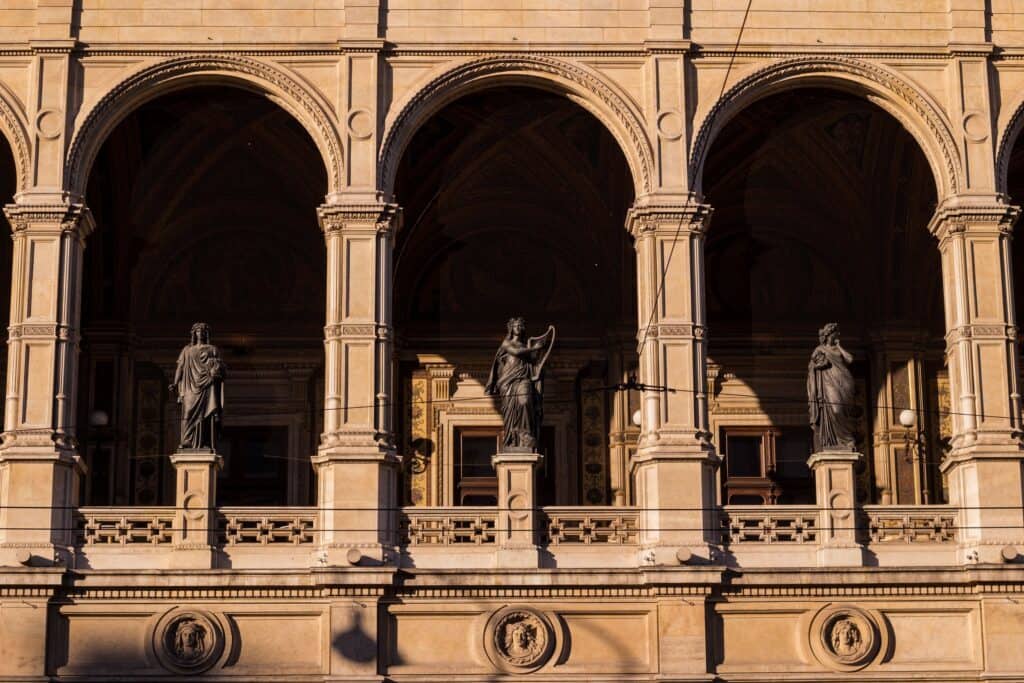
Auditorium, Opera Ball and the photographs
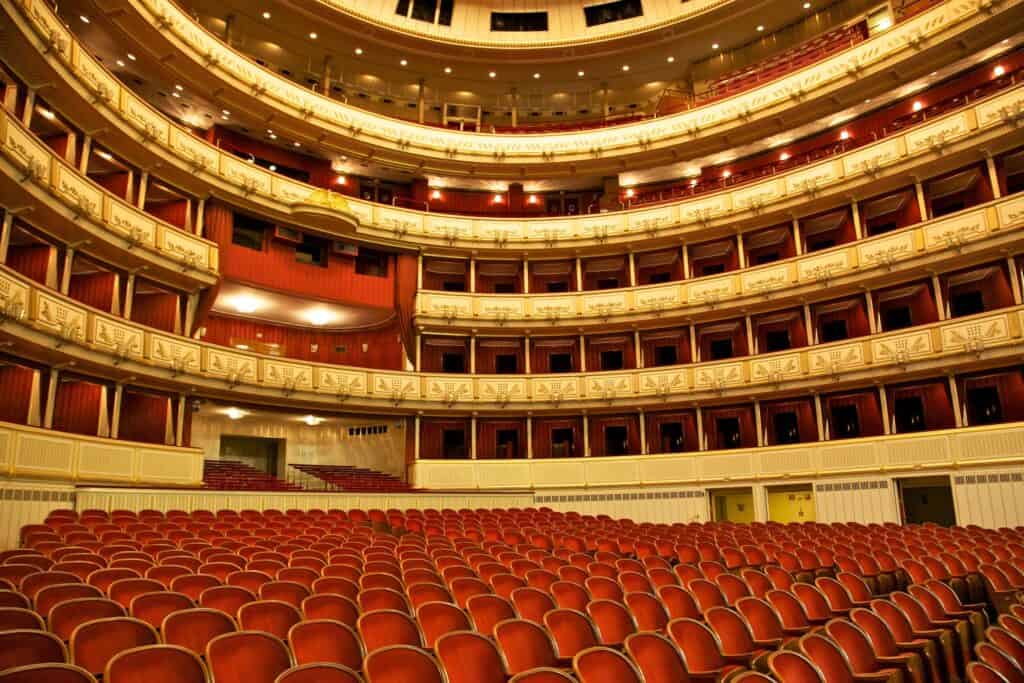
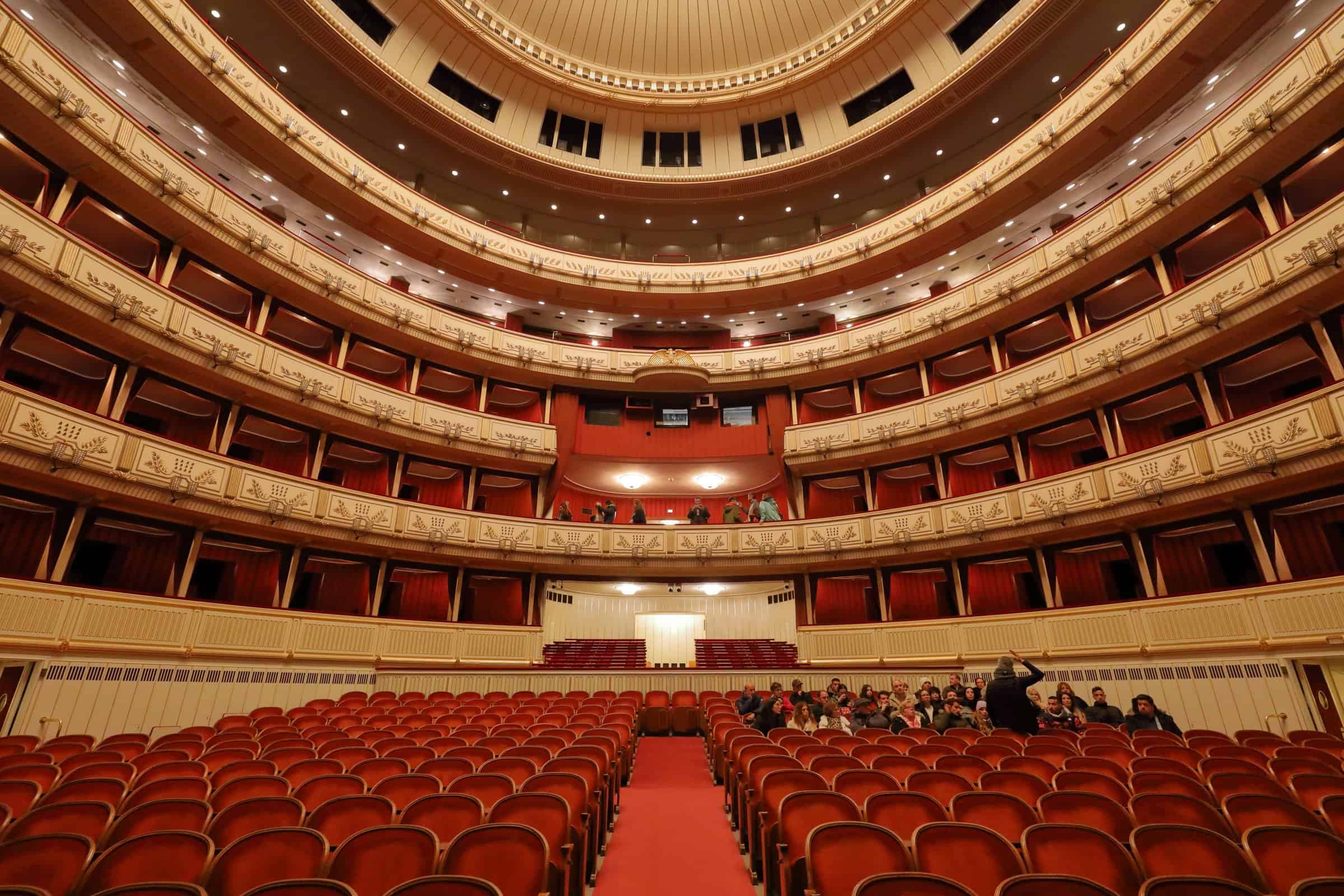
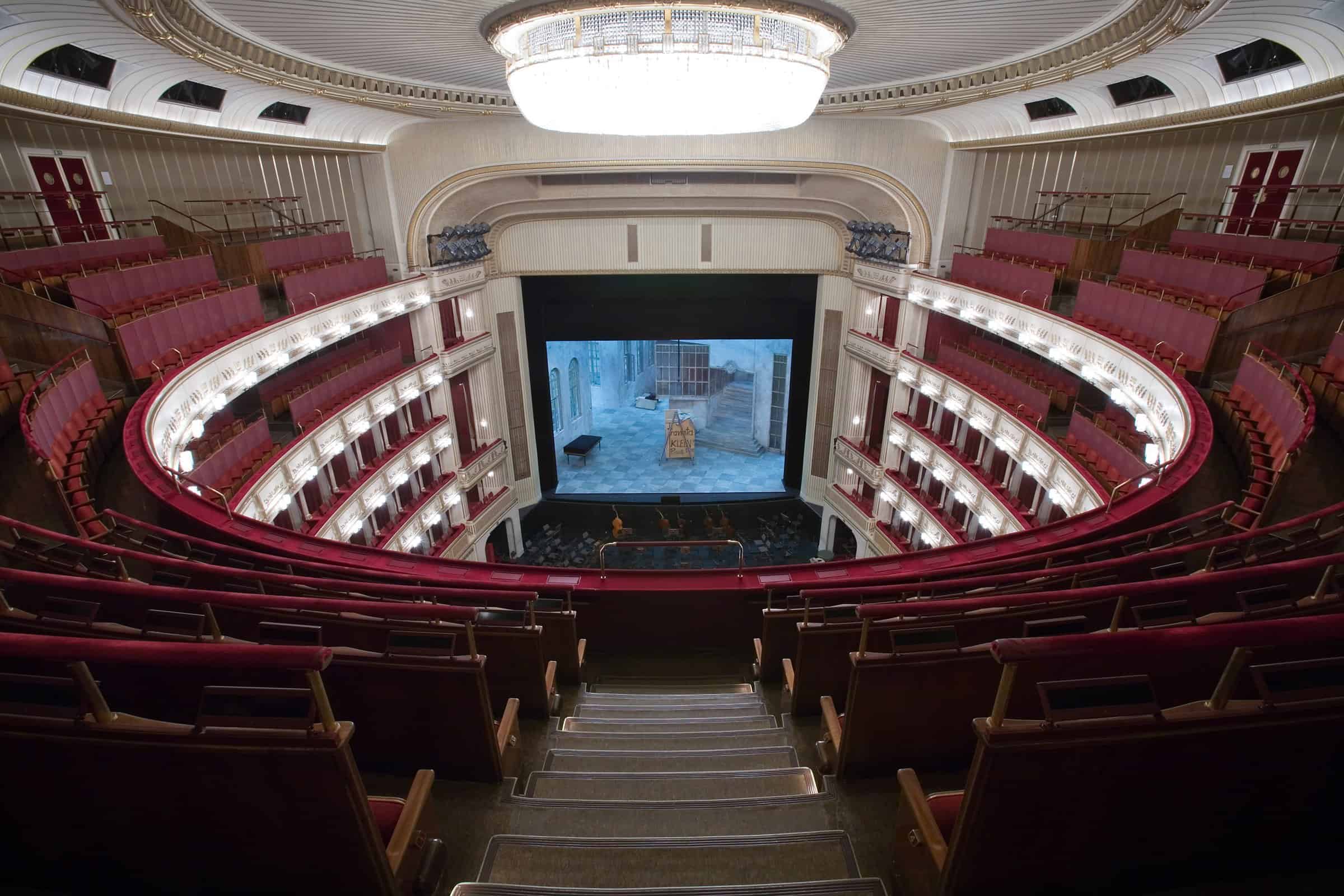
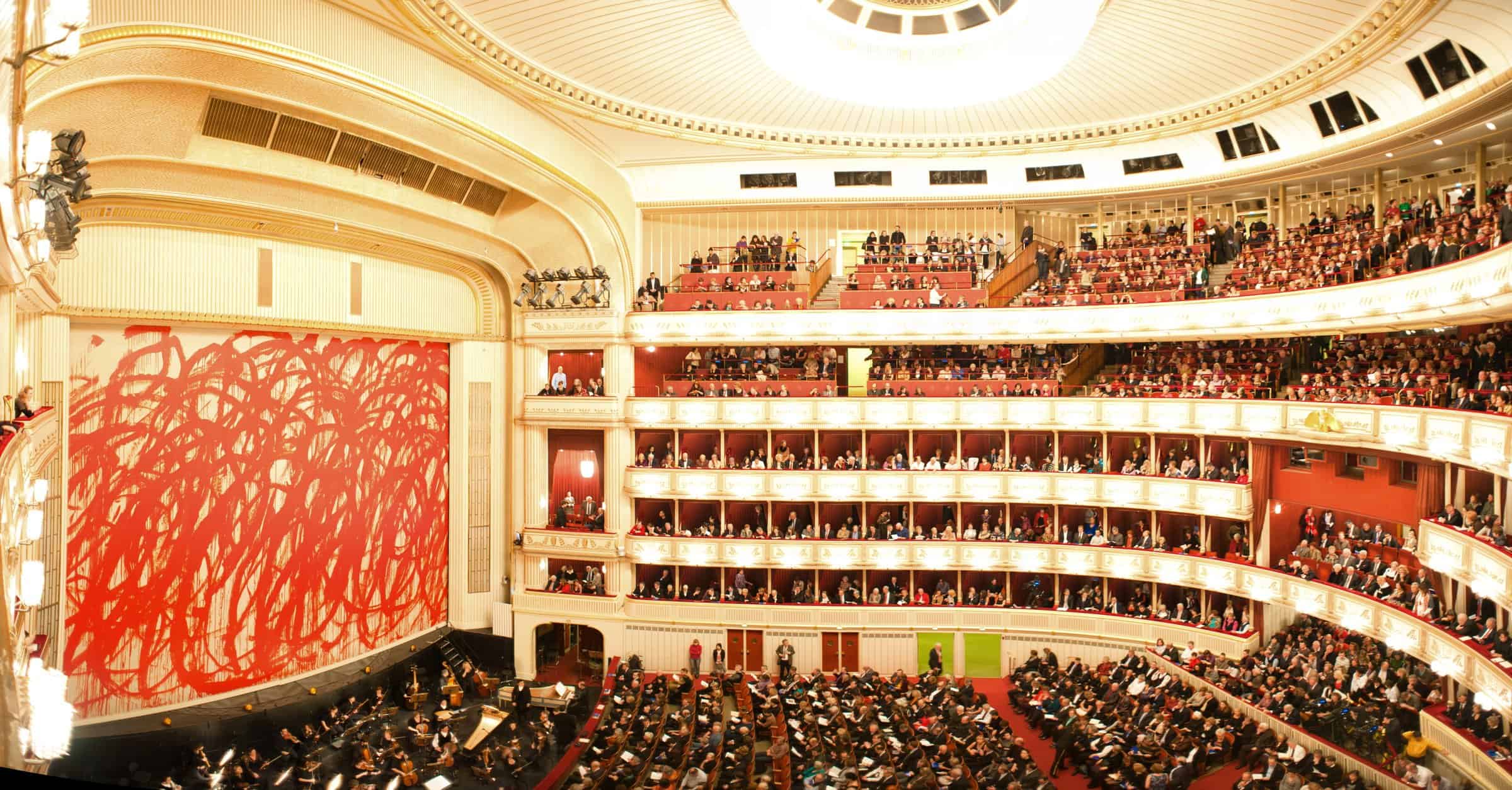
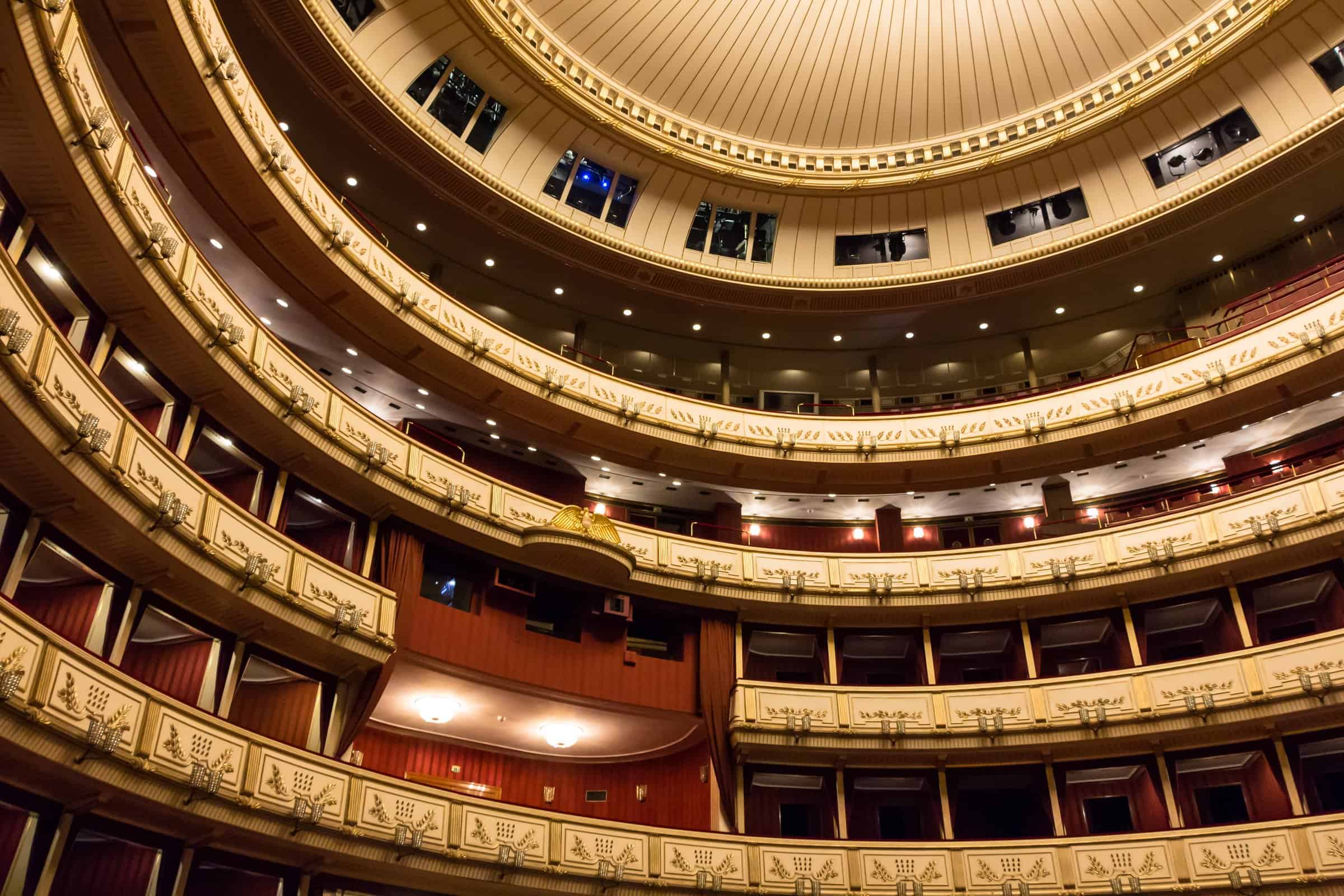
Today’s red, ivory and gold horseshoe auditorium seats around 1,700 with standing places besides, and the house is also home to the Vienna State Ballet; its orchestra is the pool from which the Vienna Philharmonic draws its members. Once a year, on the Thursday before Ash Wednesday, the stalls seating is removed and a parquet floor is laid level with the stage for the Vienna Opera Ball, the high point of the carnival season. The photographs here move from the Ring facade by day and at blue hour through the grand staircase, the gilded Schwind Foyer, the Tea Salon and the Marble Hall to the tiers of the auditorium — interiors that are as much the story as the stonework, which is why the project is tagged Interior Design as well as Commercial.
Photography and credits
Credits span Dennis G. Jarvis, C.Stadler/Bwag, Mstyslav Chernov, Diego Delso, Jorge Royan, Learicorn, Moahim, Jiuguang Wang, Jason7825, Deror Avi, Joseolgon, Rafa Esteve and Granada under CC BY-SA licences as noted on each Wikimedia Commons file.
Vienna State Opera gallery
Explore more on Archtene
- More projects by August Sicard von Sicardsburg + Eduard van der Nüll
- More projects in Vienna
- More Opera House projects