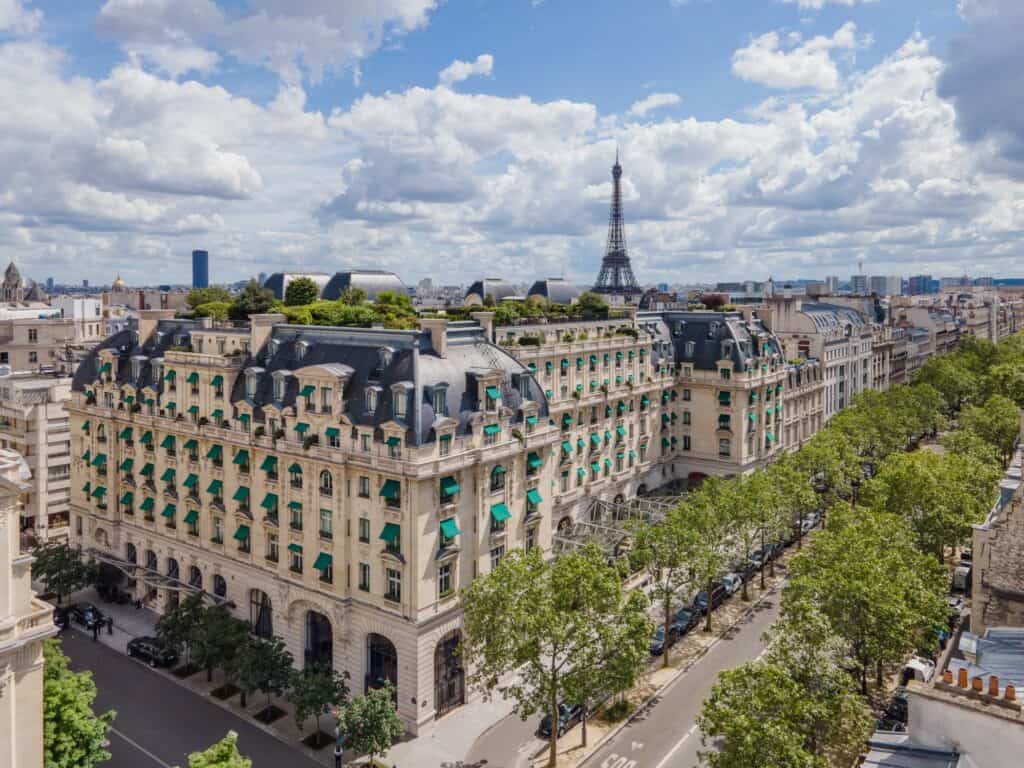
The Peninsula Paris by Richard Martinet and Henry Leung in Paris, France
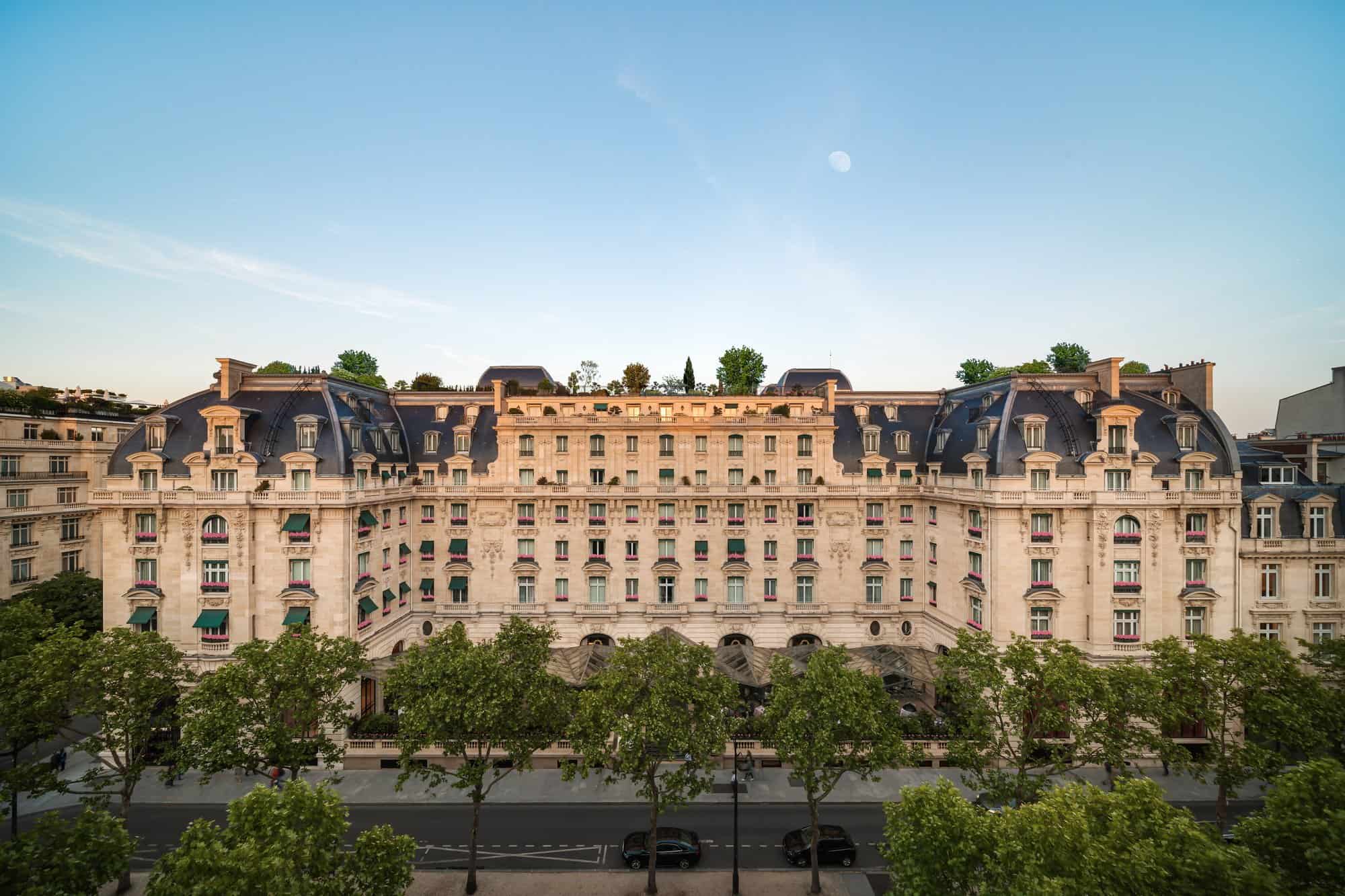
The Peninsula Paris is a palace hotel on the avenue Kléber in Paris, France, a few steps from the Arc de Triomphe, created inside the Hôtel Majestic that the architect Armand Sibien completed in 1908. After more than seventy years as government offices, the building reopened on 1 August 2014 as the first European hotel of The Peninsula Hotels, following a four-year restoration in which Richard Martinet of Affine Design led the architecture and the historic public rooms on the ground floor, while Henry Leung of the Hong Kong practice Chhada Siembieda Leung designed the interiors of the floors above with the Peninsula’s in-house team. It joins Martinet’s other palace restorations on Archtene, the Hôtel de Crillon and the Hôtel de Paris Monte-Carlo, and Paris landmarks such as the Palais Garnier.
From the Palacio Castilla to the Hôtel Majestic, 1864–1936
The site at 19 avenue Kléber, laid out under Haussmann as the avenue du Roi-de-Rome, was first occupied by a private palace that the Russian collector Alexander Basilewski commissioned from the architect Clément Parent in 1864. From 1868 it was the home in exile of Queen Isabella II of Spain, who renamed it the Palacio Castilla, signed her abdication there in 1870 and died there in 1904. The hotelier Léonard Tauber then won the property, demolished the palace and asked Armand Sibien to build a grand hotel of some 400 rooms in its place. The Majestic opened in 1908 and quickly became one of the great addresses of the Belle Époque: in May 1922 Marcel Proust, James Joyce, Pablo Picasso, Igor Stravinsky and Serge Diaghilev dined there on the night of the premiere of Diaghilev’s ballet Renard, and in 1928 George Gershwin worked on An American in Paris during his stay.
Offices, conferences and the 1973 Paris Peace Accords
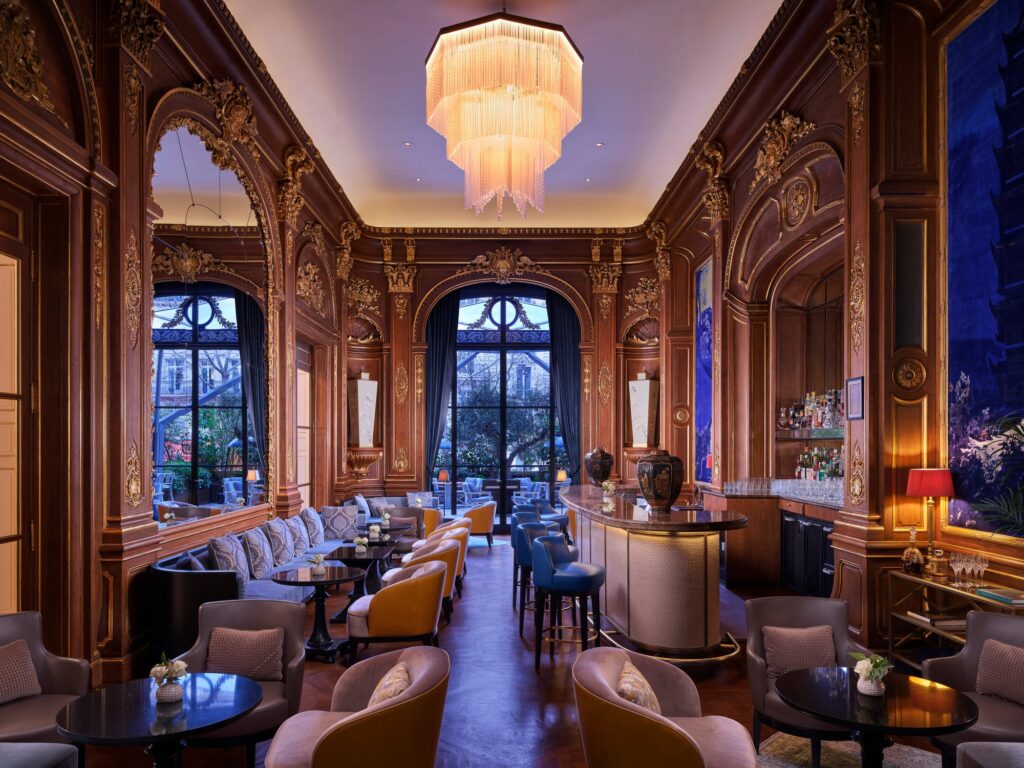
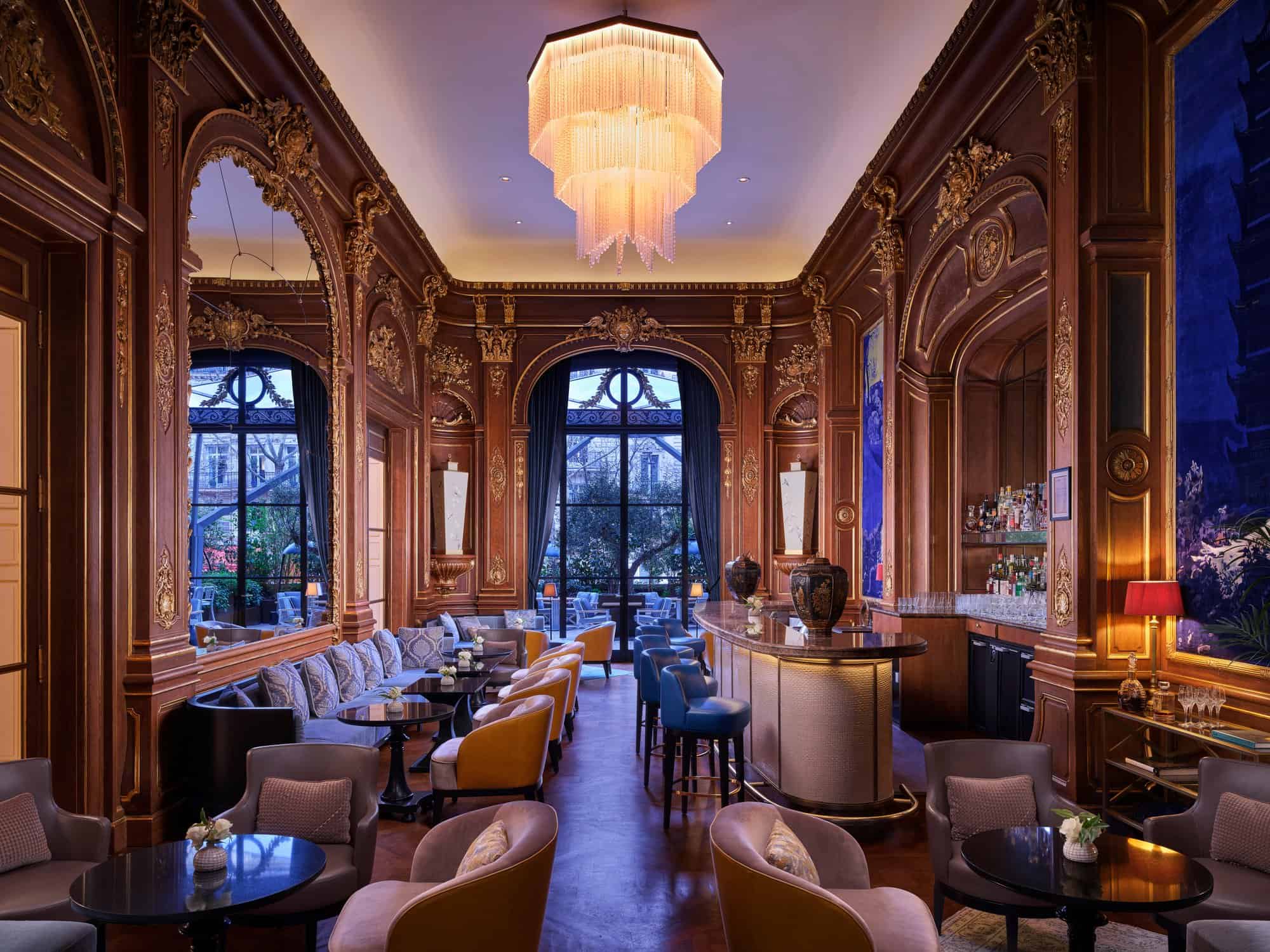
In 1936 the French state bought the building for the Ministry of War, and its second life was as eventful as its first. From 1940 to 1944 it housed the German military high command in occupied France; from 1946 to 1958 it was the first headquarters of UNESCO; and it then became the international conference centre of the Ministry of Foreign Affairs. On 27 January 1973 the Paris Peace Accords that ended American involvement in the Vietnam War were signed there, in the wood-panelled salon that is now Le Bar Kléber, and the Paris agreements on Cambodia followed in 1991. Over those decades the grand rooms were partitioned into offices and meeting rooms, false ceilings and paint hid the decoration, and the hotel that Sibien designed all but disappeared from view.
A four-year restoration, 2010–2014
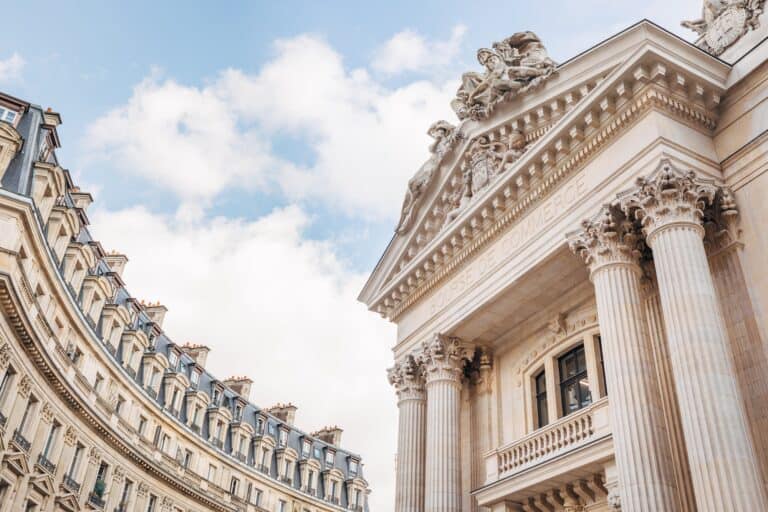
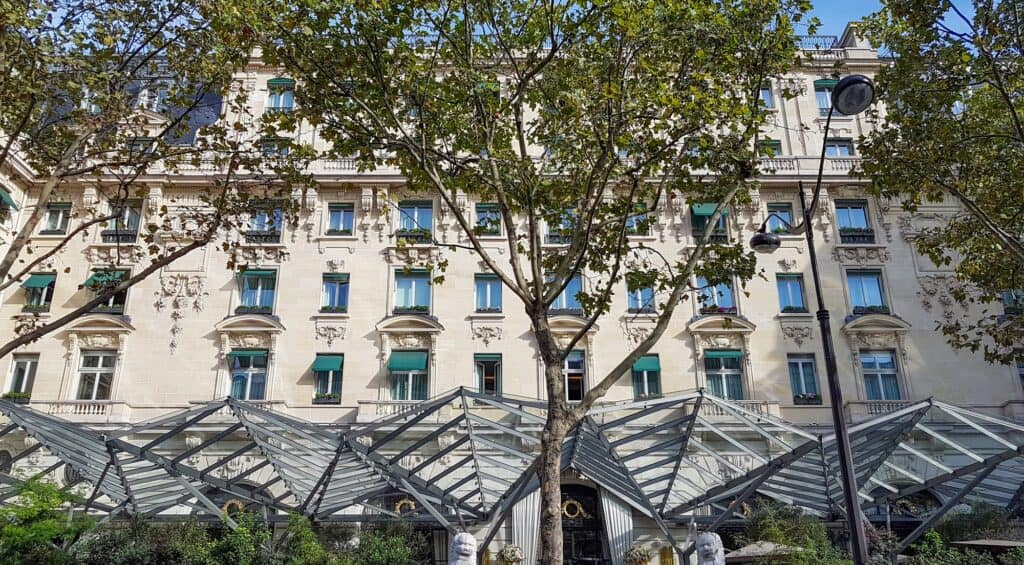
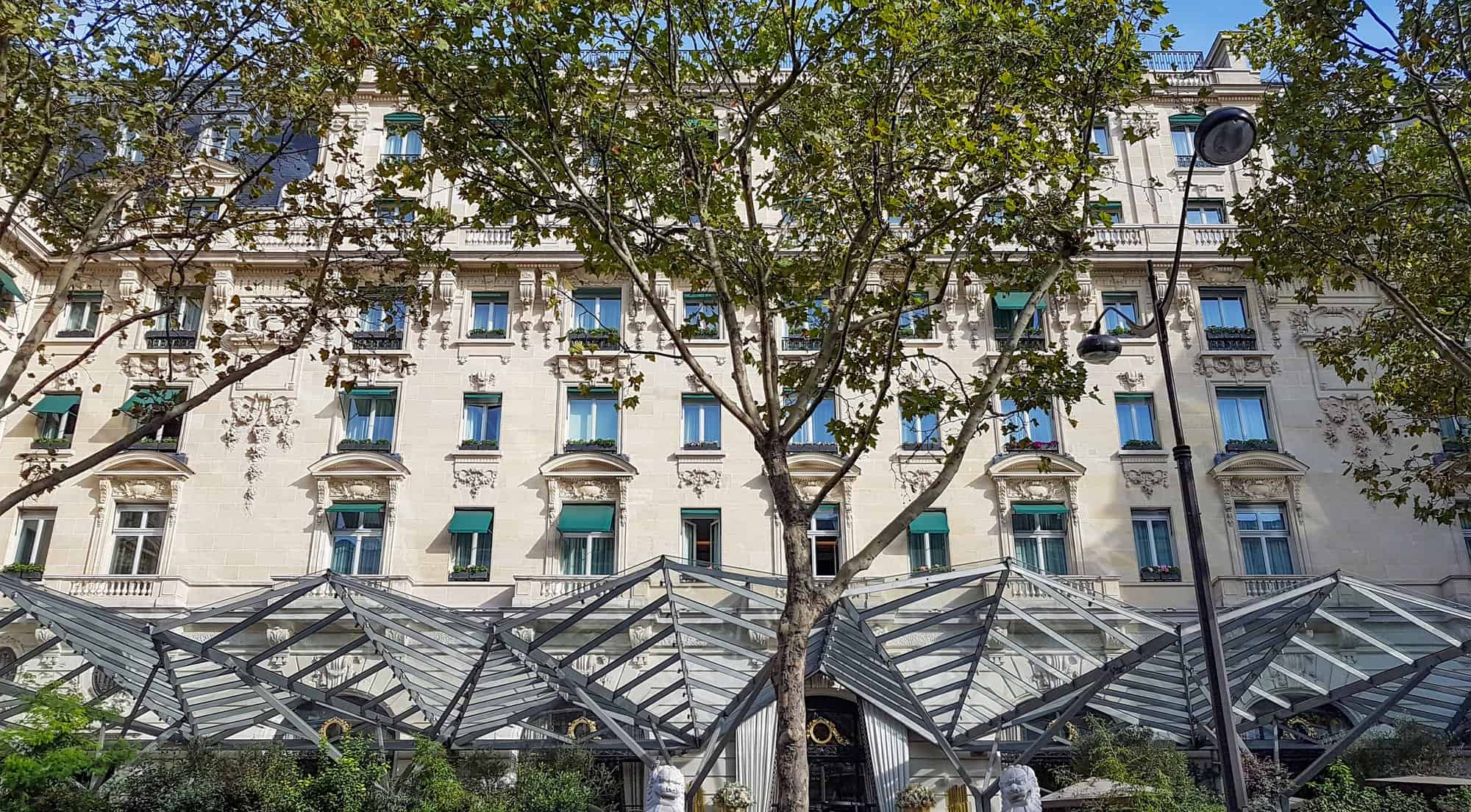
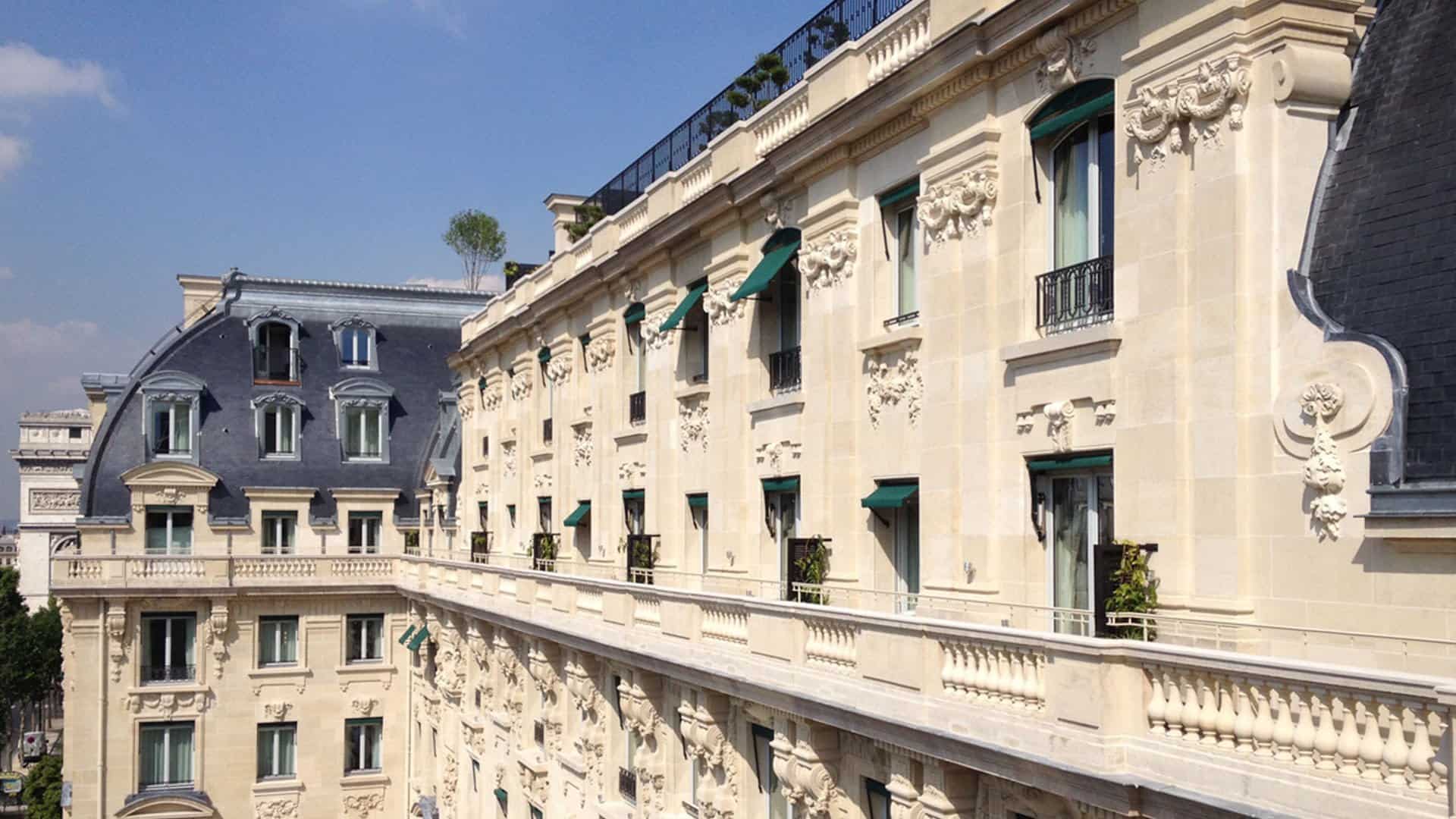
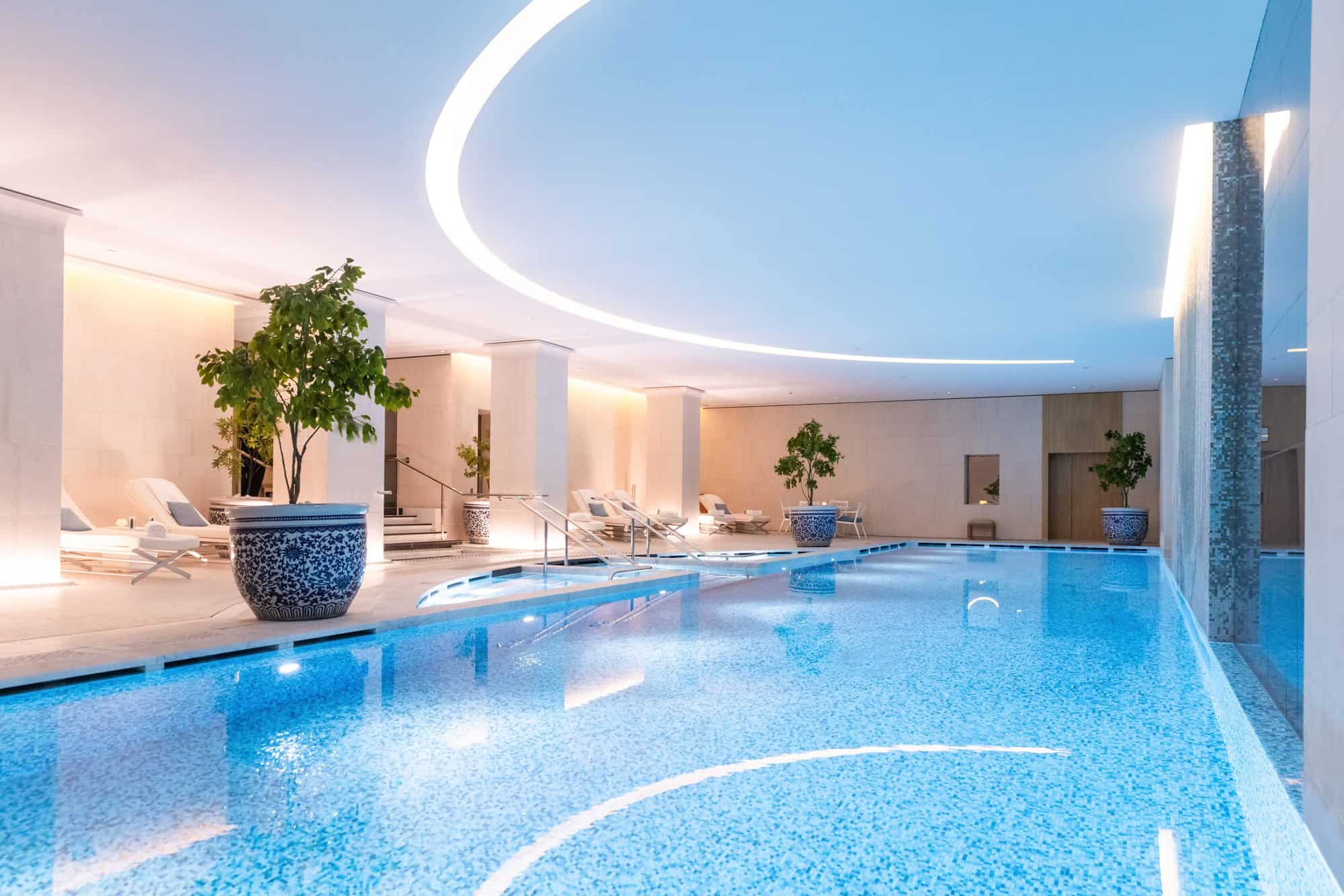
The state sold the building to Qatari investors at the end of the 2000s, and The Peninsula Hotels, in partnership with Katara Hospitality, took charge of the project in 2009. Works by Vinci Construction began in 2010 and the budget was reported at €338 million. Affine Design followed the scheme from feasibility to completion. A historical study allowed lost rooms and decoration to be reconstituted from fragments found on site, while the original plans revealed forgotten volumes, light wells and small courtyards. Affine restored the symmetry of Sibien’s plan by adding a second gallery along the inner courtyard and a fourth tower on the roof, and reworked the ground floor to bring daylight back into the lobby spaces. Behind the listed limestone front, whose 10,000 square metres were cleaned and repaired with stone from the original quarries, the structure was strengthened and three basement levels were dug to make room for a spa with a 20-metre swimming pool.
Gilding, stucco and woodwork
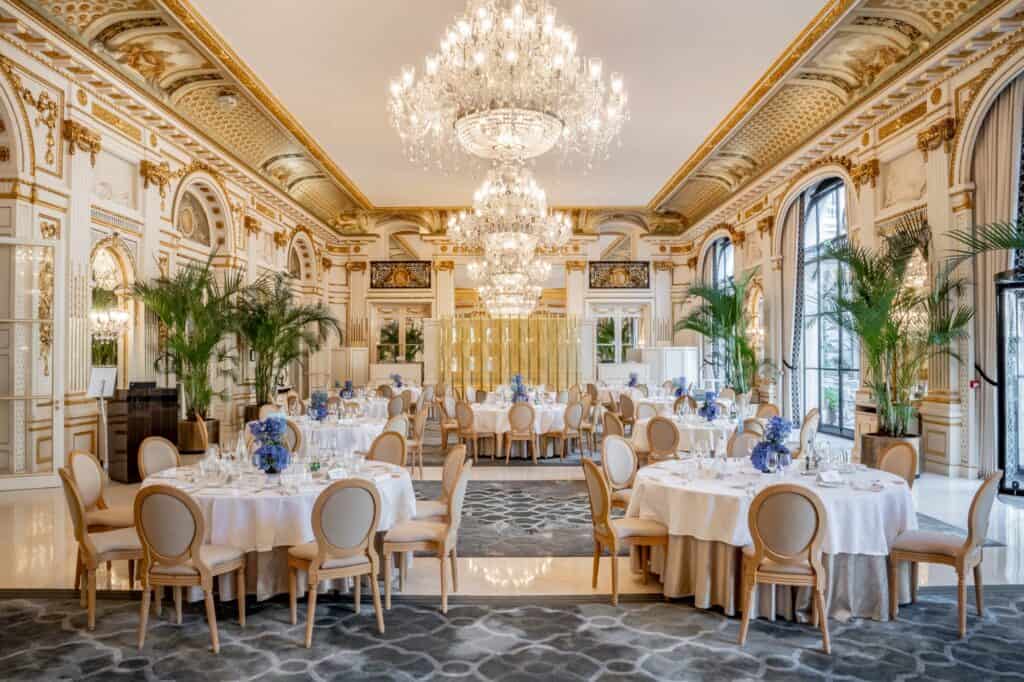
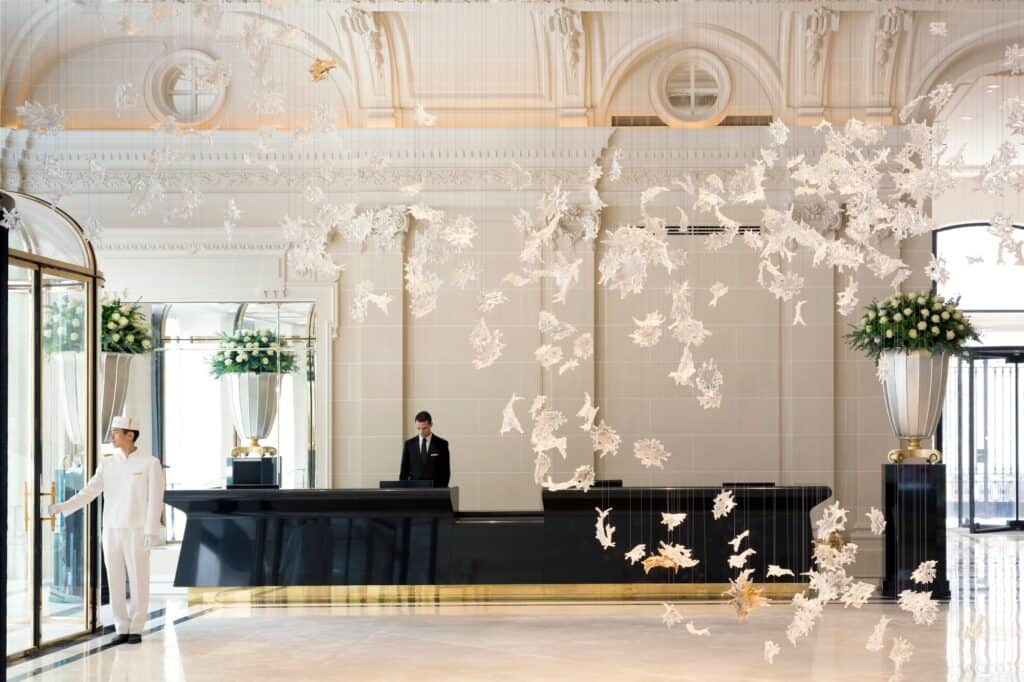
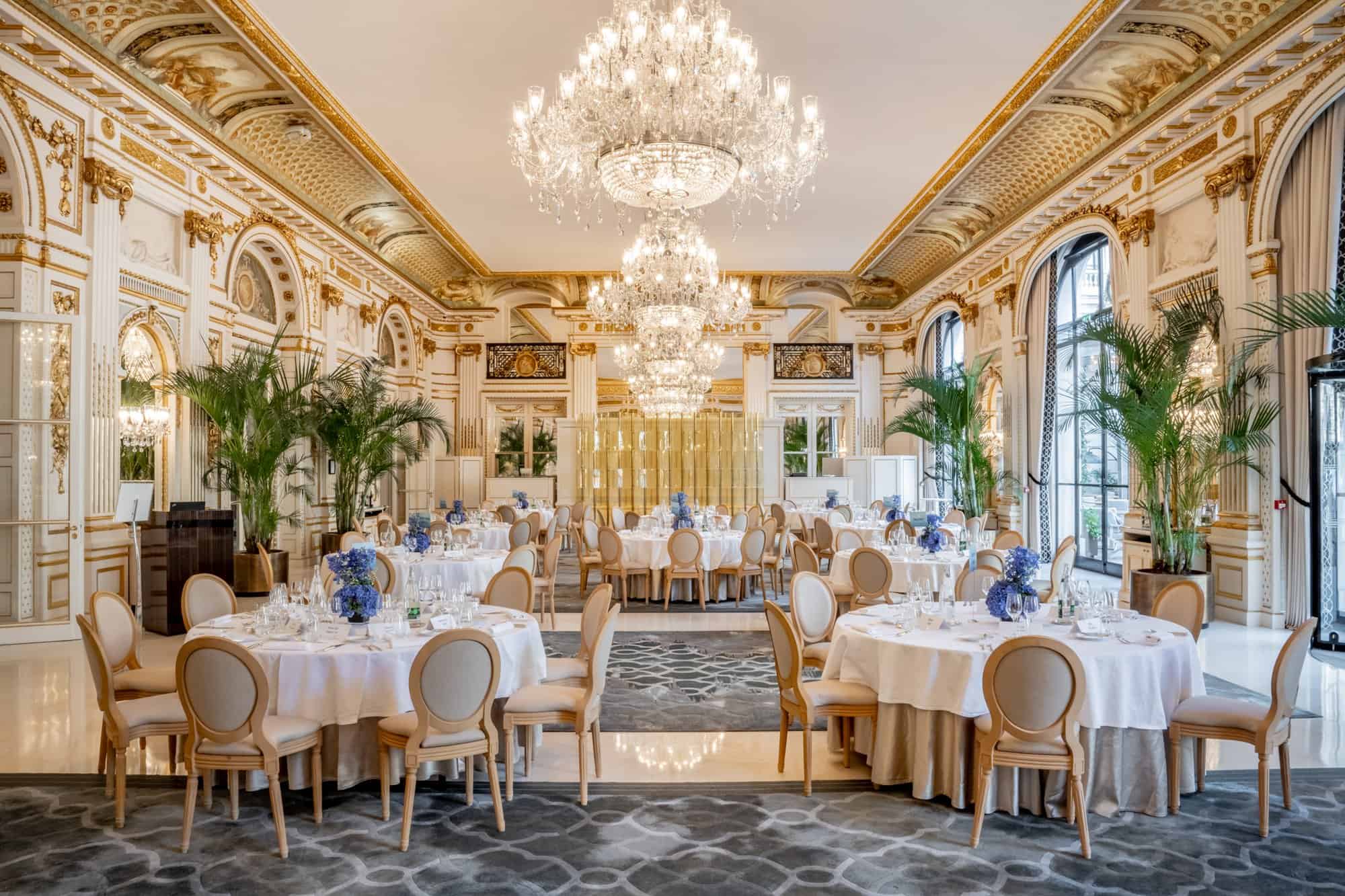
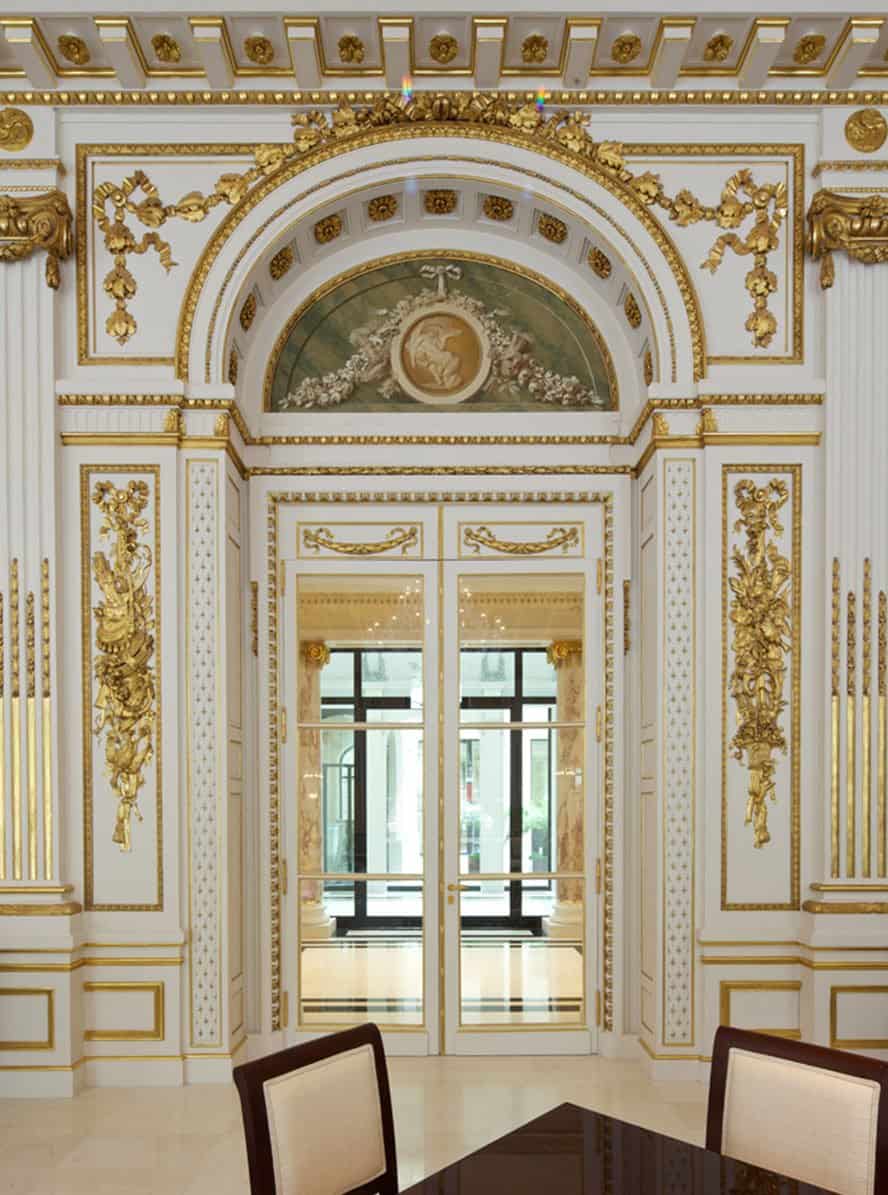
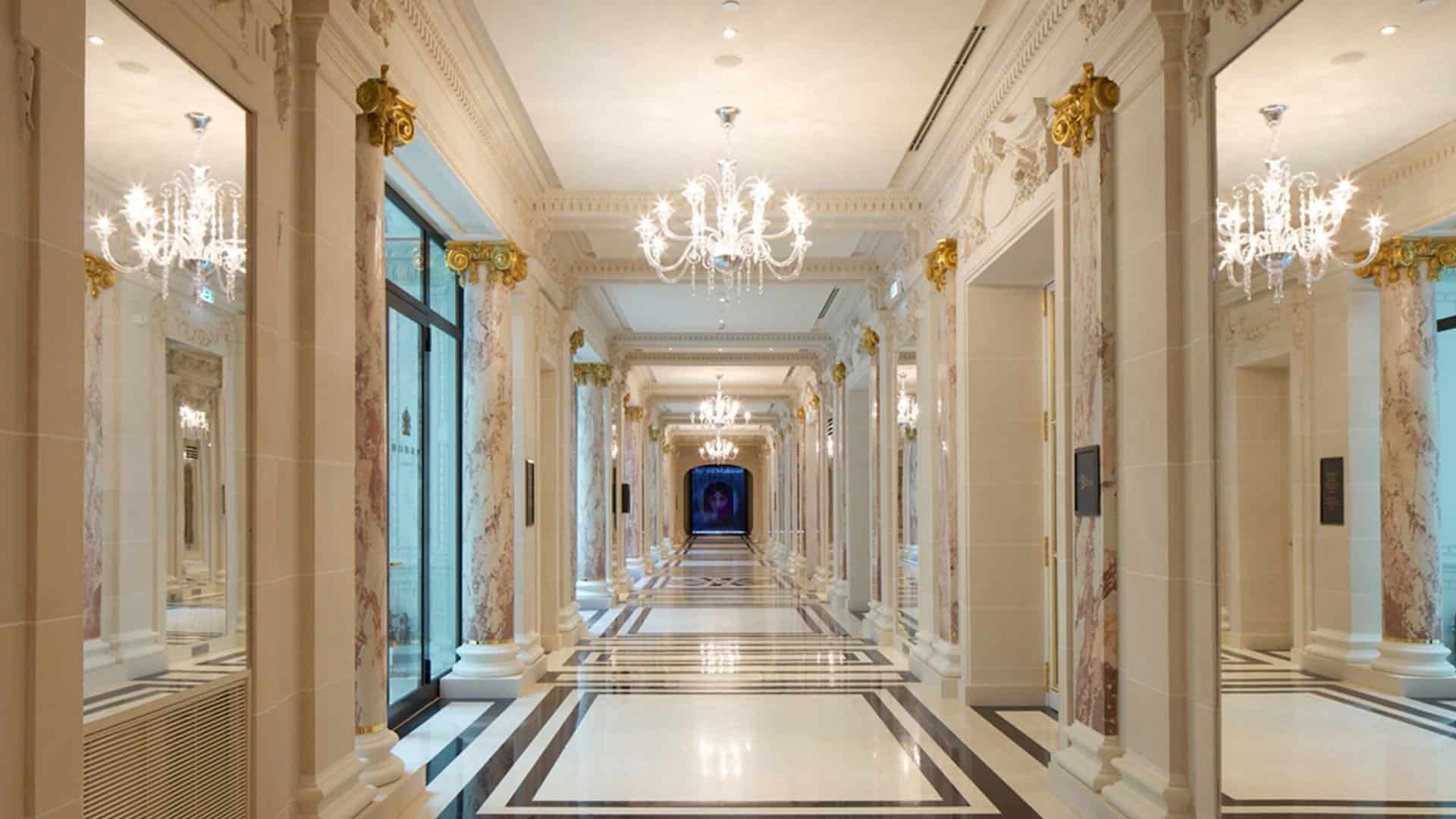
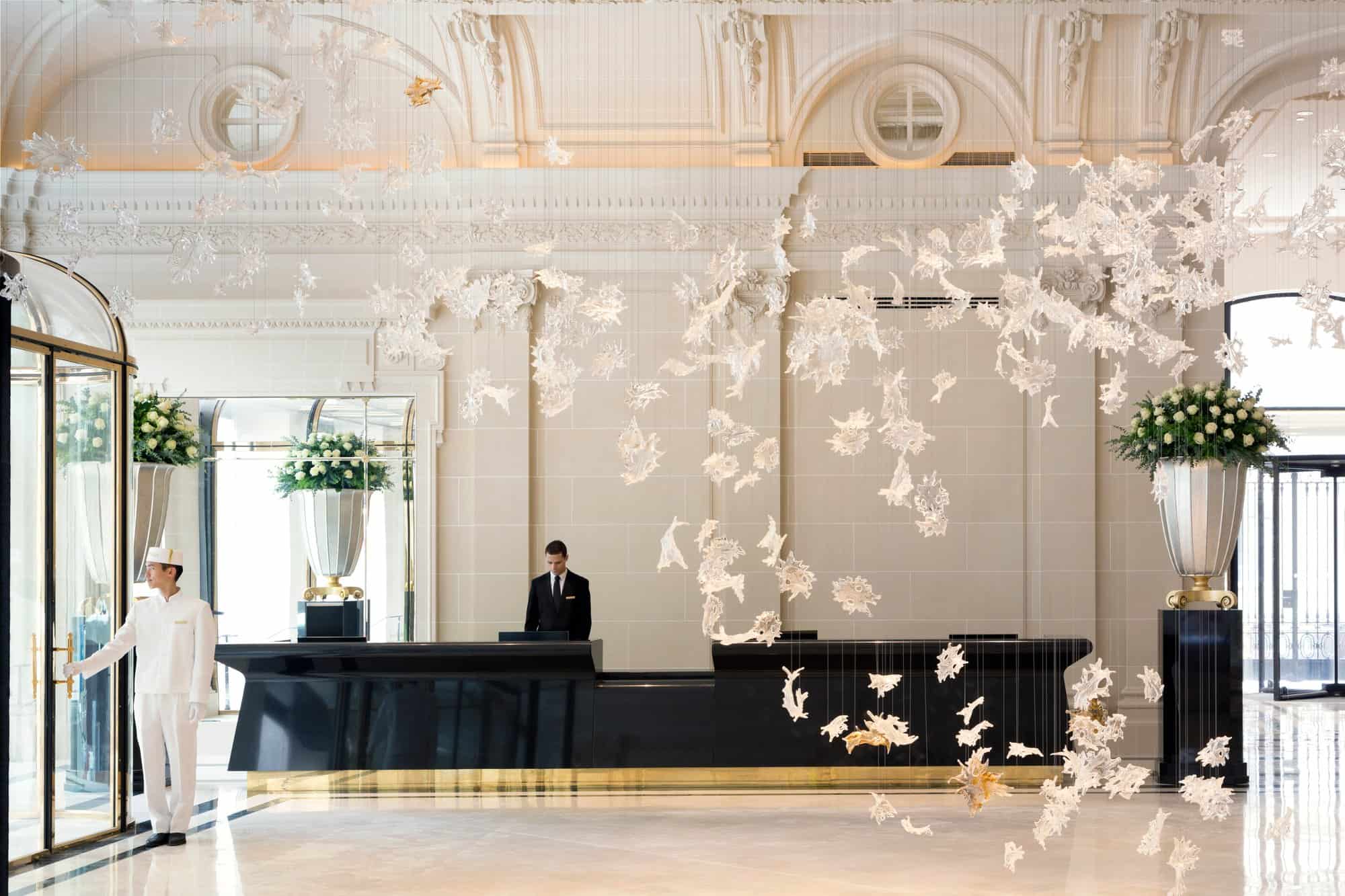
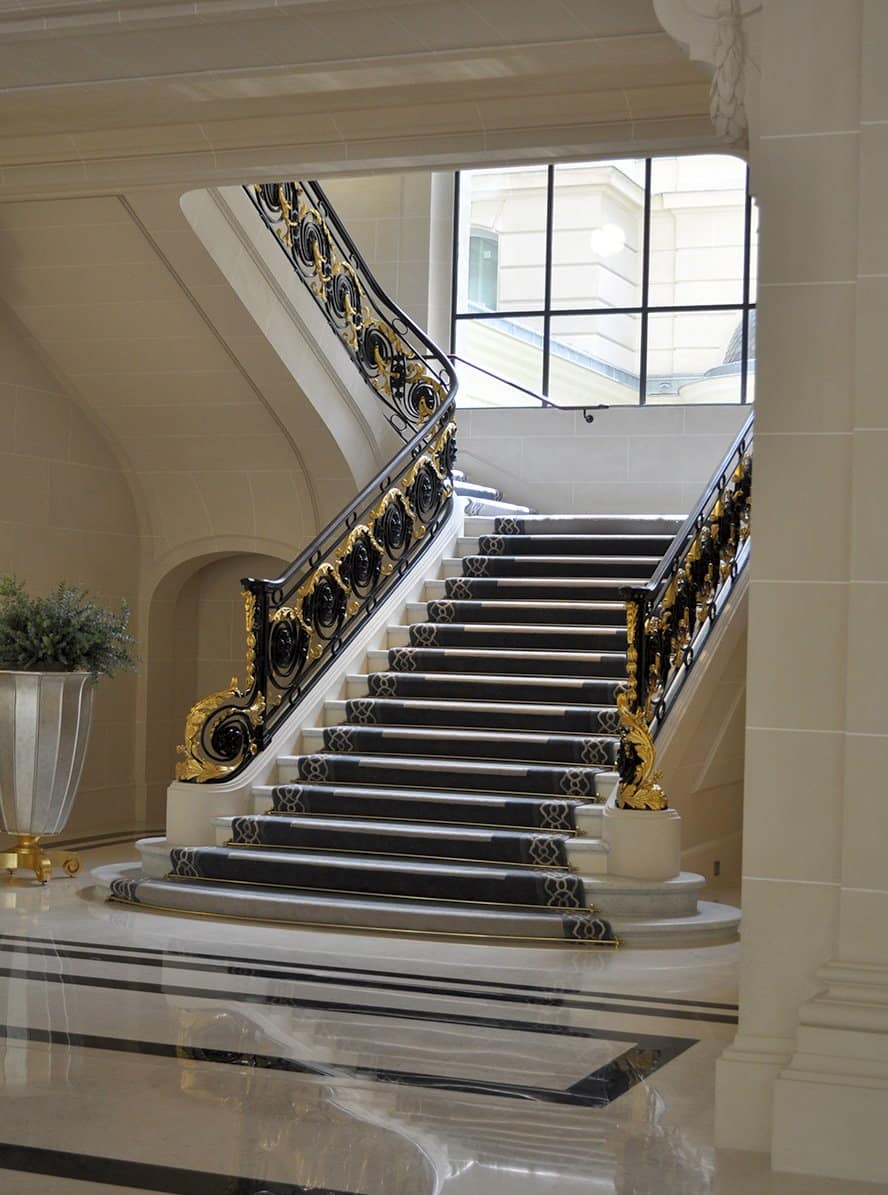
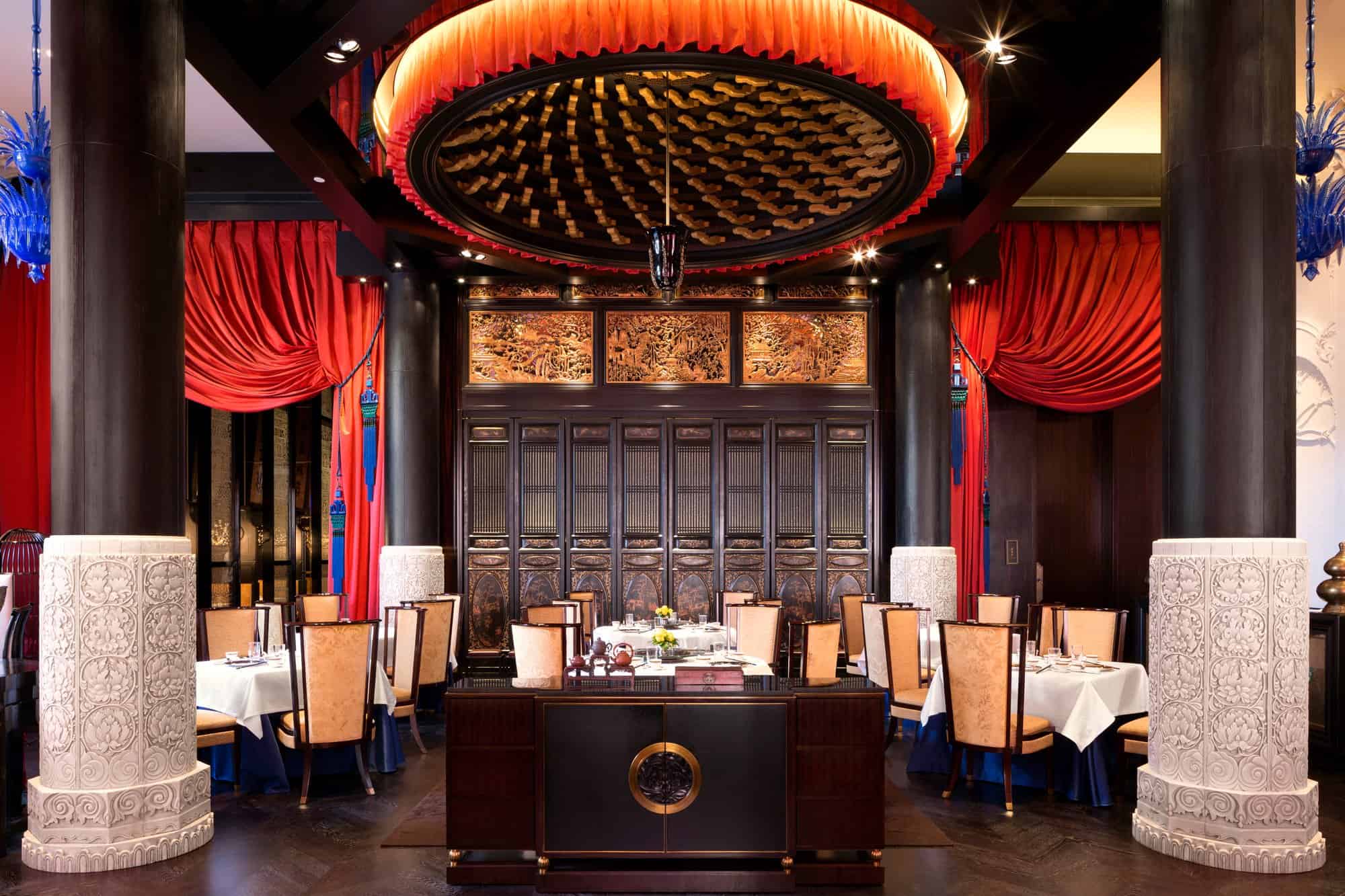
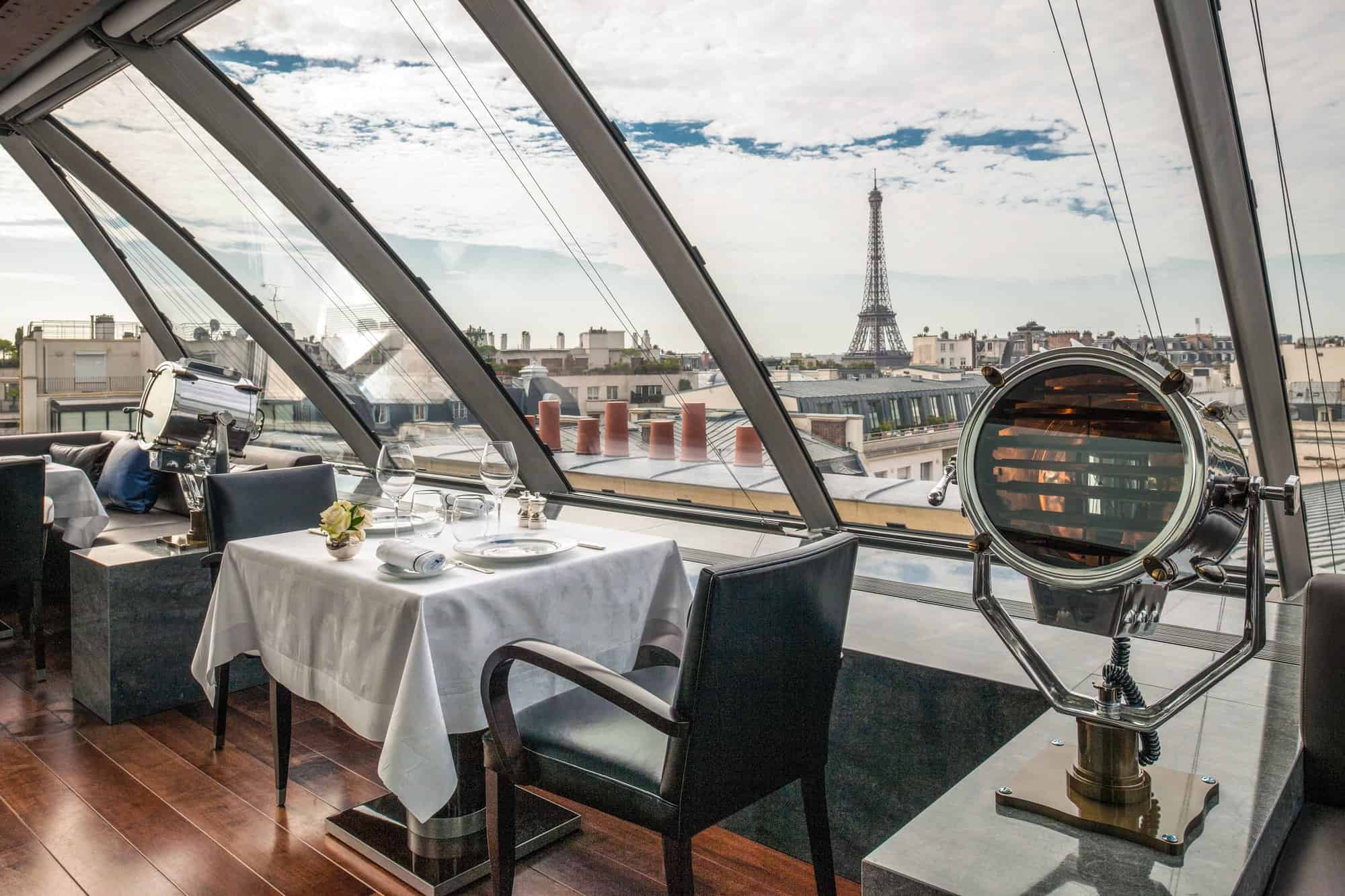
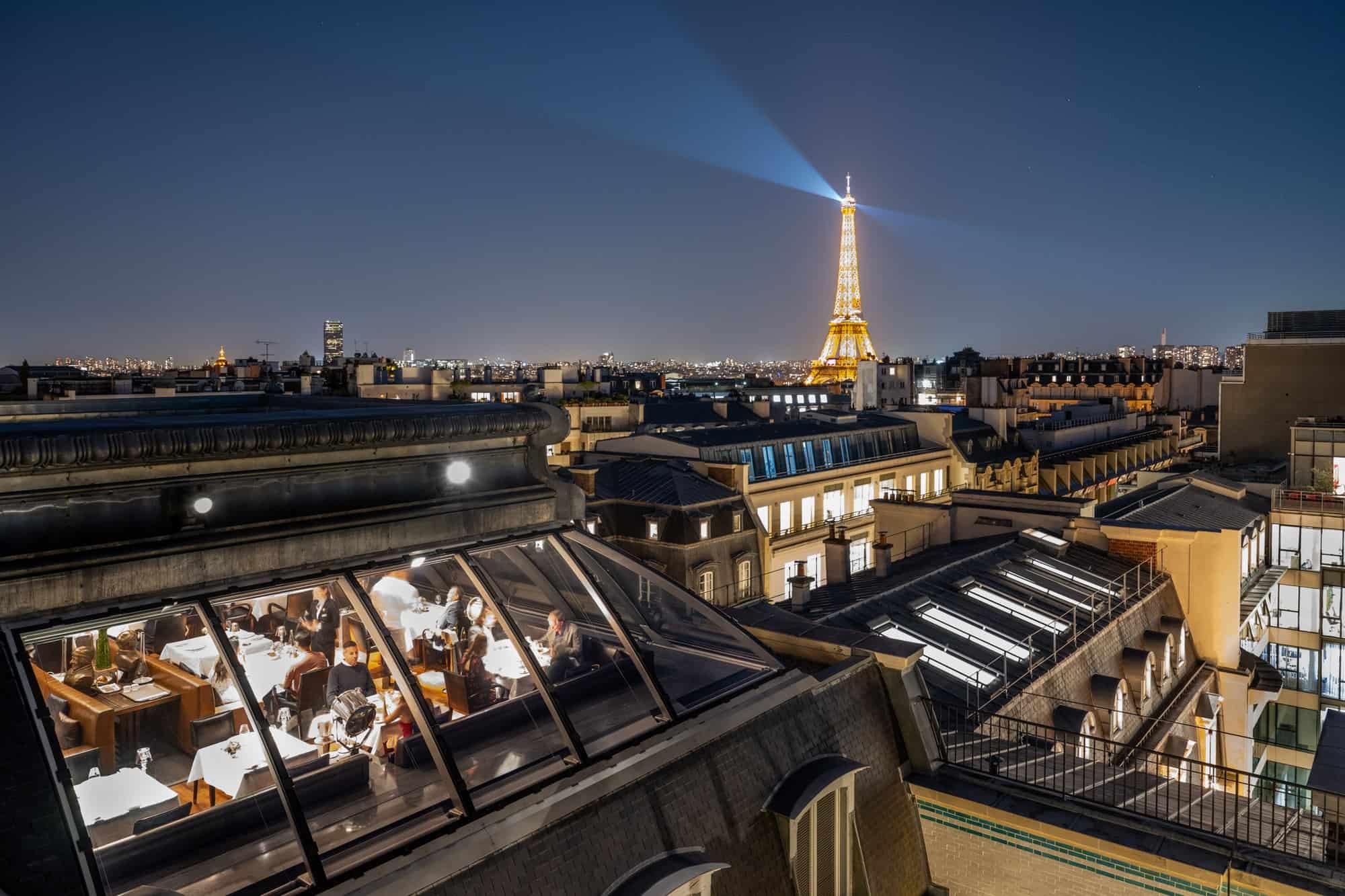
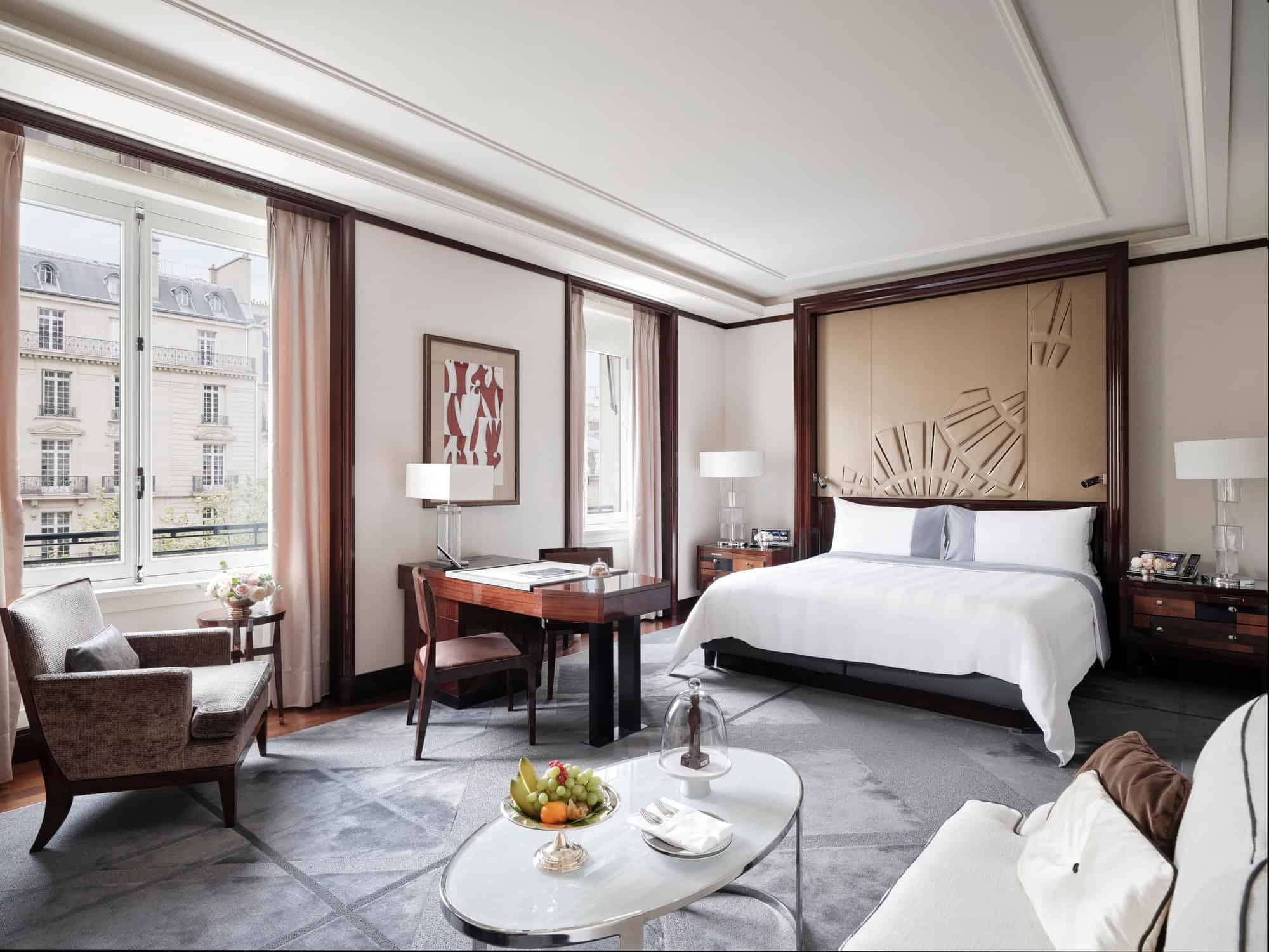
The interiors are where the restoration is most visible. Under Martinet, teams of French family craftsmen whose firms have worked at Versailles and the Louvre restored the marble, stucco, mosaics, woodwork and gilding: the gilders of Atelier Gohard applied some 40,000 leaves of gold in the lobby, galleries, rotunda, Le Bar Kléber and the Salon Adam; Atelier Fancelli numbered, removed and restored around 370 original wood panels from the lobby and 130 from the bar; and S.O.E. Stuc & Staff researched the original pigments to bring back the colours of the plasterwork. Green Campan marble columns, the rotunda mosaic and the reception ceiling were returned to their original state. Henry Leung’s rooms and suites set soft grey and cream tones and lacquered joinery against this heritage, and Chinese accents run through the house, from the pair of white marble lions at the door and the chandelier of 800 hand-blown crystal leaves in the lobby, inspired by the plane trees of the avenue, to the Cantonese restaurant LiLi. On the roof, L’Oiseau Blanc looks towards the Eiffel Tower beside a replica of the biplane in which Nungesser and Coli tried to cross the Atlantic in 1927. In 2016 the hotel received the Palace distinction from Atout France.
Photography and credits
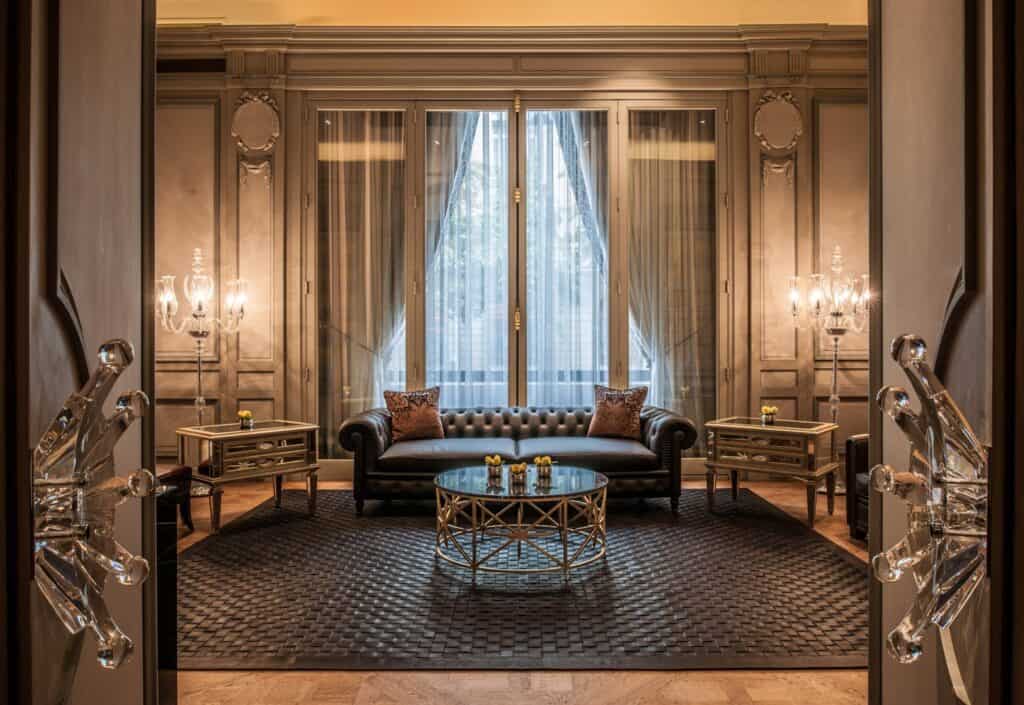
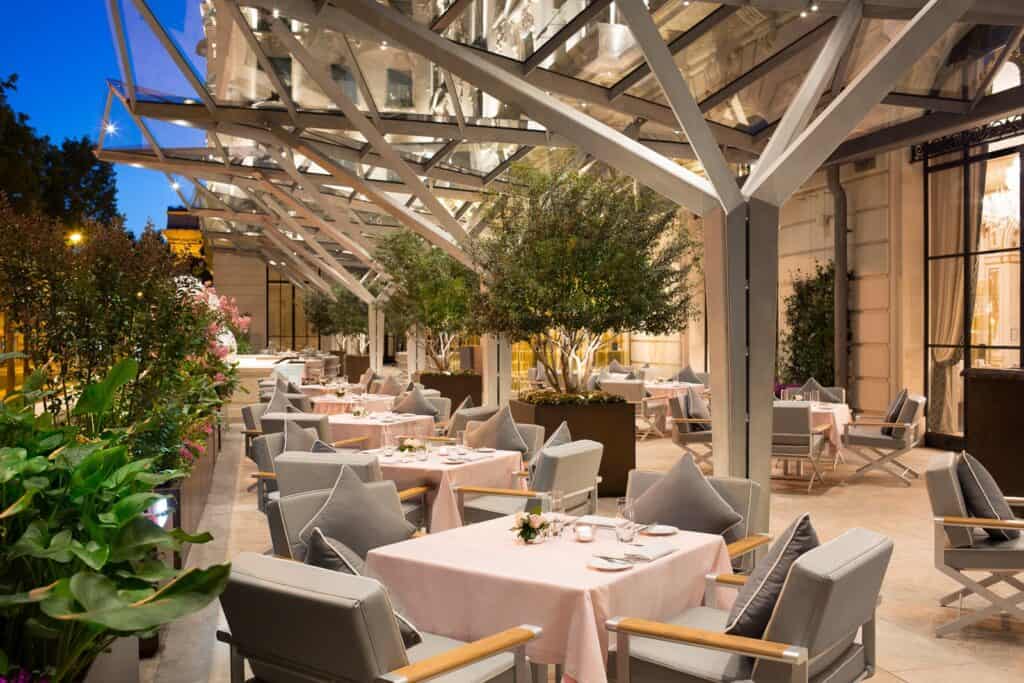
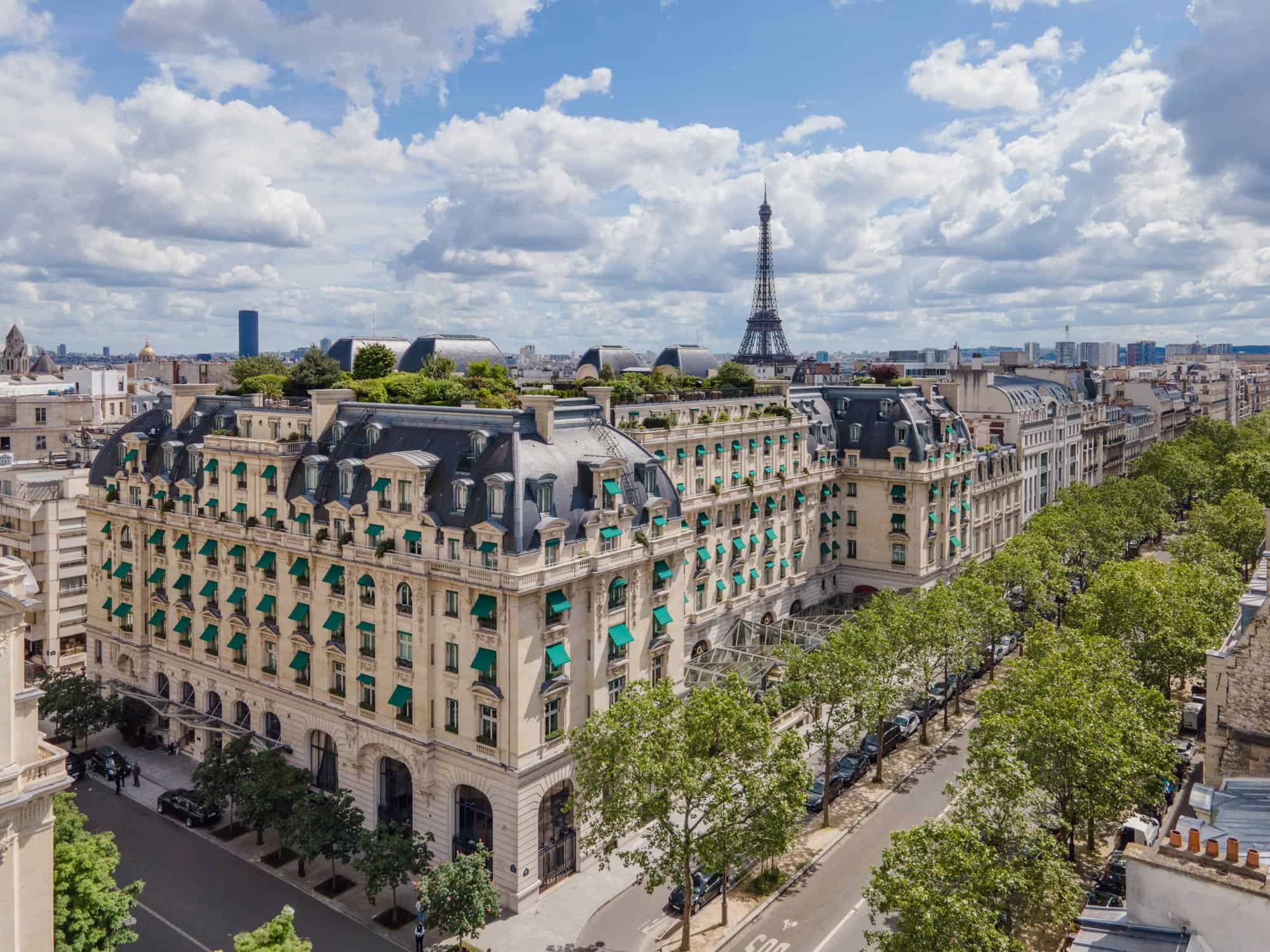
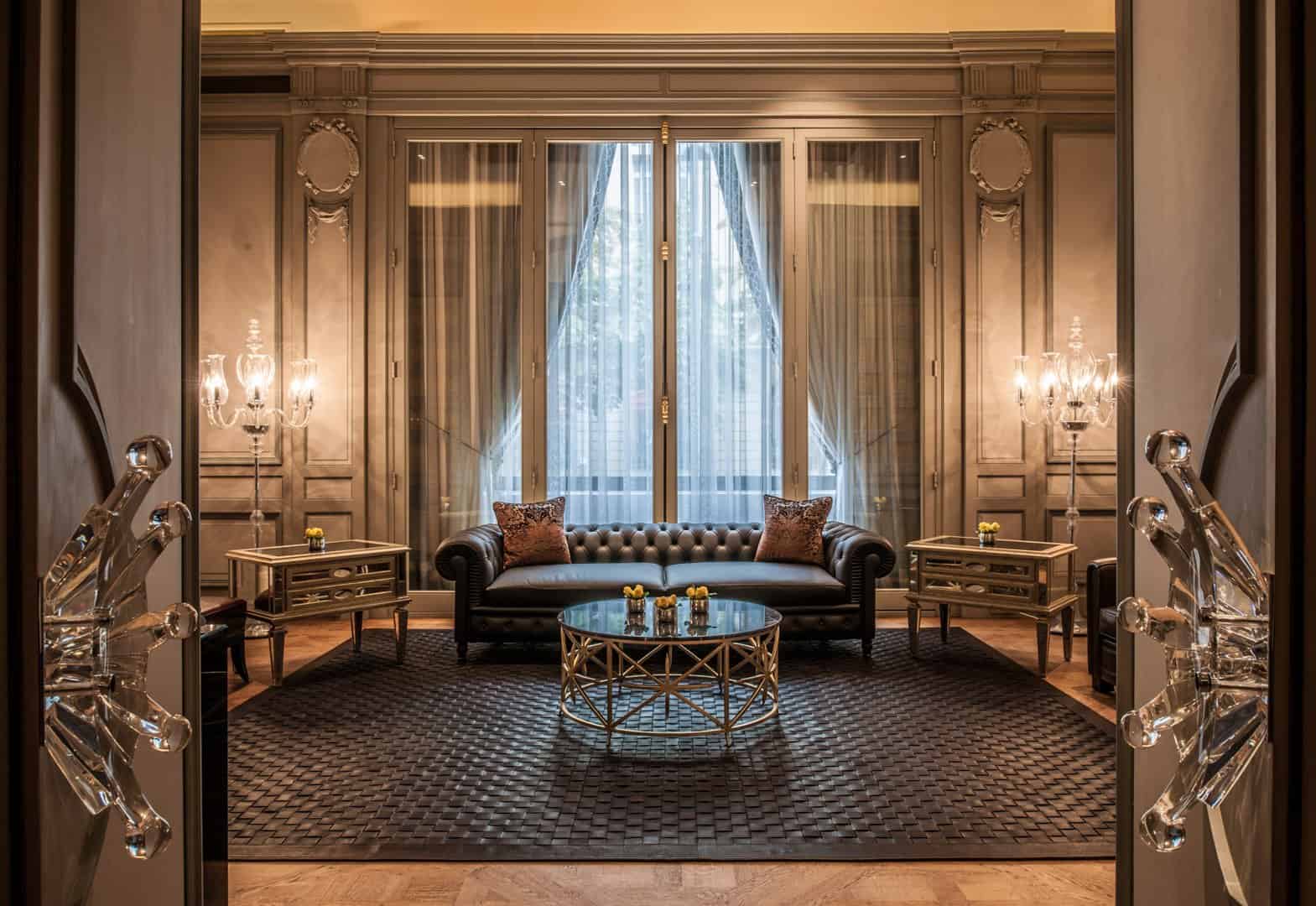
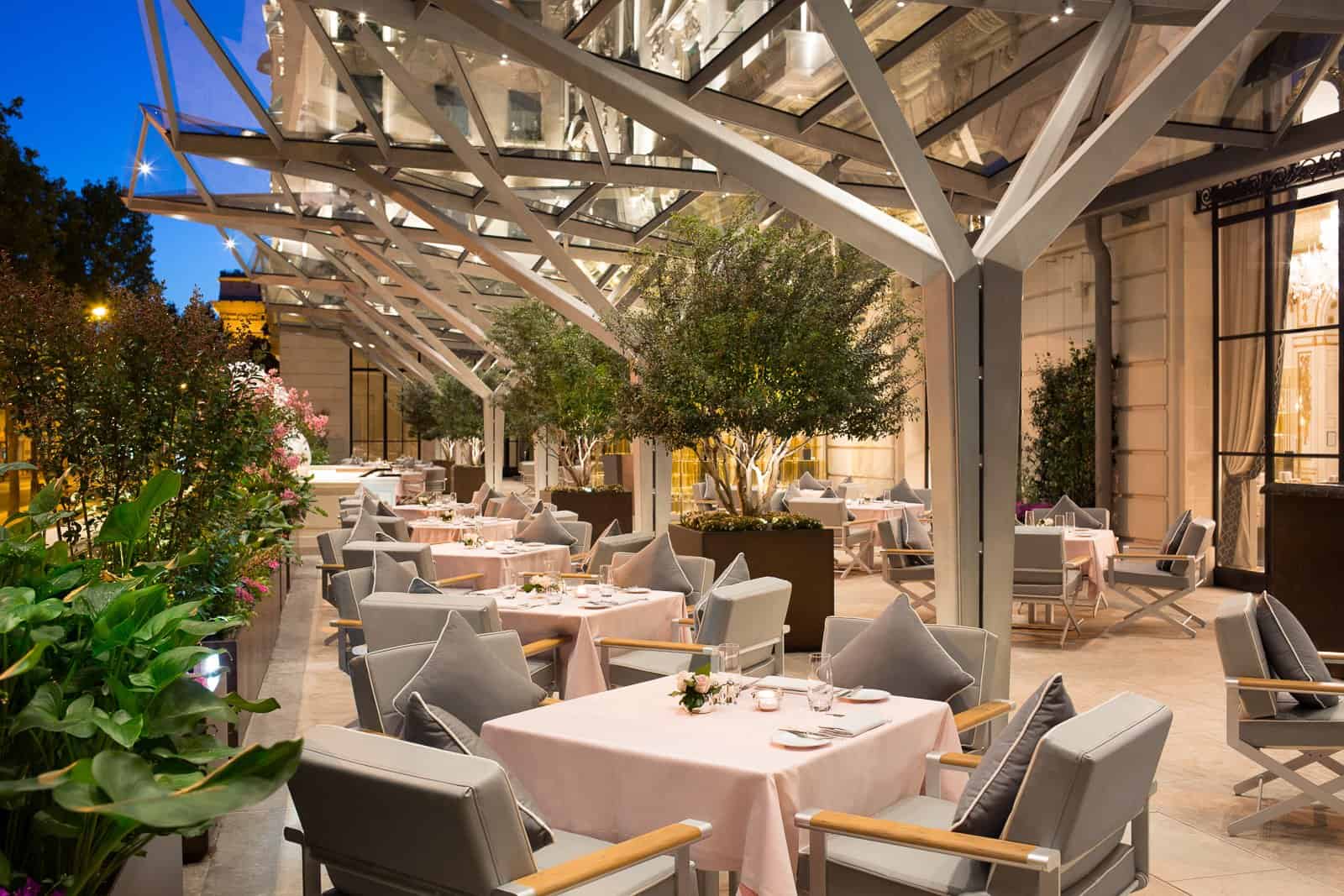
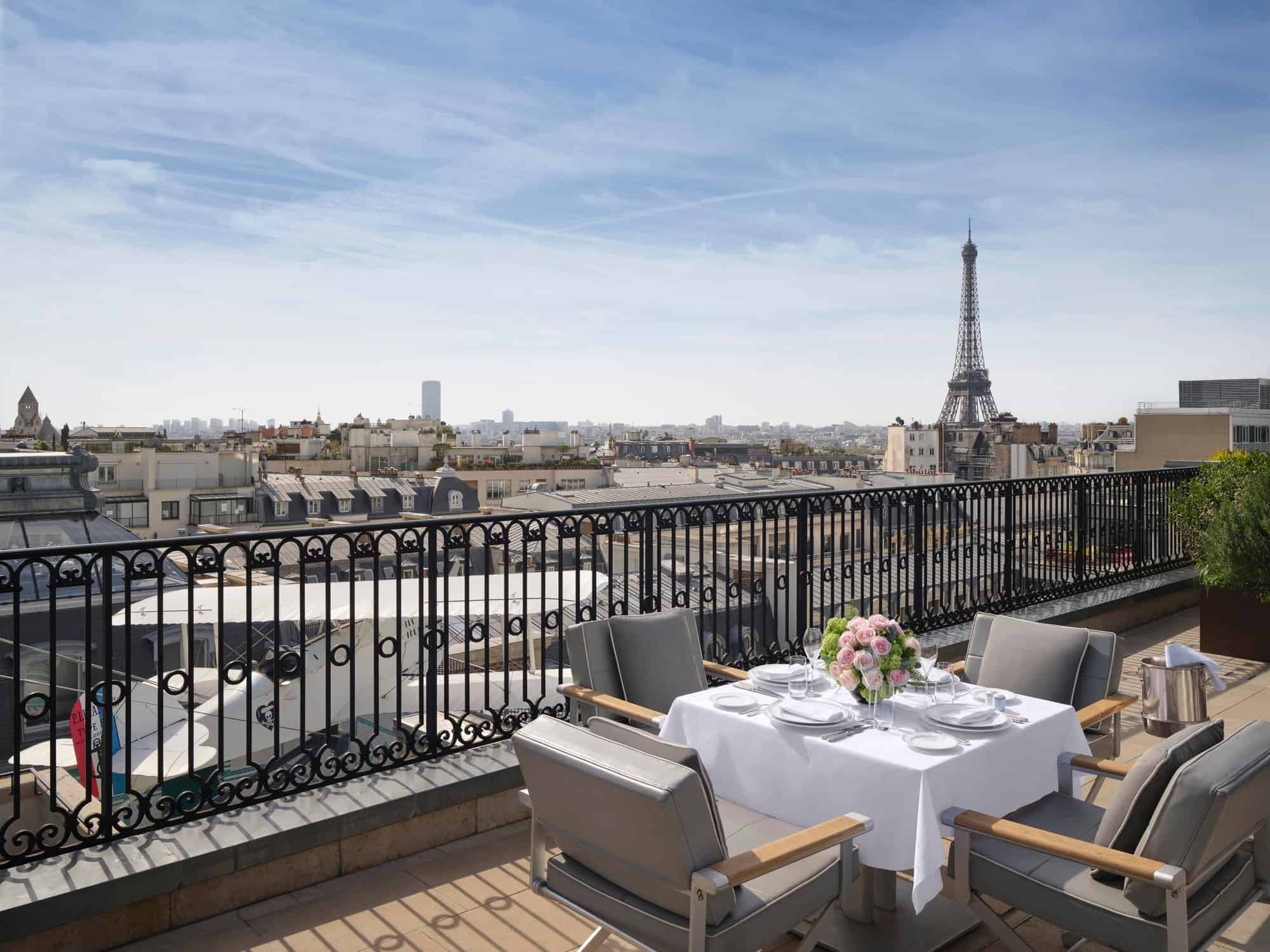
The photographs open with an aerial view of the hotel and the Eiffel Tower, then follow the avenue Kléber facade, its sculpted stonework above the glass canopy and the carved balustrades of the upper floors. Inside, they move through the gilded hall of Le Lobby, a white-and-gold stucco doorway, the panelled Le Bar Kléber, a marble gallery with gilded capitals, the reception beneath its crystal leaves and the grand staircase, before visiting Le Lounge Kléber, LiLi, La Terrasse Kléber and L’Oiseau Blanc by day and by night, and ending on the terrace of the Eiffel Tower Suite, a junior suite and the spa pool. Most of the images were released on Wikimedia Commons by the hotel’s own accounts Marketingppr (CC0) and PPR 19 (CC BY-SA 4.0); the facade detail is by Ricardalovesmonuments (2019, CC BY-SA 4.0); and four heritage views come from Affine Design’s project page, which does not name a photographer.
The Peninsula Paris gallery
Explore more on Archtene
- More projects by Richard Martinet + Affine Design + Henry Leung + Chhada Siembieda Leung + Armand Sibien
- More projects in Paris
- More Hotel projects