Chrysler Building

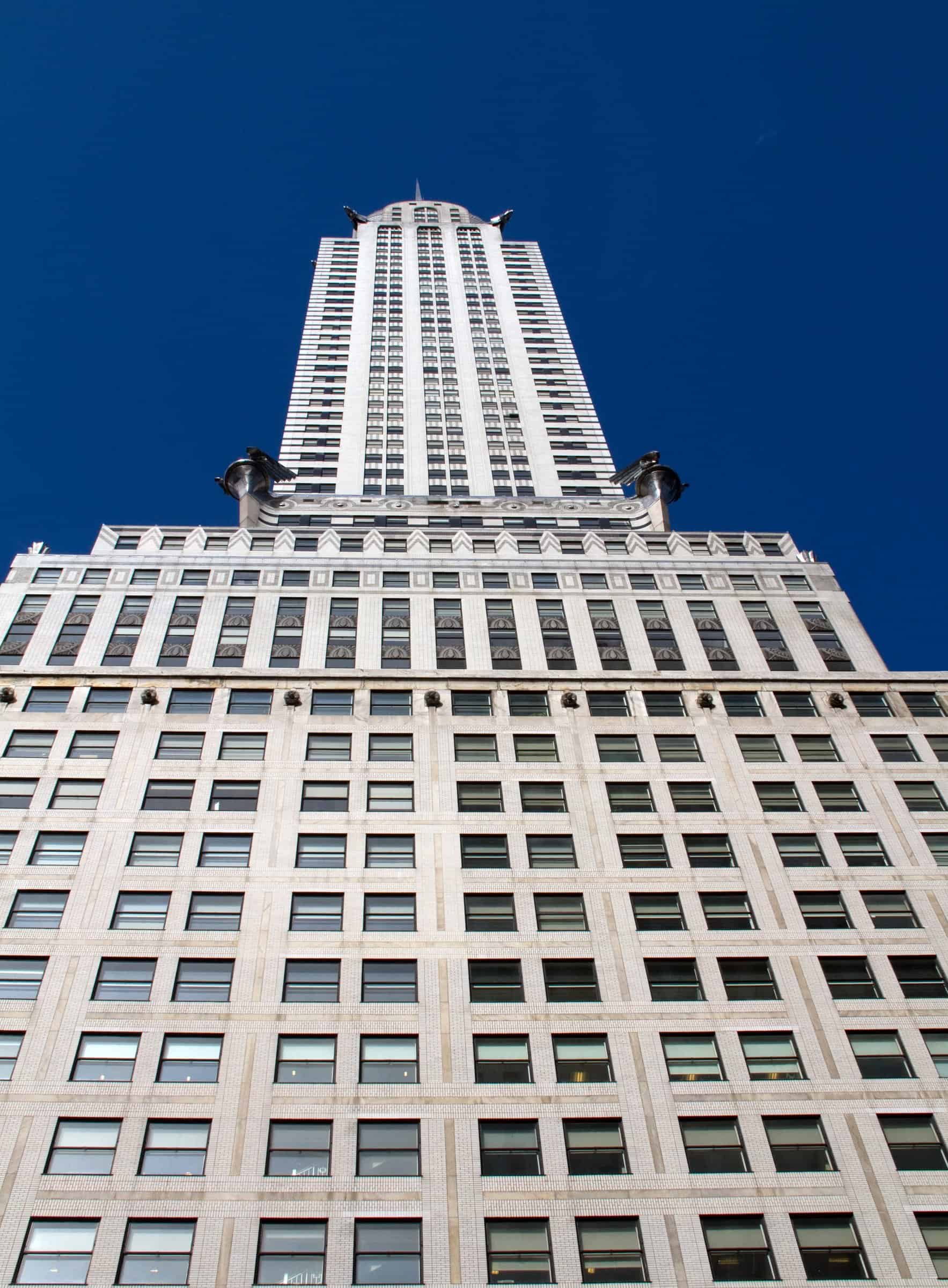
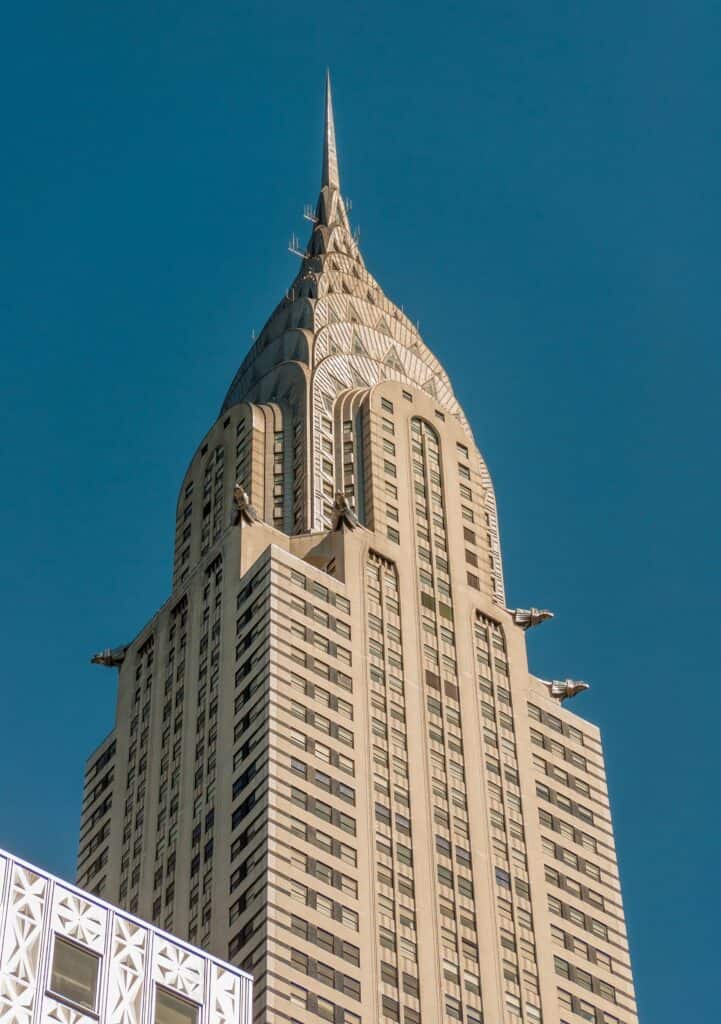
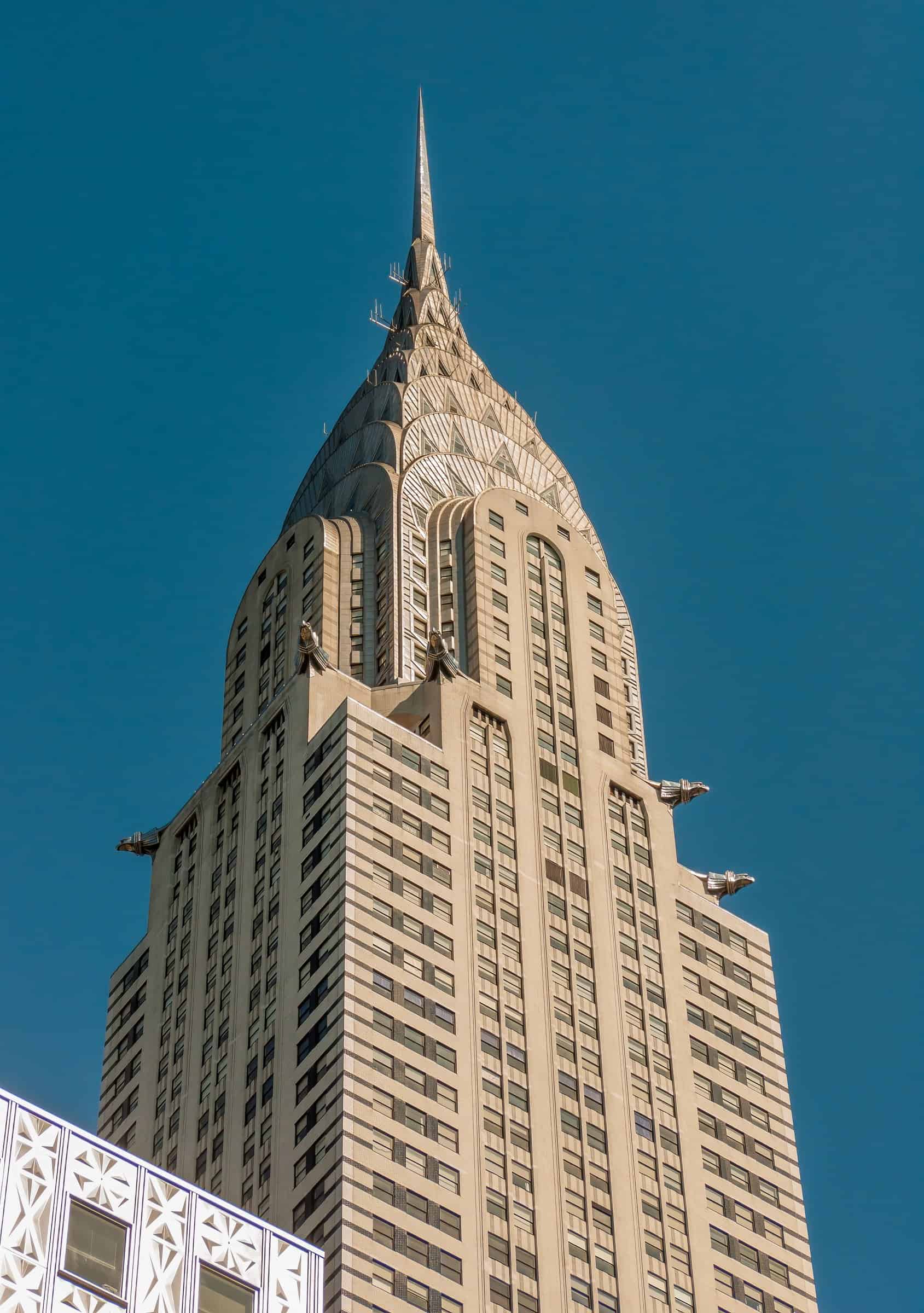
Looking up the Chrysler Building crown in New York, seven Nirosta-steel terraced arches with triangular sunburst windows tapering to a needle spire, eagle and radiator-cap ornaments at the setbacks against a clear blue sky
Sharefin


Chrysler Building by William Van Alen in New York

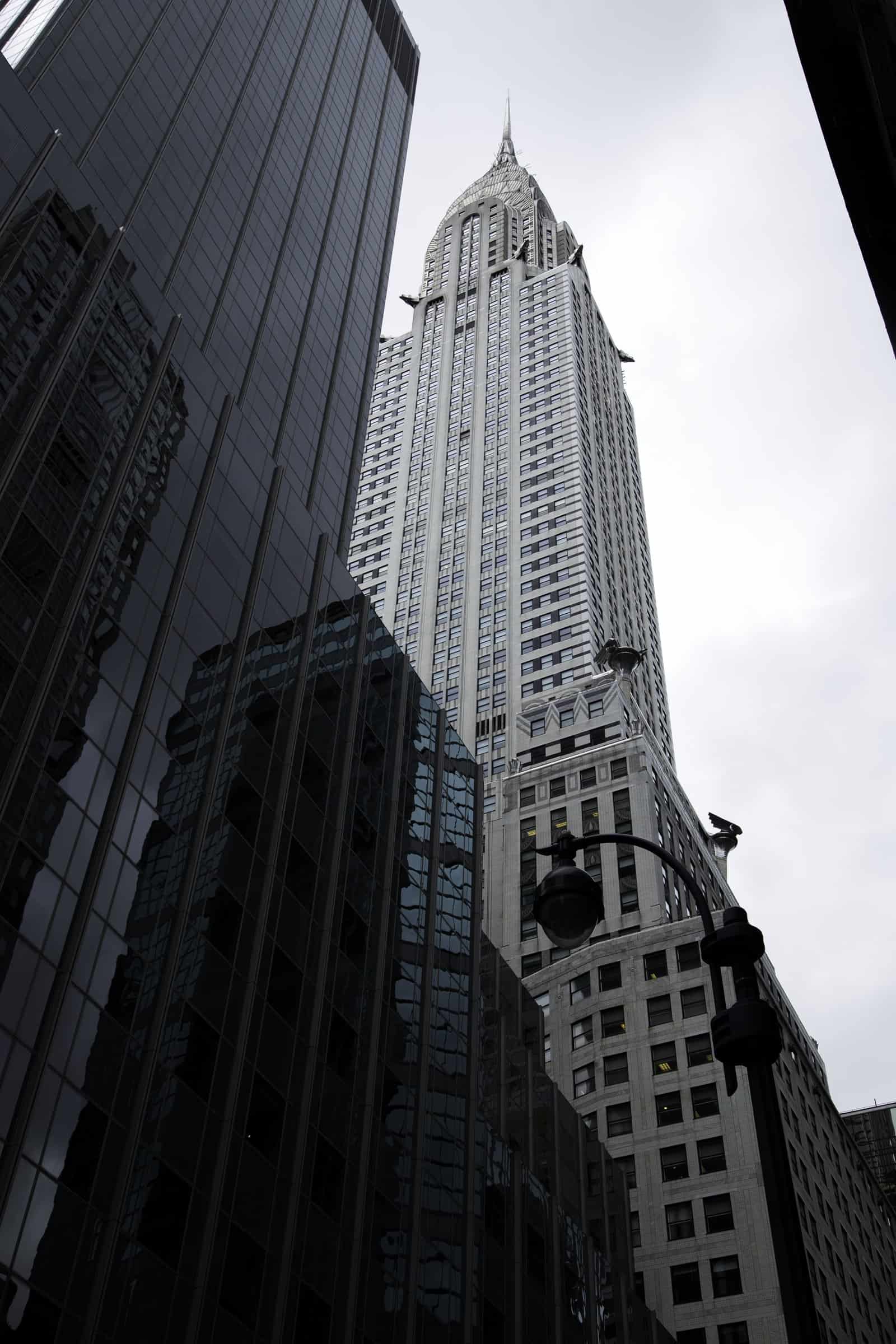
The Chrysler Building is a 1,046-foot (319 m) Art Deco office building at 405 Lexington Avenue in Midtown Manhattan, New York, completed in 1930 to designs by William Van Alen for automotive magnate Walter P. Chrysler. Briefly the world’s tallest building after its secret stainless-steel spire was raised, it remains the defining skyscraper of Jazz Age New York — a brick-and-steel shaft crowned in gleaming Nirosta steel, photographed here from street, lobby and crown.
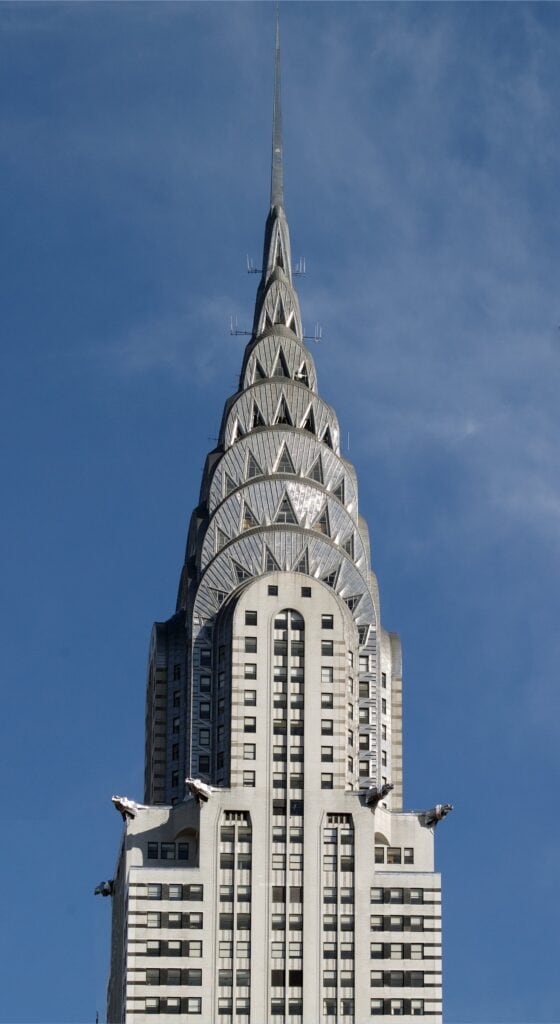
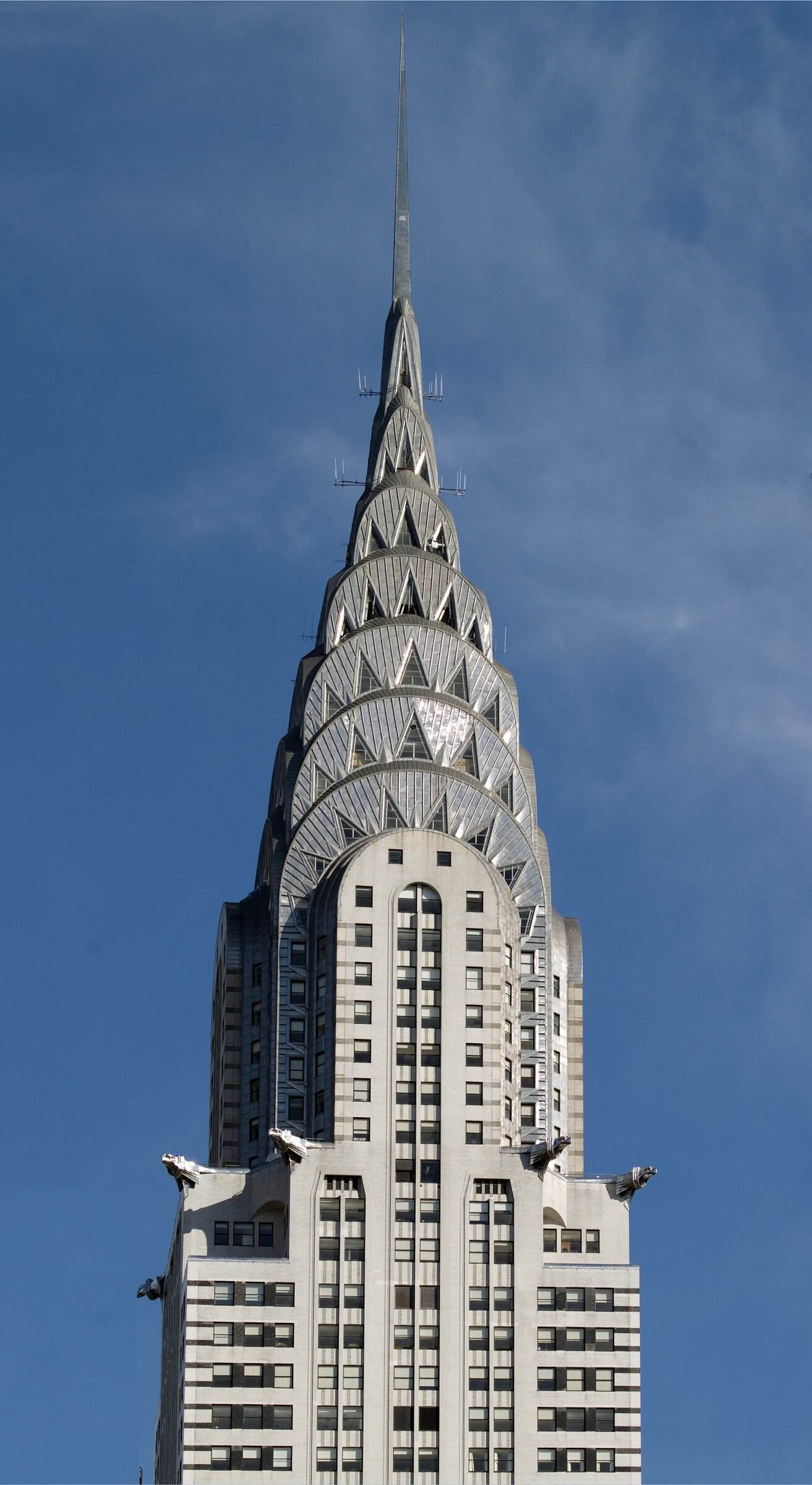
Close view of the Chrysler Building's stainless-steel crown and needle spire, seven radiating terraced arches with triangular windows and corner eagle gargoyles against blue sky

From Reynolds lease to Walter Chrysler's tower

The project began as a scheme by developer William H. Reynolds on Cooper Union land at Lexington Avenue between 42nd and 43rd Streets. In 1928 Walter Chrysler bought the lease and kept Van Alen as architect, financing the tower personally as a real-estate investment rather than as Chrysler Corporation headquarters. Redesign after redesign pushed the height upward until the finished building claimed seventy-seven storeys and the title of world’s tallest — holding it for eleven months until the Empire State Building opened in 1931.
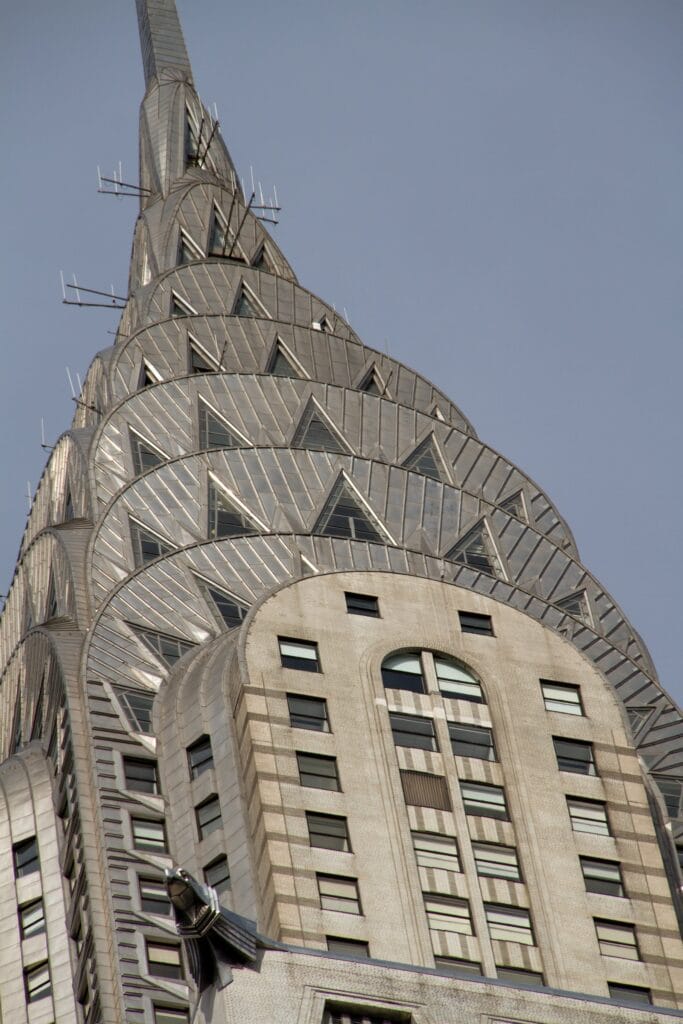
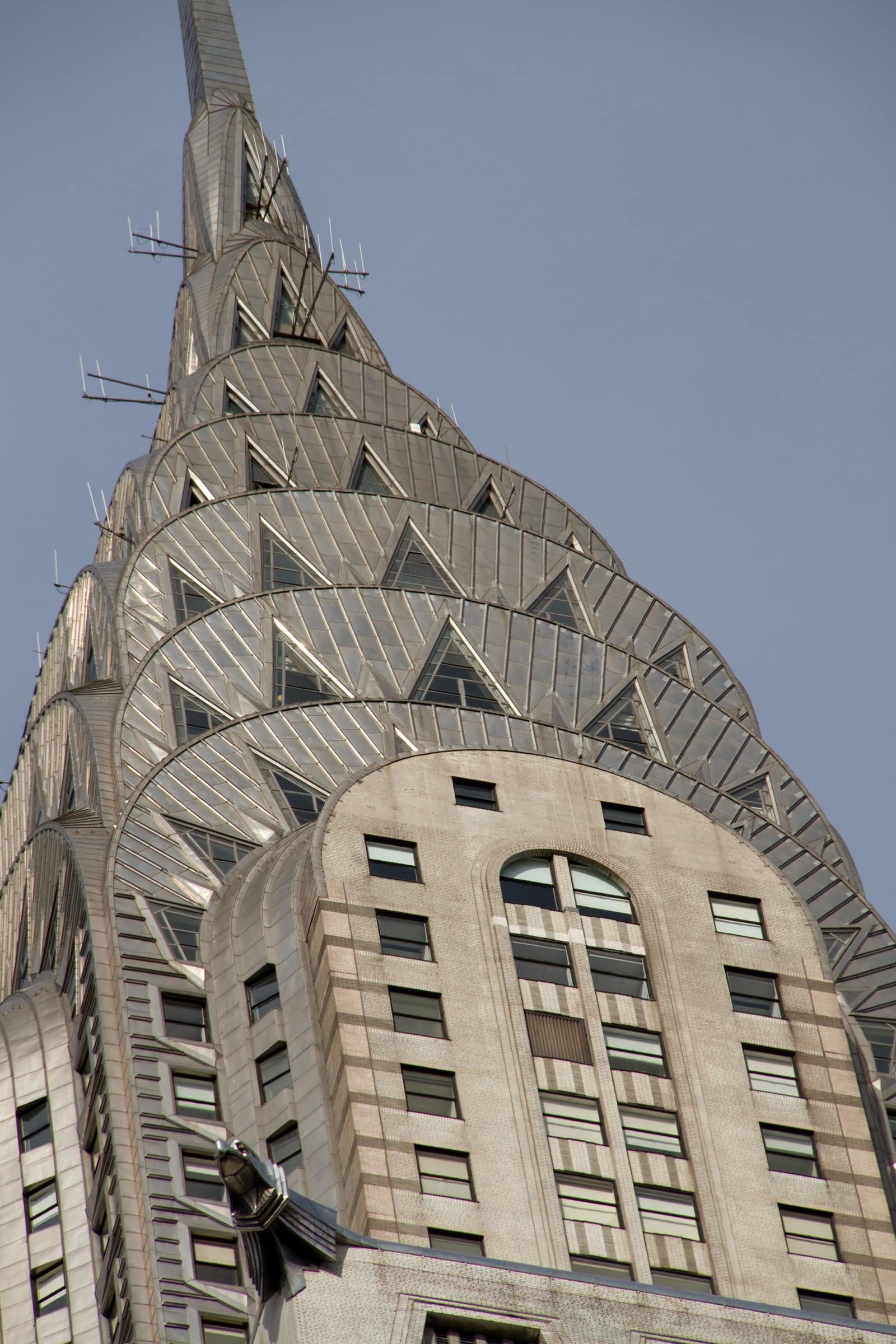
Low-angle view of the upper Chrysler Building crown in stainless steel, sunburst terraces and a projecting eagle ornament under a pale grey-blue sky

The secret spire and the Nirosta crown

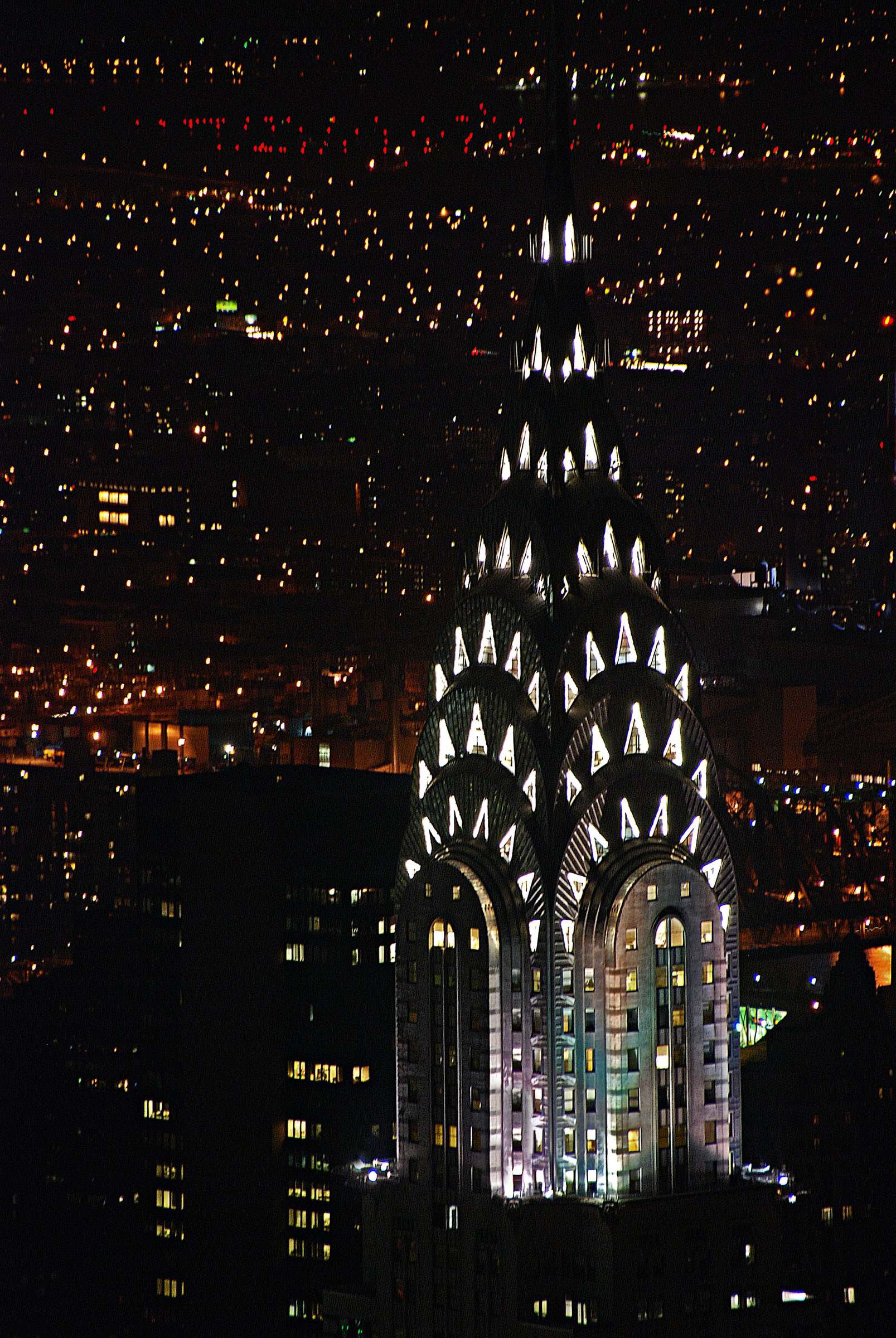
The height race with Craig Severance’s Bank of Manhattan Trust Building at 40 Wall Street turned on a theatrical last move. Van Alen had a 185-foot needle — the ‘vertex’ — fabricated in secret inside the crown; after 40 Wall Street topped out, the sections were hoisted and riveted in about ninety minutes, lifting the Chrysler to 1,046 feet. The seven radiating terraces of the crown, clad in Krupp’s Nirosta 18-8 stainless steel in a sunburst of triangular windows, were the first major American use of that alloy on a skyscraper.
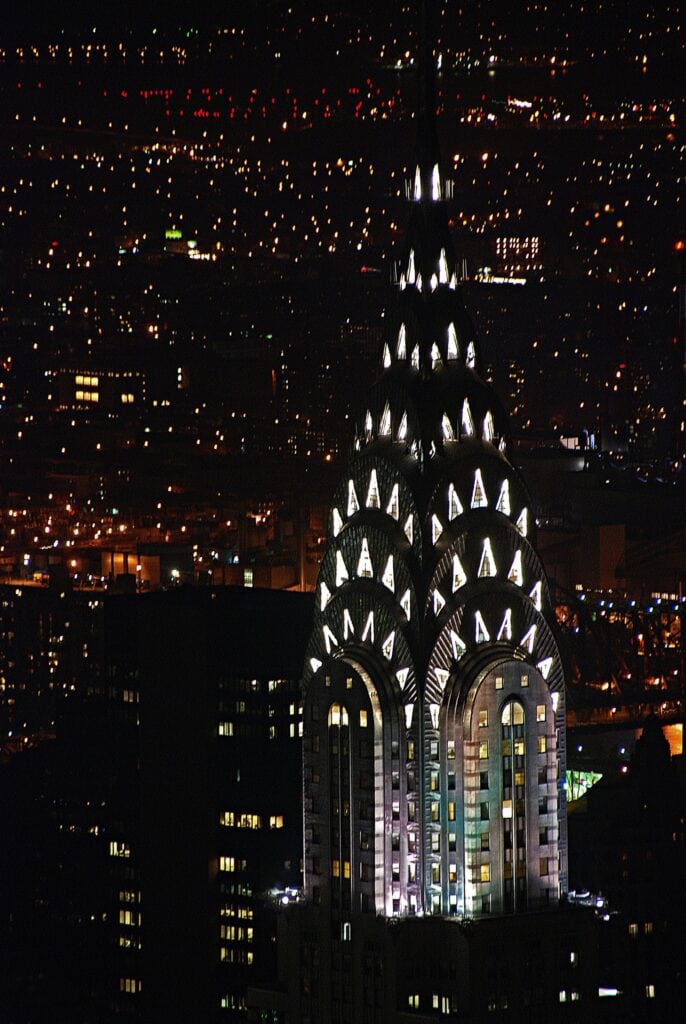
Night view of the illuminated Chrysler Building crown, white-lit triangular windows in the stainless terraces glowing above a soft bokeh of city lights

Automotive ornament and eagle gargoyles

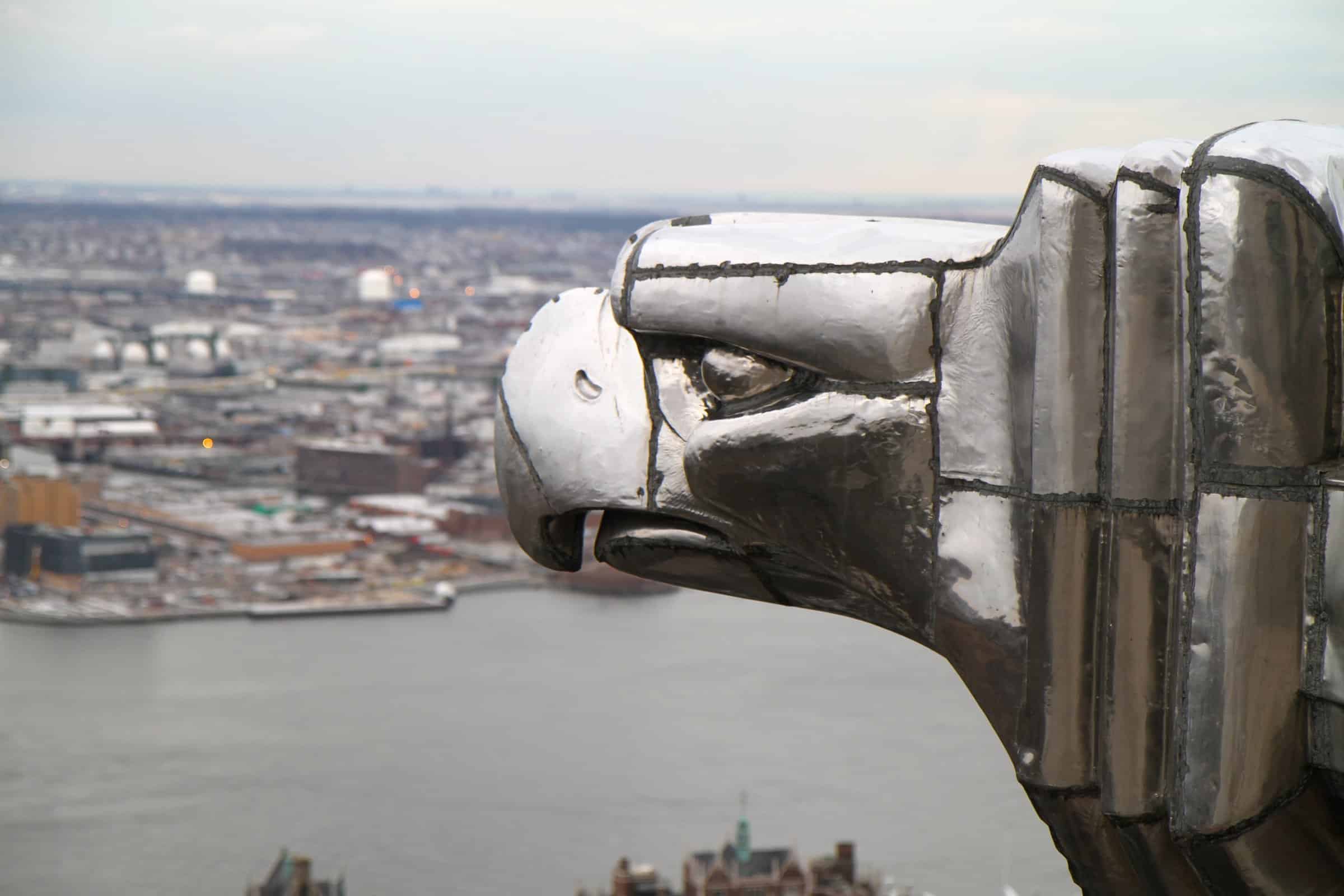
Automotive imagery runs through the exterior ornament. At the 31st-floor setbacks, stainless replicas of 1929 Chrysler radiator caps and winged hubcaps project like Gothic gargoyles; at the 61st floor, eagle heads — a nod to the national bird — guard the corners beneath the crown. Black Shastone granite and white brick stripe the shaft, while the legally mandated setbacks of the 1916 Zoning Resolution give the tower its ziggurat profile before it funnels into the Maltese-cross plan of the upper floors.
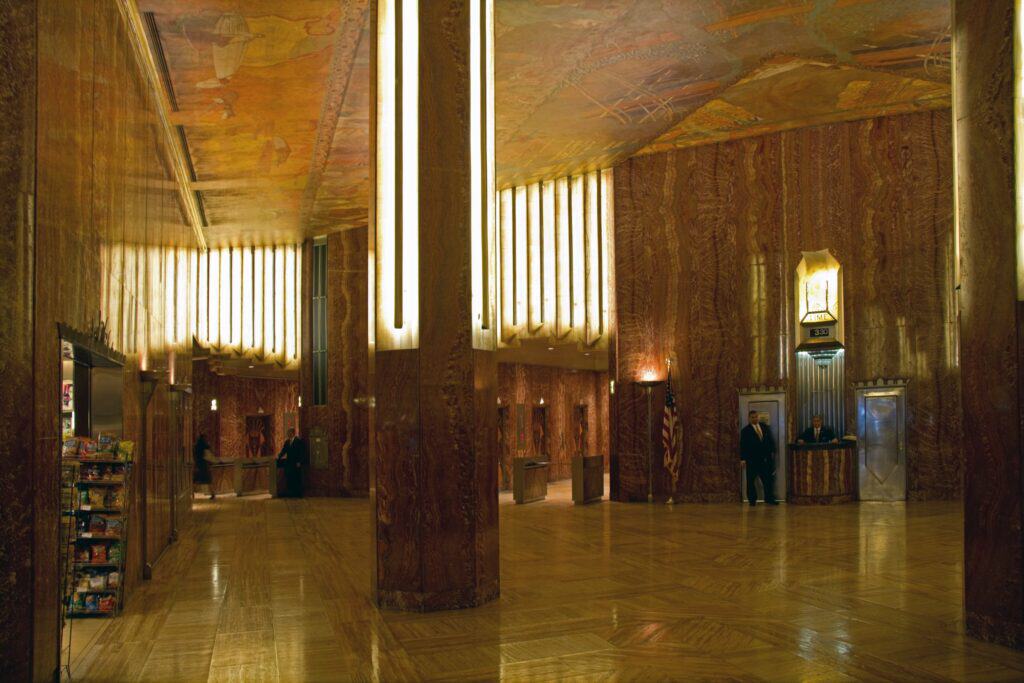
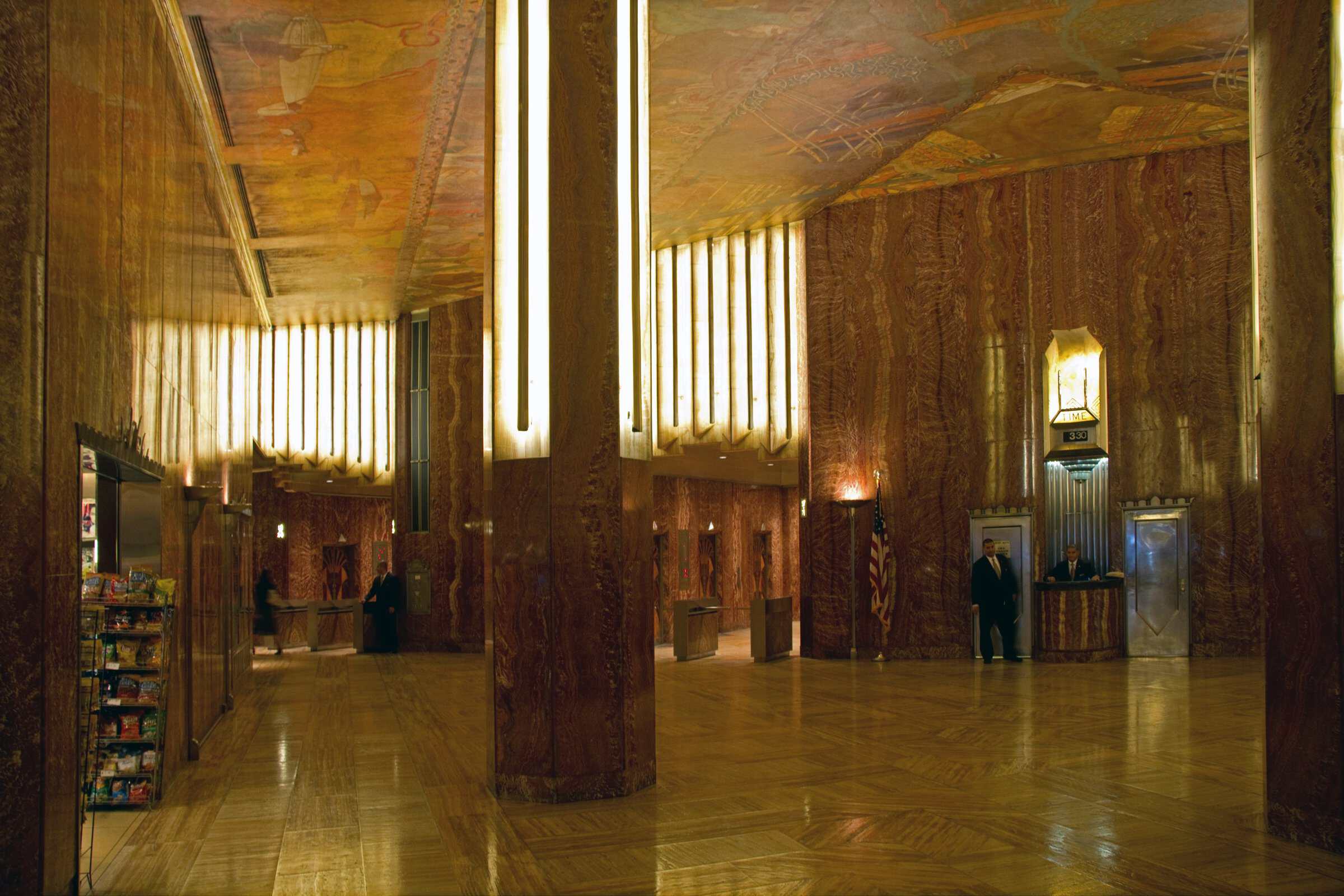
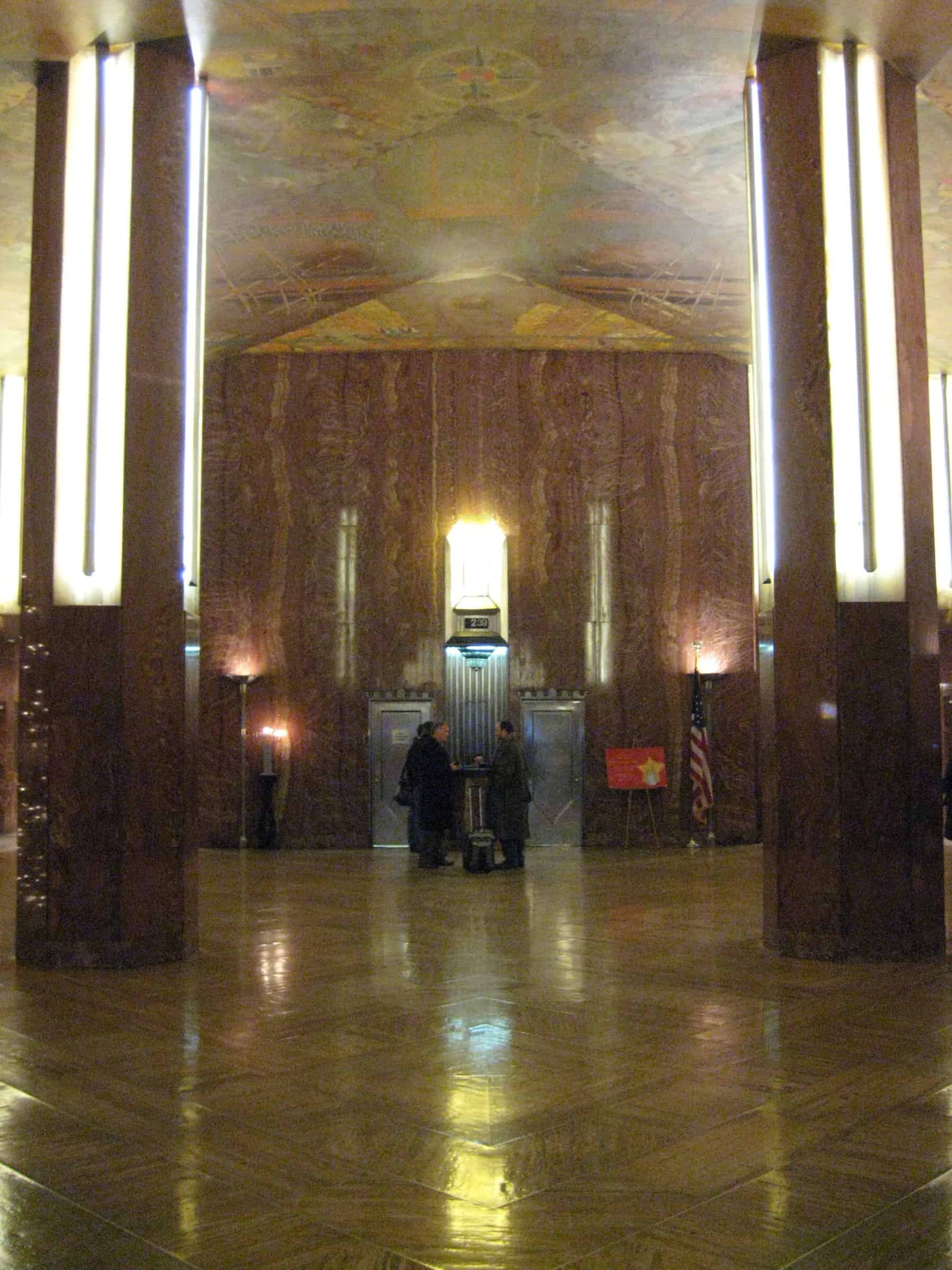
Wide view of the triangular Chrysler Building lobby, African red granite walls, glowing onyx light fins, Edward Trumbull ceiling mural and elevator banks beyond a central desk

The triangular lobby and Trumbull mural

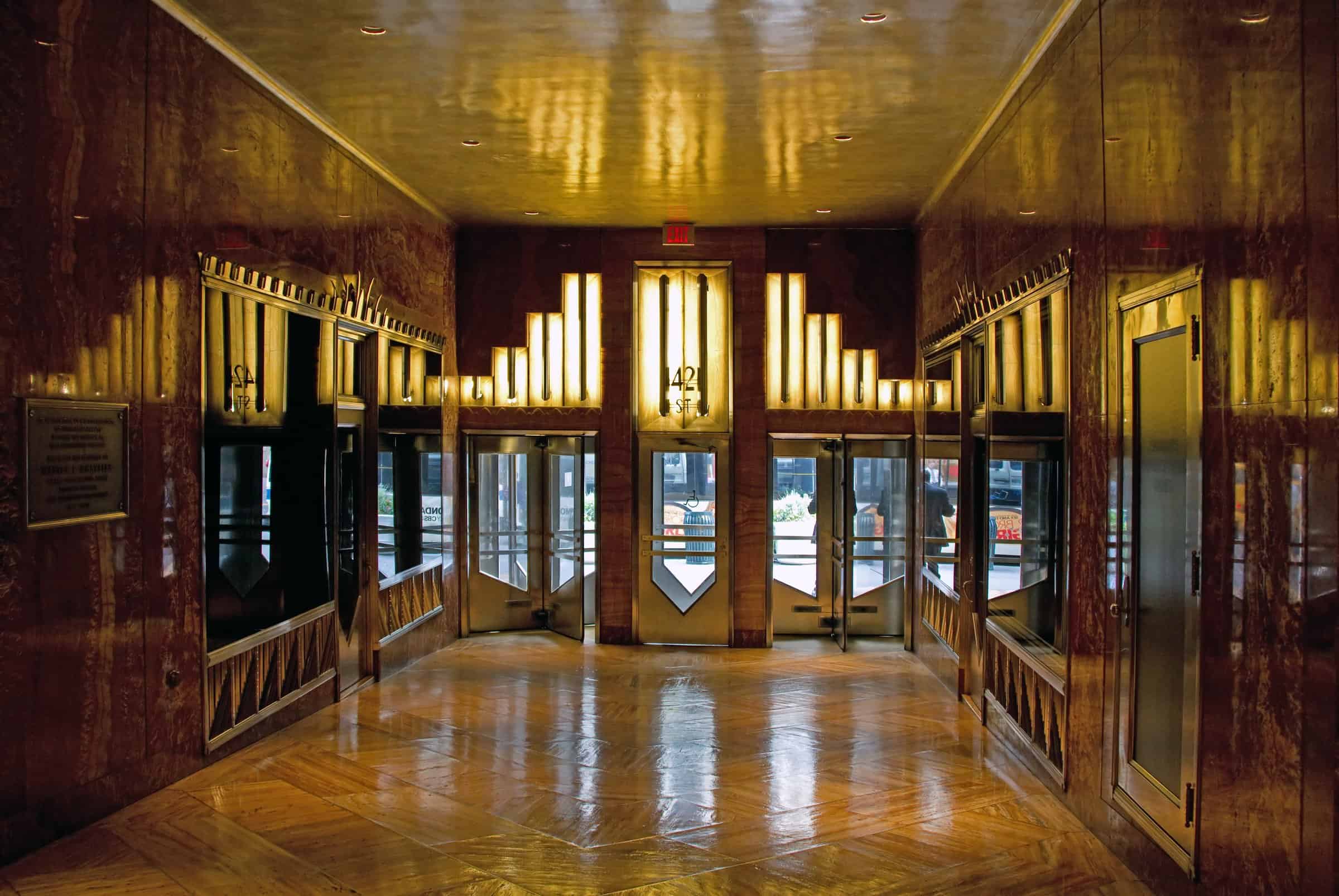
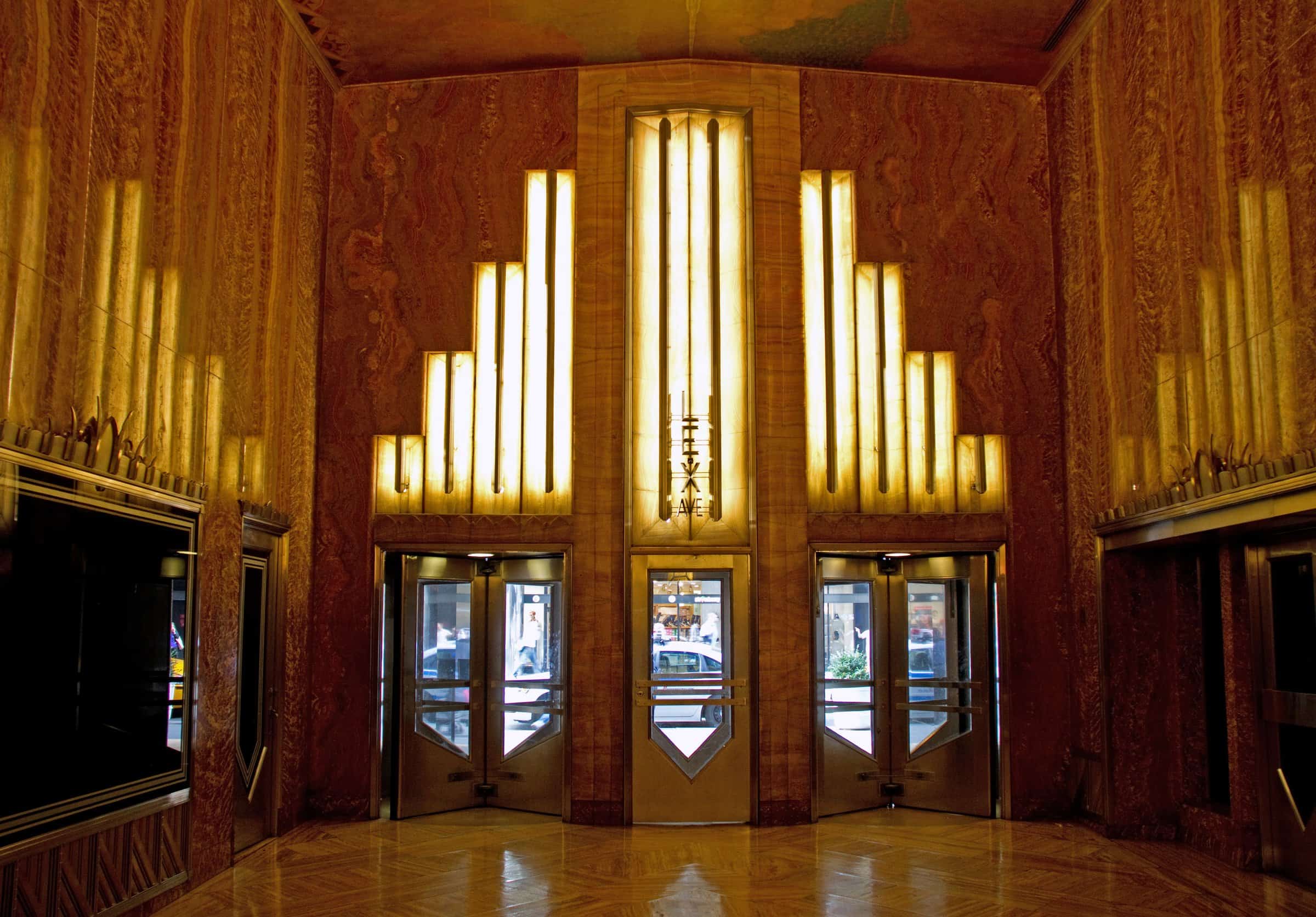
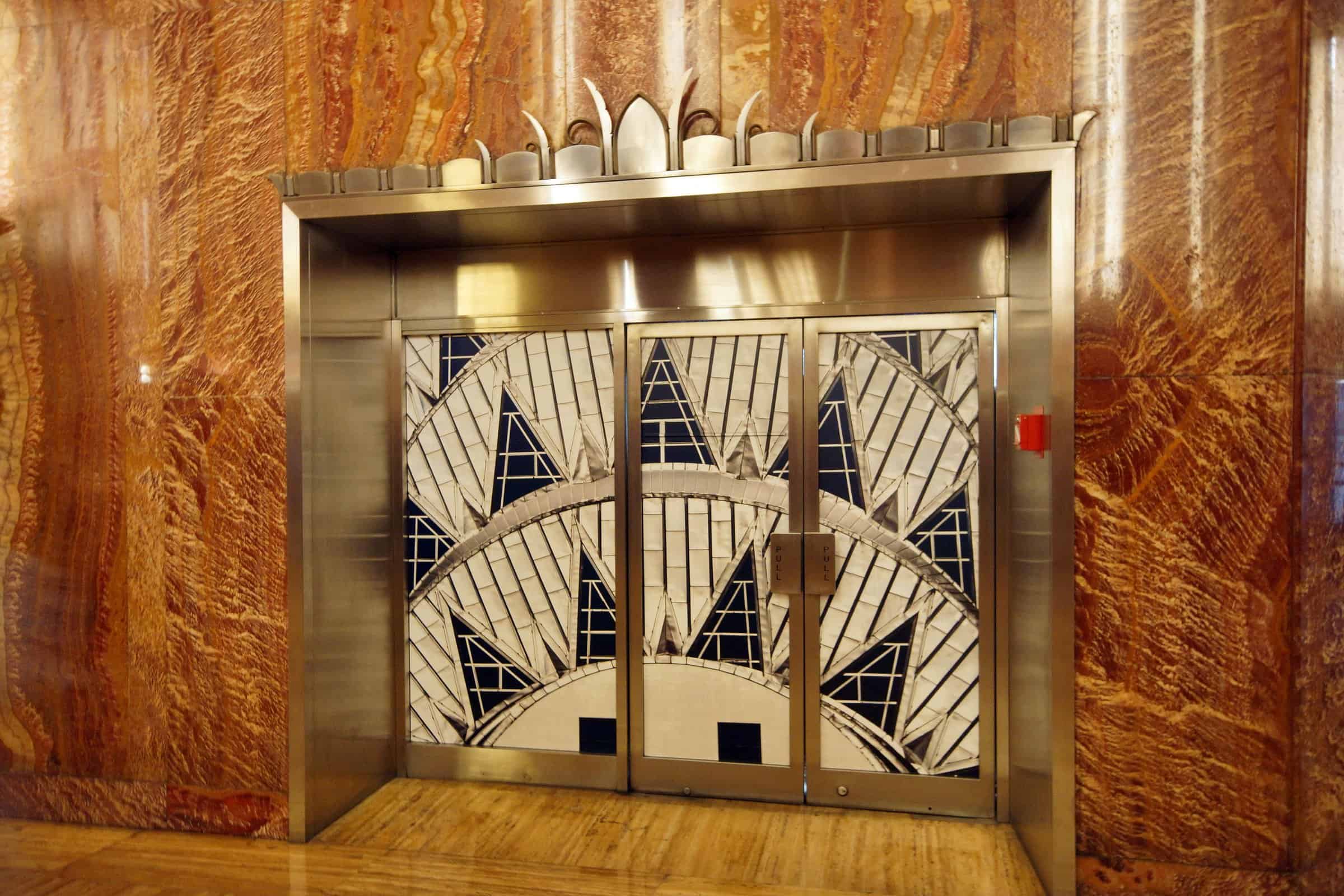
Inside, the triangular lobby joins entrances from Lexington Avenue, 42nd Street and 43rd Street. Walls of African red granite (often described as Moroccan marble) rise to Edward Trumbull’s ceiling mural Transport and Human Endeavor, a Machine Age allegory of aviation, industry and the building itself. Siena yellow travertine bands the floor paths; vertical fluorescent lamps are wrapped in Belgian blue marble and Mexican amber onyx; Nirosta steel frames the storefronts and elevator surrounds.
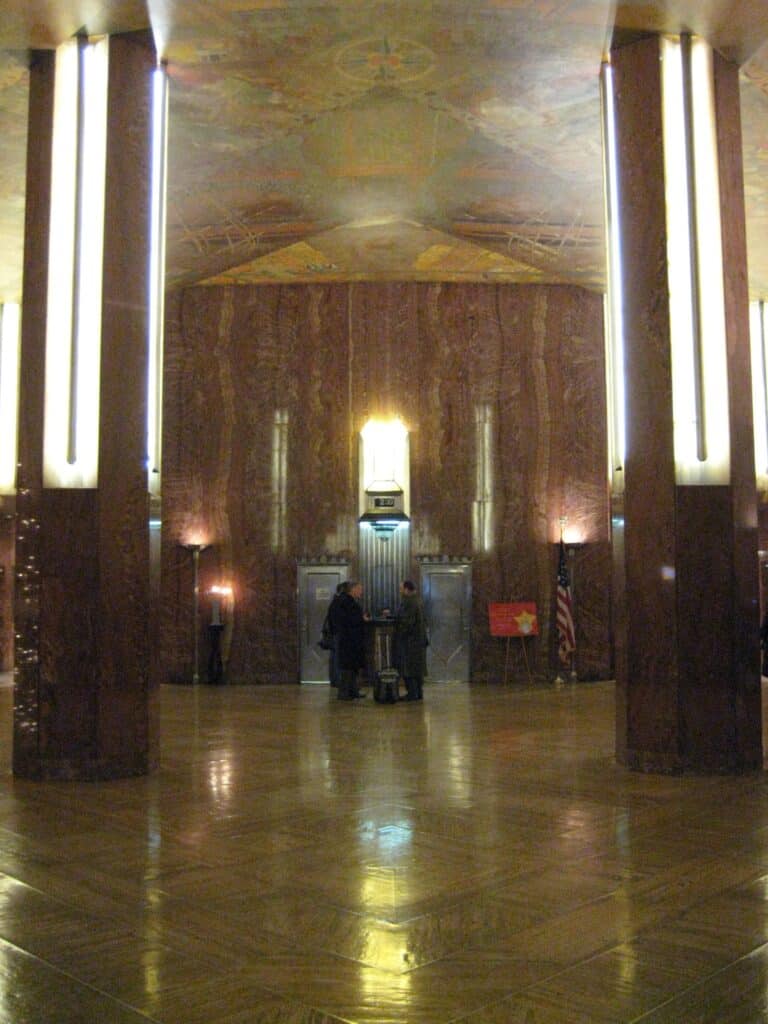
Chrysler Building lobby looking toward elevator doors between tall red-marble piers with vertical light strips, Trumbull ceiling mural overhead and a small desk with staff

Elevators and Art Deco marquetry

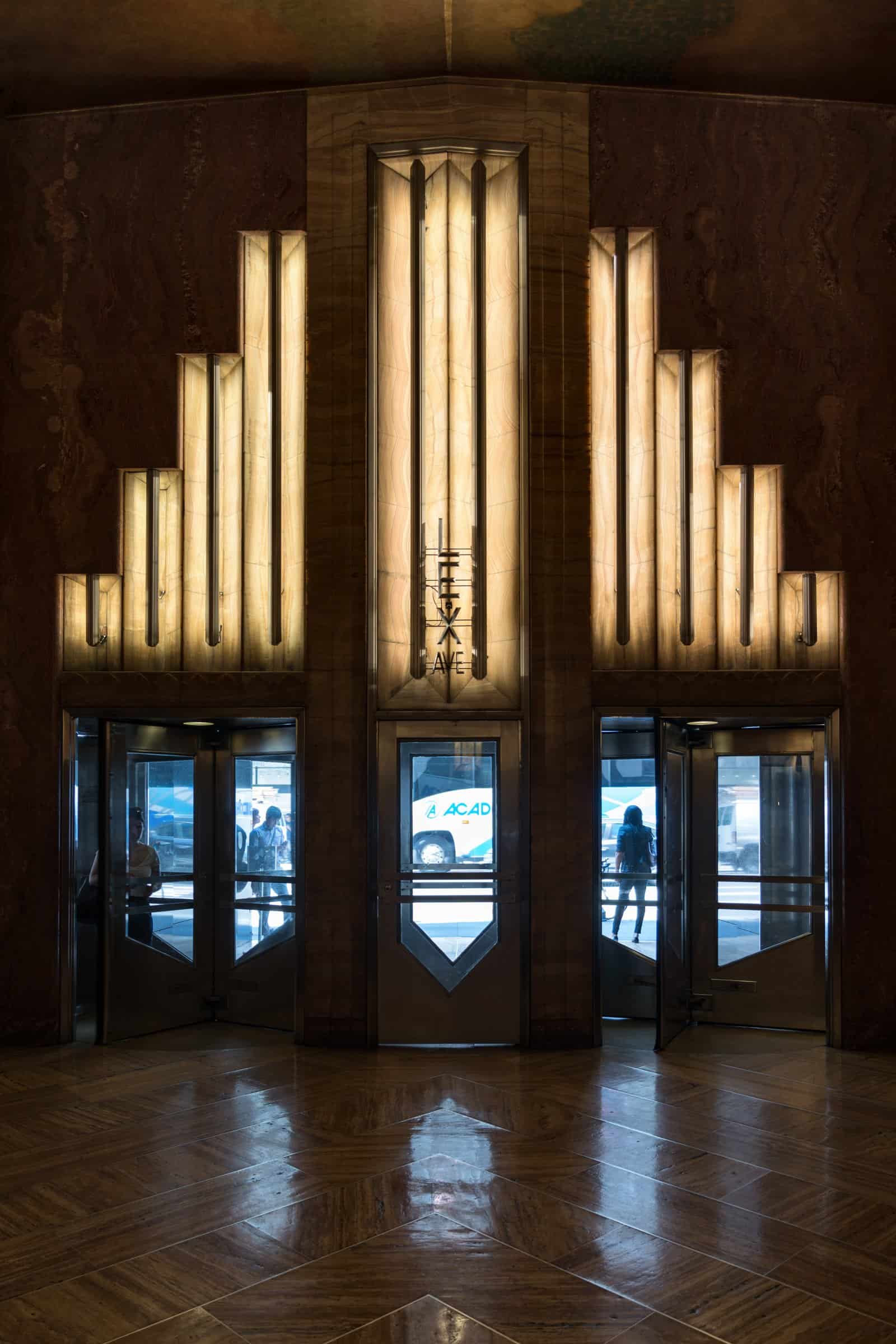
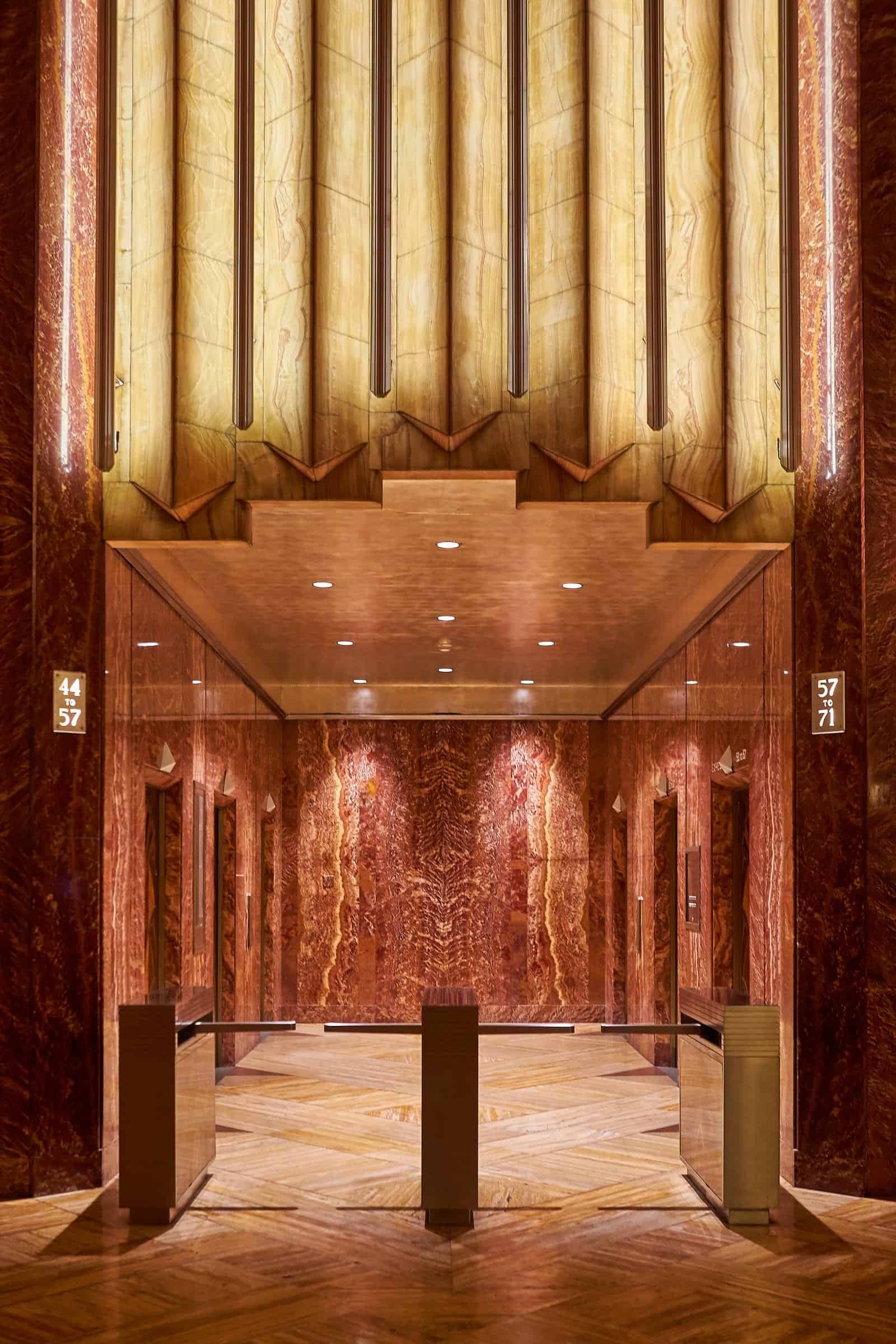
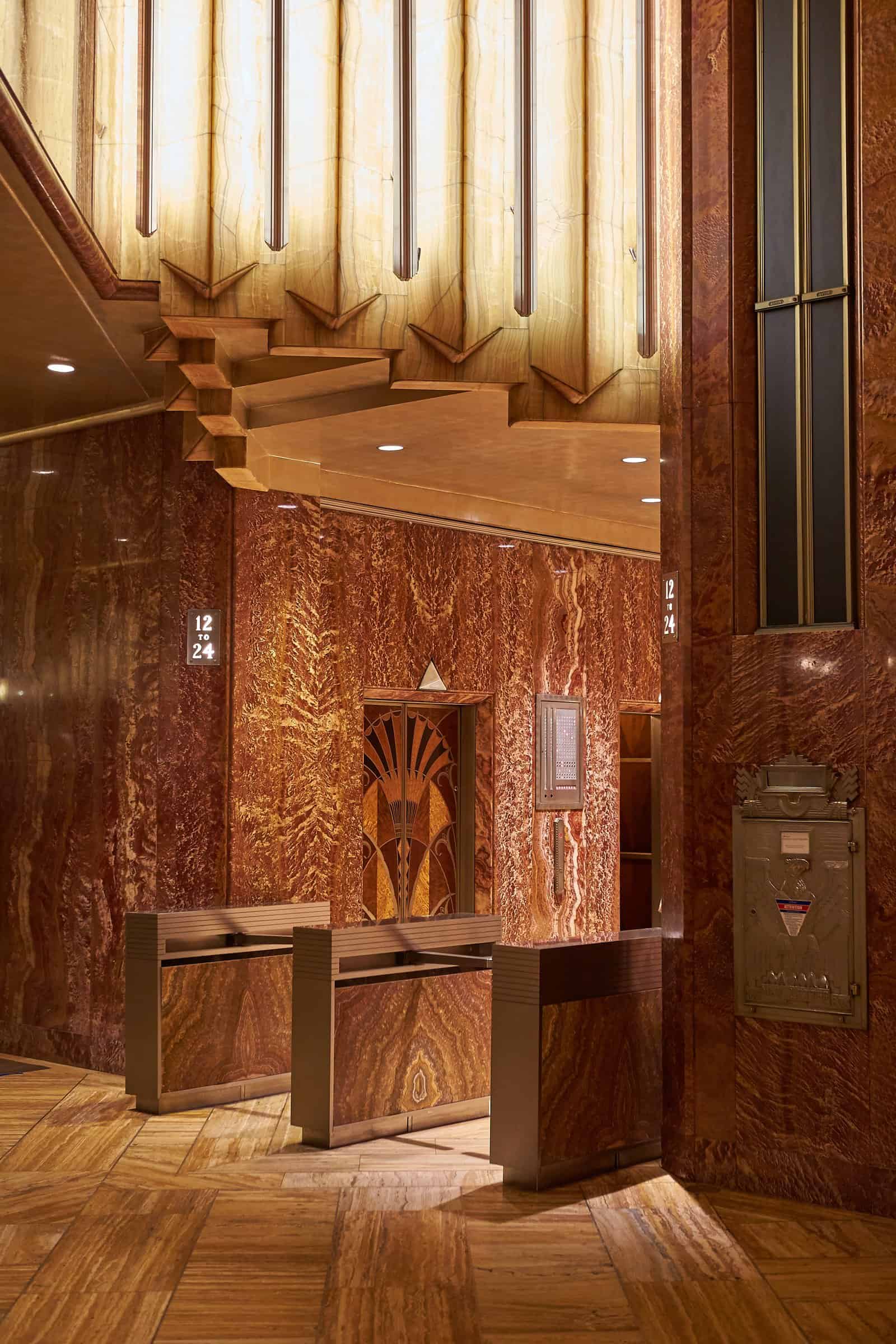
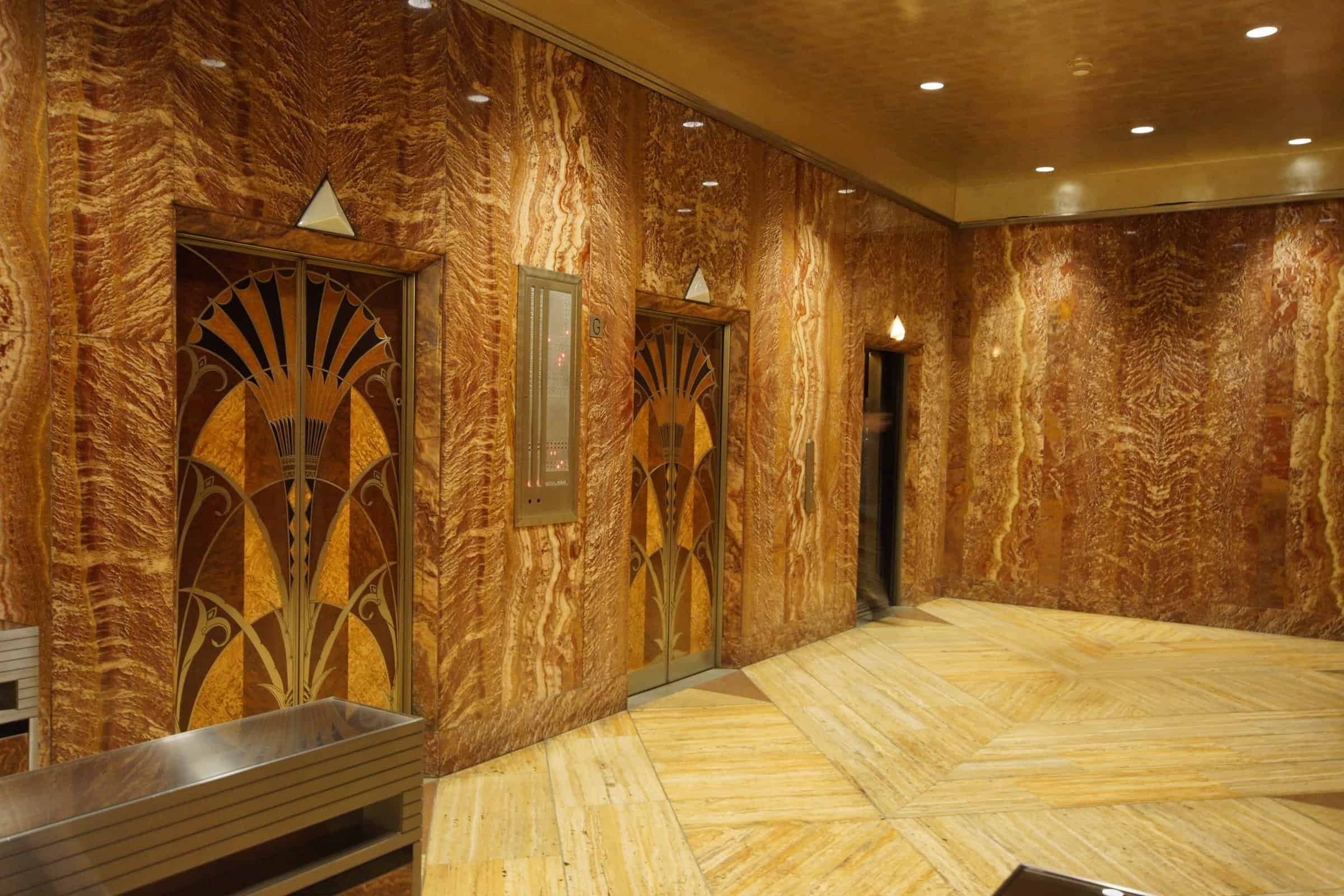
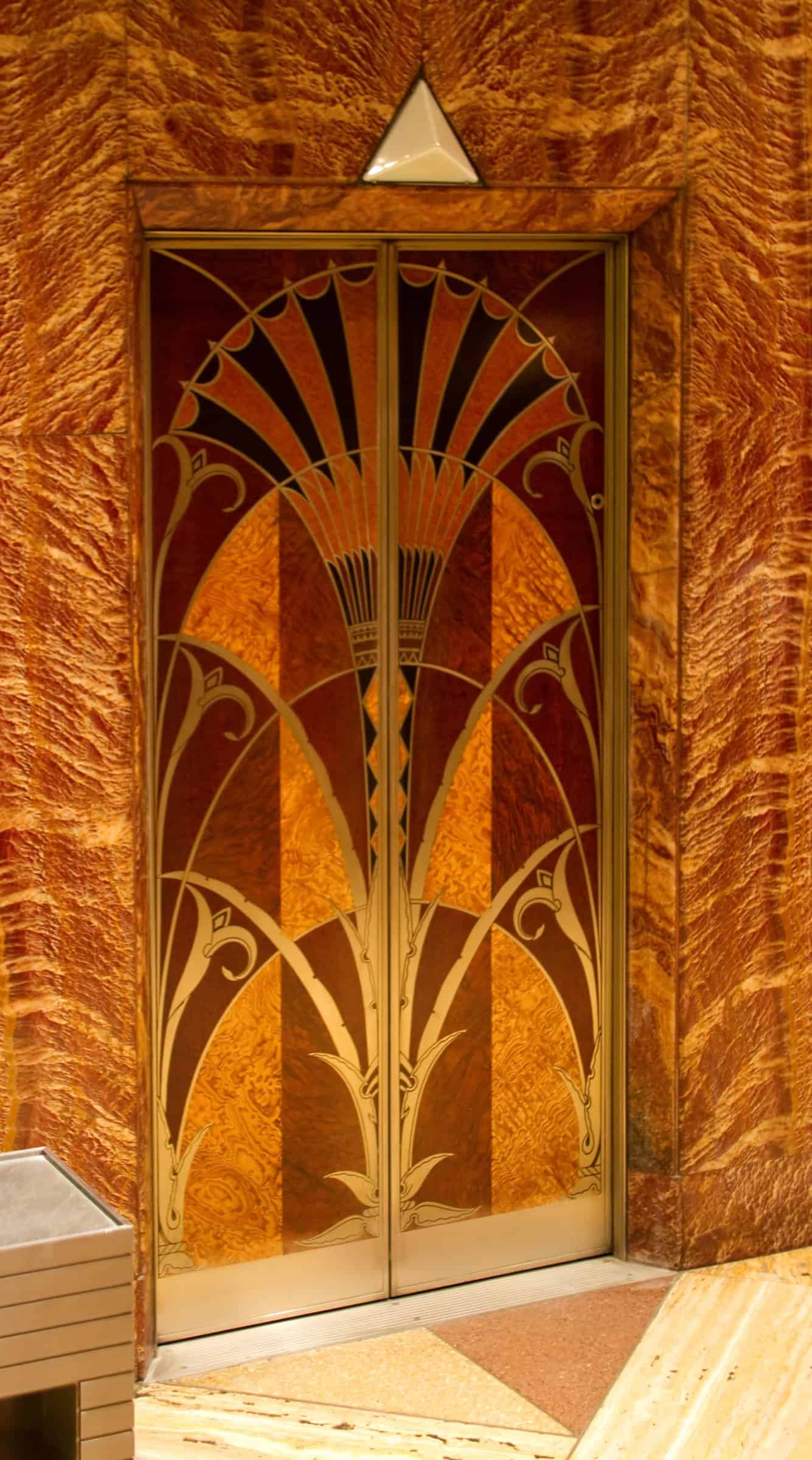
The thirty-two elevators were among the fastest of their day, grouped in four differently finished banks. Van Alen lavished exotic woods on the cab doors — lotus and sunburst marquetry, and even inlays of the building’s own terraced crown — so that the ride from lobby to office became a sequence of Art Deco cabinets. Etched-glass panels above the street doors wash the red stone with daylight; opposite Lexington Avenue a Nirosta-framed desk still carries a digital ‘TIME’ clock beneath the mural.
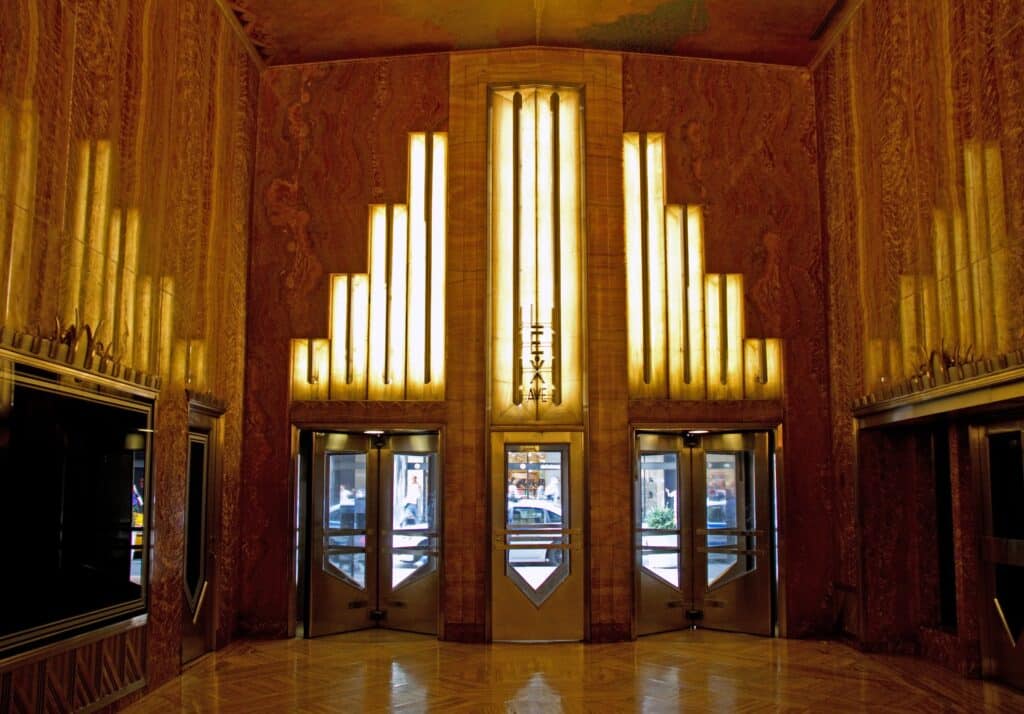
Chrysler Building Lexington Avenue exit from inside, stepped illuminated glass panels over three metal-framed doorways set in richly veined red stone with a chevron floor

Landmark status and lasting emblem

Reception at the 27 May 1930 opening was mixed — some critics found the ornament frivolous, others called it the skyscraper of the age — but later generations ranked it among America’s favourite buildings. The facade and lobby became New York City landmarks in 1978; the structure had already been listed as a National Historic Landmark in 1976. Nearly a century on, the Chrysler Building still reads as Van Alen’s ‘butterfly leaving its cocoon’: an office tower that turned a height contest into a permanent emblem of Art Deco New York.

Chrysler Building gallery
Looking up the Chrysler Building crown in New York, seven Nirosta-steel terraced arches with triangular sunburst windows tapering to a needle spire, eagle and radiator-cap ornaments at the setbacks against a clear blue skyWorm's-eye view of the Chrysler Building shaft rising through brick setbacks to its stainless Art Deco crown and eagles, framed tightly against a deep blue skyClose view of the Chrysler Building's stainless-steel crown and needle spire, seven radiating terraced arches with triangular windows and corner eagle gargoyles against blue skyProfile of a Nirosta-steel eagle gargoyle on the Chrysler Building's 61st-floor corner, looking out over the East River and Queens under an overcast skyLow-angle view of the upper Chrysler Building crown in stainless steel, sunburst terraces and a projecting eagle ornament under a pale grey-blue skyChrysler Building rising between Midtown towers from 46th Street, its eagle setbacks and terraced crown centred in a grey overcast urban canyonNight view of the illuminated Chrysler Building crown, white-lit triangular windows in the stainless terraces glowing above a soft bokeh of city lightsLexington Avenue entrance inside the Chrysler Building lobby, stepped onyx light panels over Nirosta-framed doors with LEX AVE lettering, red marble walls and chevron stone floorWide view of the triangular Chrysler Building lobby, African red granite walls, glowing onyx light fins, Edward Trumbull ceiling mural and elevator banks beyond a central deskChrysler Building corridor toward the 42nd Street exit, polished stone floor reflecting a glowing Art Deco 42 light panel above metal-framed glass doorsChrysler Building lobby looking toward elevator doors between tall red-marble piers with vertical light strips, Trumbull ceiling mural overhead and a small desk with staffArt Deco gold lettering reading THE CHRYSLER BUILDING on a dark glass lobby door panel, multi-lined geometric type in a polished metal frameChrysler Building Lexington Avenue exit from inside, stepped illuminated glass panels over three metal-framed doorways set in richly veined red stone with a chevron floorChrysler Building central elevator bank, book-matched red marble, backlit chevron onyx ceiling, floor signs for 44 TO 57 and 57 TO 71 beyond modern turnstilesChrysler Building elevator lobby with sunburst marquetry doors, warm onyx chevron lighting overhead, 12 TO 24 floor sign and marble-clad security barriersBank of Chrysler Building elevators with closed bronze-and-wood sunburst marquetry doors set in book-matched red marble under a gold ceiling with recessed lightsChrysler Building elevator doors inlaid with a stylised stainless crown motif in wood and metal, framed in Nirosta steel against book-matched amber-red marbleClose-up of a Chrysler Building lift door with lotus-like Art Deco wood marquetry in gold and dark veneers, triangular indicator light above and flame-grain wall panels

Explore more on Archtene