The Gritti Palace by Chuck Chewning in Venice, Italy
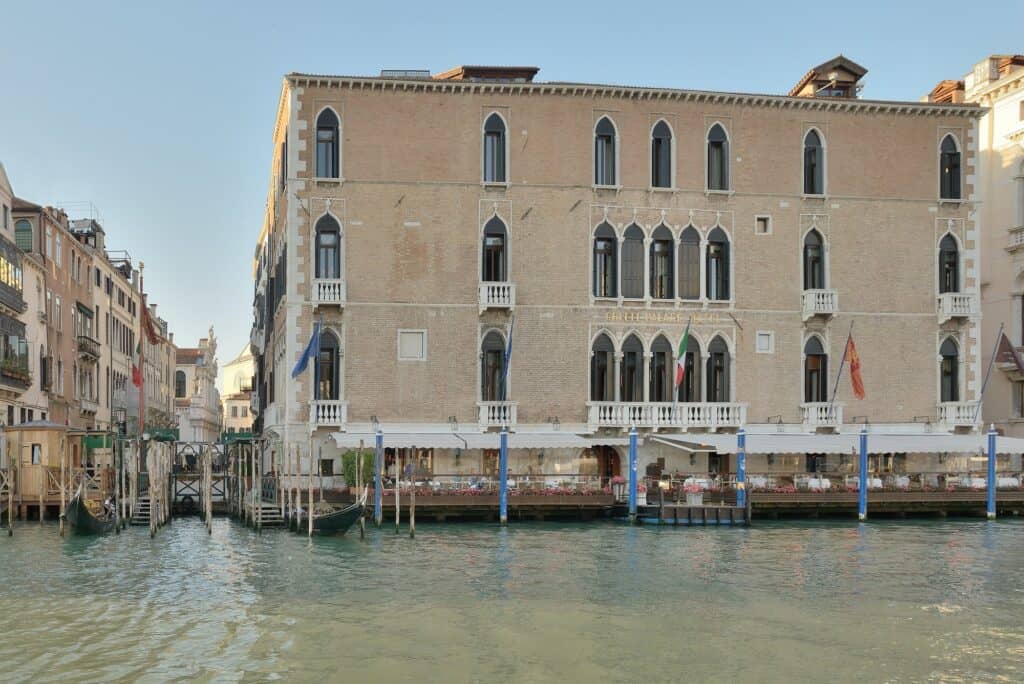
The Gritti Palace is a luxury hotel in Venice, Italy, set in the Palazzo Pisani Gritti, a Venetian Gothic palazzo on the Grand Canal facing the Basilica di Santa Maria della Salute. Between 2011 and early 2013 the hotel closed for a restoration of about 15 months: the American designer Chuck Chewning, then creative director of the New York design house Donghia, led the interiors with Donghia Associates, while the Italian engineering firm Veniceplan Ingegneria led the architectural restoration and Architectural Digest credits the structural upgrades to the architect Gretchen Alexander Harnischfeger. The hotel, now part of Marriott’s Luxury Collection, reopened in February 2013 with 82 rooms and suites. It joins other heritage hotels on Archtene such as Hôtel de Crillon, Pera Palace Hotel, Raffles Europejski Warsaw and Four Seasons Hotel Gresham Palace, and other Venice projects such as Il Fondaco dei Tedeschi and the Procuratie Vecchie Restoration.
A doge’s palazzo on the Grand Canal
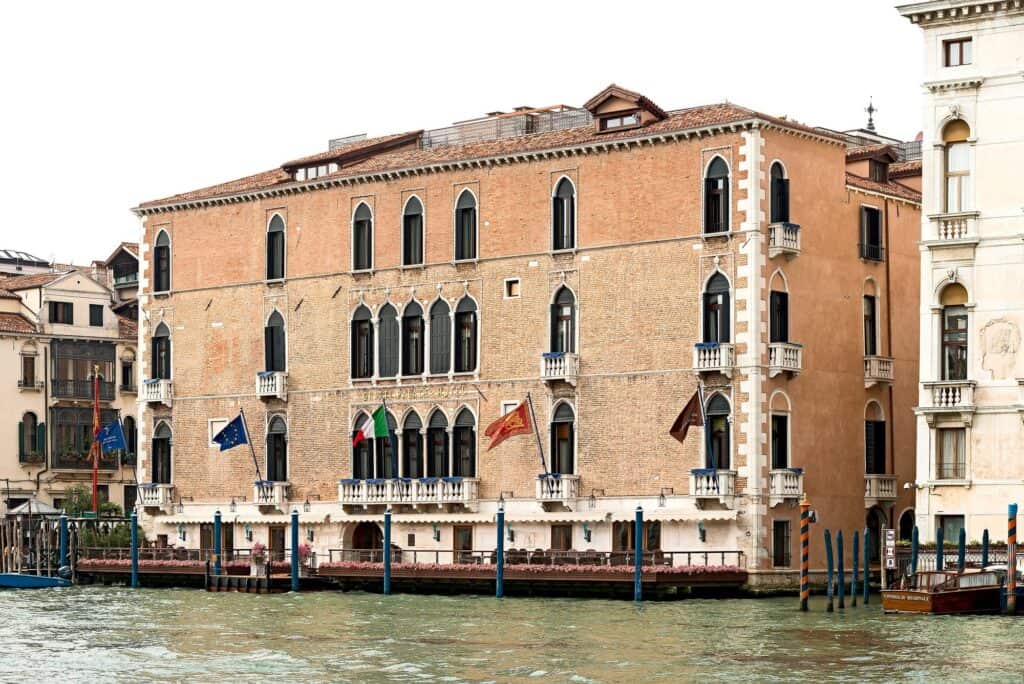
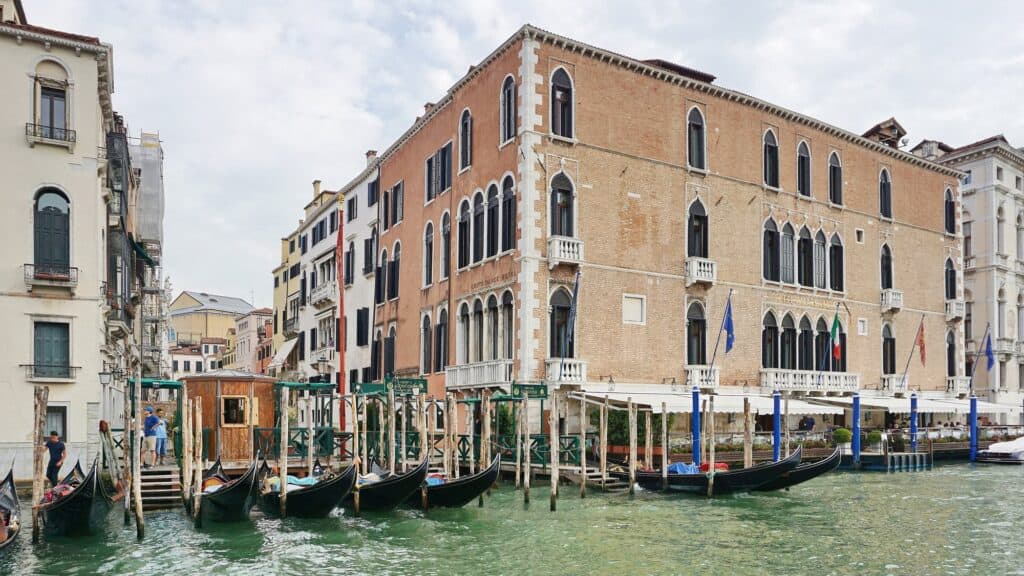
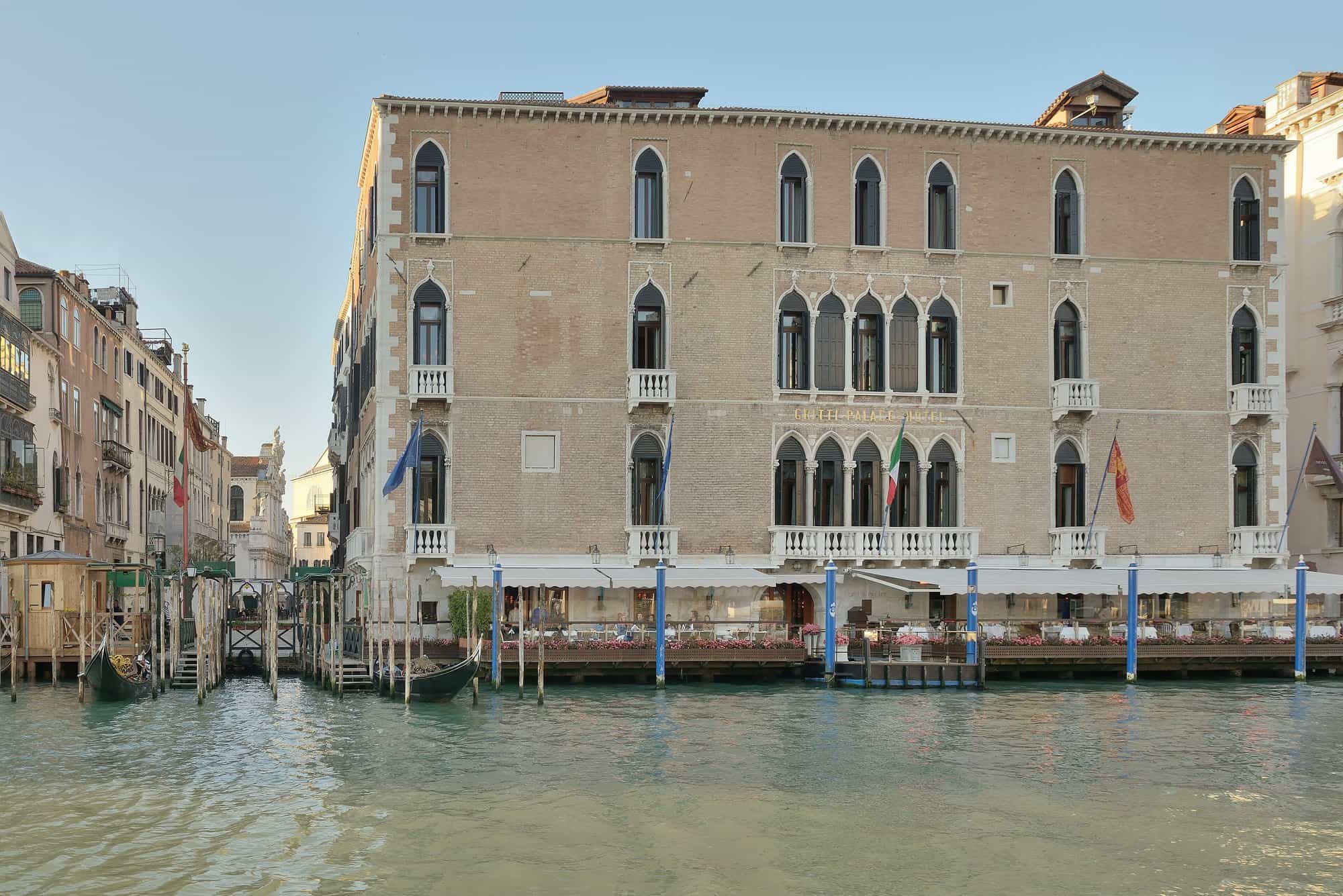
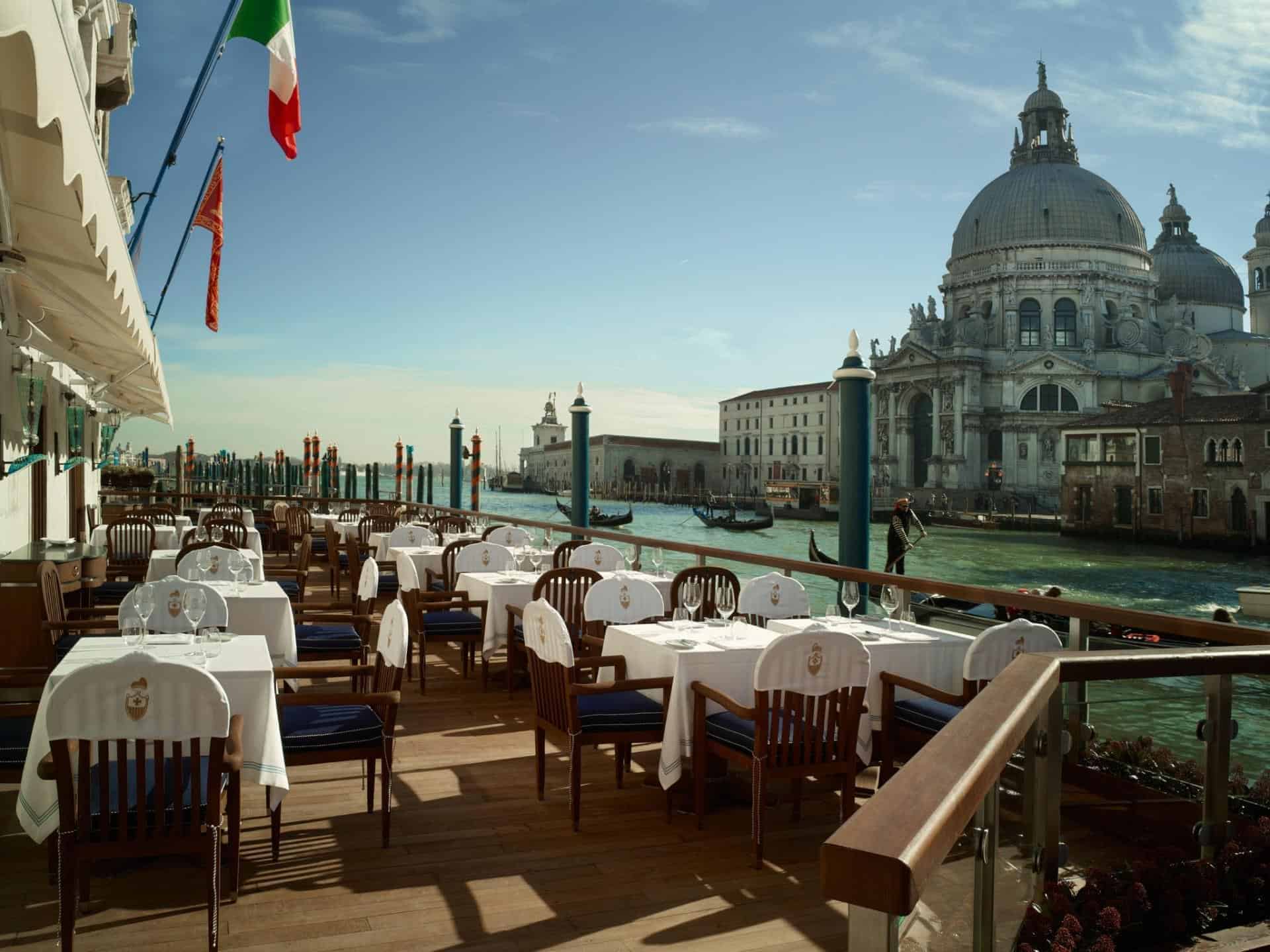
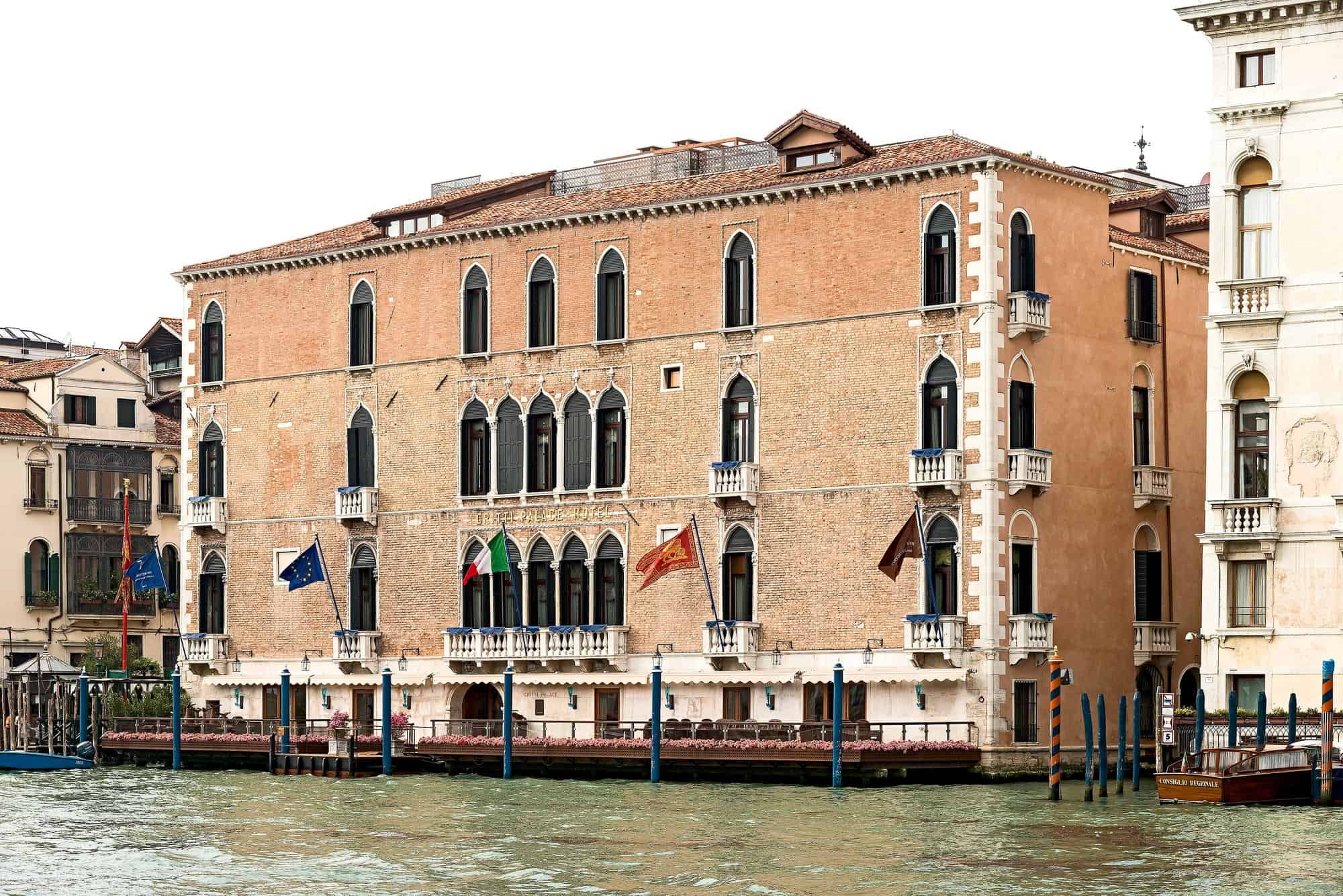
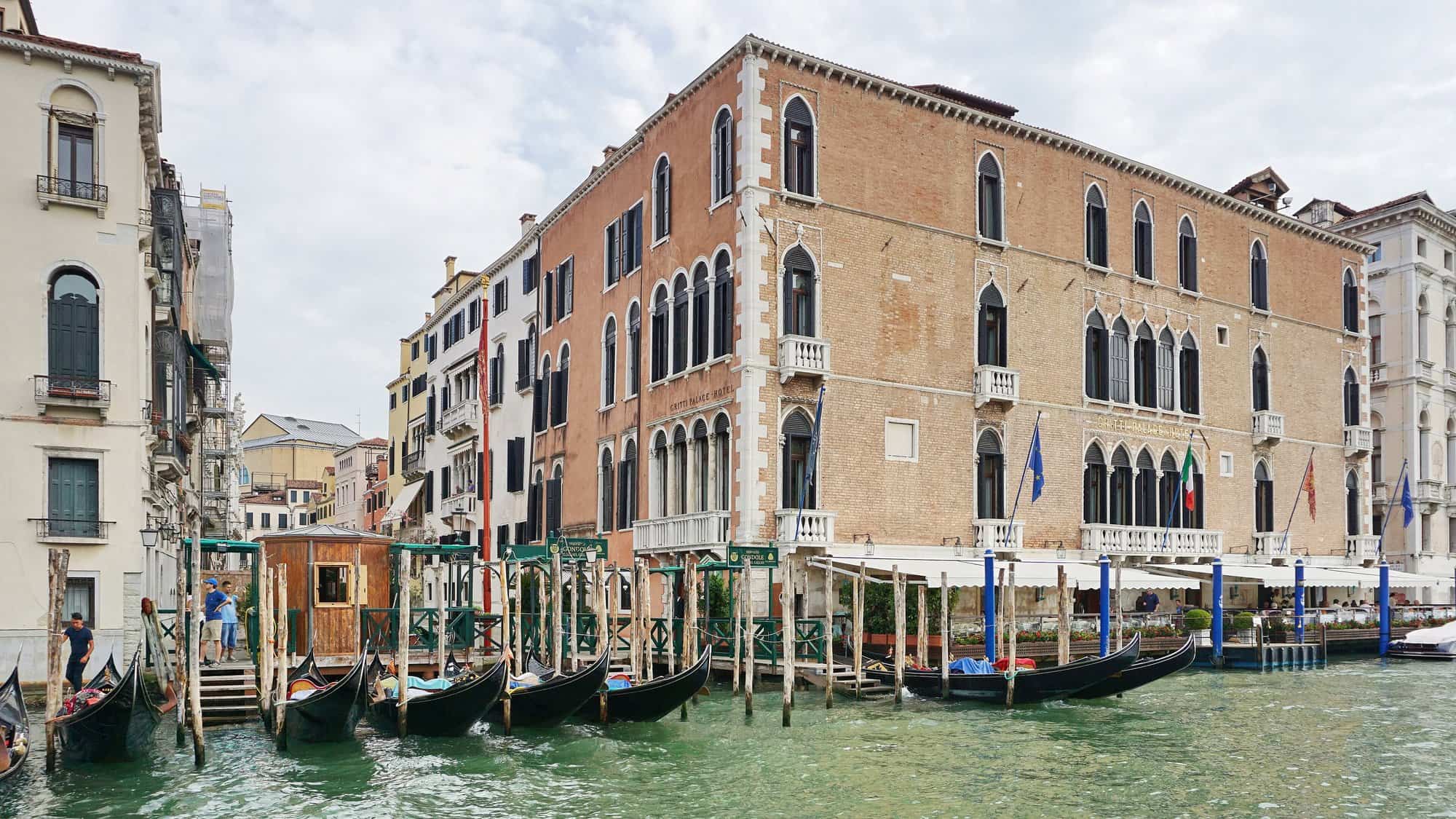
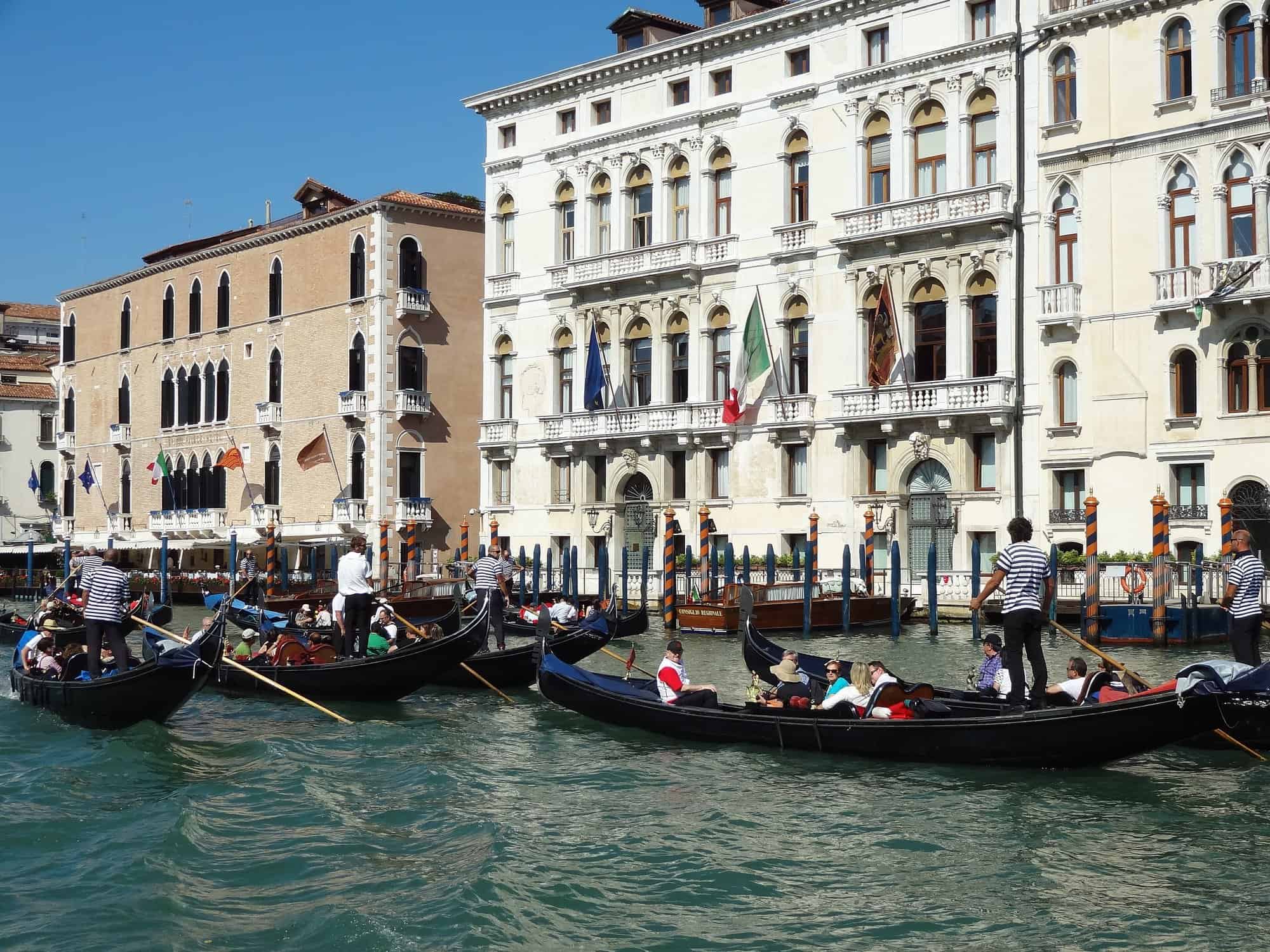
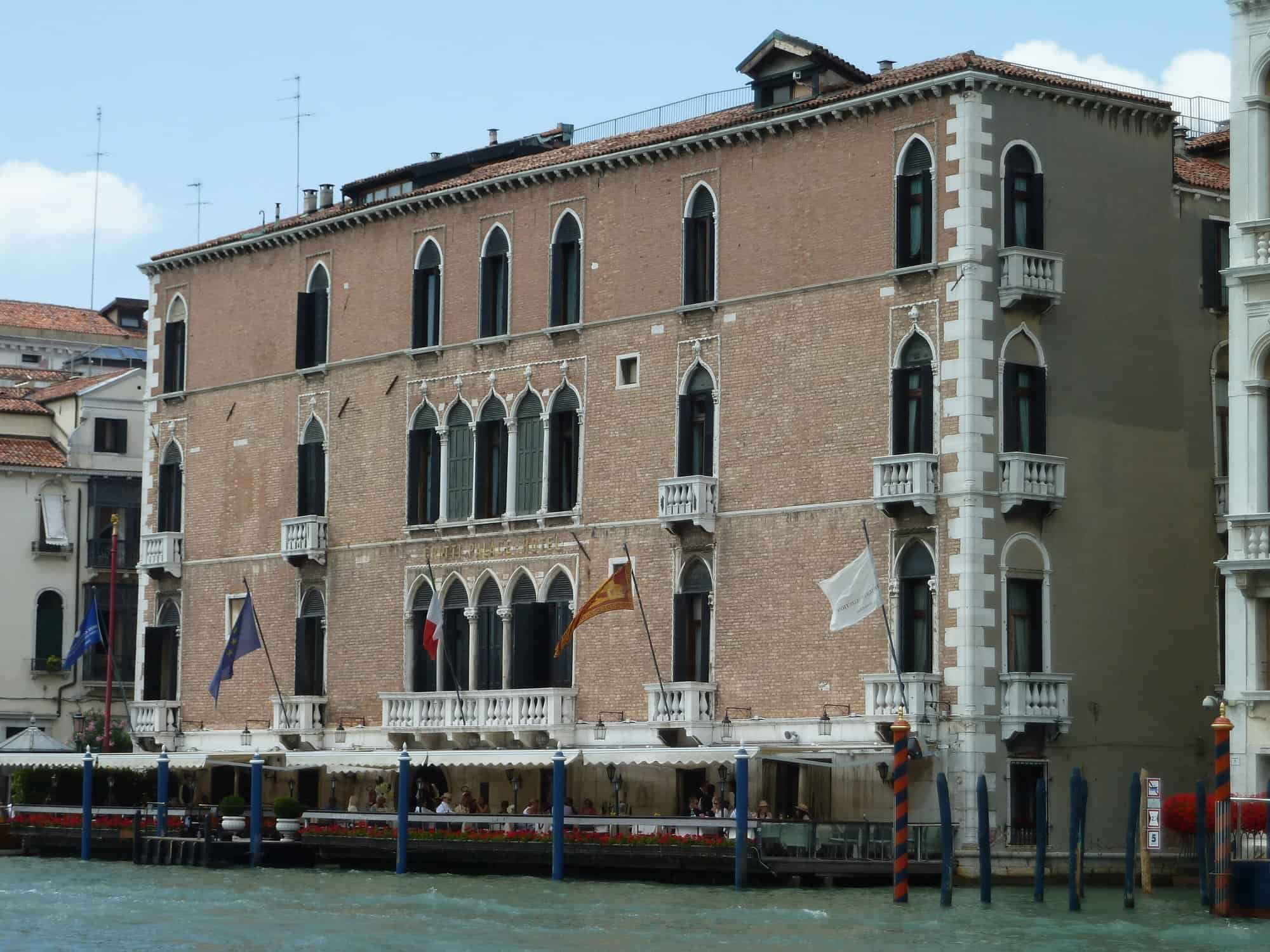
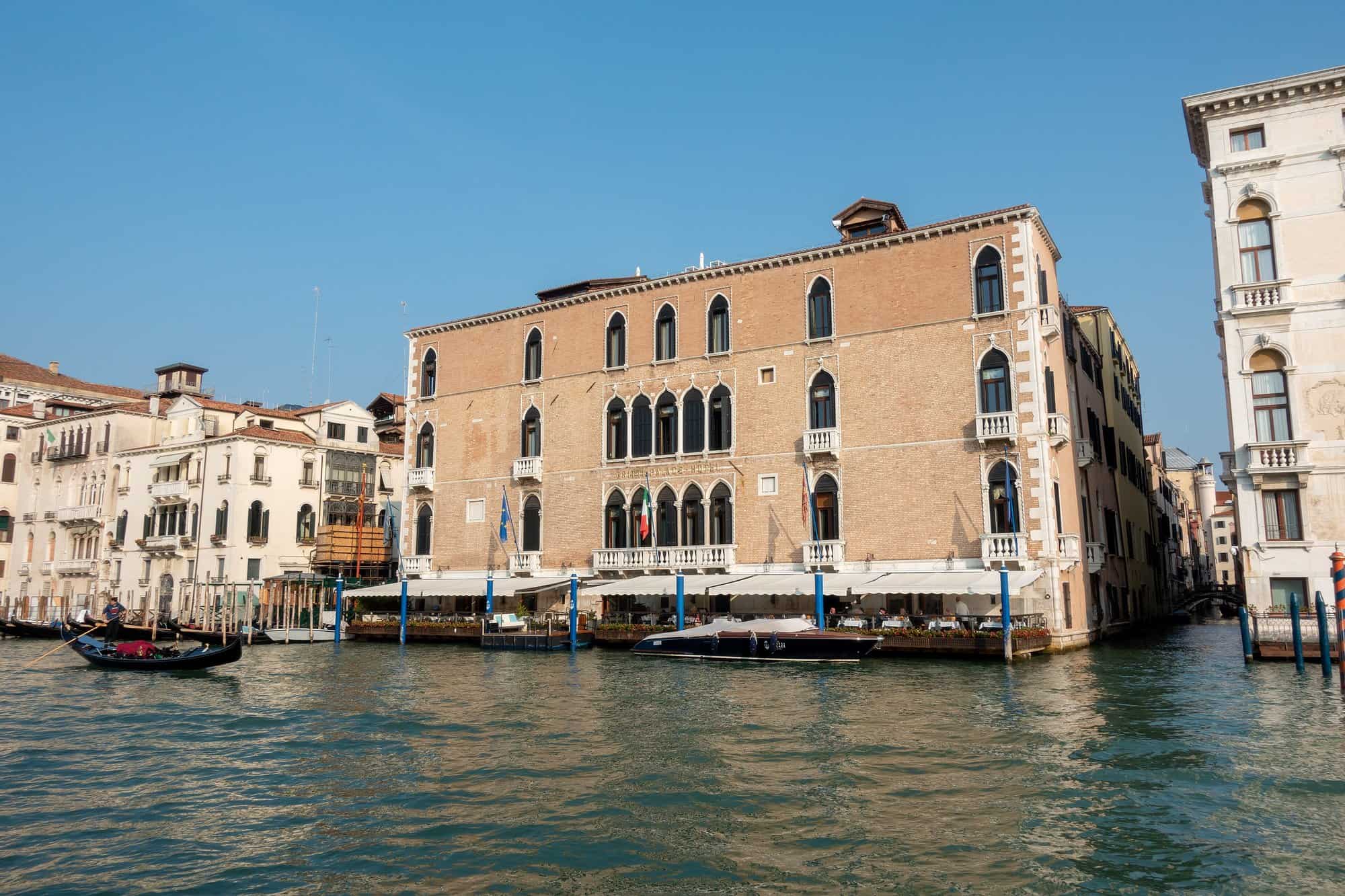
The palazzo stands on the north bank of the Grand Canal in the sestiere of San Marco, between the Campo del Traghetto beside Santa Maria del Giglio and the Rio de l’Alboro. Sources trace an earlier house on the site to the 14th century; it was rebuilt in the Venetian Gothic style for the Pisani family around 1475, and in the 1520s it became the private residence of Andrea Gritti, doge of Venice from 1523 to 1538, whose name it still carries. The side facade on the campo was reworked in the 16th century, and the canal front is said to have once carried frescoes by Giorgione, now lost. Above a low ground floor rise two main floors of pointed-arch windows, each centred on a five-light window, and a third floor added around 1890 that repeats the Gothic motifs in a neo-Gothic manner, with three single windows in place of the central group. The waterfront terrace, where the hotel now serves meals within sight of the Salute, was built out over the canal in the 20th century.
From private palazzo to grand hotel
In the 19th century the palace remained a private house that took paying guests, among them John Ruskin and his wife Effie, who stayed there while he was writing The Stones of Venice. It became a hotel in 1895, for a time linked to a neighbouring hotel, and in 1947 the Compagnia Italiana Grandi Alberghi bought it and named it the Gritti Palace. It later became a favourite of writers, collectors and film stars. Ernest Hemingway stayed and wrote there in the 1940s and gave the hotel a part in his novel Across the River and into the Trees, Somerset Maugham was a regular, and Peggy Guggenheim, whose palazzo stands across the canal, is said to have celebrated her 80th birthday there in 1978. Scenes of Michelangelo Antonioni’s Identification of a Woman and Woody Allen’s Everyone Says I Love You were filmed at the hotel. Sheraton, later part of Starwood Hotels & Resorts, bought it in the mid-1990s, and Starwood was itself acquired by Marriott International in 2016.
Restoration and protection from the tides
By 2011 the building urgently needed repair: its ground floor, set like the rest of Venice on timber piles in the lagoon, was reported to have flooded more than 30 times that year alone. Starwood closed the hotel for restoration, reported as costing about €35 million in its own announcement and more than $50 million in other accounts, with scaffolding in place from November 2011 to February 2013. Starwood said Veniceplan Ingegneria led the architectural restoration of the protected landmark together with the regional heritage authority for Venice and its lagoon, with local architects and artisans engaged on the work. Because the original walls could not be touched, a watertight tank, or vasca, is said to have been inserted beneath the building, part of the hydraulic engineering that lets the hotel stay open during high tides. LED lighting, waste-water recycling and new windows for thermal and acoustic insulation were added, and the room count was cut from 91 to 82, now 61 rooms and 21 suites, to make rooms and bathrooms more generous.
Interiors by Chuck Chewning and Donghia
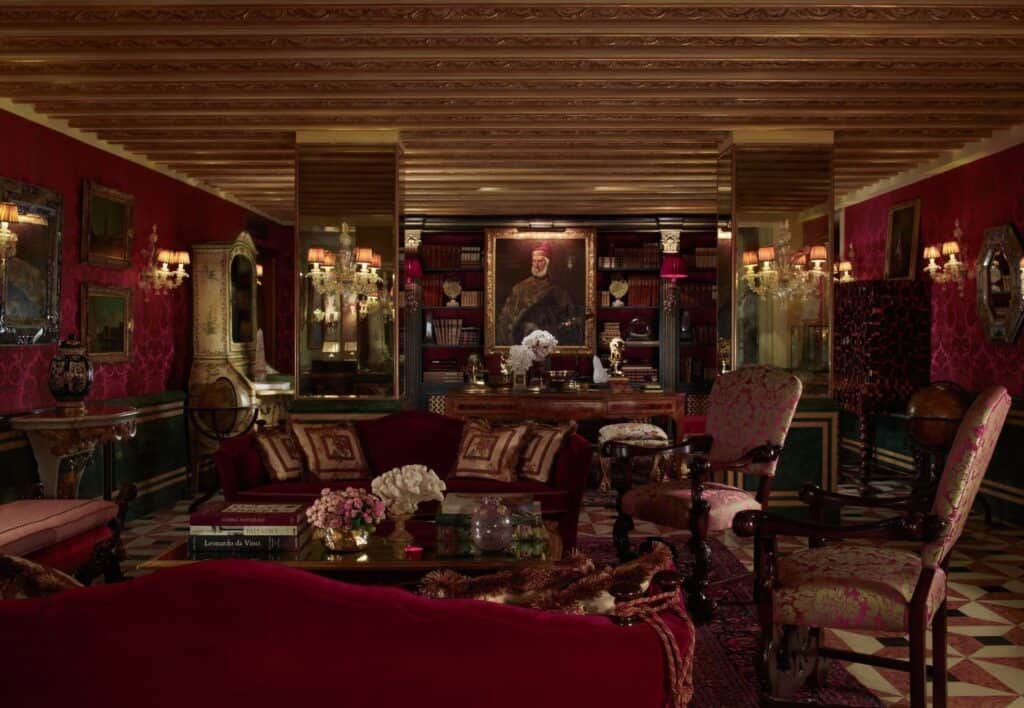
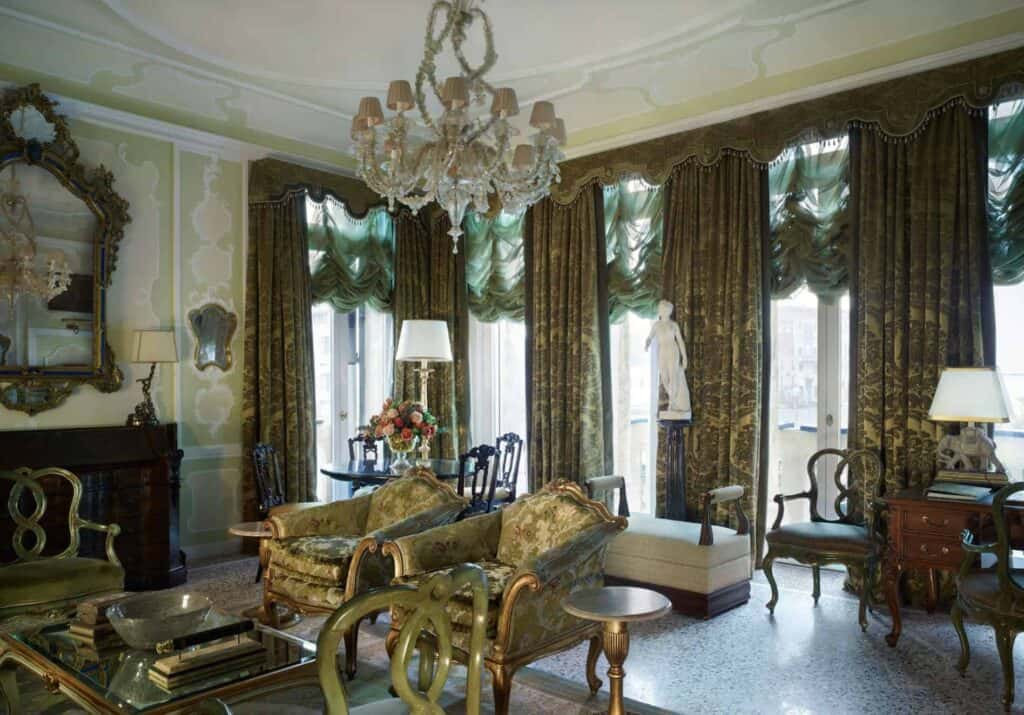
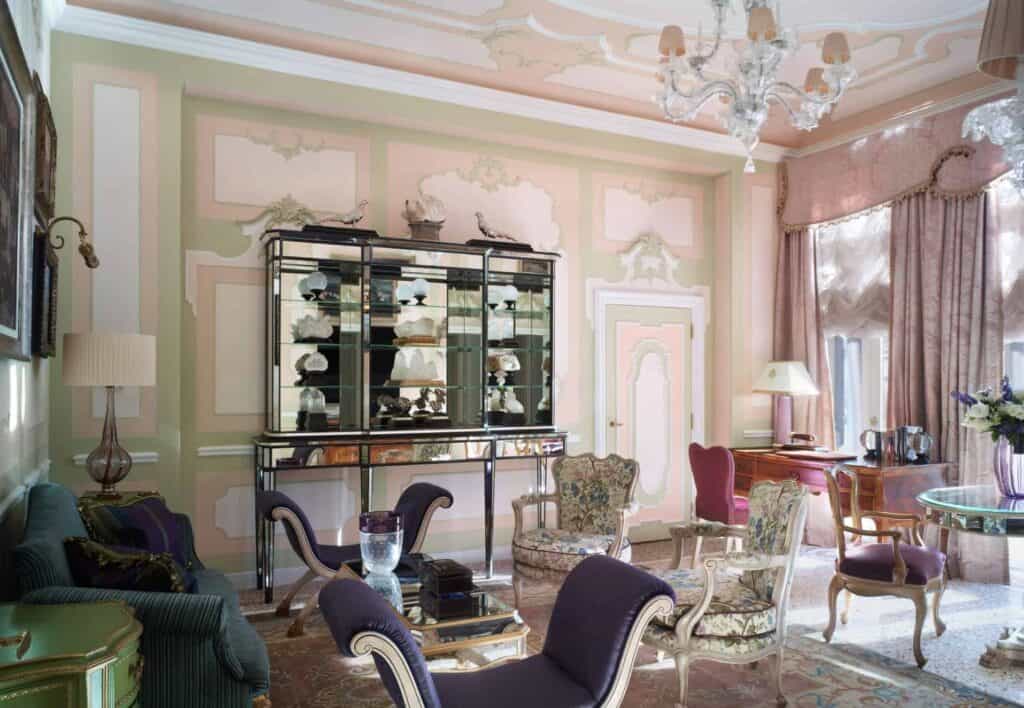
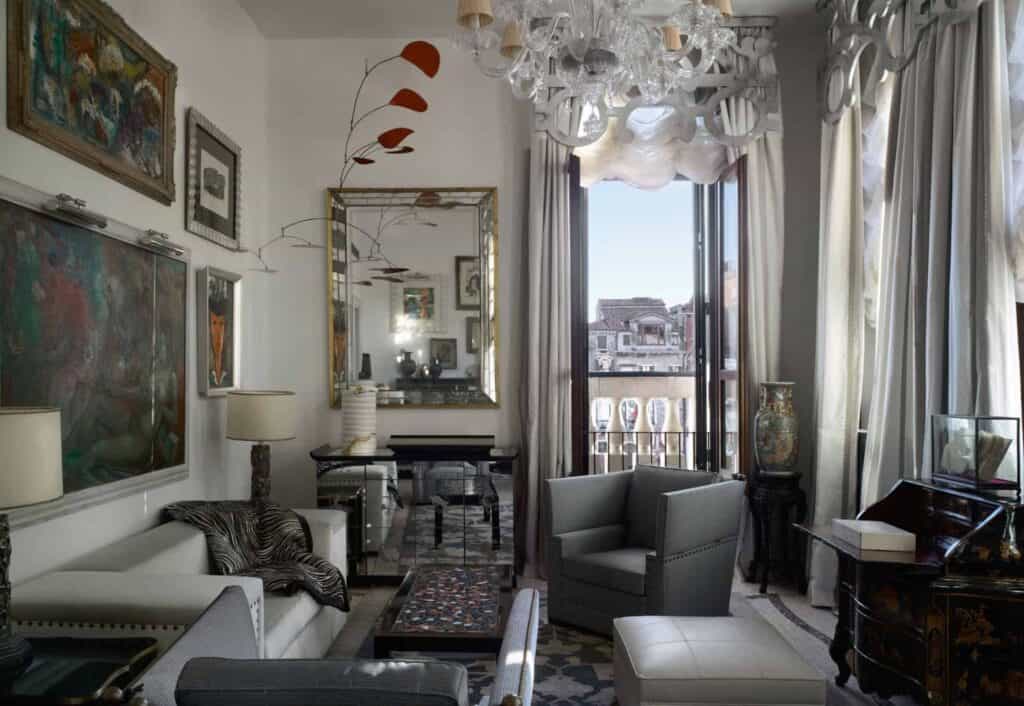
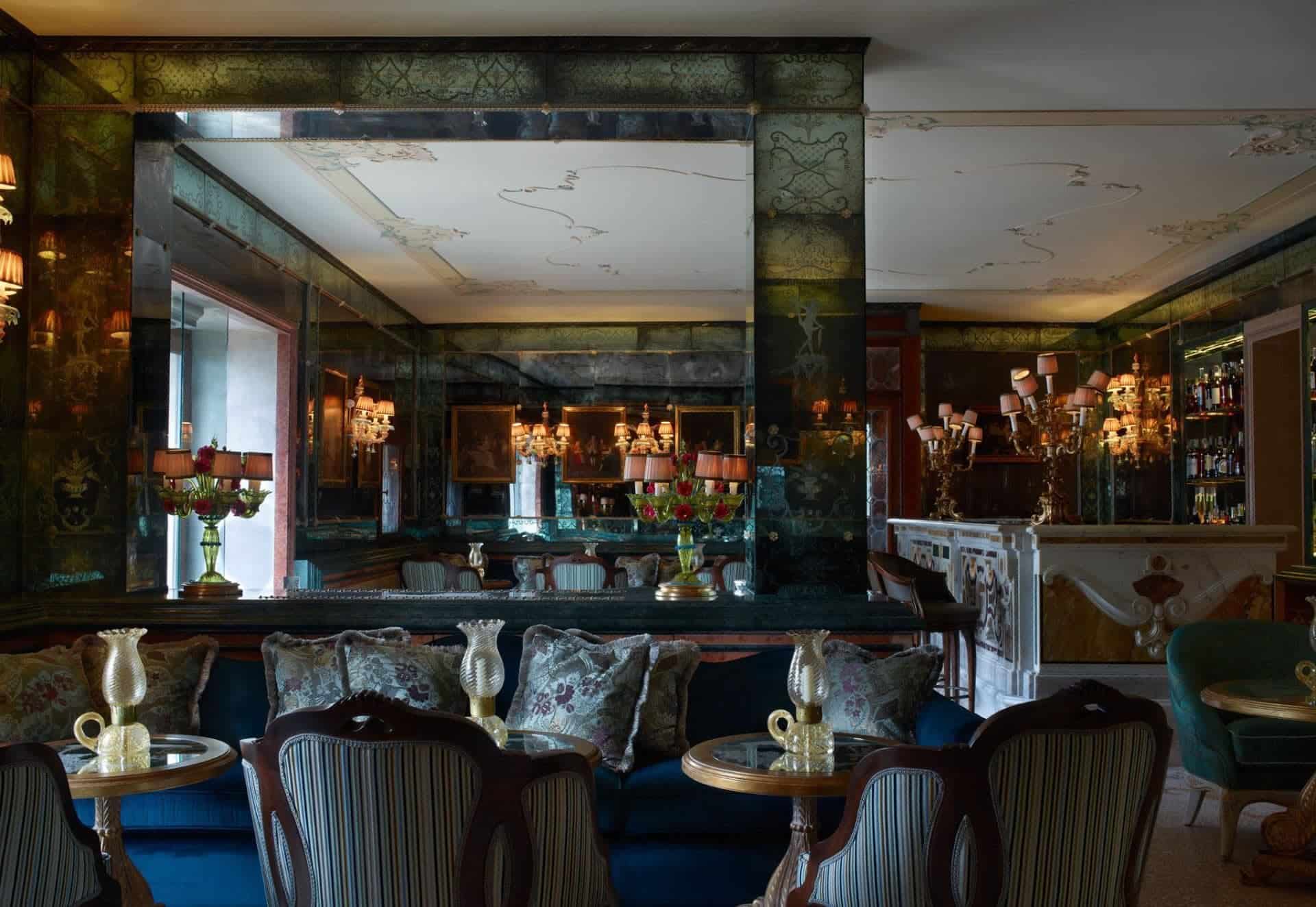
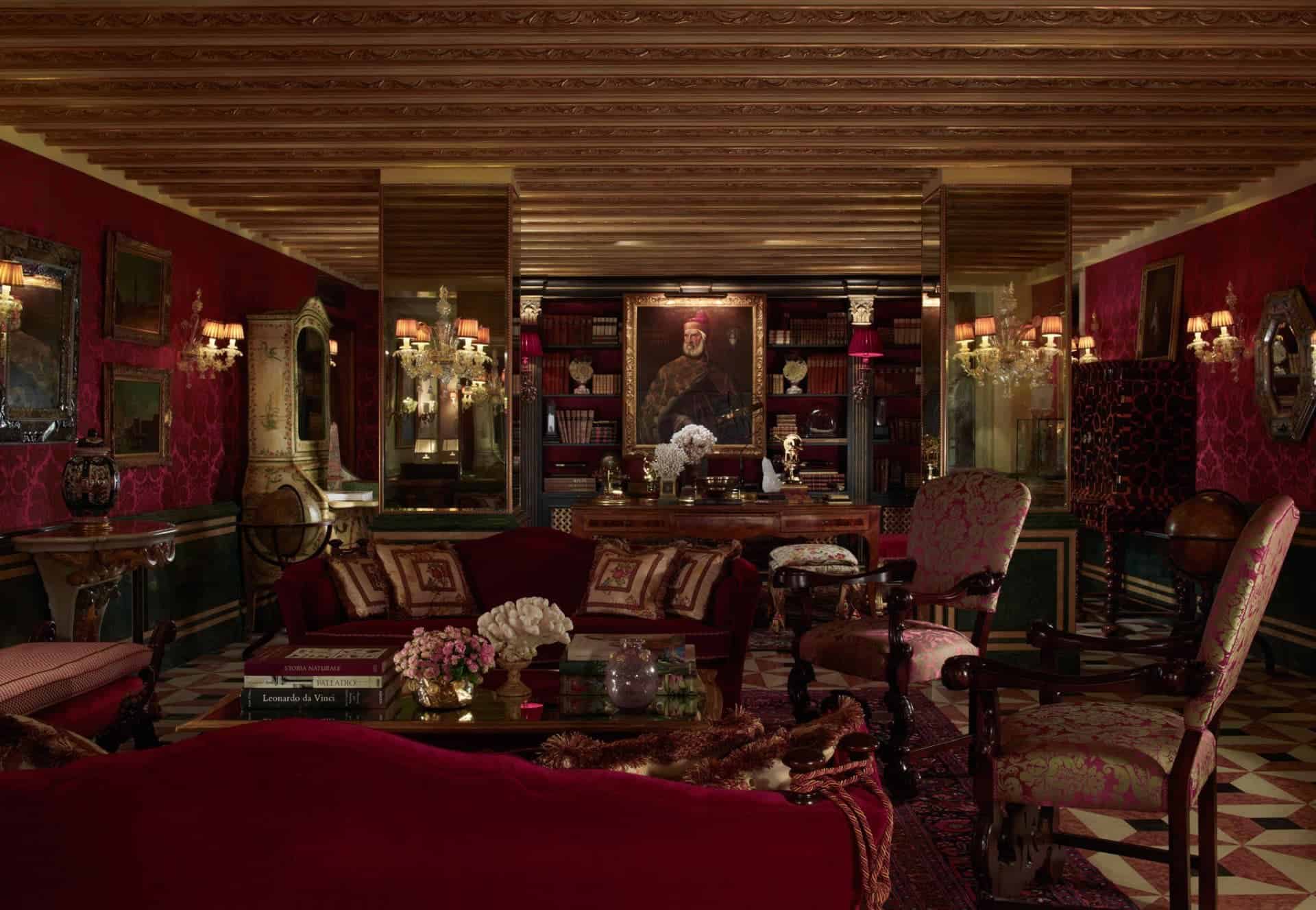
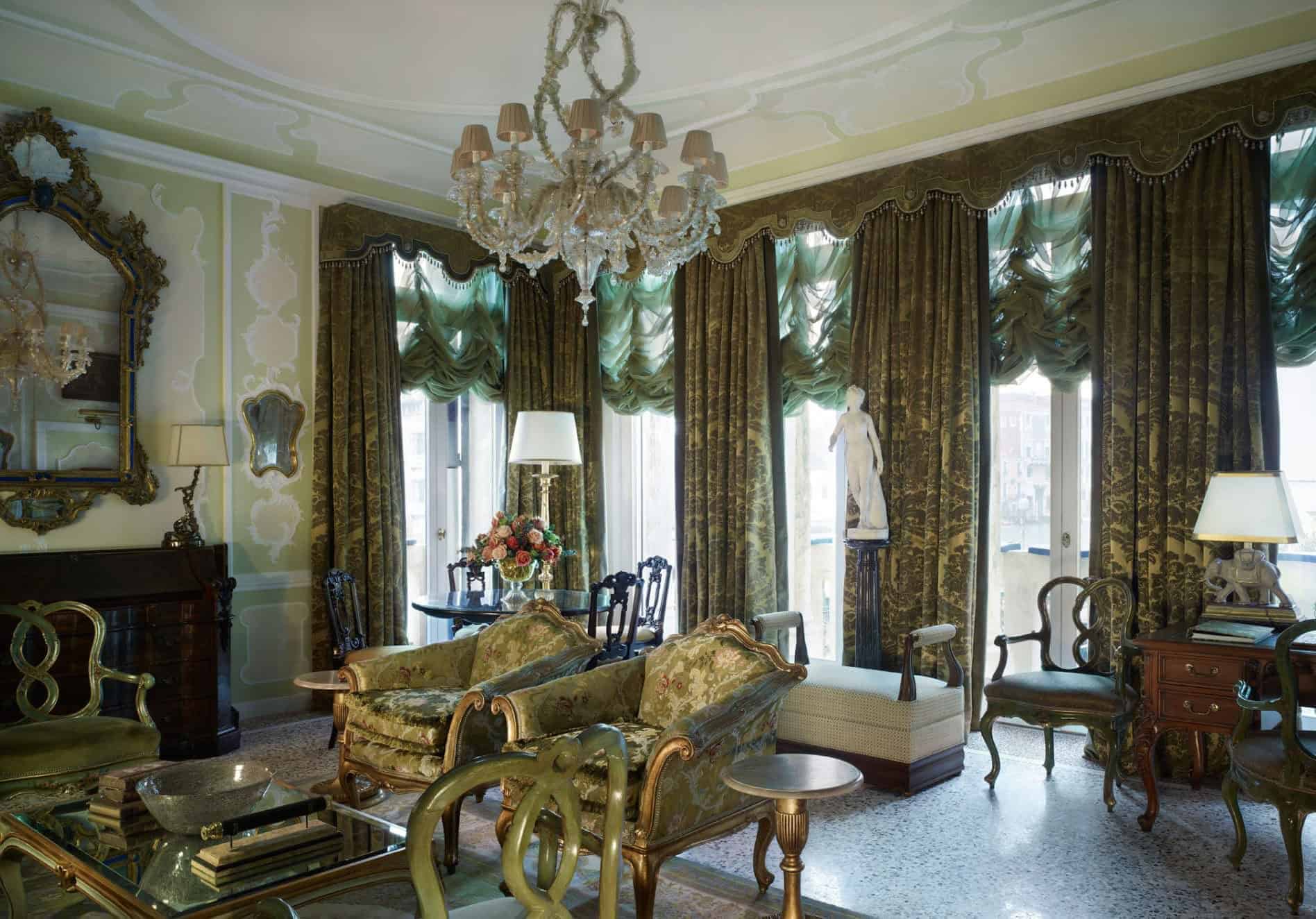
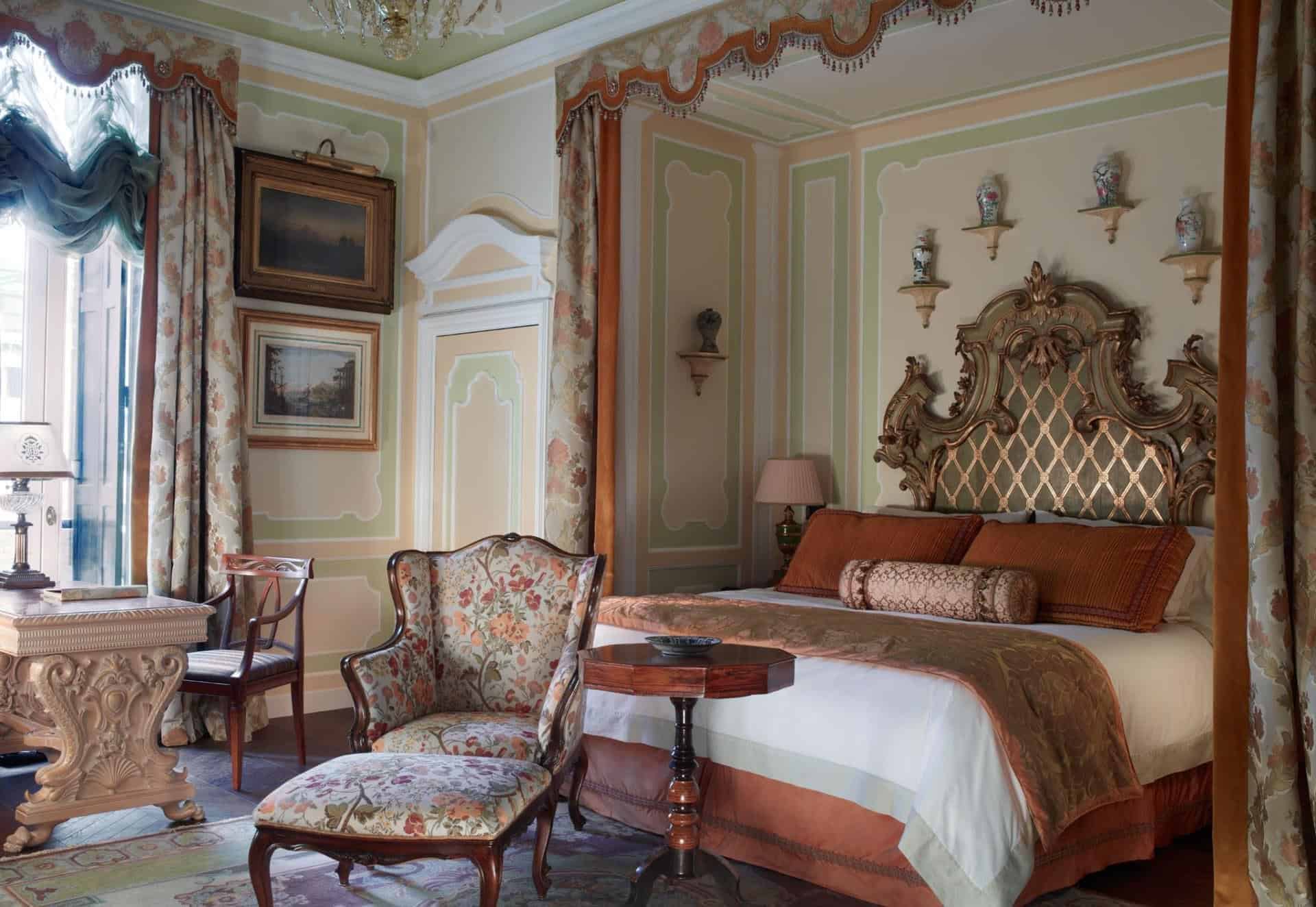
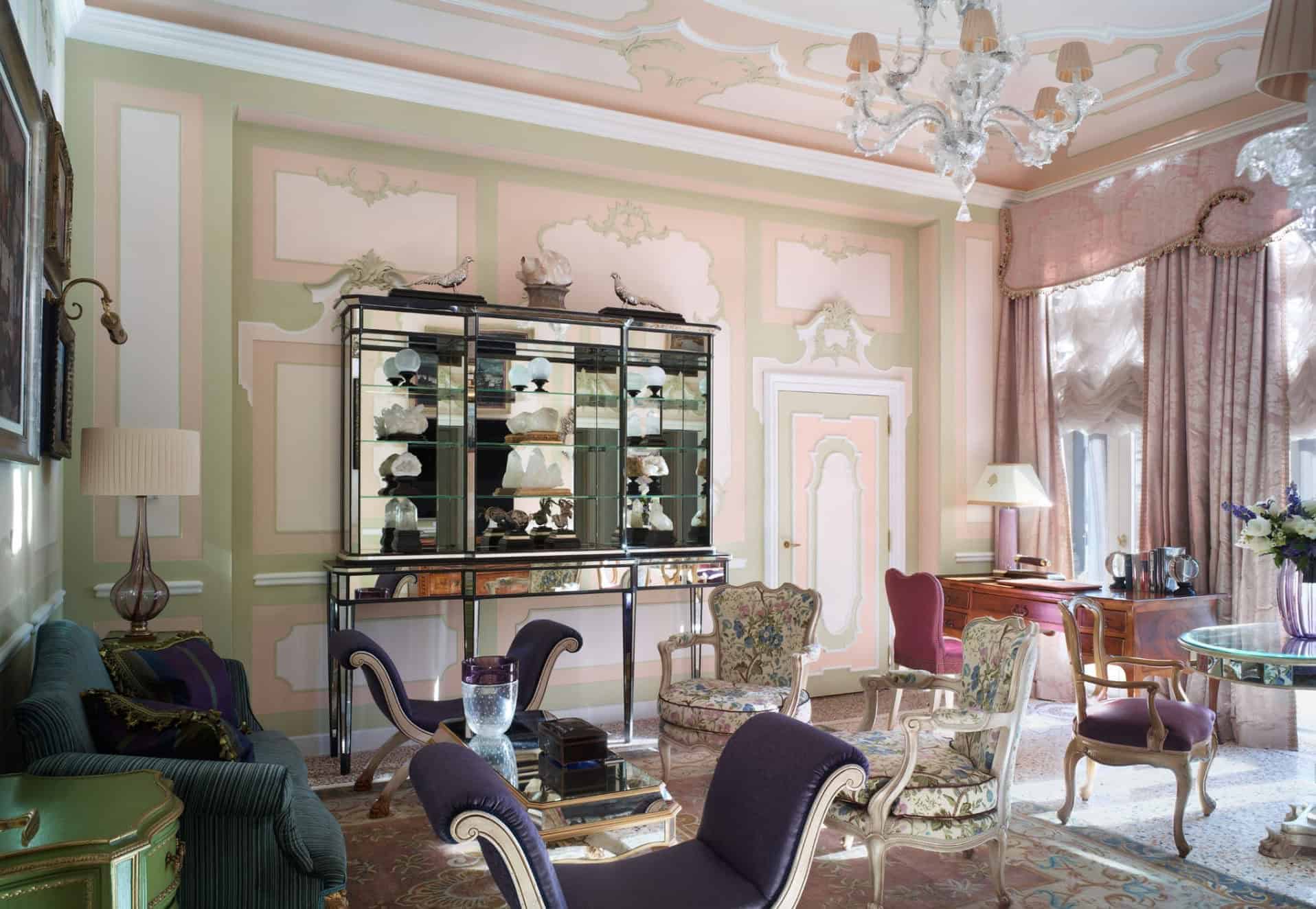
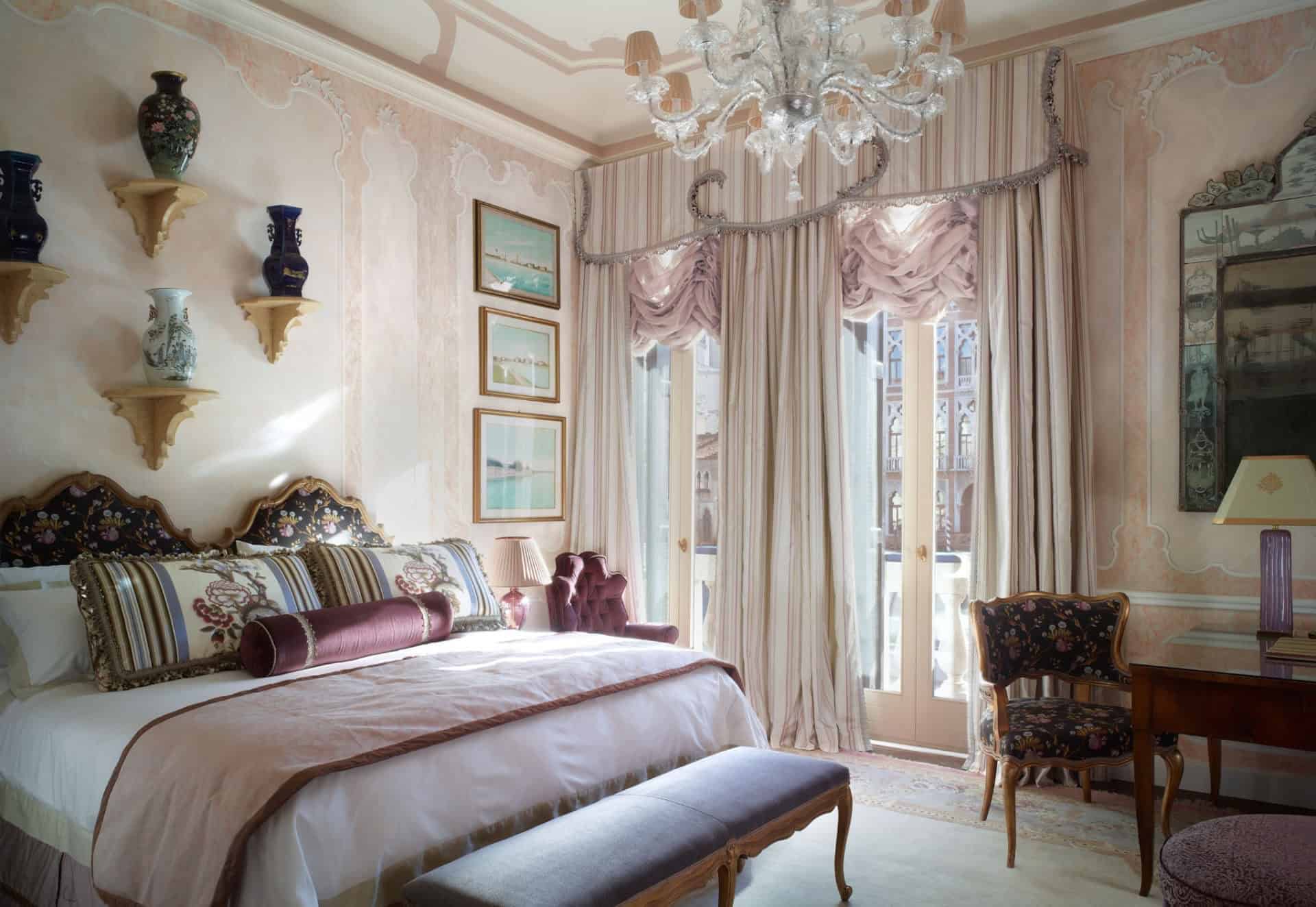
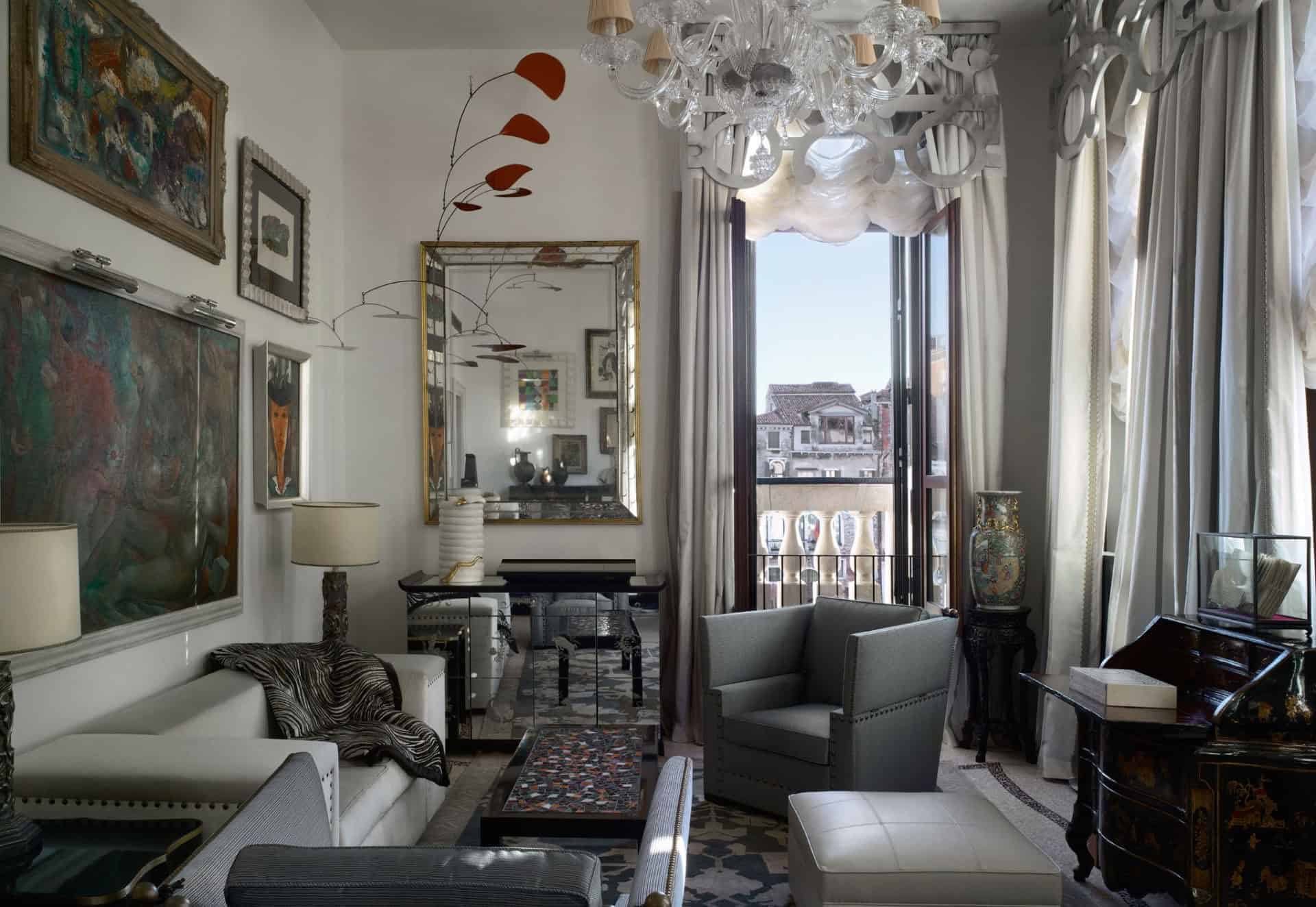
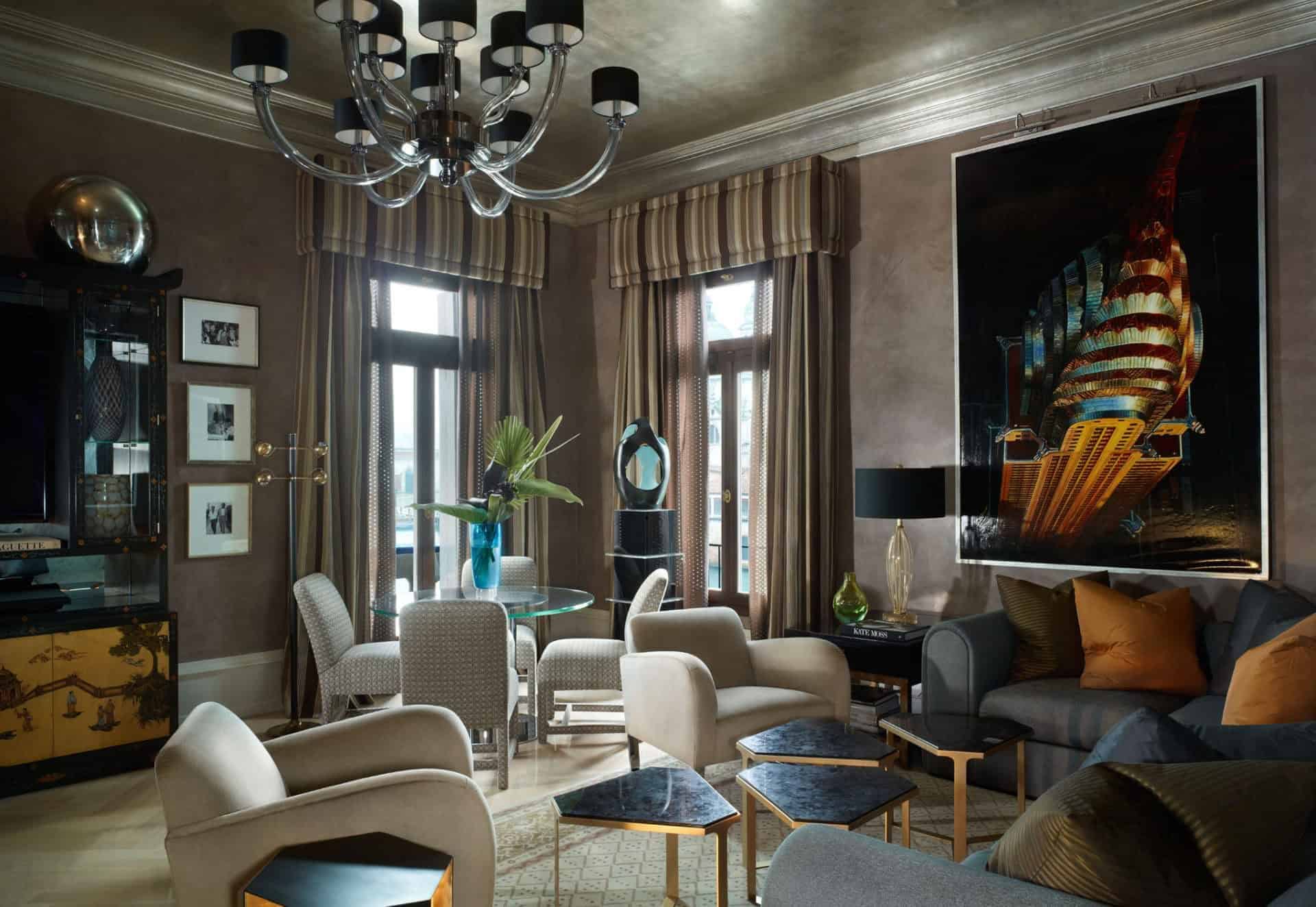
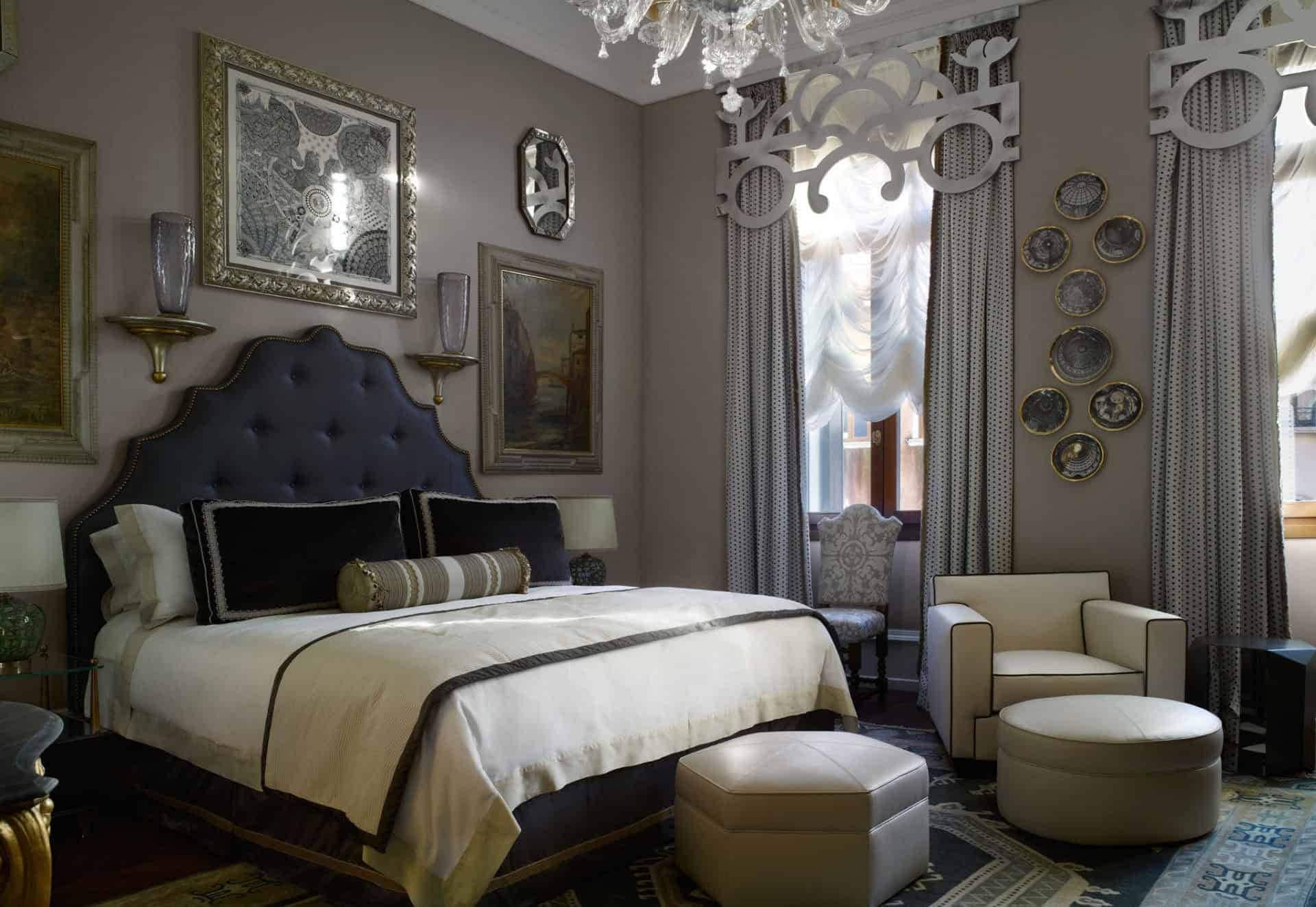
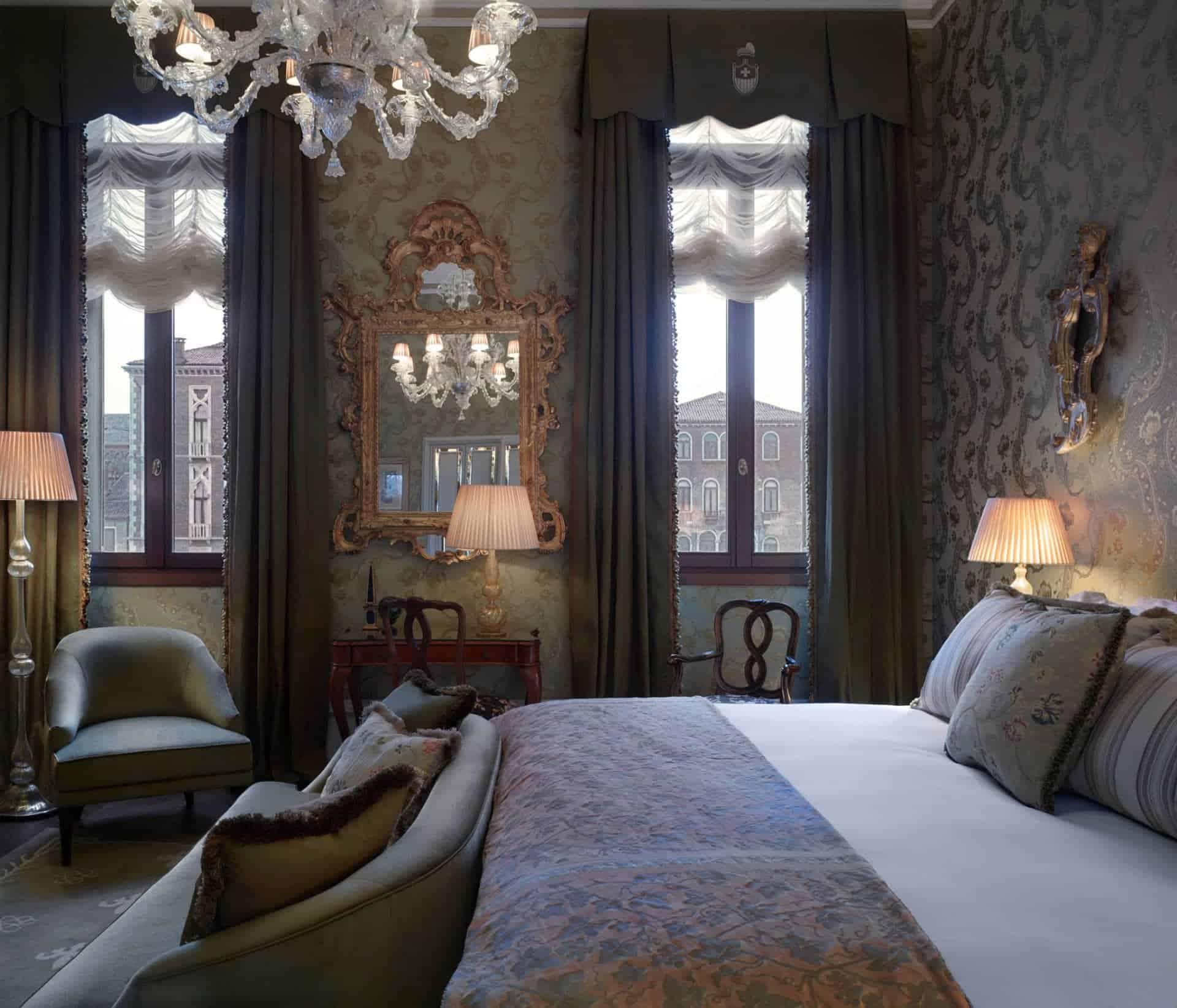
Chewning, who had worked on earlier Luxury Collection renovations in Athens and Vienna, treated the hotel as “a grand, invaluable home more than a hotel”. Donghia has been owned since 2005 by Rubelli, the Venetian textile house that had supplied the hotel’s silk damask wall coverings in the 1940s, and the team drew on more than 7,000 historic documents in Rubelli’s archive, choosing a Doge’s red damask for the Explorer’s Library and a Gio Ponti cut velvet for suite sofas. The hotel’s art and antiques were catalogued first, and dozens of old Fortuny curtains were remade as cushions and throws. Venetian artisans made new plaster mouldings for the ceilings, new terrazzo floors followed historic patterns, with the Club del Doge’s modelled on a room in the nearby Palazzo Pisani Moretta, and three local artists hand-marbled the walls of the grand staircase. Bar Longhi keeps its three paintings by Pietro Longhi. Ten signature suites were named after famous guests and Venetian landmarks, from the refreshed Ernest Hemingway Suite to new suites honouring Somerset Maugham, Peggy Guggenheim and Angelo Donghia, the founder of Donghia, and the two-storey Redentore Terrazza Suite, with a large roof terrace.
Photography and credits
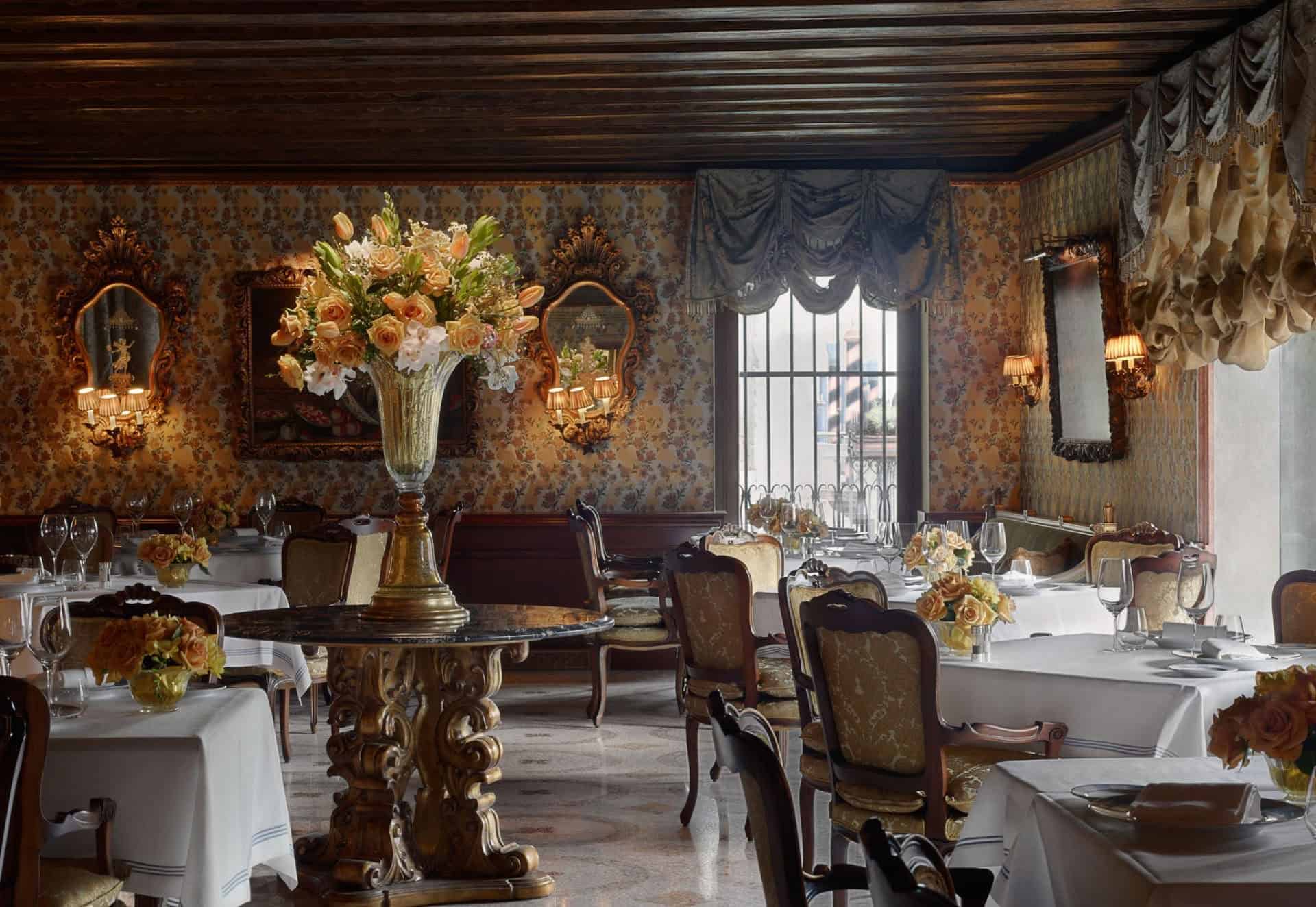
The photographs open on the canal facade and the Gritti Terrace looking across to the Salute, then alternate between views of the palazzo from the water and the restored interiors: Bar Longhi, the Club del Doge restaurant, the red Sala Tiziana, the sitting room and bedroom of the Ernest Hemingway Suite, the pink and green Somerset Maugham Suite, a suite in the spirit of Peggy Guggenheim, the silver-grey Angelo Donghia Suite, a suite bedroom with antiqued-mirror valances and a guest room. The twelve terrace and interior views come from Chuck Chewning’s project page and are credited to Fritz von der Schulenburg, who photographed the restored hotel in 2013; the exteriors are by Wolfgang Moroder, Didier Descouens, Armin Kleiner, Iain Cameron, Abxbay and Kent Wang, as credited on Wikimedia Commons.
The Gritti Palace gallery
Explore more on Archtene
- More projects by Chuck Chewning + Donghia + Veniceplan Ingegneria + Gretchen Alexander Harnischfeger
- More projects in Venice
- More Hotel projects