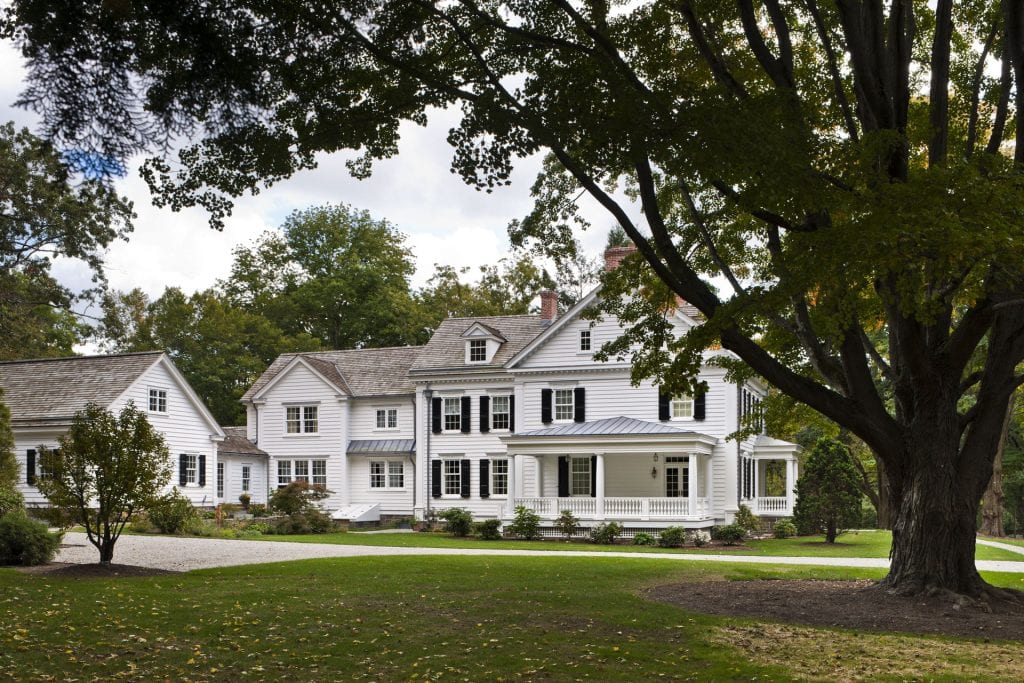
Mine Hill, located in Fairfield, Connecticut, is a residence designed by Peter Zimmerman Architects. The project involved constructing a new home on the site of a century-old house that had undergone numerous modifications over the years. The original structure, while not officially designated as a historic resource, held significant sentimental value for the local community and was a familiar landmark to residents.
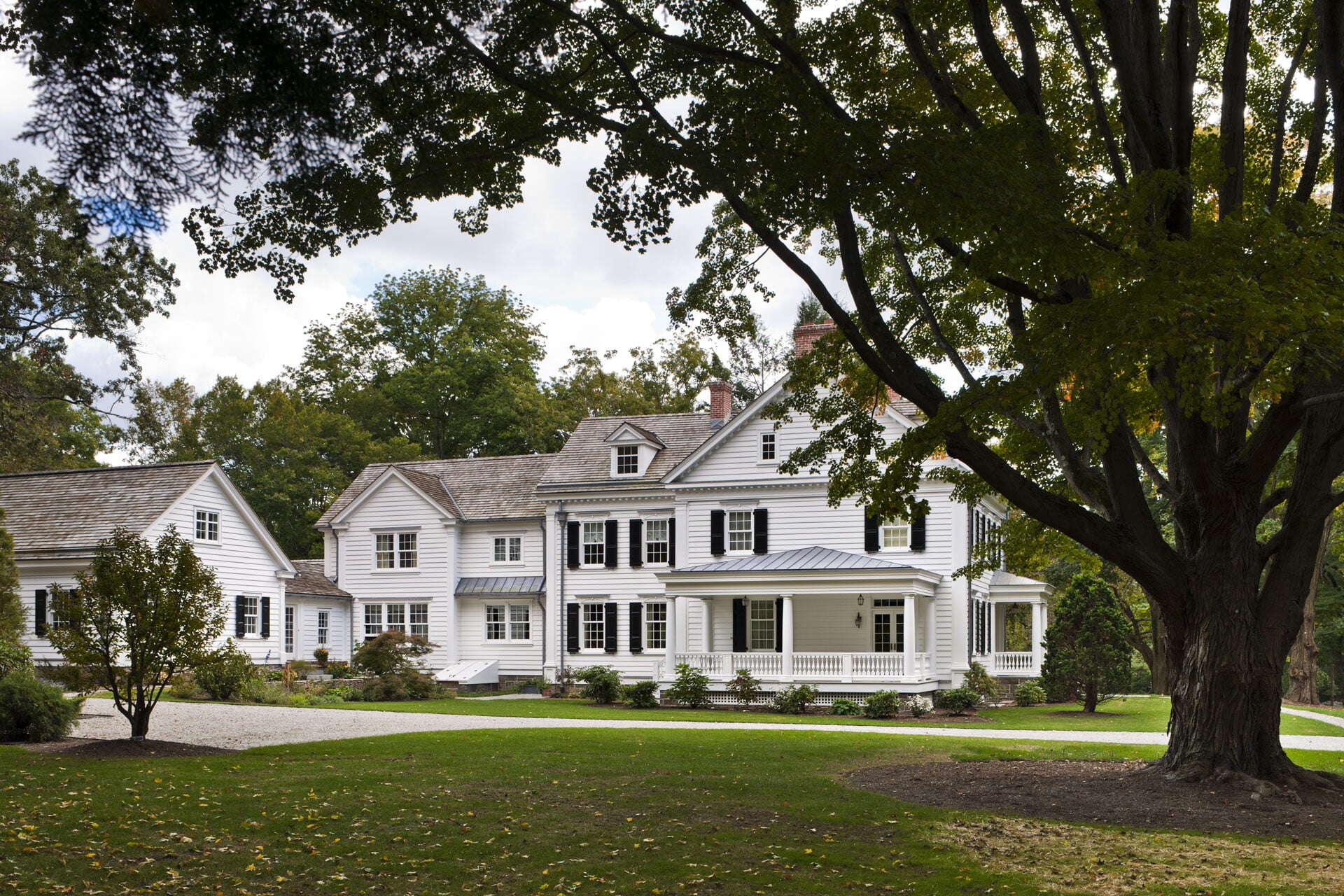
The design approach for Mine Hill was rooted in the belief that architecture should be deeply connected to its cultural and historical context. To honour the memory of the original house, the architects aimed to create a residence that appeared as though it had always been part of the site. This was achieved by adopting the classic New England interpretation of the Georgian or Federal style, ensuring the new home blended seamlessly with the mature specimen trees, ancient rose garden, and the park-like nature of the property.
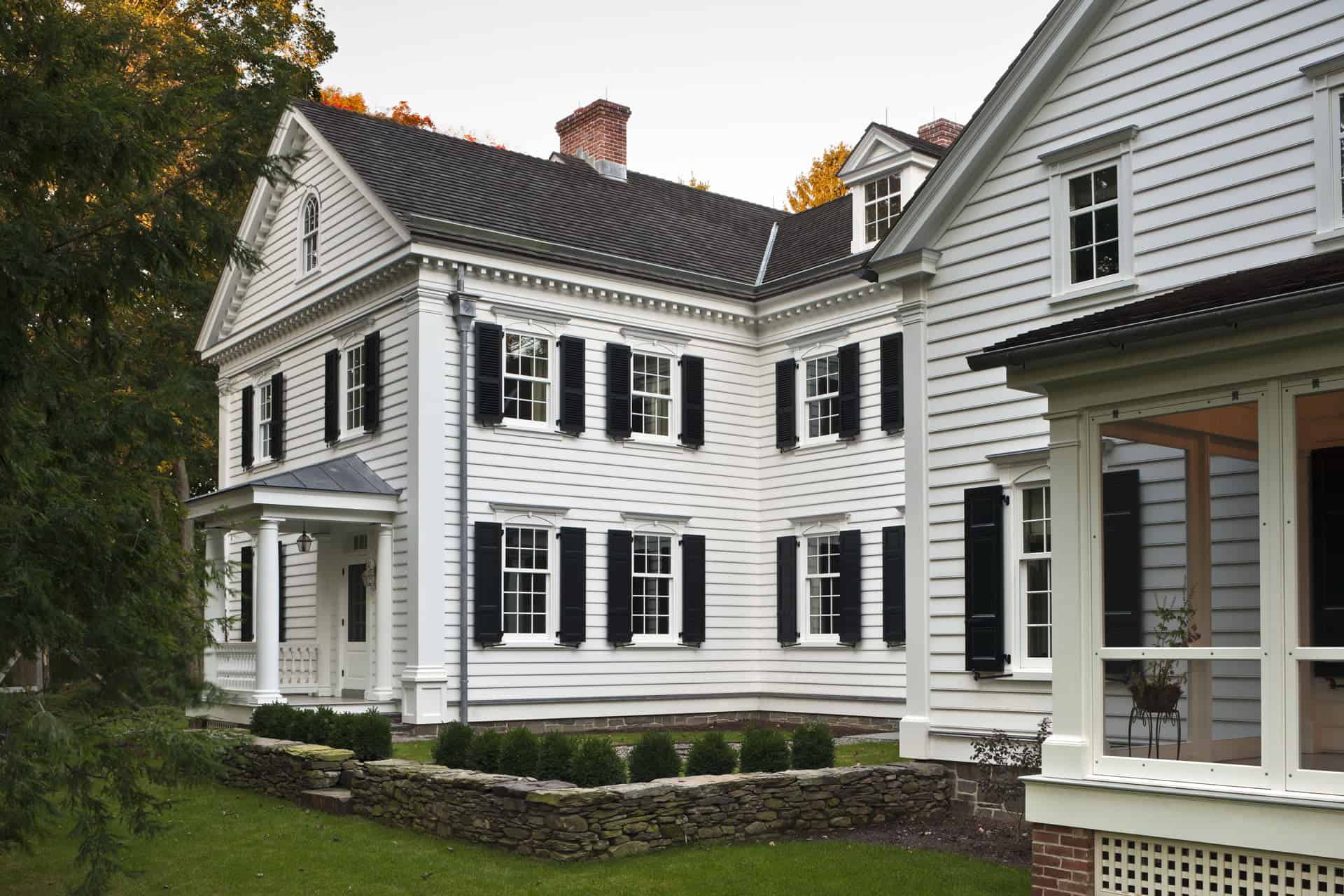
The design strategy involved placing two central masses of the house perpendicular to the street, aligning with the approximate footprint of the original structure. A prominent two-bay mass was added in front, parallel to the street, to enhance the home’s presence and prominence. Subsequent smaller volumes were incorporated toward the sides and rear, suggesting organic growth over time. This thoughtful massing not only honoured the original design but also met the programmatic requirements of the clients.
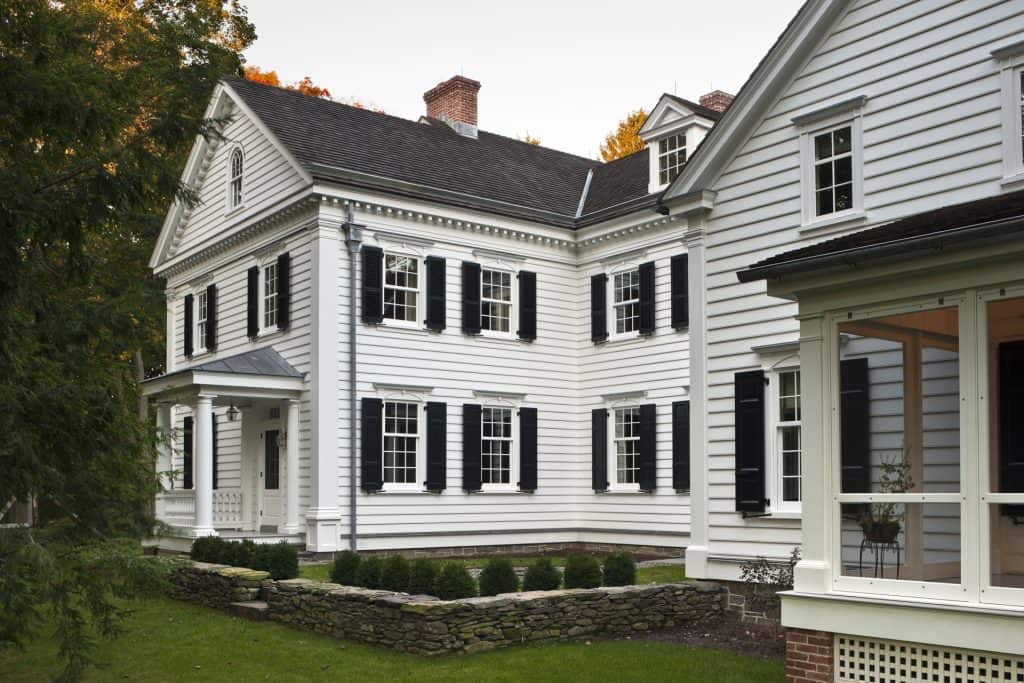
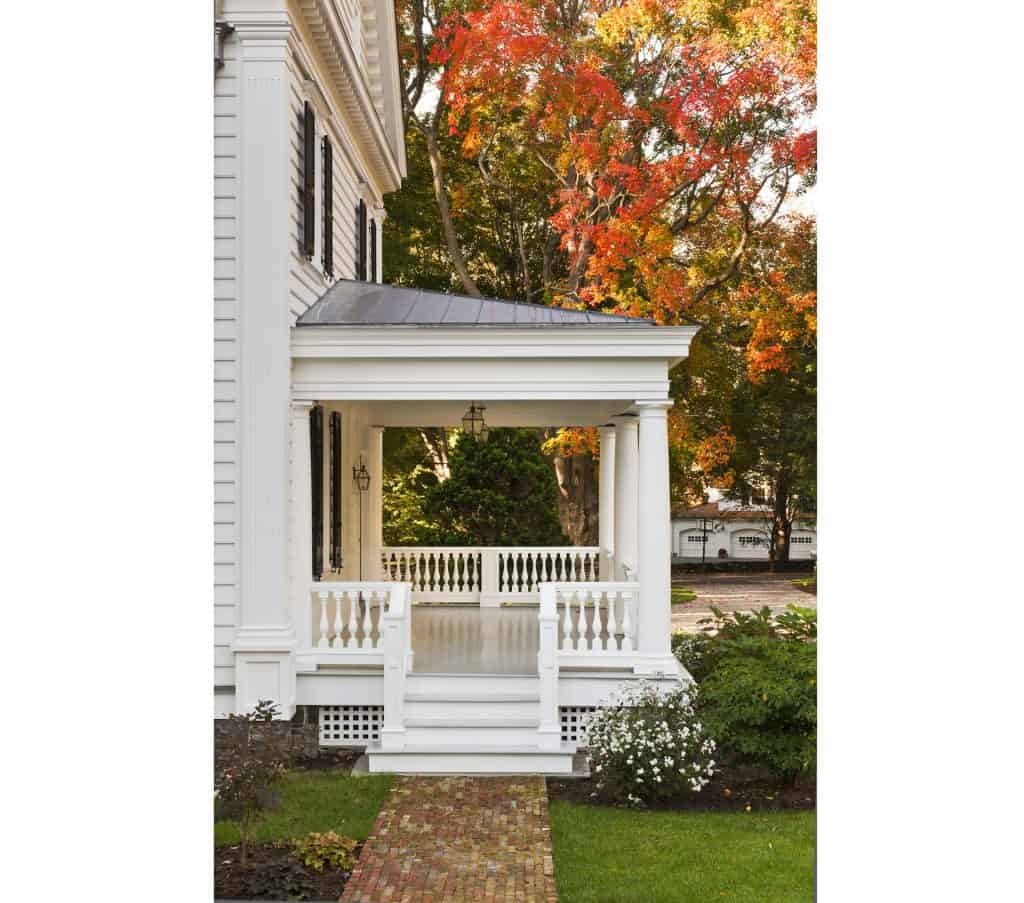
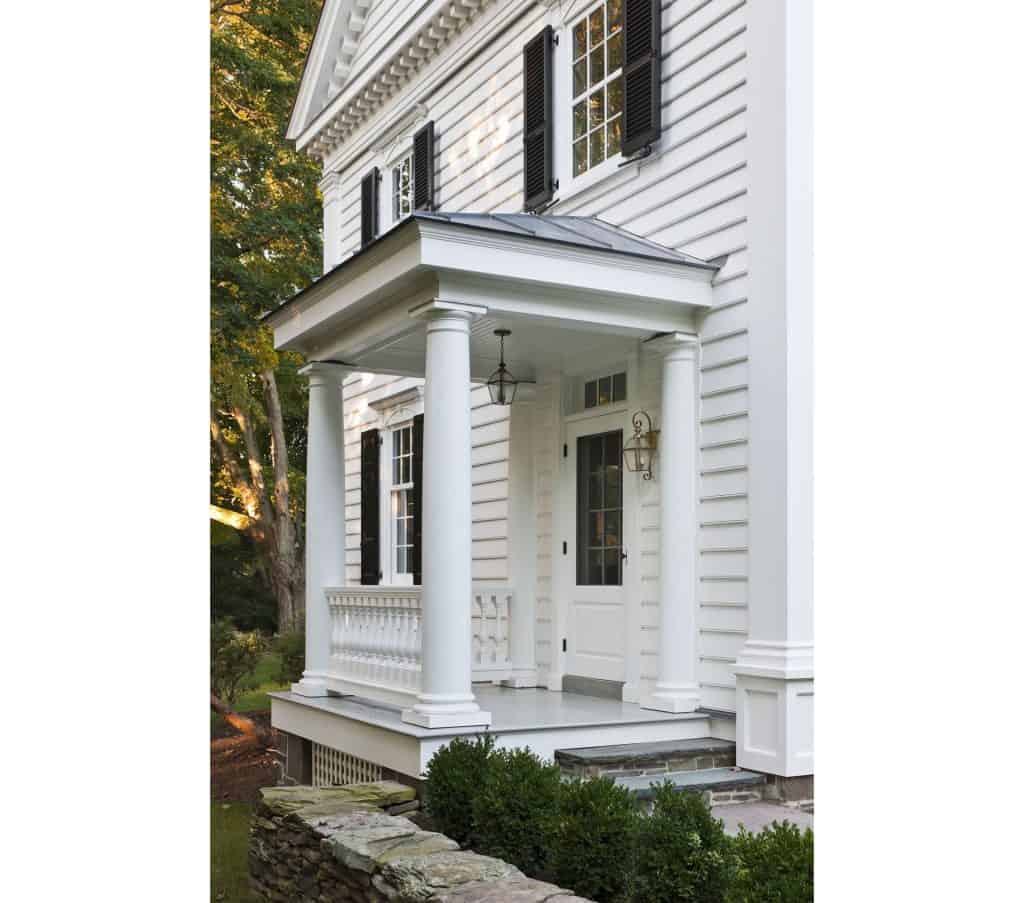
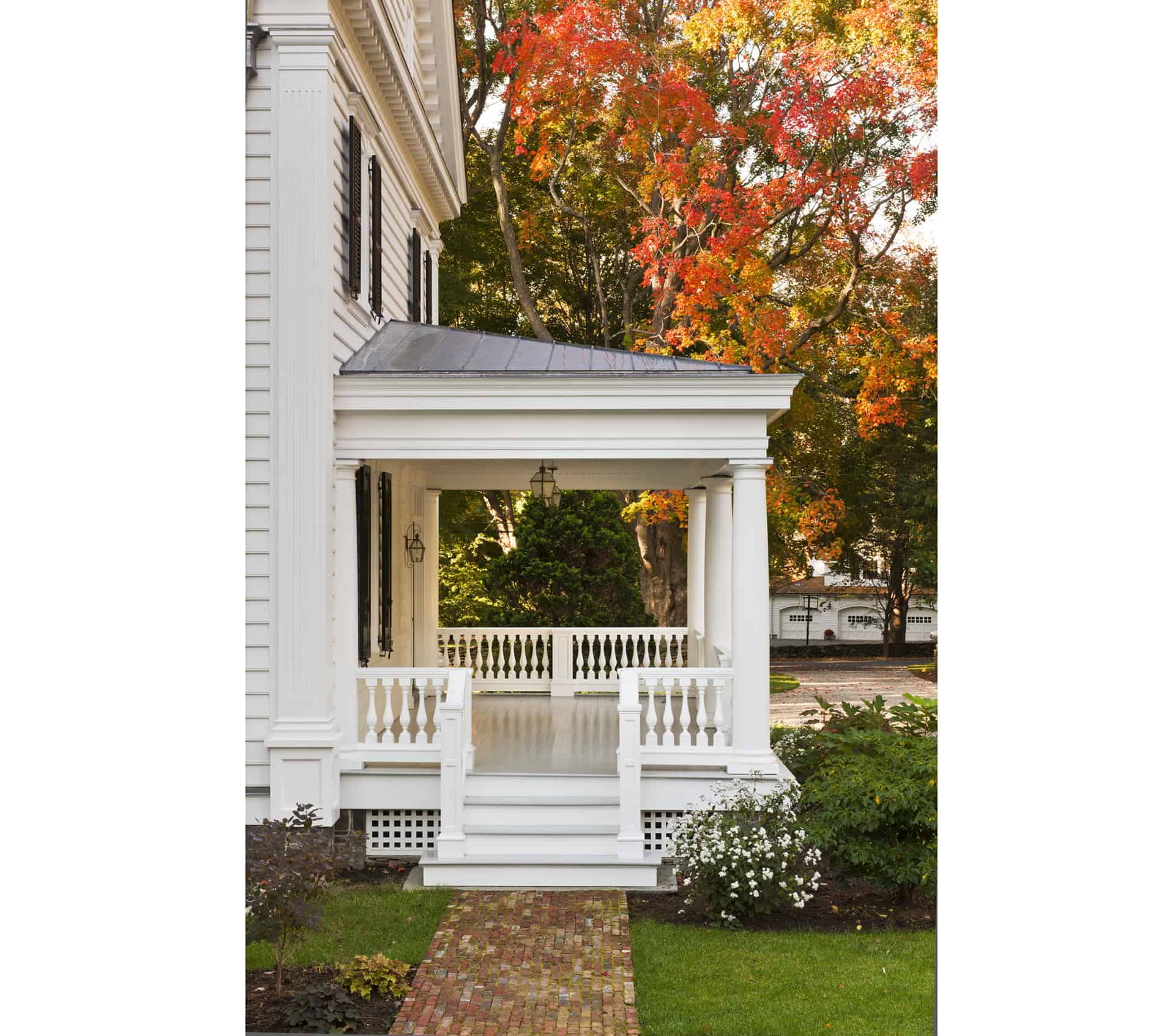
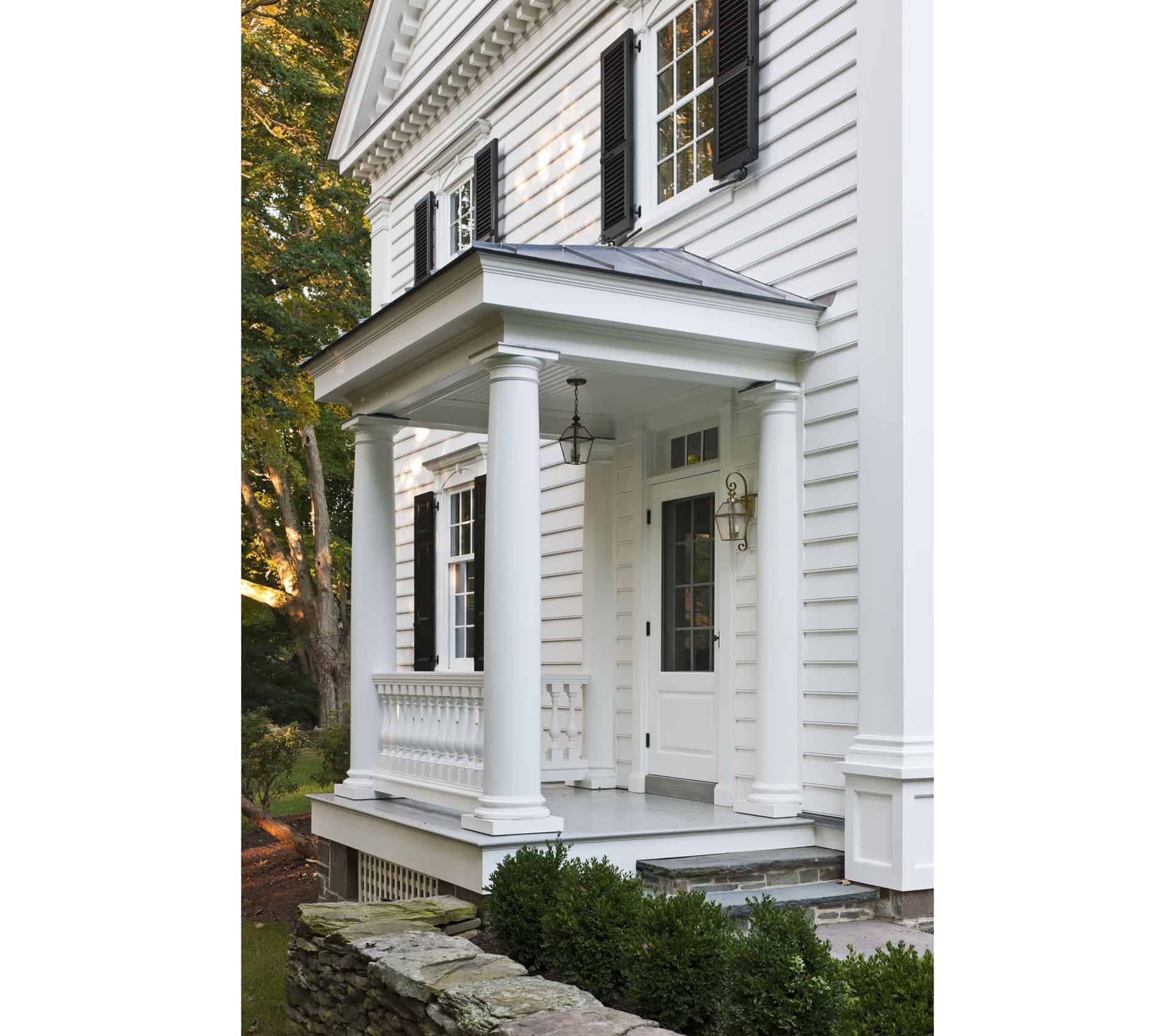
The exterior materials were carefully selected to reflect the traditional New England aesthetic. The house features ¾-inch beaded clear mahogany clapboard siding, complemented by a cedar shingle roof. The foundation base is constructed from salvaged stone, adding a sense of history and continuity to the design. Multiple porches, constructed of mahogany and topped with lead-coated copper roofs, provide outdoor living spaces that connect the interior to the surrounding landscape. The doors are layered with dense paint, giving them an appearance of having been painted over the years, further enhancing the home’s timeless character.
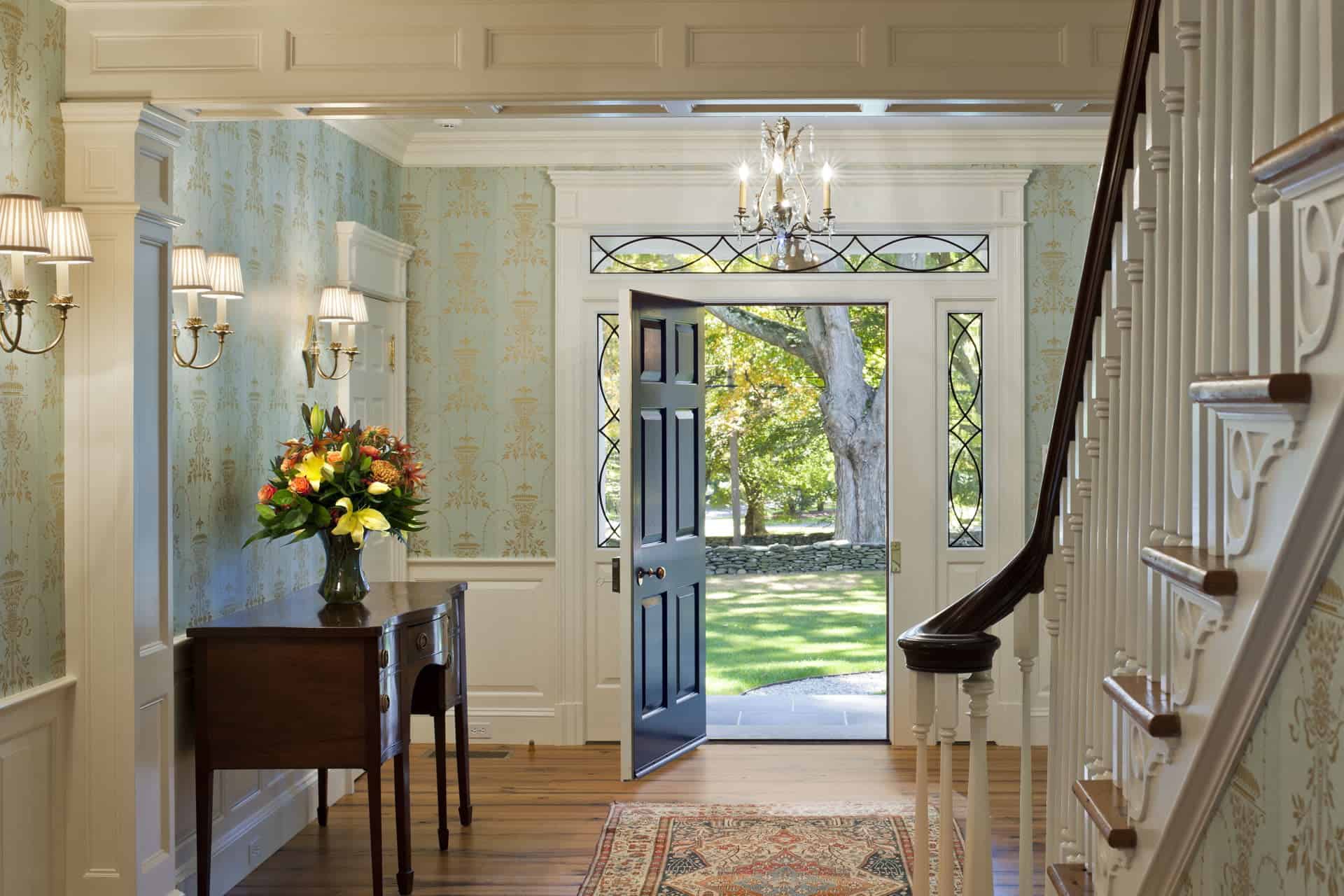
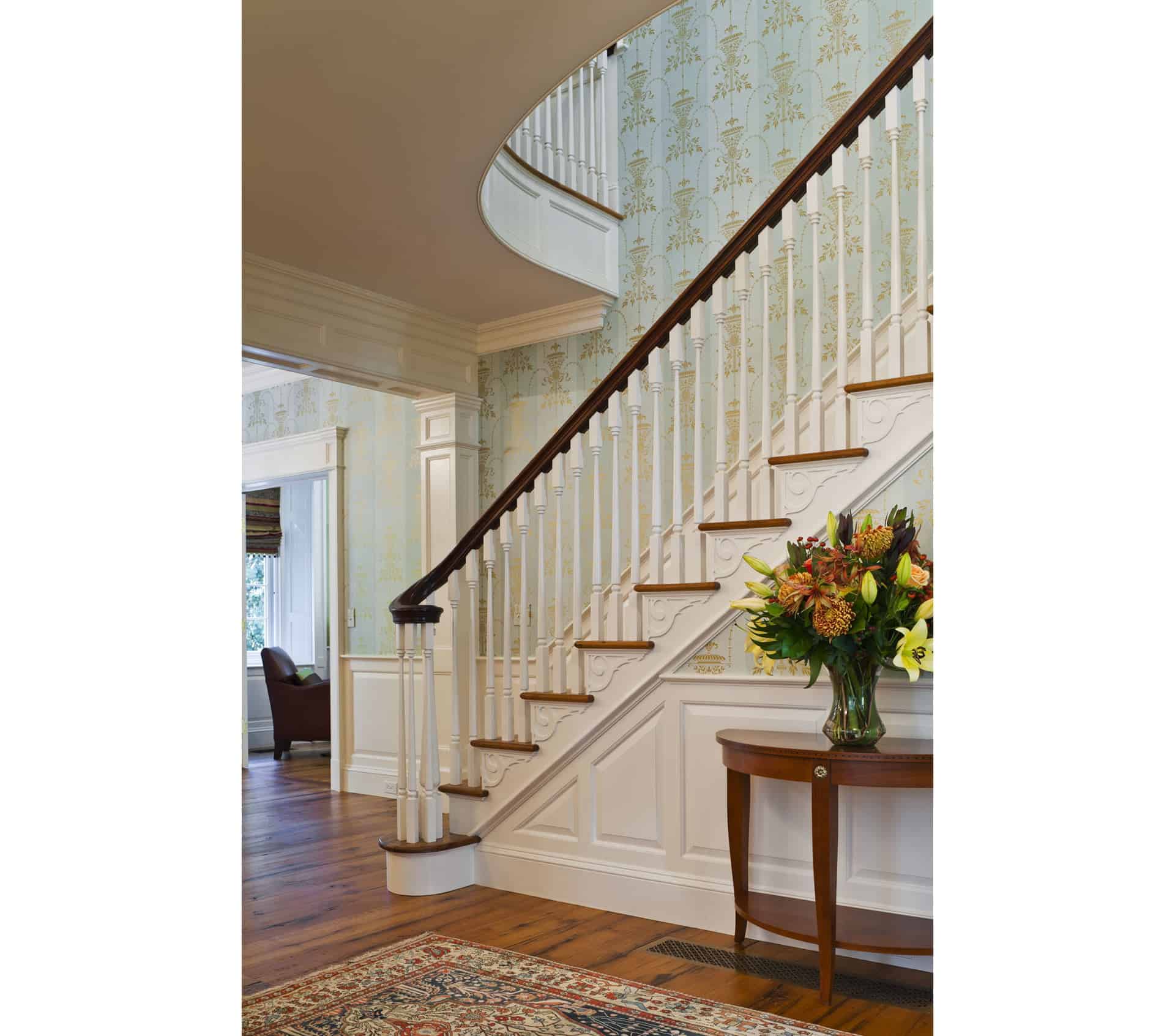
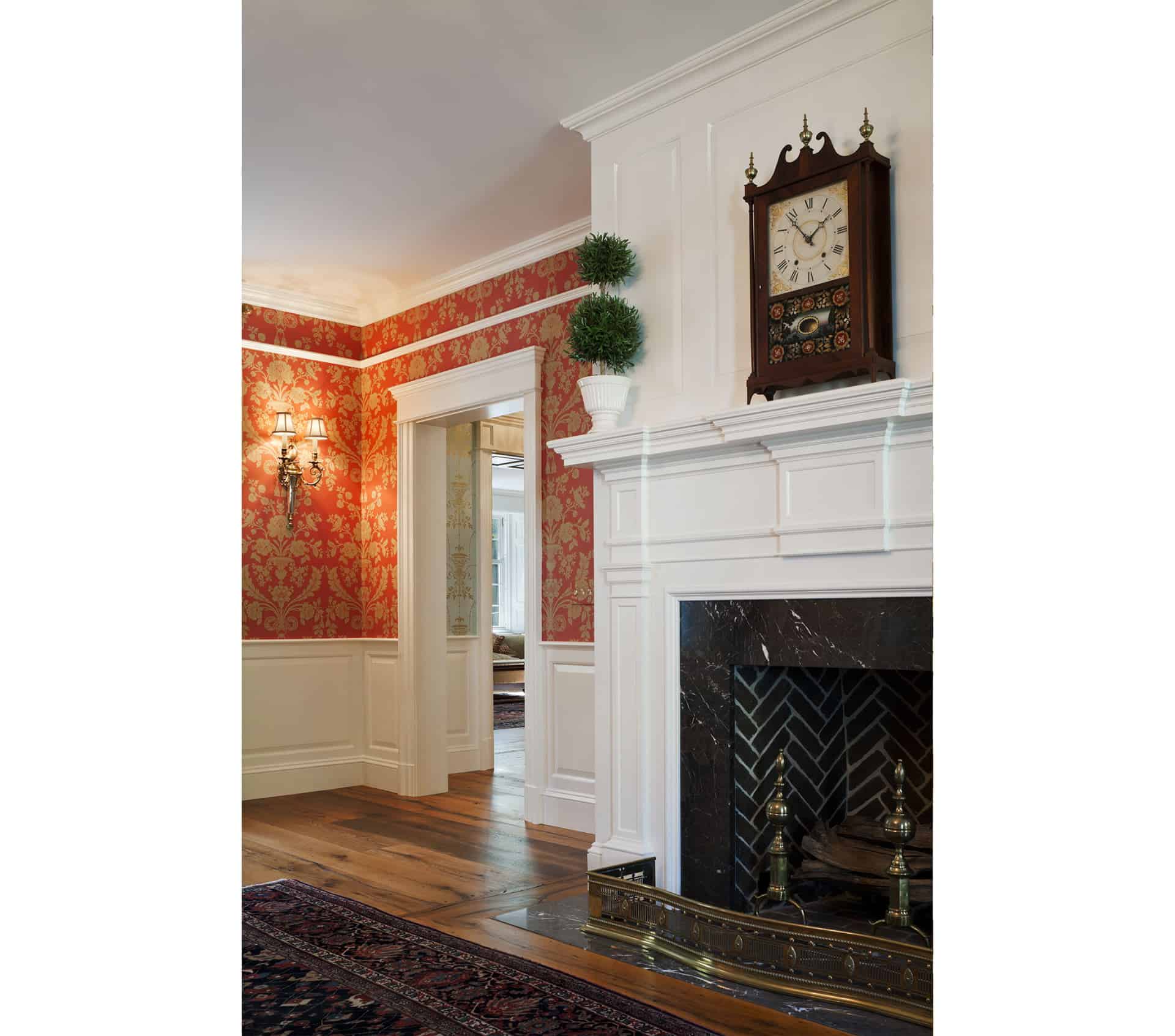
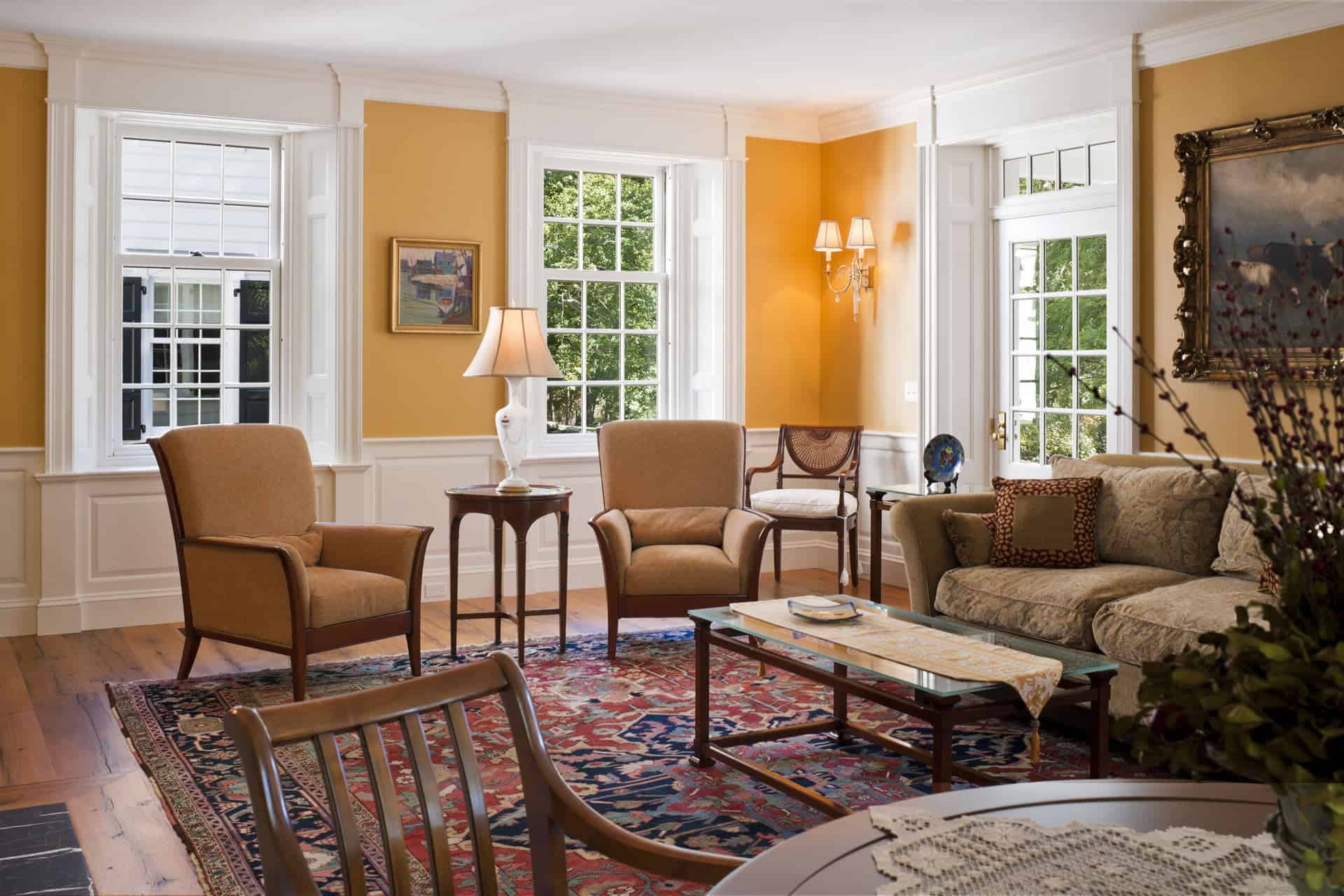
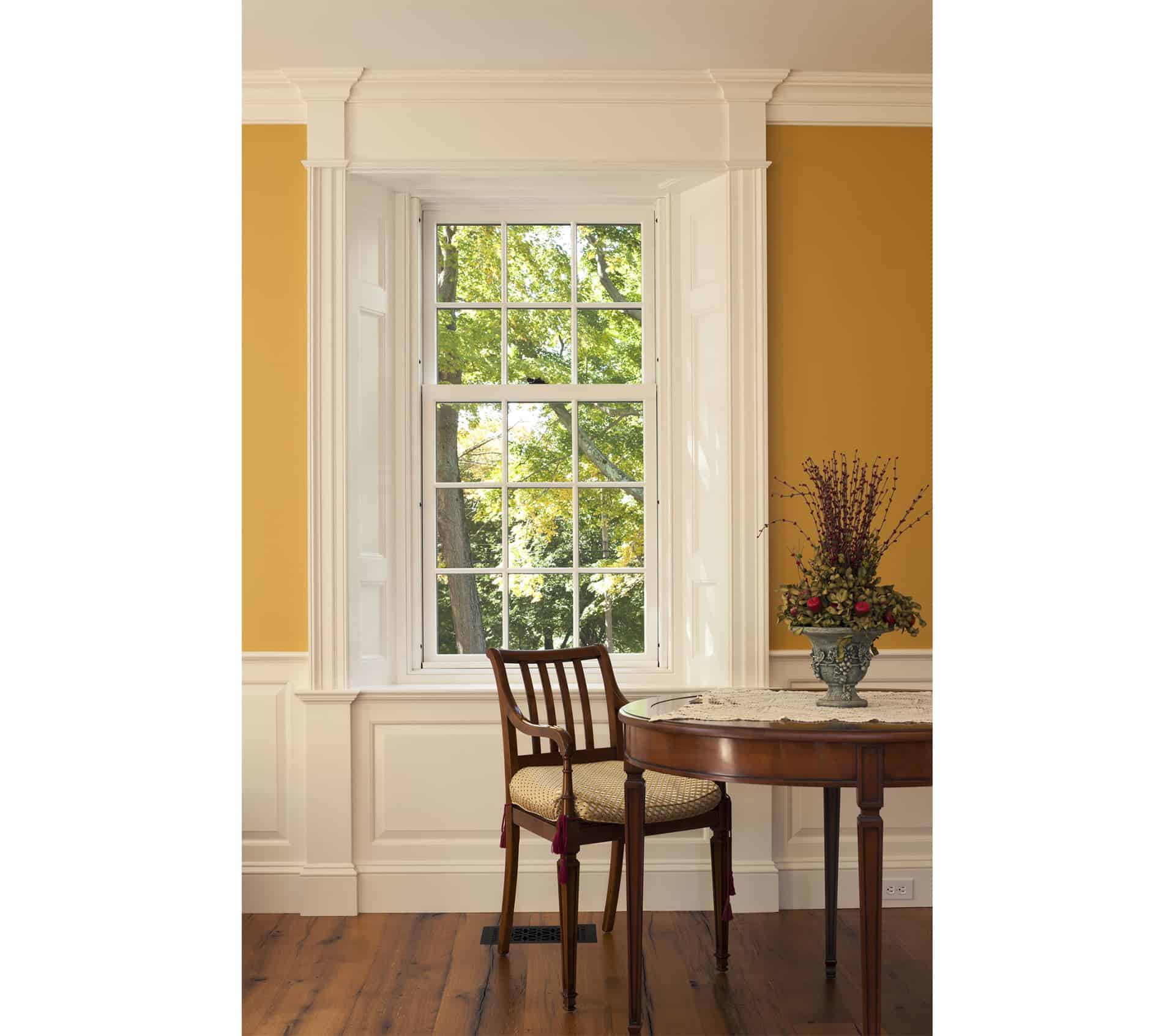
The interior spaces were designed to reflect the formal Georgian elements of the exterior. Fluted corner pilasters, brick chimneys, half-round window dormers, and windows with heads and mahogany shutters contribute to the classical detailing. The Classically detailed soffit, fascia, and rake further reinforce the formal aesthetic. These elements correspond to the formal spaces within the home, creating a harmonious relationship between the interior and exterior.
The design of Mine Hill also considered the surrounding landscape, integrating the home into its park-like setting. The mature specimen trees and ancient rose garden were preserved, and the new construction was positioned to complement these existing features. The park-like nature of the site was maintained, ensuring that the residence appeared as a natural extension of the landscape.
The project was completed in 2016, marking a significant addition to the portfolio of Peter Zimmerman Architects. The firm’s design philosophy is deeply rooted in the historic traditions of architecture, focusing on classical proportion and scale, the balance of shadow and light, and the sustainable relationship between materials. They strive to create spaces that offer a sense of transparency between interior and exterior environments, ensuring that each design responds sensitively to its surrounding cultural context.
While specific details about the interior layout and design elements of Mine Hill are not readily available, the project’s emphasis on integrating the new construction with the existing landscape and honoring the historical significance of the site reflects the firm’s commitment to thoughtful and context-sensitive design. The residence stands as a testament to Peter Zimmerman Architects’ ability to blend traditional architectural styles with modern living requirements, creating homes that are both timeless and functional.
In summary, Mine Hill is a residence that exemplifies the principles of Peter Zimmerman Architects. By honouring the historical context of the site and integrating the new construction with the surrounding landscape, the project demonstrates a deep respect for architectural traditions and a commitment to creating spaces that resonate with their environment.
Gallery
Explore more on Archtene
- More projects by Peter Zimmerman Architects
- More projects in Connecticut
- More Estate projects