Gleneagles Townhouse by 3DReid in Edinburgh, United Kingdom
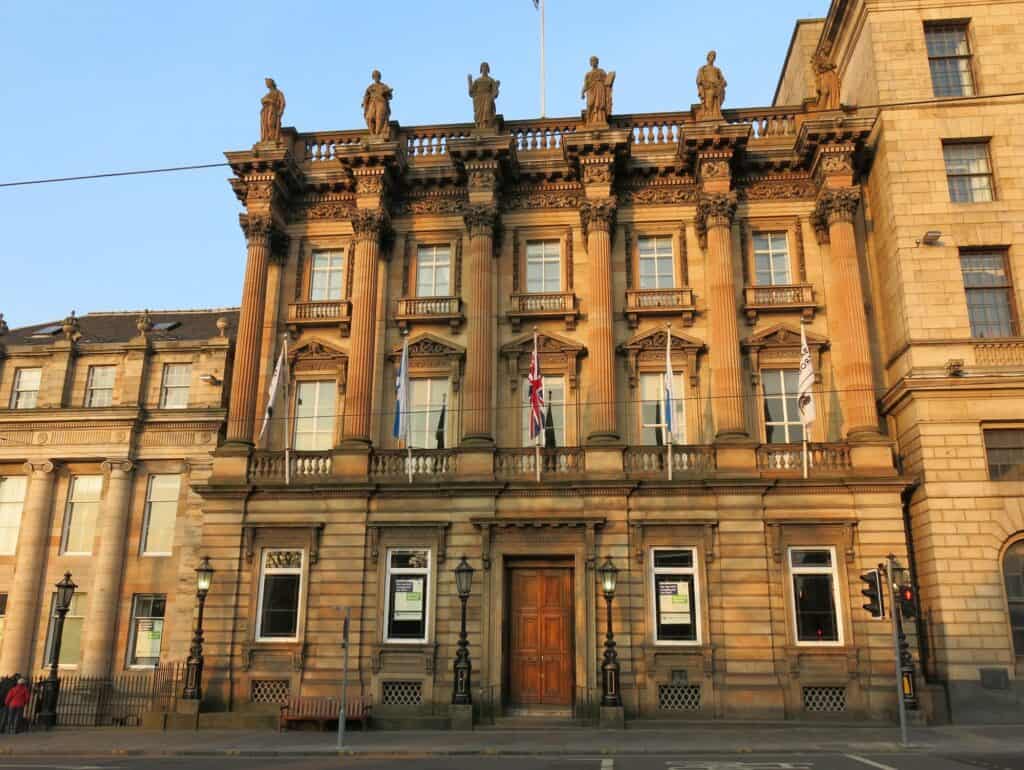
Gleneagles Townhouse is a hotel and private members’ club at 37–39 St Andrew Square in Edinburgh’s New Town, the first city outpost of the Perthshire hotel Gleneagles in its almost 100-year history. It occupies two adjoining Category A listed buildings: a classical townhouse of 1781 by John Young and, beside it, the former head office of the British Linen Bank, designed by David Bryce in 1846 and completed in 1851. After a five-year project led by 3DReid as architect and lead consultant, with Simpson & Brown as conservation architects and interiors by Ennismore’s in-house studio AIME Studios, the hotel opened on 6 June 2022 with 33 bedrooms, an all-day restaurant in the old banking hall, a rooftop bar and a wellness suite in the basement vault.
From a 1781 New Town house to the British Linen Bank
The British Linen Company was founded by royal charter on 6 July 1746, on the initiative of Andrew Fletcher, Lord Milton, to promote the Scottish linen industry, and over the following decades it turned from making and marketing cloth to banking, issuing its first true banknotes around 1750 from a mansion in Tweeddale Court off the Royal Mile. Around 1807 the company moved to the New Town, buying No. 37 St Andrew Square, a house built in 1781 by John Young, after James Craig, for George Ramsay, 8th Earl of Dalhousie. It had been built to match No. 35 at the insistence of Sir Laurence Dundas, so that the pair framed the forecourt of his Dundas House. William Burn made internal alterations and rear additions in 1823, and in 1825 the bank acquired the three neighbouring houses that would become the site of its new head office at Nos. 38–39. The company, which was only allowed to call itself the British Linen Bank in 1906, was taken over by the Bank of Scotland in 1969, and the building served as a Bank of Scotland branch until 2016.
David Bryce’s Imperial Roman bank and its domed banking hall
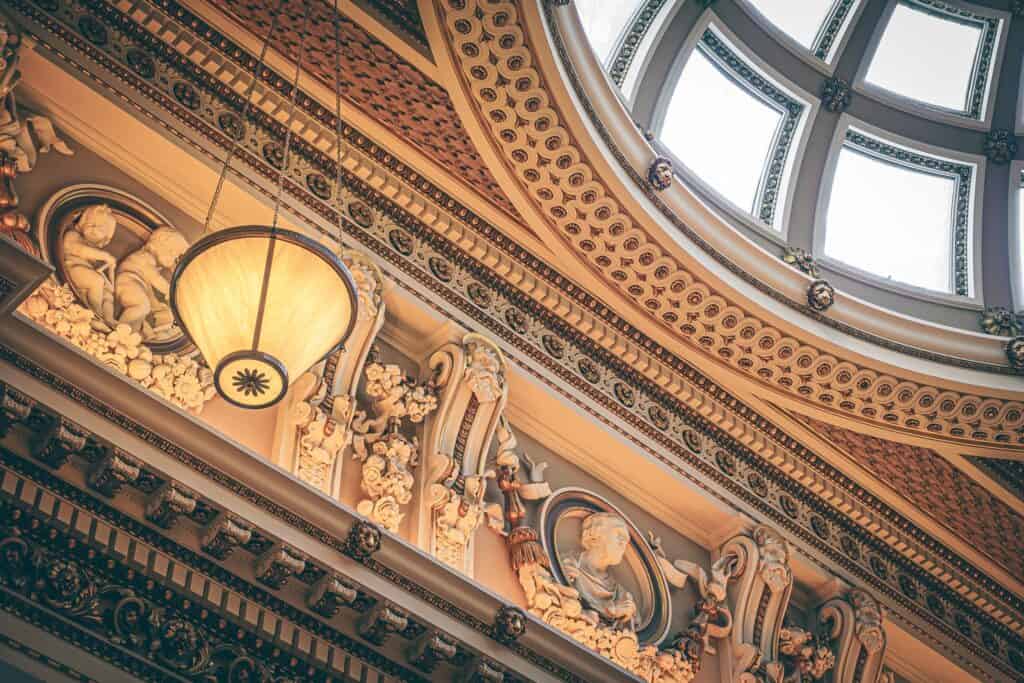
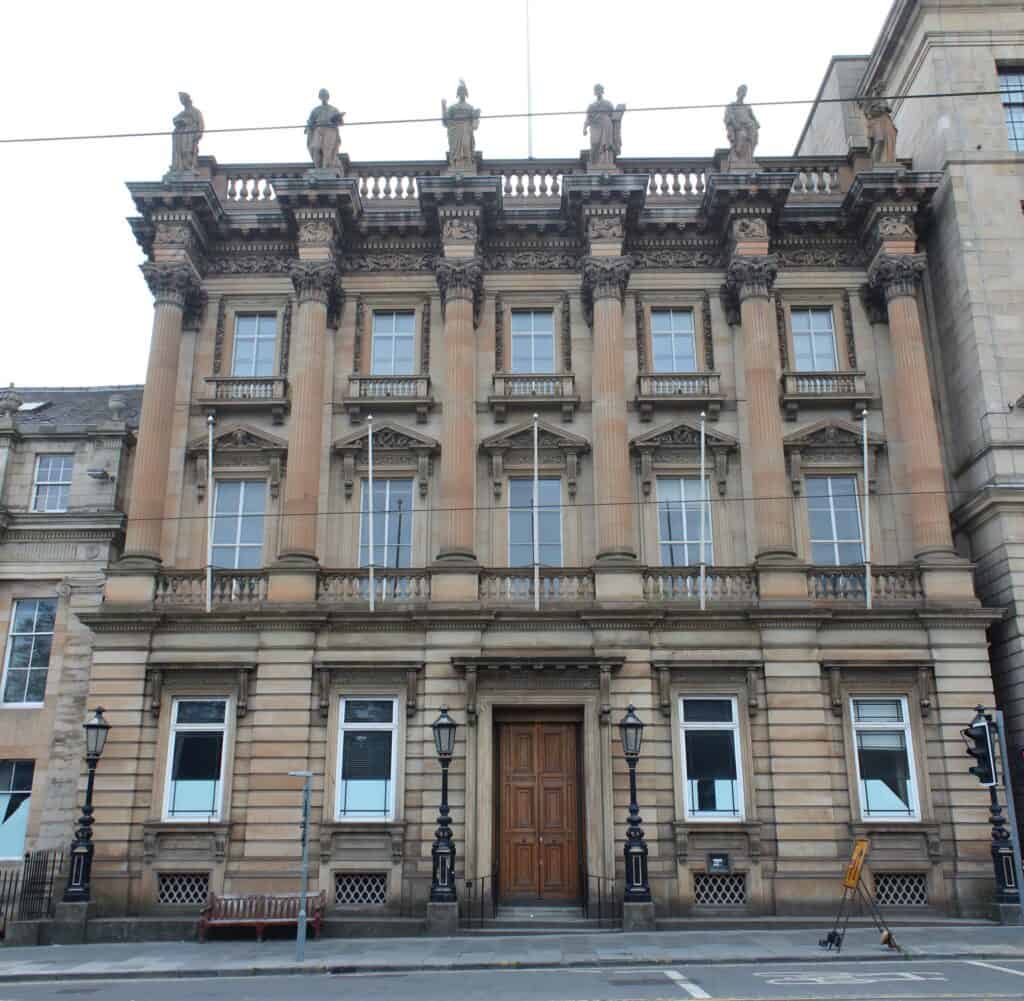
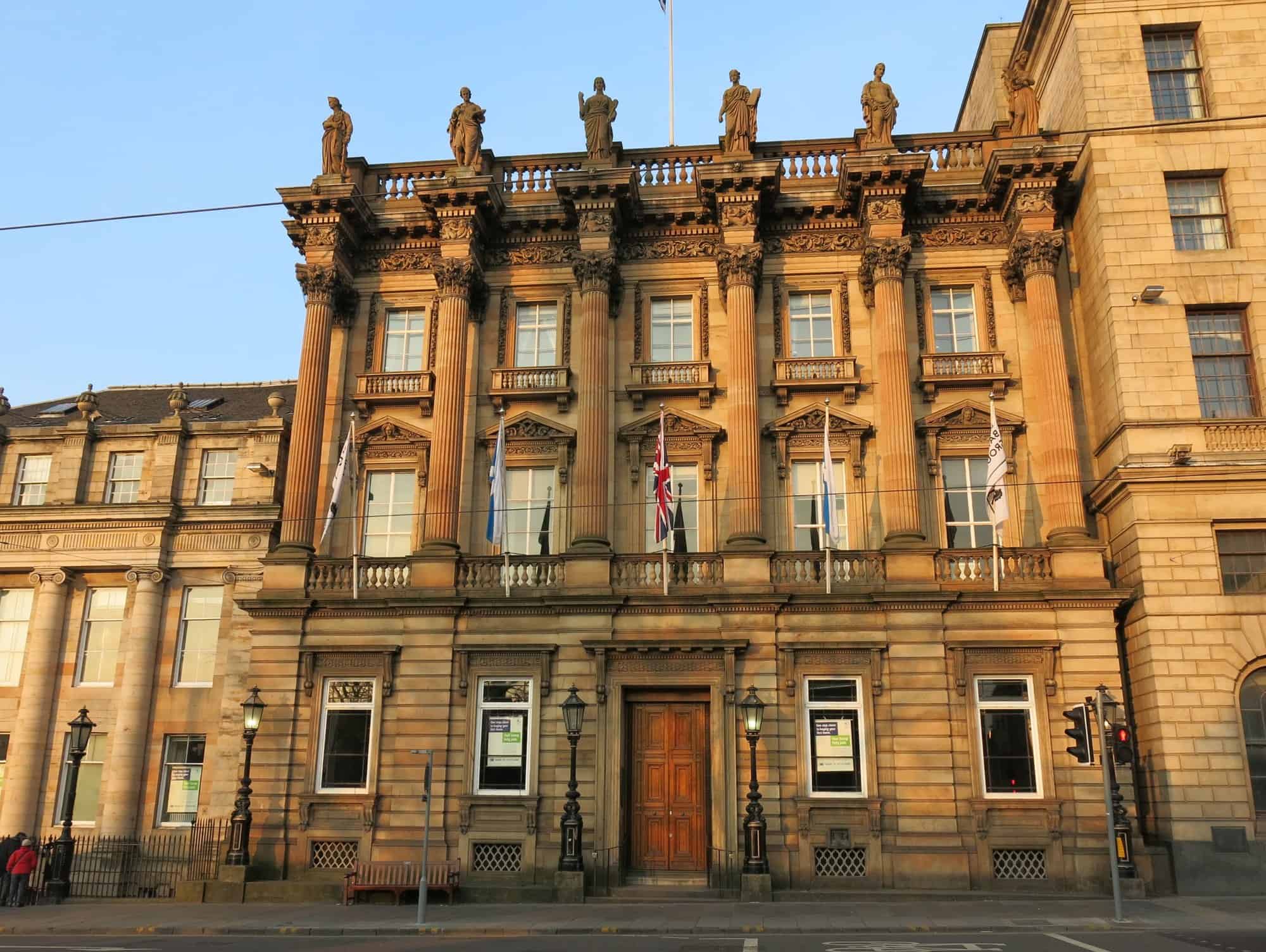
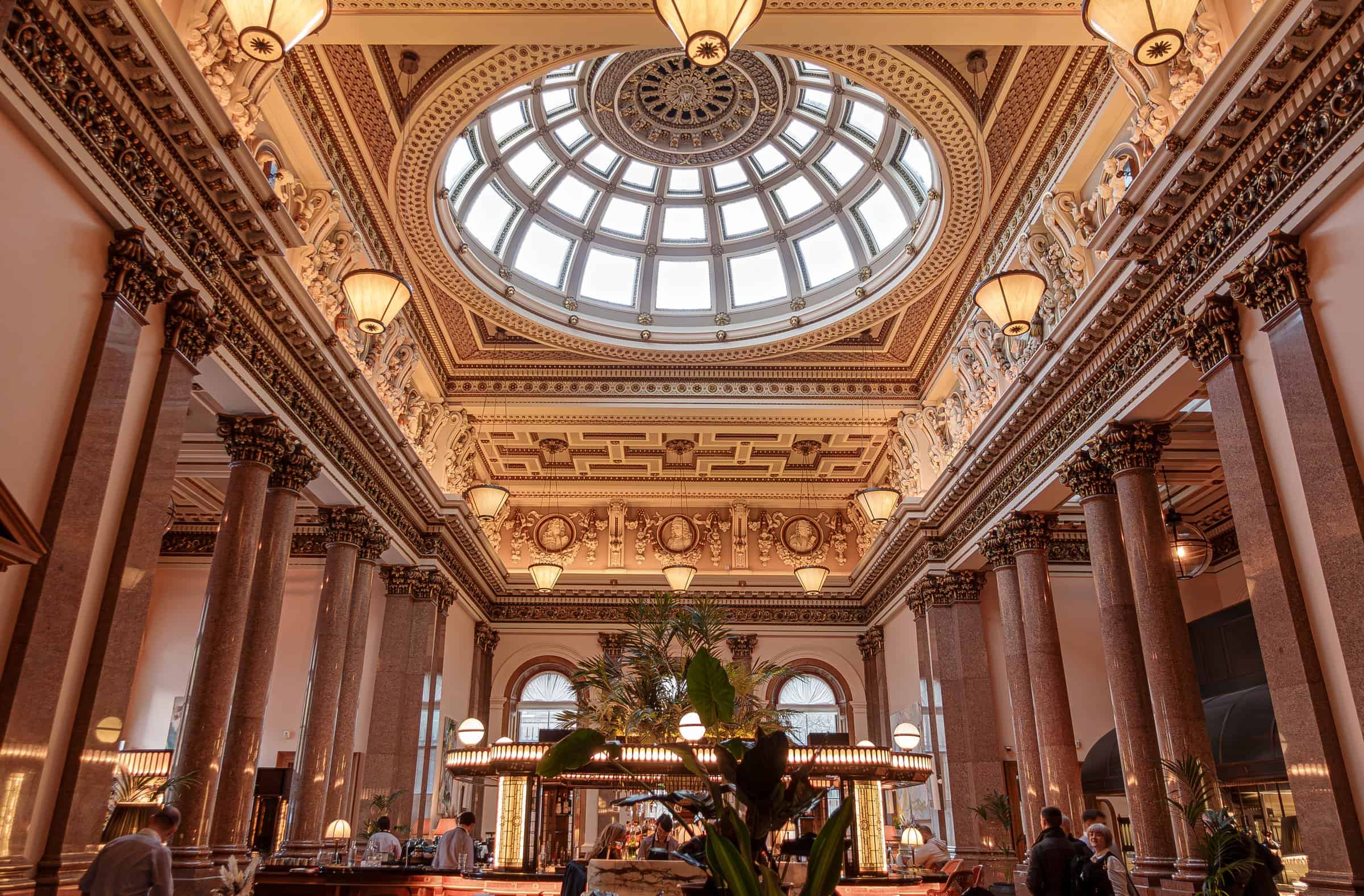
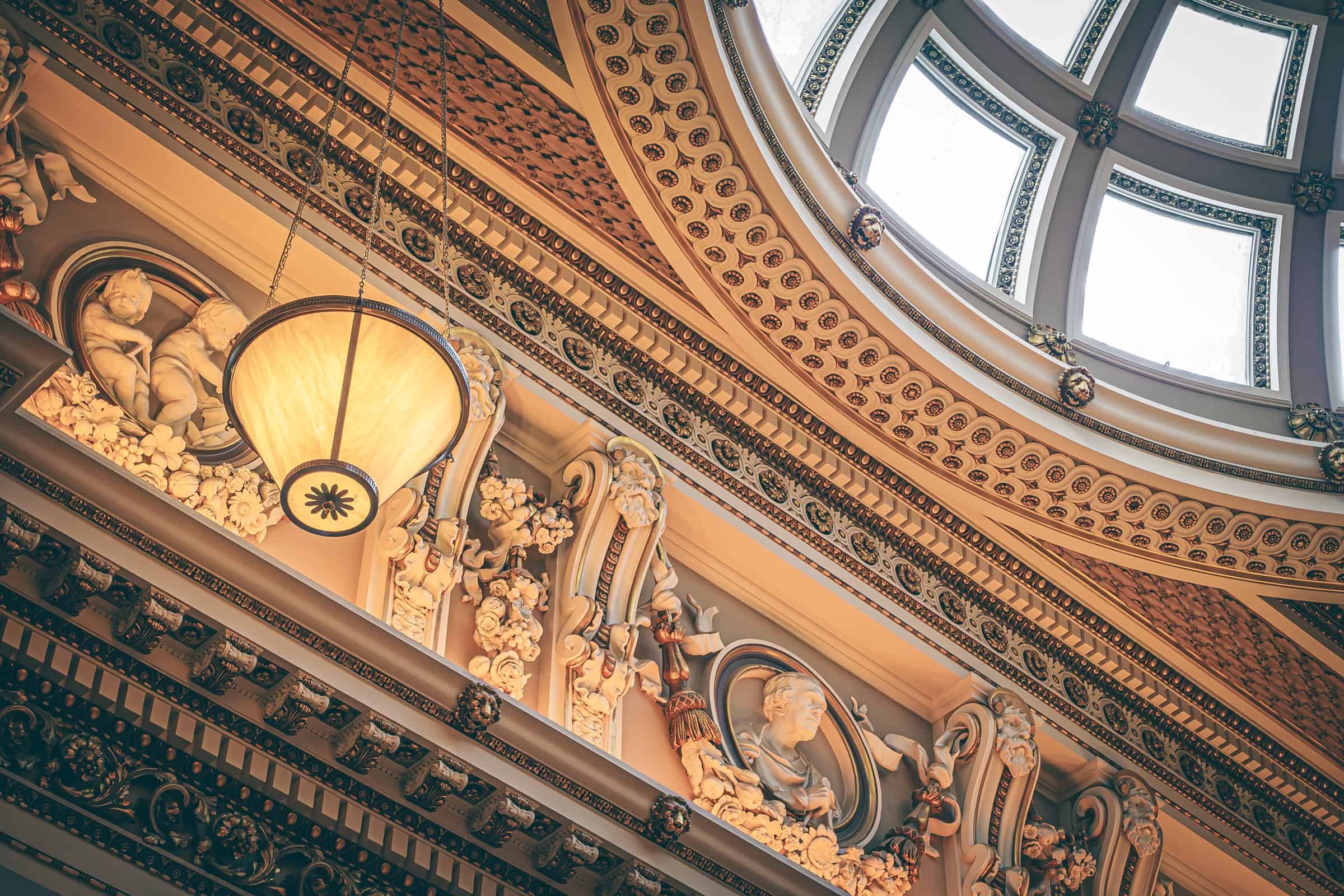
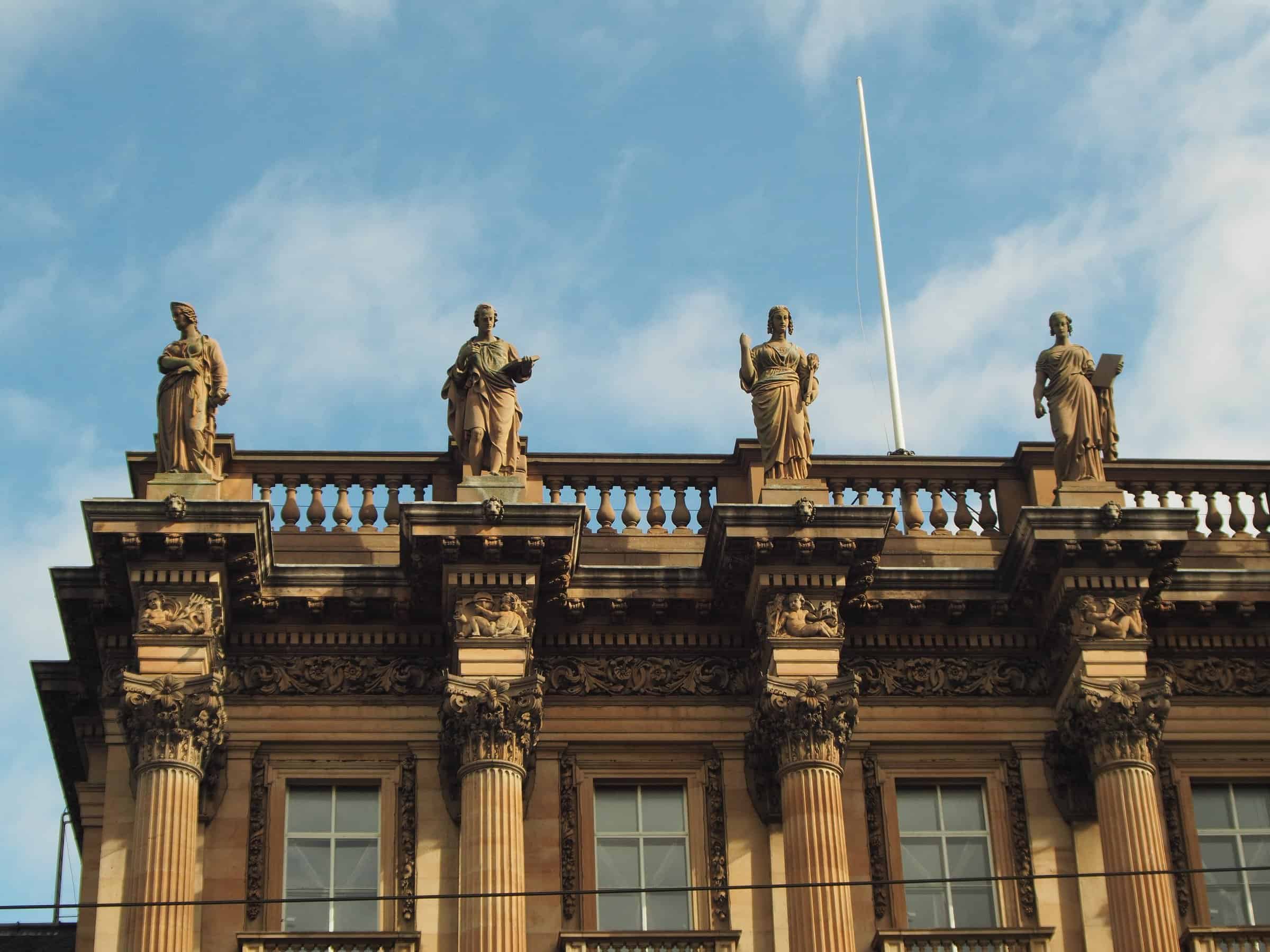
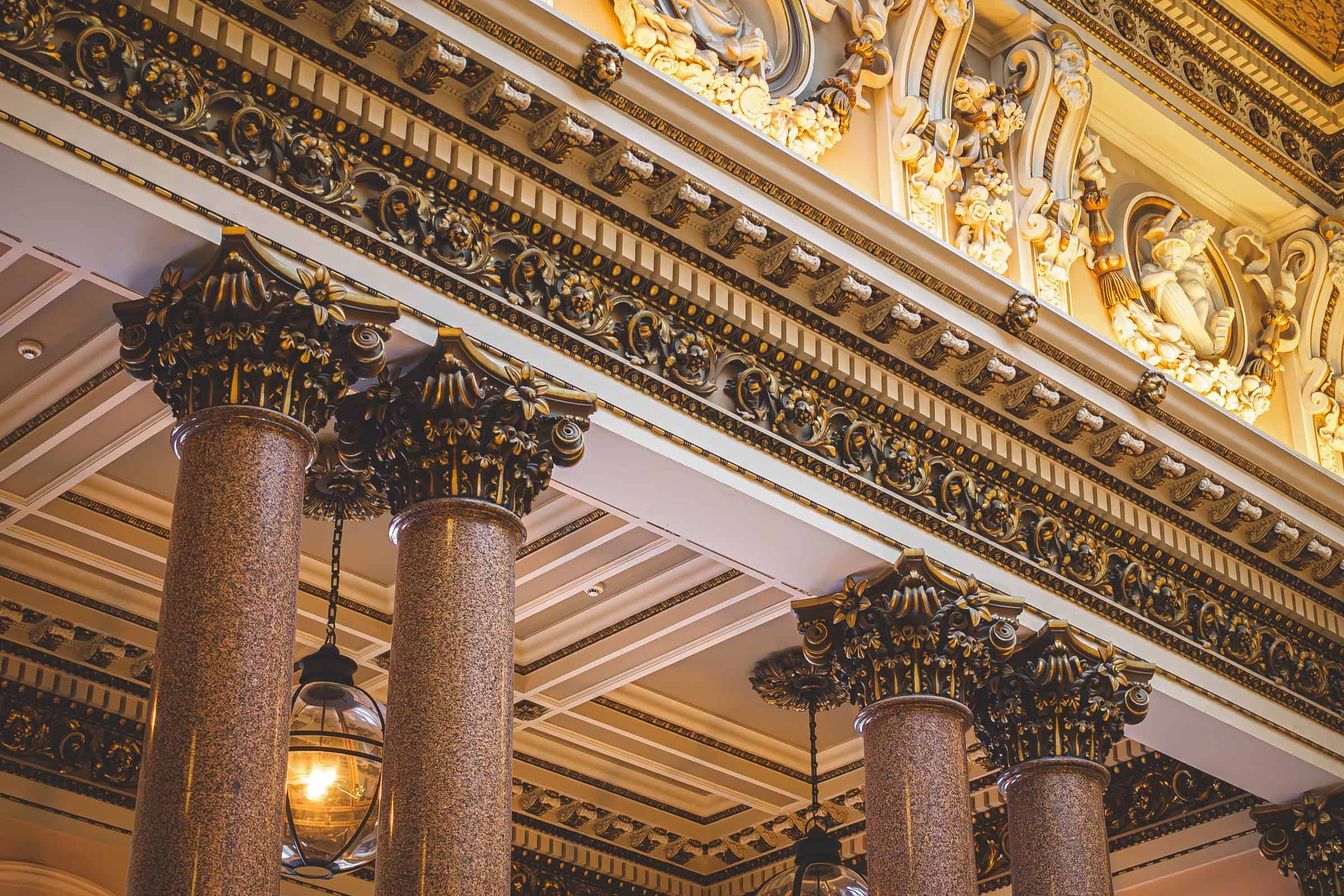
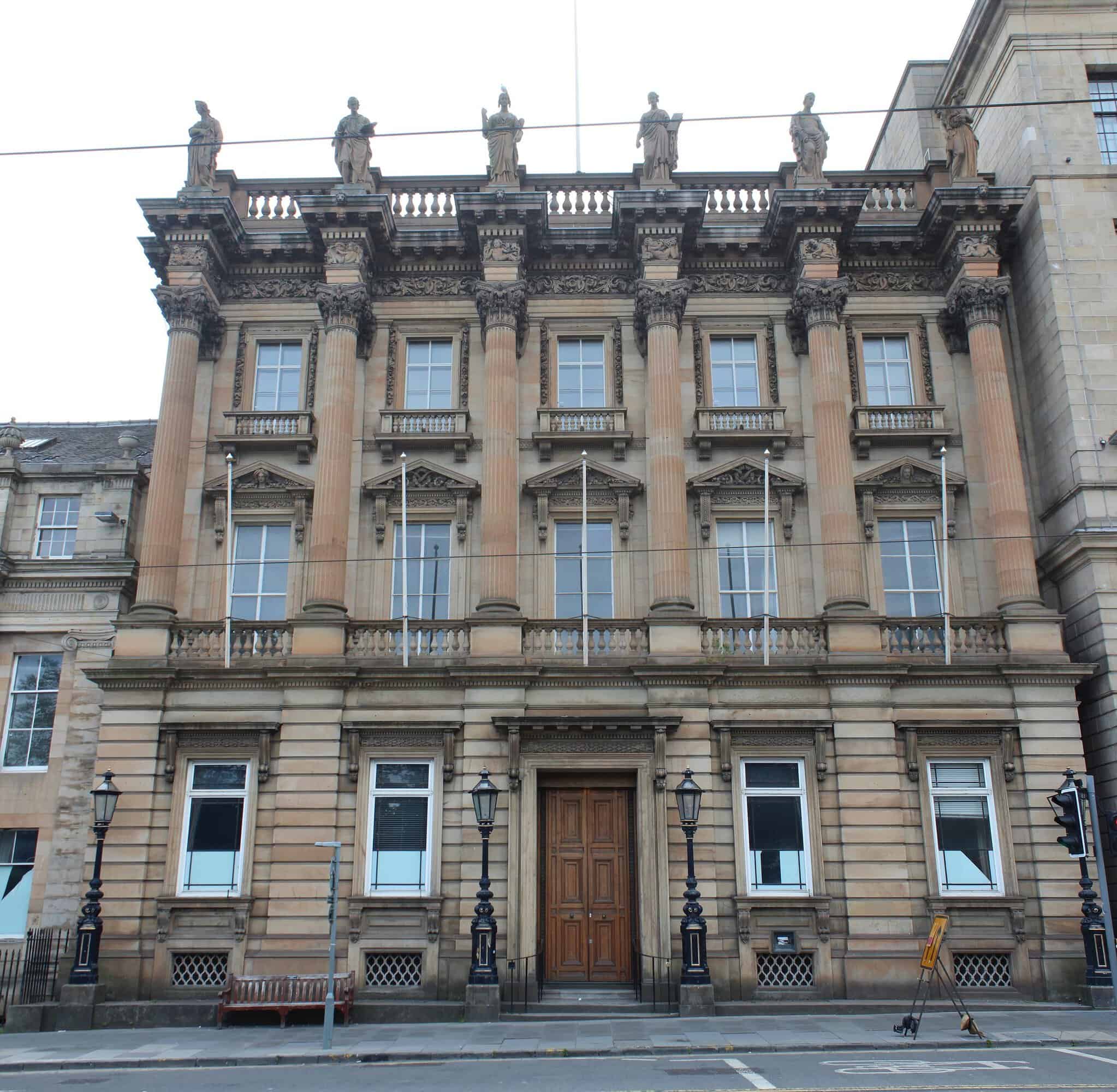
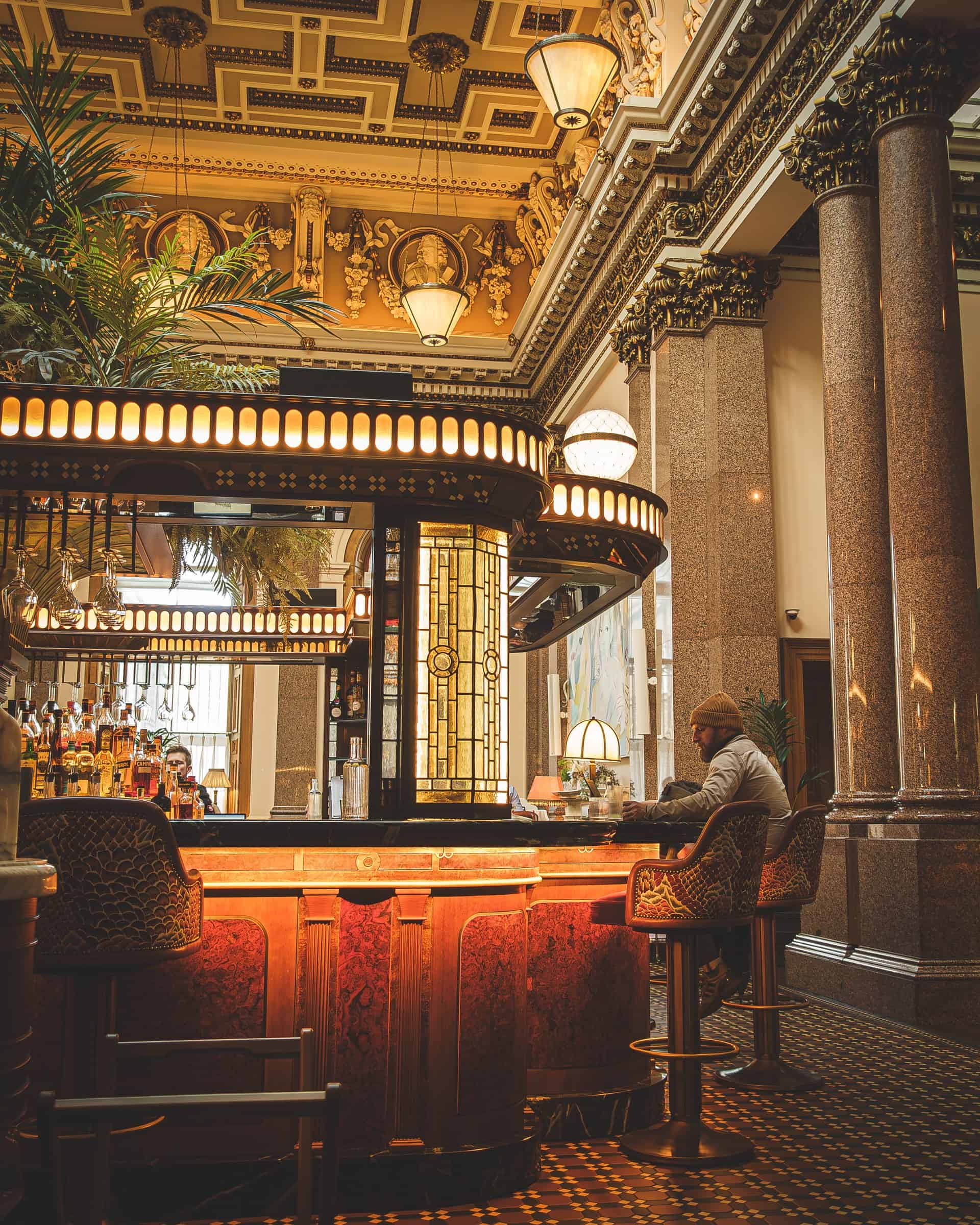
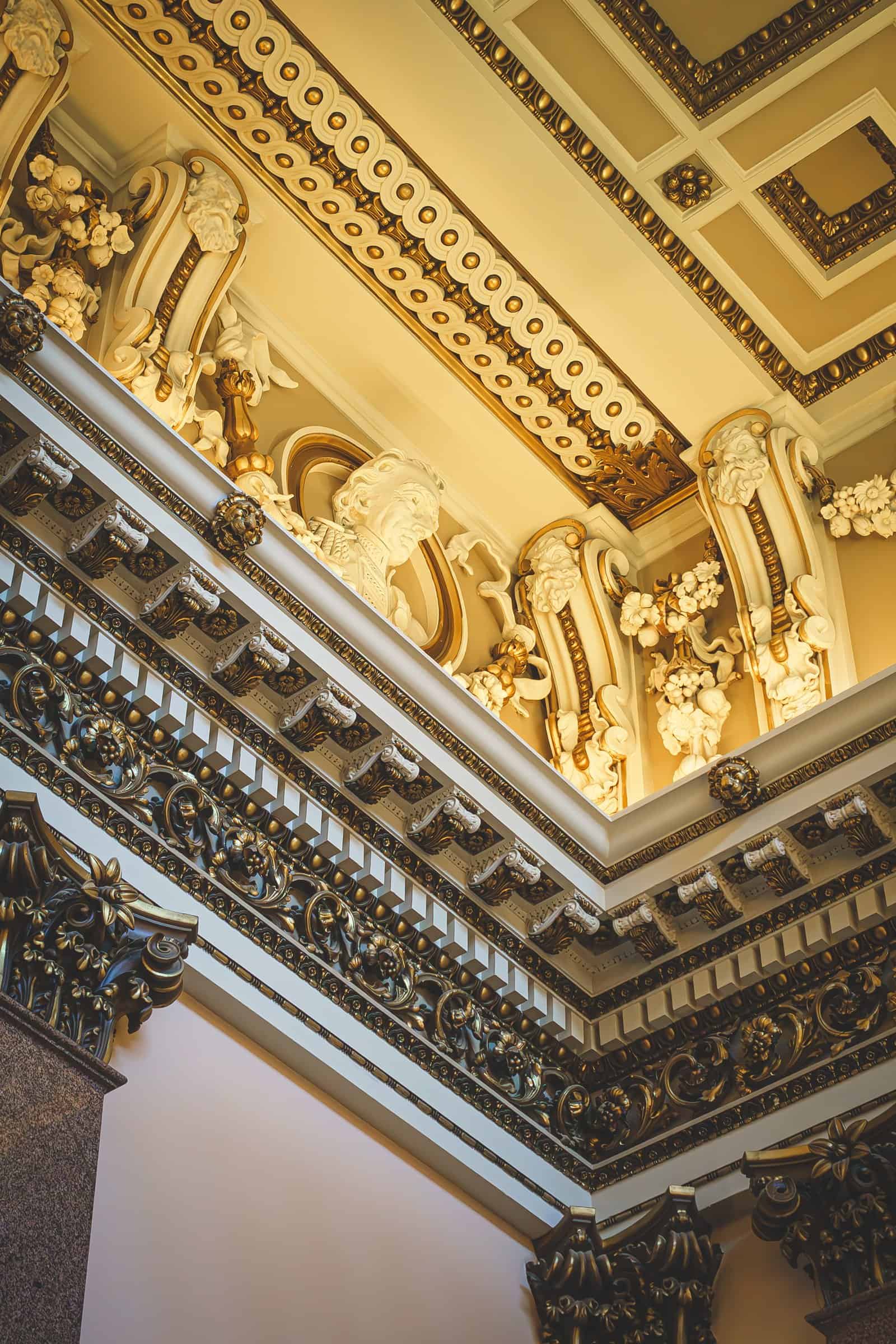
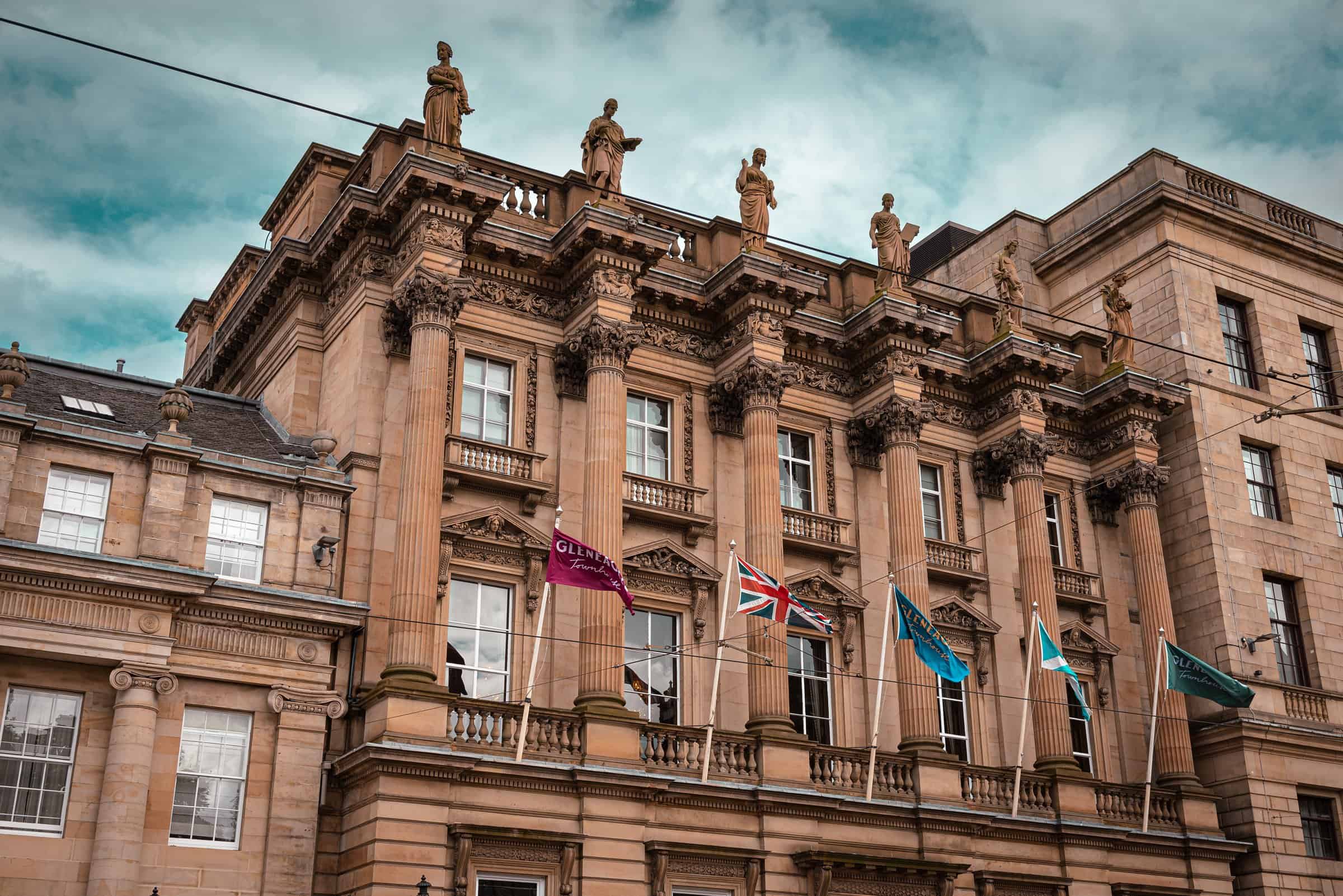
For its head office the bank turned to David Bryce, who designed a colossal three-storey, five-bay bank in an Imperial Roman manner in 1846; it was built between 1847 and 1851 at a cost of about £30,000, and historians have compared it to a fragment of Imperial Rome and credited it with “Baalbek-like grandeur”. Above a channelled ashlar ground floor with a massive central doorway, six free-standing fluted Corinthian columns rise through the upper floors, and the entablature breaks forward over each to carry a statue by Alexander Handyside Ritchie personifying Navigation, Commerce, Manufacture, Science, Art or Agriculture. The design is closely related to C. R. Cockerell’s rejected scheme for the Royal Exchange in London, itself developed from Palladio’s Loggia del Capitaniato in Vicenza. Inside, a palatial stair hall with a gilded, scrolled balustrade leads on axis to the cruciform banking hall, or telling room: 22.7 metres long, lined with polished Peterhead granite columns and pilasters with bronzed zinc capitals, with mirrored arches in the side aisles, an attic of plaster swags and busts of eminent Scots, a Greek-cross coffered ceiling and a central dome of engraved glass rising 15.2 metres above a floor of Minton tiles. Bedford Lemere photographed the hall in 1896 for the bank’s 150th anniversary; new east wings followed in 1929–31, and in the early 1950s William Wilson’s stained-glass Governors’ Window was set above the hall door and a war memorial to the 68 members of staff who fell in the First World War was placed in the stair hall. Both buildings were listed at Category A in 1965.
Conversion by 3DReid and conservation by Simpson & Brown
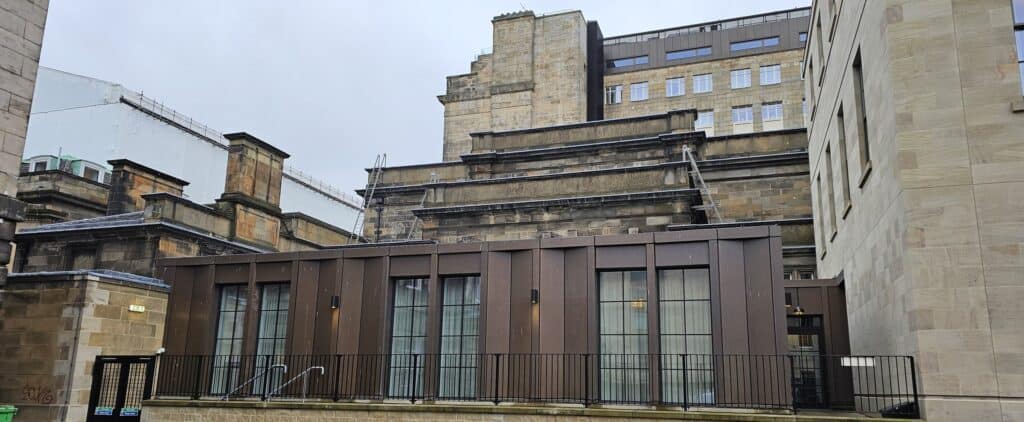
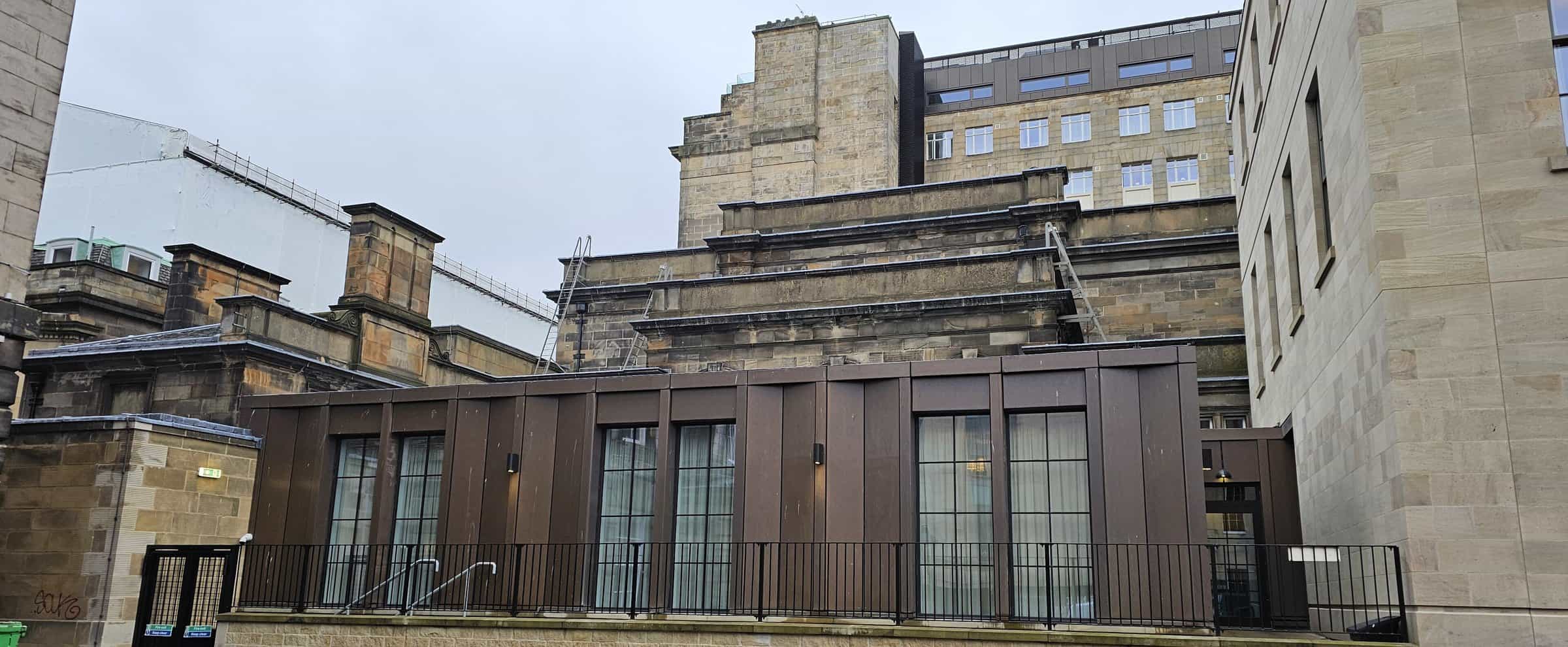
Gleneagles’ owner Ennismore turned to 3DReid, which had already worked on the renovation of The Gleneagles Hotel in Perthshire, to act as architect and lead consultant for the sympathetic alteration, extension and refurbishment of the two listed buildings, which stand within the Old and New Towns of Edinburgh World Heritage Site. The brief was to fit 33 generous bedrooms, an all-day restaurant, a members’ lounge, co-working spaces, a rooftop bar with a private terrace and a basement gym and wellness suite into the reconfigured buildings with minimal interference to their most significant features, keeping the banking hall as a single space. The historic fabric was completely overhauled: the stone facades and statues were repaired, the slate roofs stripped and reinstated, the rooflights upgraded, including the etched, curved glass dome, and the single-glazed timber sash and case windows repaired or replaced. At the rear, a full-height extension reinterprets the proportions of the original stone townhouses, with a low pavilion set behind a ‘garden wall’ so that the historic buildings stay in view, built in Catcastle Buff sandstone, reclaimed West Highland slate from the original roof and natural copper panels that weather to a warm bronze patina; on top, the rooftop bar was kept low enough to preserve the silhouette of Ritchie’s statues and balustrade against the sky. Simpson & Brown, as conservation architects, helped the team understand, conserve and adapt the fabric, reversing inappropriate modern alterations, reinstating lost details and improving accessibility, while Atelier Ten’s heat-pump strategy brought low-carbon heating and cooling into the listed building. The project won the commercial category of the Glasgow Institute of Architects Design Awards 2022 and was a finalist for Hotel Conversion at the AHEAD Awards Europe 2022.
AIME Studios interiors, The Spence and Lamplighters
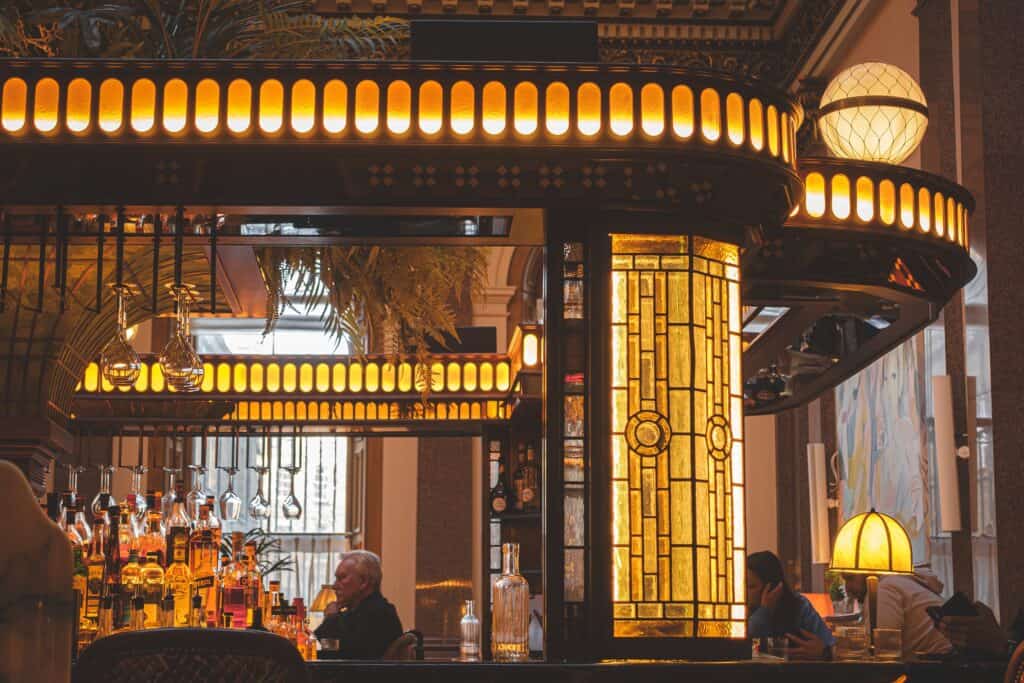
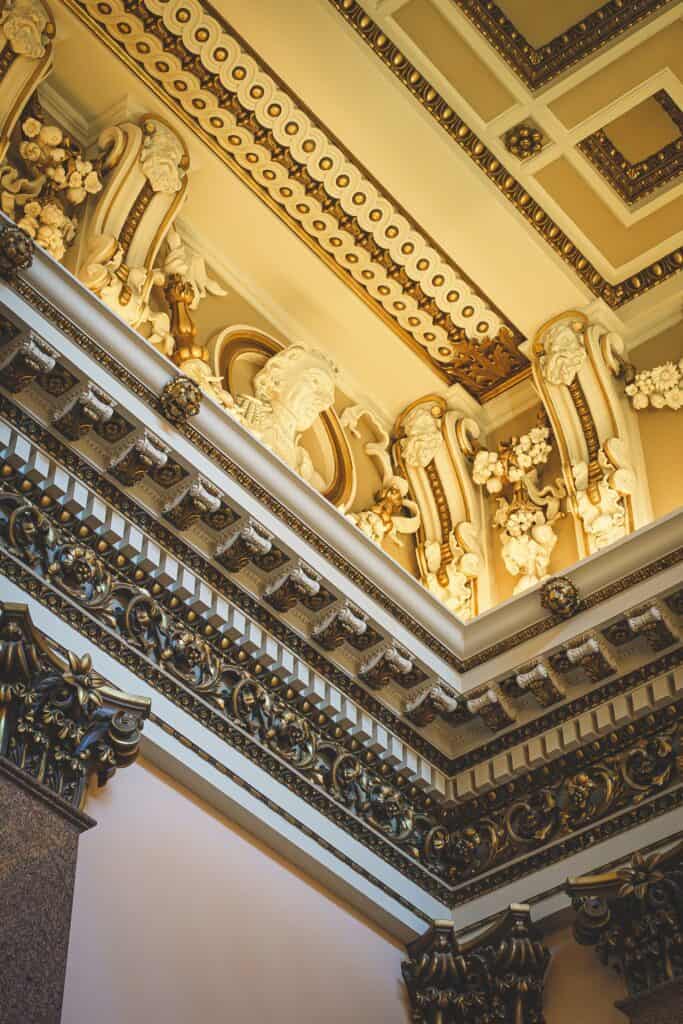
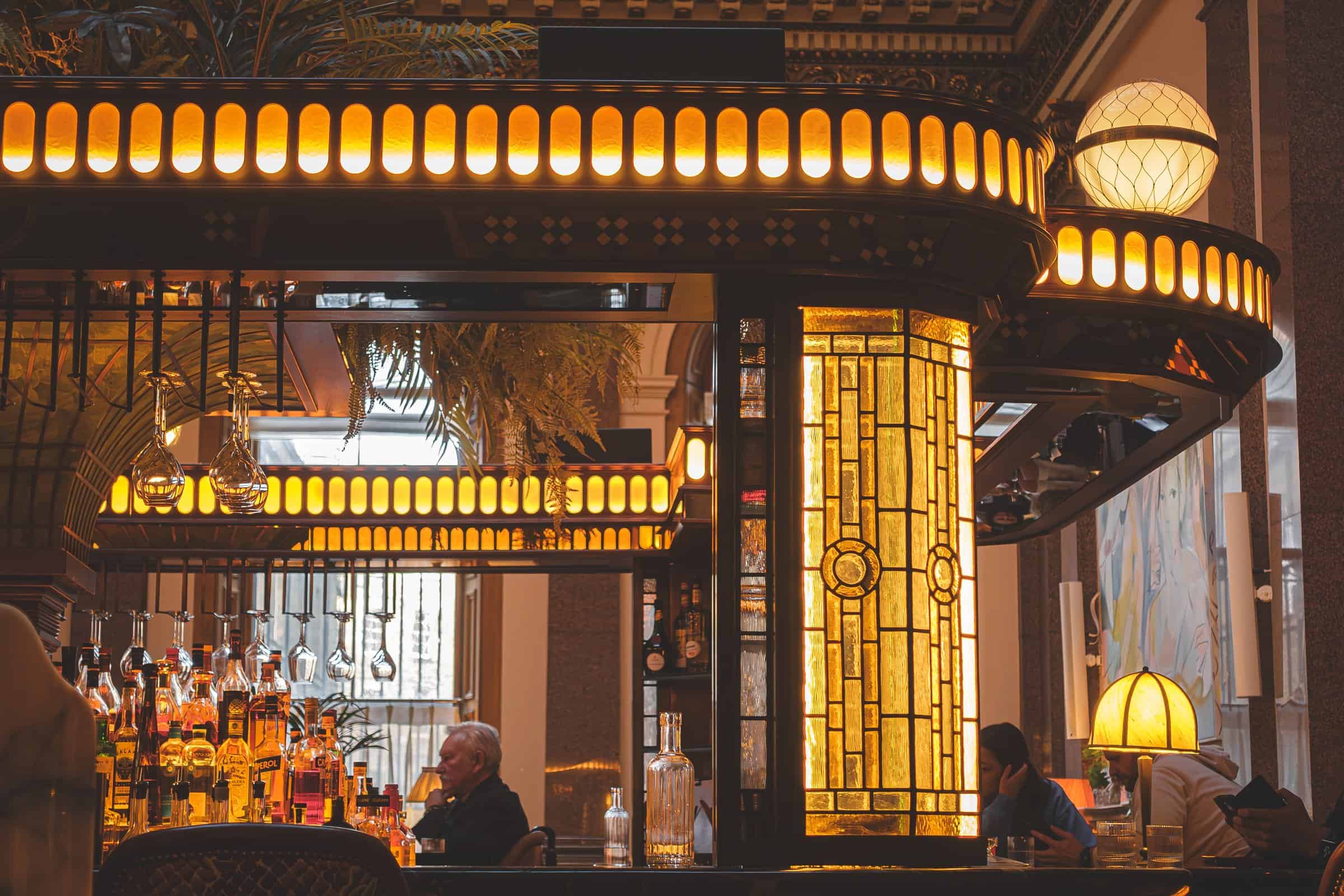
AIME Studios, Ennismore’s in-house creative studio, which was still called Ennismore Design Studio when the hotel opened, designed every part of the interior and the hotel’s own brand identity, from the bedrooms to the bars and the wellness centre. Led by Charlie North, Ennismore’s vice president of interior design, the team set out to make the townhouse feel like an extension of the 1920s Gleneagles Hotel, with refreshed paint schemes, simpler fabrics and custom furniture and joinery with subtle period references, set against a contemporary collection of work by living Scottish artists. The glass dome, ornamental plasterwork, stone columns, floor tiles, fireplaces and panelling were painstakingly restored, along with the Governors’ Window, the grand staircase and the war memorial. The banking hall became The Spence, an all-day restaurant named after the old Scots word for a larder, where a square central bar beneath the dome nods to the old banking counter and a palette of peachy pinks, peppermints, plums and peacock blues warms the granite and gilt. The basement vault now holds the gym and treatment rooms, and high above the square Lamplighters, the new rooftop bar for members and hotel guests, uses mirrors, a curved timber bar and floral carpets under its deliberately low ceiling, with a terrace looking over the city to the Firth of Forth and the hills of Fife.
Photography and credits
The photographs open with Bryce’s bank front in warm evening light, with No. 37 at its side, then move into the banking hall: The Spence beneath its engraved-glass dome, the busts and swags around the dome, Ritchie’s statues on the parapet, the amber-lit central bar, the granite columns and carved cornice, a straight-on view of the facade, the bar from the side, a corner of the gilded ceiling, the colonnade under its flags in 2024 and, finally, the new copper-clad pavilion at the rear. The exterior views date from 2014 to 2025 and the interiors from February 2024; no freely licensed photographs of the bedrooms, the wellness suite or Lamplighters were available. Credits go to Enric, Gary Campbell-Hall, ToyHorse, Chabe01 and Drkirstyross, under the Creative Commons licences noted on each Wikimedia Commons or Flickr page.
Gleneagles Townhouse gallery
Explore more on Archtene
- More projects by 3DReid + Simpson & Brown + AIME Studios + David Bryce
- More projects in Edinburgh
- More Hotel projects