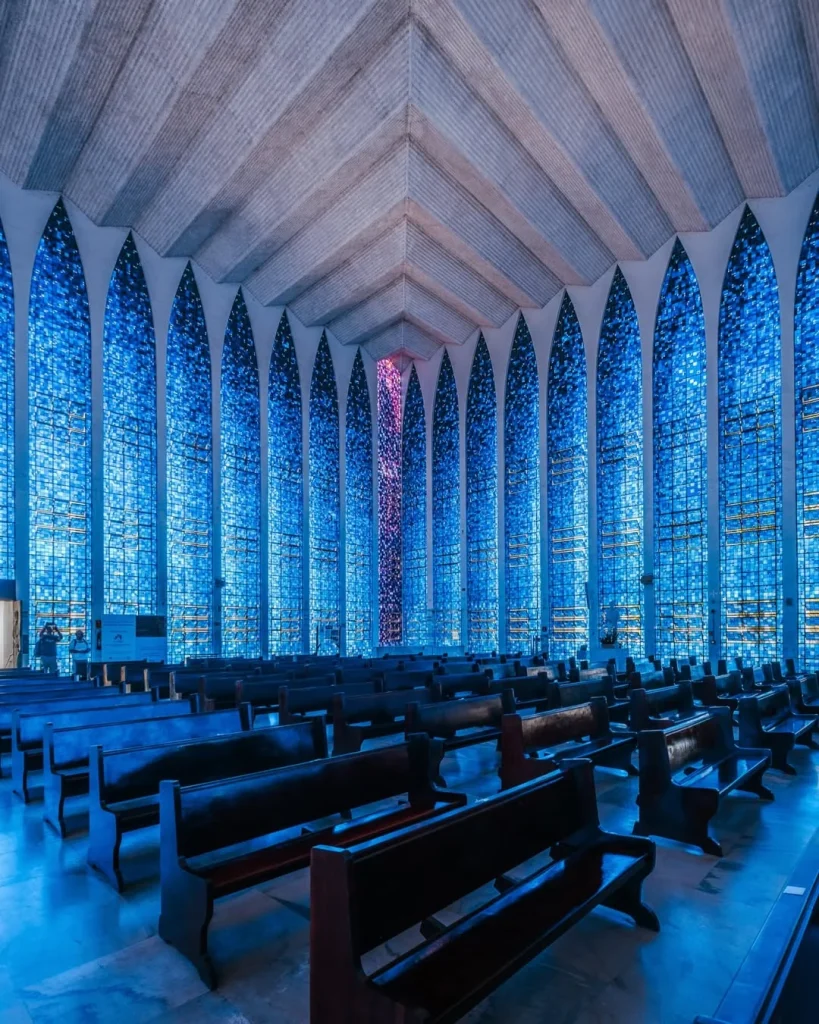
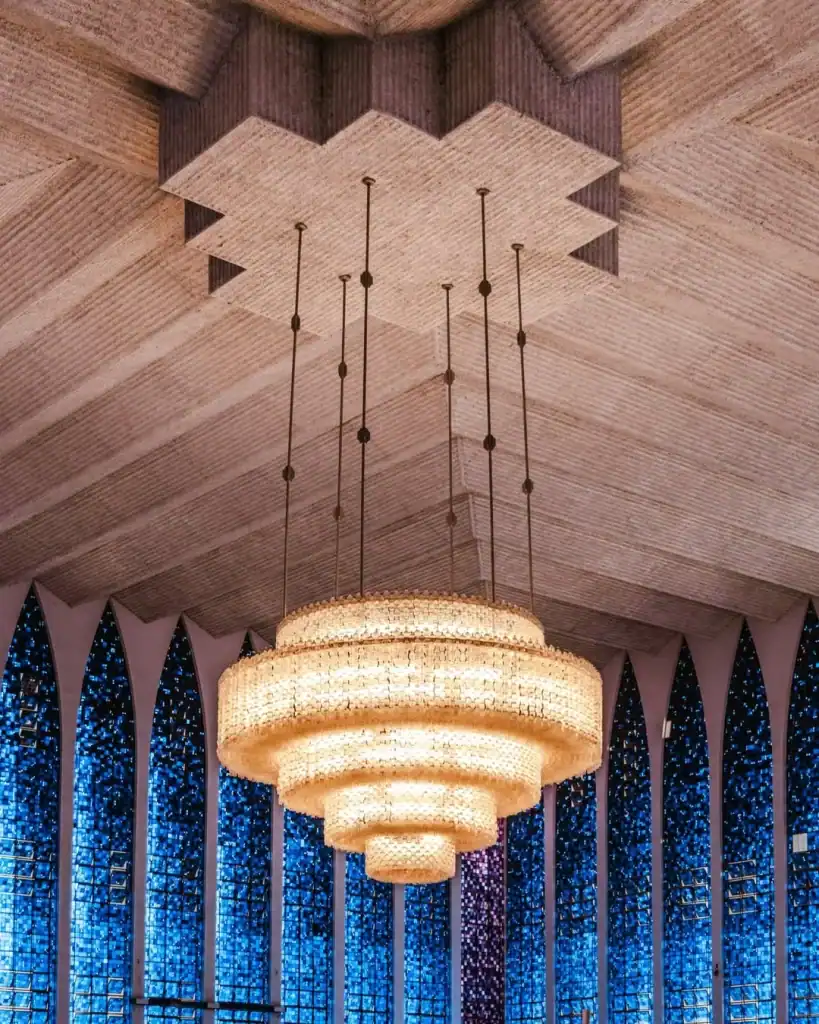
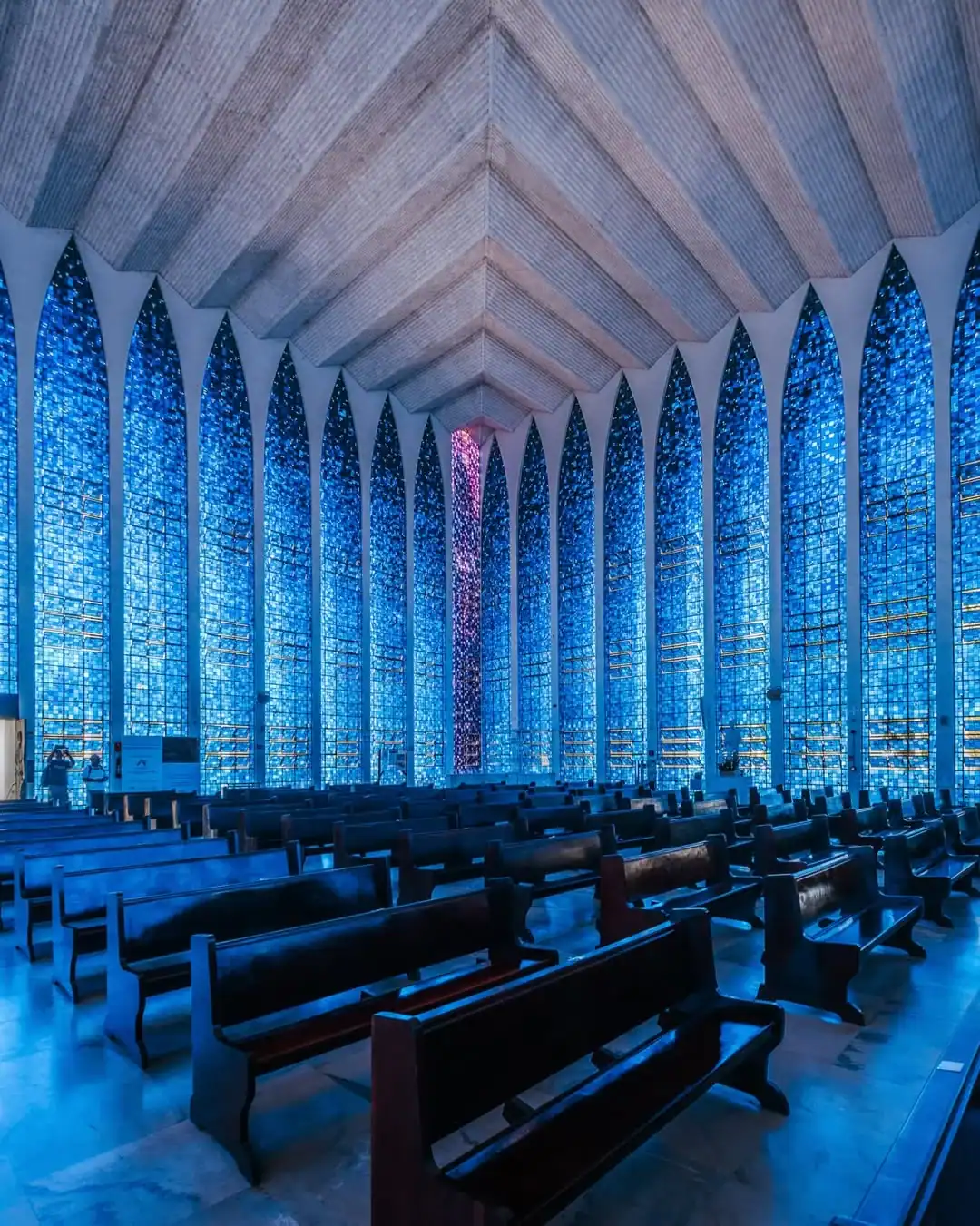
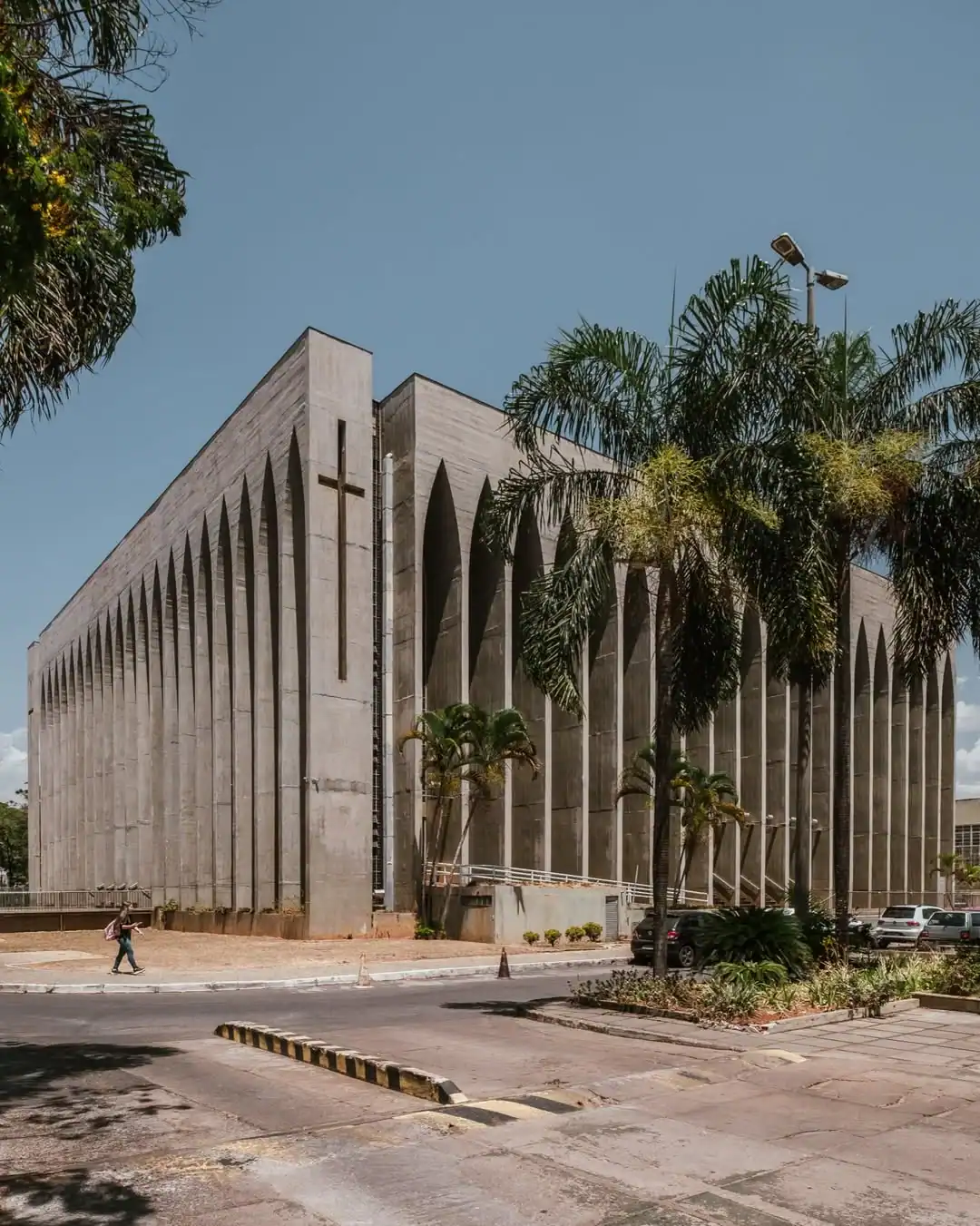
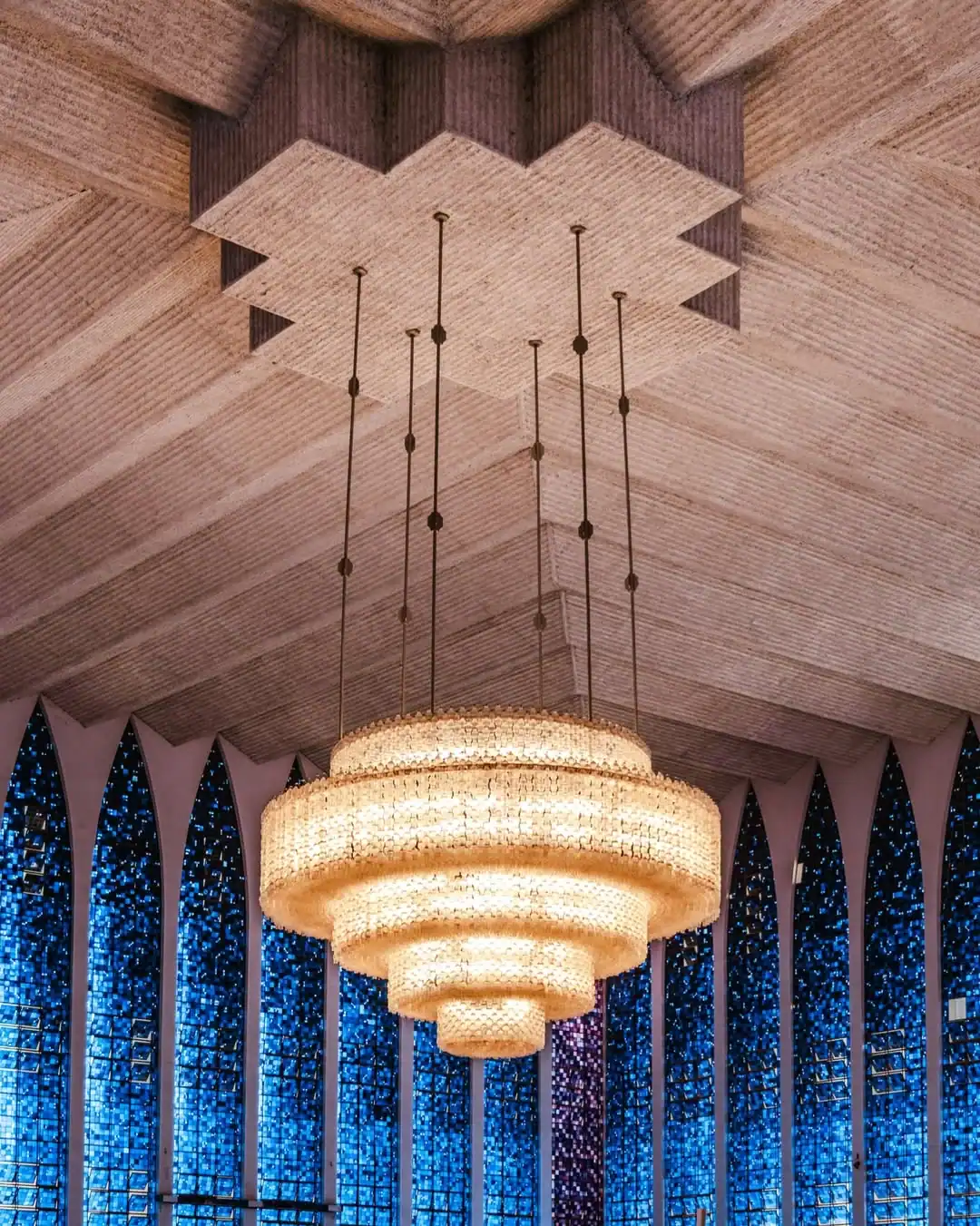
The Don Bosco Church in Brasília, Brazil, stands as a testament to the visionary work of architect Carlos Alberto Naves. Completed in 1963, this architectural masterpiece is renowned for its distinctive design and symbolic elements that reflect the spiritual essence of the Salesian community. The church’s design features 80 16-metre-high brise-soleil columns, which enclose the structure in a Gothic style. These columns support stained-glass windows in 12 shades of blue, symbolising a starry sky. The roof is adorned with designs by Naves himself, and the central chandelier, crafted by Alvimar Moreira, contains 7,400 Murano glass pieces and 180 lamps, weighing a total of 2,600 kilograms.
The church’s design is deeply symbolic, with the brise-soleil columns representing the protective embrace of the Salesian community. The stained-glass windows, in their varying shades of blue, evoke the vastness and serenity of the night sky, creating a contemplative atmosphere within the sacred space. The intricate roof designs and the impressive chandelier further enhance the church’s ethereal ambiance, inviting visitors to experience a sense of transcendence and divine presence.
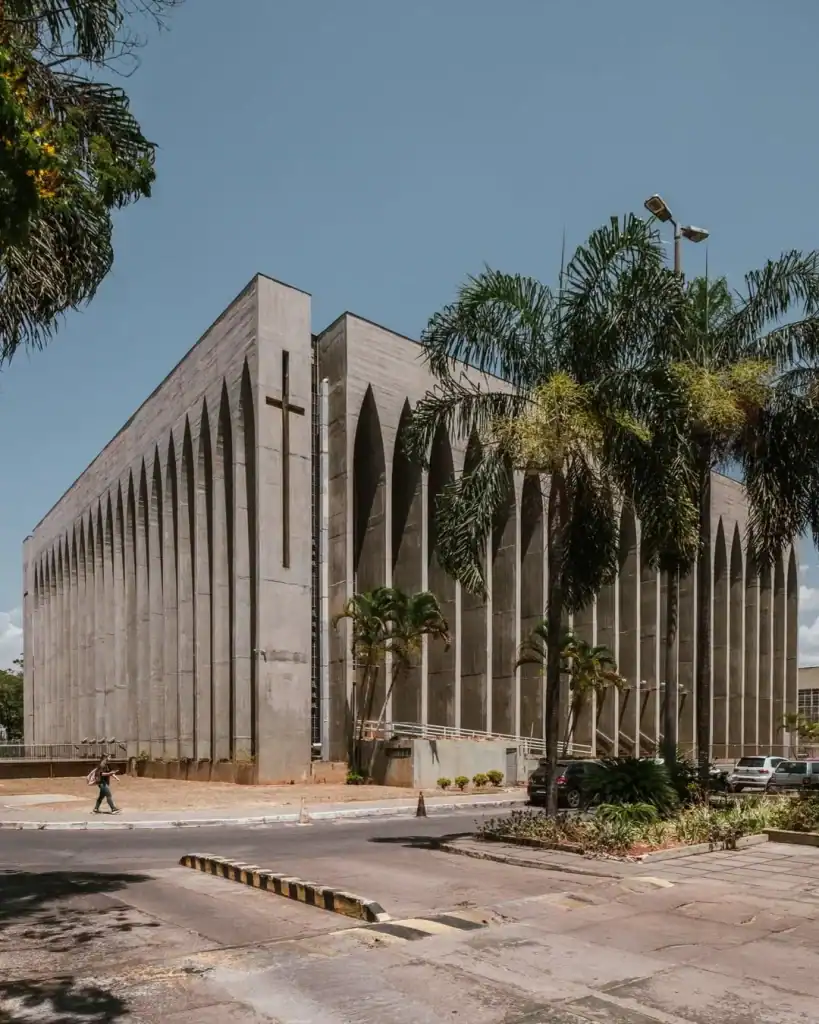
Situated in Brasília, a city celebrated for its modernist architecture, the Don Bosco Church harmoniously integrates with its urban surroundings. Its unique design not only contributes to the city’s architectural diversity but also serves as a focal point for the local community. The church’s location and design reflect the Salesian order’s commitment to creating spaces that foster spiritual growth and community engagement.
The Don Bosco Church’s architectural significance extends beyond its aesthetic appeal. It embodies the principles of modernist architecture, characterised by clean lines, functional design, and the use of modern materials. Naves’ innovative approach in utilising brise-soleil columns and stained-glass windows demonstrates a thoughtful integration of form and function, creating a space that is both visually striking and spiritually uplifting.
The church’s design also reflects the cultural and religious context of Brazil in the early 1960s. During this period, there was a movement towards modernising religious architecture, moving away from traditional styles to embrace designs that resonated with contemporary sensibilities. The Don Bosco Church stands as a prime example of this shift, blending modernist aesthetics with religious symbolism to create a space that is both innovative and deeply meaningful.
The Don Bosco Church’s influence extends beyond its architectural peers. It has inspired subsequent generations of architects and designers, serving as a reference point for those interested in integrating modernist principles with religious architecture. Its unique design elements and symbolic features continue to captivate and inspire, underscoring the enduring relevance of Naves’ work.
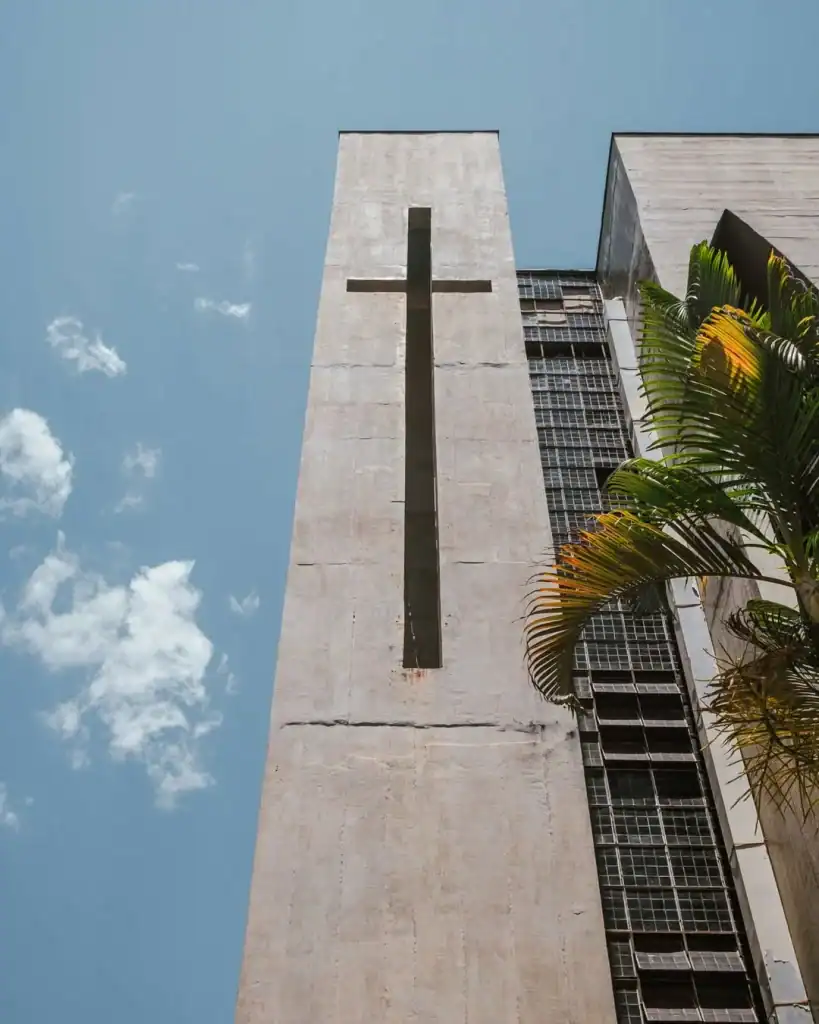
In the broader context of Brasília’s architectural landscape, the Don Bosco Church contributes to the city’s reputation as a hub for innovative and forward-thinking design. Its distinctive style adds to the rich tapestry of architectural diversity, reflecting the city’s embrace of modernist ideals and its commitment to creating spaces that serve both functional and symbolic purposes.
Visiting the Don Bosco Church offers a profound experience, allowing individuals to appreciate the intricate details and thoughtful design that characterise Naves’ work. The church stands as a testament to the enduring power of architecture to inspire, uplift, and foster a sense of community and spirituality.
In conclusion, the Don Bosco Church in Brasília is a remarkable example of modernist religious architecture. Through its innovative design and symbolic elements, it offers a space that is both architecturally significant and spiritually enriching. The church continues to serve as a beacon of inspiration, reflecting the enduring legacy of Carlos Alberto Naves and the Salesian community’s commitment to creating meaningful and transformative spaces.
Gallery
Explore more on Archtene
- More projects by Carlos Alberto Naves
- More projects in Brasília
- More Church projects